ASSIGNMENT FOUR: PUBLICATION DRAFT

Further research on photobooks

Are you ready to publish a photobook? Chris Pichler in conversation with Lens Culture

Chris Pichler is the founder and publisher of Nazraeli Press (California). He says that it’s important to work out why there is a need to publish this particular group of photographs, he says its important to be honest:

Pichler says that he looks for material that gives him a eureka moment, seeing something he’d not seen before.

Reference:

Nazraeli Press and LensCulture (s.d.) Are You Ready to Publish a Photobook? – In conversation with Chris Pichler, Nazraeli Press. At: https://www.lensculture.com/articles/nazraeli-press-are-you-ready-to-publish-a-photobook (Accessed  13/08/2024).

The best and worst of times talking photobooks with aperture lesley Martin

Lesley talks against the background of an explosion in the photobook medium. She says the bar for book making is high now, and lots of creativity from indie and self publishing.

Asked what advice she gives most often give to aspiring photobook makers?

  • Assess why you want to make a book: to bring together my images and poetry in a form that can be shared sensitively
  • ask yourself about the concept behind your project and book—what is it really about? Community – my experience and a model for inclusive and harmonious community
  • Who is your audience? Myself, some local people and those from communities outside my locality
  • Identify what you like in a book…Look carefully and try to figure out how the books you like were put together/designed. I have done this in my research

She says making your own book is slightly different to publishing a book – you might want to just  make a dummy; make a small private edition; play around with the form.

Lesley looks for photobooks that is thoughtful and pushes boundaries- work that makes you want to look and look again.

Reference:

This interview is primarily aimed at street photographer’s publishing. He was asked, “Has the photobook become a fetish? How can young photographers avoid this trap for their early-career publications? Dewi replies that the book should always be about content, about what the photographer has to say or show. Design is critical, but only to make work more accessible, and understandable. He believes function comes before form.

He says that photography like other arts should address external things and have a relationship with the world. Dewi suggests that some emerging photographer would be better to focus on getting new work out rather than trying to get published. If you are making a book you should ask

  • Why do you want a book? Is it the best way forward?
  • Do you really have something to say? Yes and others have told me so and that this is a global issue
  • Does it bring the work together coherently? That is my aim during the editing and refining process
  • Who is the audience and what is the best way of reaching that audience?
  • What from should the book take?

He also says that there is a great need to be honest, and also self-critical and aware.

My learning – Ask myself at every stage:

  • Why the book form? Why am I making it?
  • Do I really have something to say?
  • What is it essentially about?
  • Who is the audience?

Reference

Lewis, D. and LensCulture (s.d.) Have Something to Say: 30 Years of Photobooks with Dewi Lewis – An interview with publisher Dewi Lewis |. At: https://www.lensculture.com/articles/dewi-lewis-have-something-to-say-30-years-of-photobooks-with-dewi-lewis (Accessed  13/08/2024).

ASSIGNMENT FOUR: PUBLICATION DRAFT

Understanding photobooks – Colberg, J. (2016)

This source increased my understanding of photobooks and gave me lots of good advice. These are my notes:

A photo book is its own unique medium, a book that is viewed because of the images inside it. The photographs should carry a book’s message, ant text is subordinate.

Main differences between an exhibition and a photobook:

  • Exhibitions operate in a specific place, has a limited lifespan, viewers enter to view the images, usually in a clinical space.
  • The exhibition is constructed around the space someone can cover walking.
  • Exhibition images can be larger and be viewed from further away.
  • More control over with an exhibition on how it’s viewed than a book
  • Photobook is an intimate object, viewed individually as and when wanted
  • Photobooks live in the space between a person’s hands and eyes
  • Photobooks go out into the world, they are a ‘photographers ambassadors’ (Colberg, 2016:26)
  • Photobooks can be viewed over and over again

A photo book as an object:

They have a physicality, is to be handled, the size, the weight, affects how you hold it.

  • The end pages, page paper, have an effect on your experience – makes it feel cheap/expensive
  • Is the printing good quality?images true, light and showing detail? Does the whole book have an unwanted colour cast?
  • A softcover can be too flimsy, though a hard cover might not lay flat
  • Is the texture attractive and easy to read?

Colberg says it is important for photographers to ‘be aware of how the process of making a photo book will inevitably entail making compromises’ (Colberg, 2016:33). He divides publishing into 1) production and 2) postproduction stages,

Production:

  • The concept
  • Editing the images
  • Sequencing the edit
  • Text production
  • Design and layout
  • Materials printing and binding decisions
  • Preprinting file preparation
  • Printing
  • Binding

Postproduction:

  • transportation to warehouse/shop
  • Advertising
  • Selling

He usefully lists the challenges as:

  • Quality of printing – especially on on-demand printers
  • Correct binding – so nothing is trimmed off or unprinted. Perfect binding, which I’ll use,  can be satisfactory if attention is paid to not putting images across the gutter, made cheaply
  • Getting the correct overall feel of a quality book
  • Preparing a digital file effectively- this I will have to learn to do with affinity software.

His seventeen rules for how to make a photobook:

  1. Know why your book has to be made- what will this contribute that hasn’t been in this form before? Don’t make them for their own sake.
  2. Do your own research to support your decision making during the process. What are my preferences? What works well?
  3. Avoid shortcuts
  4. Best made through collaboration. Use other eyes, a designer, use whatever expert help you can get.
  5. Have a budget – it’s always a balancing act. Understand the costs.
  6. Everything has to be in the service of the book- to desired end, e.g. Edit, sequencing, design, materials…
  7. There has to be a good reason for every decision made. As above
  8. Be prepared to make compromises. This may well be in my case because of budget.
  9. Aim for the perfect book then make the best possible.
  10. There is no such thing as the perfect photobook. As above use the best solutions.
  11. A photobook plays more than one role, e.g. expression, selling, promotion…
  12. Keep your audience in mind – ensure it is understandable.
  13. Don’t approach editing and sequencing as if they are dark arts. ‘editing is based on recognizing form and content’ (Colberg, 2016:189)- give the images your full attention over time.
  14. Allow the process to take time – do not let the deadline dictate the outcome
  15. Always work with physical objects: notebooks, prints, dummies…
  16. All aspects of photobook making are important
  17. Don’t worry about money. He suggests if you don’t have the money-don’t do it!

My takeaways:

Reading this book has enforced my belief that a book is the best medium for my work.

I know why I am making a book – to share my feelings about community and to encourage others to reflect on community – and by sharing through artist talks only I have control locally about who views the images and poetry.

The book will be an ambassador for my work, but most importantly it is an intimate object that can be viewed where and when liked. I intend my work to be reflective and a book that can be viewed over and over supports this ethos.

Reference:

Colberg, J. (2016) Understanding photobooks. London, England: Routledge.

ASSIGNMENT TWO: Reflections on formative feedback

This was a video feedback session, see written feedback which followed:

Actions suggested by Tutor

  • Ensure I show my reflections on how my aims have been/will be met -Done
  • Update my aims and objectives – Done
  • Show how I’ve engaged with and used the Photography online ethics resources – Done
  • Include wider context around my work- Done
  • Be aware of learning outcomes- Yes
  • Give evidence- Done
  • How will I use my learning from the resolved project – Developed
  • Can include hyperlinks in the proposal – Done
  • Give links to my previous work alluded to – Done
  • Reconsider showing my work locally : Since April 2024 my thoughts about sharing my work have developed. I was initially concerned about sharing my work locally, however by November 2024 I moved to a position where I was holding artist talks withing the woodland with the book. Initial feedback from attendees is that the book has a theme that extends outside of the locality; this encourages me to continue the talks and to consider expanding them.

I have since updated and revised my project proposal (Nov 2024) taking on board the above advice and later learning. It was interesting to reflect now against my original proposal written in April 24. See: https://nkssite6.photo.blog/category/body-of-work/bow-assignments/assignment-2/a2-draft-project-resolution-proposal/

ASSIGNMENT TWO: Reflections against learning outcomes.

Assignment 2 Publication proposal for resolution

Reference: Boothroyd, S. and Alexander, J. (2020) Sustaining Your Practice Course Manual. Barnsley, UK: Open College of the Arts.

Reflections against learning objectives

LO1 demonstrate comprehensive knowledge of the professional context(s) relevant to your practice and have an understanding of the professional dimensions that underpin a successful photographic practice.

I attended a seminar with speaker Nick Dunmar of AOP ‘the business of being creative’ see post: https://nkssite6.photo.blog/2024/07/23/research-oca-creative-conversation/ which supported my calculations when setting a day rate, see blog post: https://nkssite6.photo.blog/category/sustaining-your-practice/assignments/assignment-1-syp/a1-setting-a-day-rate-exercise/

I did preliminary research into funding sources to gain an understanding of what is available and how accessible it is.

To produce my project budget, I investigated publishing options, quality and costs and software for publishing. See my my A2 draft budget see blog post: https://nkssite6.photo.blog/category/body-of-work/bow-assignments/assignment-2/a2-draft-project-resolution-proposal/

LO2 coherently present a body of work, making creative presentation decisions that complement your subject and/or your artistic strategies.

Creating a realistic  budget and timeline for my final project informed my decisions on the creative presentation of my final resolution for my body of work, including:  a book as the outcome, Artist talks for dissemination, social media and website for dissemination and likely publicity materials, see blog post: https://nkssite6.photo.blog/category/sustaining-your-practice/assignments/assignment-2-syp/a2-syp-learning-log/

LO3 operate in complex commercial contexts requiring the application of specific interpersonal, professional and business skills within an ethical framework.

I explored the commercial side of the photographic industry to produce my project budget. This included preliminary investigations into the cost of publishing and publicity materials.

My networking and research visit to the Cardiff Ffoton book fair helped me to finalise my plan for disseminating my work, via publishing and reaching an audience. See blog post: https://nkssite6.photo.blog/category/sustaining-your-practice/syp-research/ffoton-gallery-cardiff-book-art-fair-13-7-24/

Competition: AOP Open Awards

Deadline 12.7.24

Details: The Open Award is open to everyone – both professional and amateur – and are about championing exquisite imagery. There are no categories or restrictions in the Open Award, the image is the star, and exciting and innovative work is encouraged.”

The AOP Open Award is run by the Association of Photographers and is an exciting opportunity  for professionals and amateurs to compete on equal terms, with still and moving images created by a person, during what is our prestigious Annual Awards season.

The AOP Open Award aims to bring together professional and amateurs in a high profile way. The Open Award is a popular competition that has been running for 15 years, and each year has attracted approximately 1,500 entries from around the world. 

Finalists will be exhibited alongside 38th AOP Photography Award Finalists at the official AOP Awards Showcase in September 2024 with Gold and Silver Winners for the 38th AOP Awards, including the Open Award being announced live at the event.

AOP Open Award Finalists will also feature in the highly collectable 39th AOP Awards Book. Gold and Silver Winners will each receive a complimentary AOP Associate Membership*.

Submission rules:

  • All images must have been created on or after 1 January 2022.
  • Can enter a single or series (2-5) of images, created by a person.
  • Images submitted online should be RGB and in JPEG format. They should be no larger than 3500 pixels on the longest edge. Your final file size must not exceed 10 megabytes
  • You can enter a piece of moving imagery up to 7 minutes in length, demonstrating your understanding and skills within the medium. All moving image entries must reference whether the work is a collaboration with another artist be it a director, editor, colour grader, musician etc. or whether it’s the independent work of the photographer. You may wish to illustrate the creative use of technologies for example AR, VR, CGI or an other technique, created by a person.
  • You can enter works of innovation with an example of excellence that illustrates the creative use of technologies and innovations in the production of still images. This can be AR, VR, CGI or any other technique, created by a person.
  • You can enter commissioned or personal work.
  • For Full Image Specifications please see points 7 & 8 in the 2024 AOP Open Awards Terms and Conditions

Single Members – £15.00 Non-members – £20.00 Series Members – £25.00 Non-members – £35.00

MY ENTRY

Project title: What Lies Beneath

Project description: 2000 words

Series description:

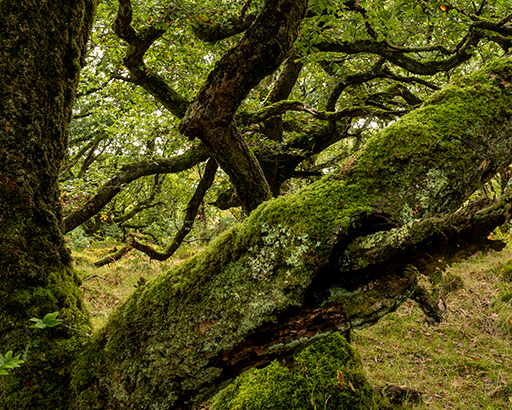
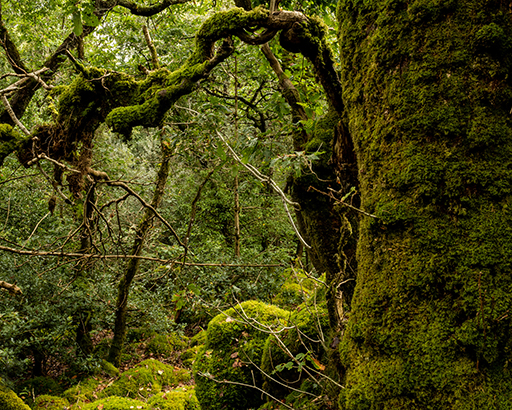
     ‘What Lies Beneath’, expresses my reflections on community using the landscape of an ancient woodland to create a visual model where things successfully coexist and support each other. Here I transform abstract ideas in my head into something concrete.

Though humans provoked the concept of the work, they are not evident in the images. Unlike woodland community members, the local human community is often disharmonious and driven by difference. The inclusive, harmonious characteristics of these diverse woodland societies would benefit human societies where sadly, ‘incomers’ like myself, are never accepted as local, no matter how long passes, or what they contribute to the neighbourhood – this a story common to settings across the globe.

In this work, combining the world in my head with the one in front of me, has helped to heal some of the wounds that inspired the story’s beginning.   

What lies beneath the emerald wrapping, embracing their collective realm?

What lies elsewhere beneath man’s disguised demeanour, civil but deliberately divisive?

Niki South    

What lies beneath: Community

1.           Community. This is the second in a series of images for my body of Work ‘What Lies Beneath’. The series expresses my thoughts on community, using the landscape of an ancient woodland to create a visual model where things coexist, are inclusive and support each other. My experience of local community provokes the concept of the work, as its characteristics are in stark contrast to the woodland, often disharmonious, discriminating and driven by difference. This image is an entry portal to a varied but cohesive community.

What lies here beneath the willing emerald wrapping, accepting their collective realm?

What lies elsewhere beneath man’s disguised demeanour, civil but deliberately divisive?

2.           Harmony. This is the first in a series of images for my body of Work ‘What Lies Beneath’. The series expresses my thoughts on community, using the landscape of an ancient woodland to create a visual model where things coexist, are inclusive and support each other. My experience of local community provokes the concept of the work, as its characteristics are in stark contrast to the woodland, often disharmonious, discriminating and driven by difference. This image initially appears chaotic, however on closer sight the community is harmonious and supportive.

What lies here beneath the luminescent selfless sheaths, accepting mutual benefit?

What lies elsewhere beneath community spirit, concealed but festering? 

3.           Cooperation. This is the fourth in a series of images for my body of Work ‘What Lies Beneath’. The series expresses my thoughts on community, using the landscape of an ancient woodland to create a visual model where things coexist, are inclusive and support each other. My experience of local community provokes the concept of the work, as its characteristics are in stark contrast to the woodland, often disharmonious, discriminating and driven by difference. This image showcases cooperation in a complex but sympathetic community.

What lies here beneath the verdant creeping coverlet, collectively enjoying comfort?

What lies elsewhere beneath deceitful welcomes, smiling but spreading spite?

4.           Diversity. This is the sixth in a series of images for my body of Work ‘What Lies Beneath’. The series expresses my thoughts on community, using the landscape of an ancient woodland to create a visual model where things coexist, are inclusive and support each other. My experience of local community provokes the concept of the work, as its characteristics are in stark contrast to the woodland, often disharmonious, discriminating and driven by difference. This image shows welcoming tolerant behaviour in a diverse society.

What lies here beneath the soothing snaking sleeve, insulated from harm by another?

What lies elsewhere beneath undesired need, acknowledged but resented?   


5. Reciprocity. This is the last in a series of images for my body of Work ‘What Lies Beneath’. The series expresses my thoughts on community, using the landscape of an ancient woodland to create a visual model where things coexist, are inclusive and support each other. My experience of local community provokes the concept of the image, where its characteristics are in stark contrast to the woodland, often disharmonious, discriminating and driven by difference. This image demonstrates the generous, understanding that is possible in a community.

What lies here beneath the abundant enveloping eiderdown, slumbering peacefully together?

What lies elsewhere beneath acceptable appearances, charming but prejudiced?

COMPETITION ENTRY: Shutter hub Yearbook awards exhibition 2024

Shutterhub YEARBOOK AWARDS 2024

https://shutterhub.org.uk/call_for_entries/yearbook-awards-2024/#callout_apply

I supplied 6 images and a paragraph about my image/project (see below)

Shutterhub yearbook 2024: 250 photographers chosen worldwide: https://shutterhub.org.uk/exhibition-yearbook-awards-2024/:

Interesting that when I submit, if 1 image only is chosen it is this always one:

See this chosen image on the centre of the last page on the pdf below, and when on the live site clicking on my name (highlighted on the 2nd page) you to my website. I received an enquiry about my work via my web contact page, stimulated by my image and a visit to my website.

Resulting Shutterhub online presention:

I publicised this with an instagram post:

Submission details:

YEARBOOK is their annual awards for photographers, open to all, whatever stage they are at in their career. The Awards and exhibition are promoted to people working within the creative industries and to those who commission photography. They reach out to editors and publishers to share work with them and introduce them to photographers they may not yet know about. With prizes from major industry organisations Alamy, Metro Imaging, Newspaper Club, and Shutter Hub Editions, accompanied by an online exhibition.

YEARBOOK has no theme, it’s all about sharing your best work, and promoting the future of photography. Asking for entries from all photographers, no matter your background or education. Enter images that stand alone to represent your style, skills and the work you’d like to do more of.

They’ll promote your work on our website, to their contacts, through newsletter, and on social media, reaching tens of thousands of people who are interested in photography. Awards judges are looking for a wide variety of photographic work to support, giving opportunities for different genres and approaches.

There are no set entry fees for YEARBOOK, asked to ‘pay what you can’.

Deadline for entries: 11 July 2024 (5pm UK time)

RULES: Each photographer can enter up to 6 images. Images can be from a series or individual images.

SPECIFICATIONS FOR ENTRIES: All submitted files must be named with photographer’s name and title of work. Files that are not labelled correctly may not be accepted. Correct file naming looks like this: lastname_firstname_title_of_image.jpg

Images can be landscape or portrait format.

Submitted images must be jpegs, 2000 pixels wide, 300ppi and no more than 5MB in size. Please submit images in sRGB colour profile.

I supplied from ‘What Lies Beneath’: Cooperation, Harmony, Cooperation, Diversity,  Nourishment, Reciprocity.

Photographers retain copyright and ownership, as always.

 I was asked to provide a paragraph about my image/project (if your work is accepted for the exhibition, this information may also be used for publicity materials).

I supplied:

‘What Lies Beneath’ expresses my reflections on community using the landscape of an ancient woodland to create a visual model where things coexist and support each other. Though humans provoked the work, they are not evident in the images, my local community is often disharmonious and driven by difference. The inclusive, characteristics of these diverse woodland societies, would benefit human communities where sadly ‘incomers’ like myself, are never accepted as local, no matter how long passes – a story common to settings globally. Combining the world in my head with the one in front of me, has helped to heal some of the wounds that inspired the story’s beginning.   

What lies beneath the emerald wrapping, embracing their collective realm?What lies elsewhere beneath man’s disguised demeanour, civil but deliberately divisive?

SUCCESS

22.7.24

Hello!
I am really pleased to be able to confirm that your work has been selected for Shutter Hub’s YEARBOOK Awards 2024 exhibition!

Do feel free to tell people you are in the exhibition and spread the word but please don’t screenshot this email to share. The exhibition, including the full list of selected images and exhibitors will be launching on 08 August 2024, so please hold off on sharing any news until that date.

We’ll be promoting the exhibition far and wide to make sure it is seen by as many people as possible, and please tag us on Twitter and Instagram @shutter_hub and use the hashtag #SHYEARBOOK so we can share your posts too and spread the word further!

If you’d like to get involved in other Shutter Hub projects make sure you’re signed up to our mailing list to get our latest news, and follow us on social media to stay up to date with our daily news.

Thank you again for taking part, and congratulations! We’re really excited to share such a strong selection of images by so many wonderful photographers.

Best wishes,

Charlotte
Charlotte Shears
Community & Projects / SHUTTER HUB

I did receive some contact via my website directly from this exposure eg:

ASSIGNMENT TWO: Learning log

Working on this assignment was a turning point for me – procrastination into action!

This was the brief for the assignment: Write and send to your tutor a comprehensive proposal showing in detail how you intend to resolve and deliver or disseminate your major project. Your proposal should include:

For the Publication proposal I need to: Write proposal to communicate with my tutor the details of how I’ll resolve my final project and outline how I’ll engage with a public audience. I will:

  • Explore business side of my practice, to develop further understanding of how artists and their projects are supported. I attended a useful seminar with Nick Dunmar of AOP ‘the business of being creative’ see post: https://nkssite6.photo.blog/2024/07/23/research-oca-creative-conversation/
  • Explore sources of funding: National Arts Councils, Regional development agencies, partnership funding, foundations grants and awards, crowd funding. I have done this and am likely to return to research further for assignment, but as I am not going to publish my book, and want to keep the audience small, such funding is not relevant to me.
  • Work out a budget:
  • I have done a theoretical exercise to set a day rate for myself see blog post:https://nkssite6.photo.blog/2024/07/24/assignment-two-setting-a-day-rate/
  • It is difficult to consider what my photos might be worth, certainly not the cost in time and overheads that I’ve put into them. Should my photography become popular, and I want to sell it then I would need to do this exercise at this stage. The AOP app could be useful: http://www.the-aop.org/information/usage-calculator and I would need to look at others work and prices for comparisons.
  • I have worked through all other budgeting components for A3 budget working document here:

This must meet the set primary objective: To disseminate my work to a wider audience. My timely visit and networking at the Ffoton book Fair in Cardiff help to crystallise my plans, see my reflections at the end.  

I also want to:

  • Confidently engage with a public audience face to face when disseminating my body of work.
  • Broaden my professional photography practice, enabling me to engage in professional and commercial contexts and to establish relationships and network and understand markets.

CHOSEN OUTCOMES:

A book:

  • Though I want to use my work to engage and offer others opportunity for reflection, due to the nature of the topic I must limit its exposure locally – though my secrecy about my work locally has made it intriguing. I have decided that there will only be one copy of the book (not for sale) which will be used in face-to-face situations with limited open-minded locals during my artist talks and tours.
  • The book will also expose my work to professionals, away from my locality.  I will continue exposing my work through open calls for competitions and exhibitions, via portfolio reviews accompanying the images, via gallery showings of images where appropriate, and offering the opportunity to extract for magazine articles and similar.

Artist talks and tours locally:

  • These will be in the woodland with poetry reading and image sharing in the environment, with feedback opportunity on postcards.
  • Their purpose is to combine the images and poetry in a way that will offer access to viewers to reflect on some parts of the nature of community.
  • Viewers will be able to takeaway postcards with images to give them talking points, the poetry will remain with the author. The sensitive nature of the subject means I will be most likely to get frank responses in 1:1 situation.

This gives access to different types of learners:

  • Visual: book, images, physical woodland, written feedback on postcards
  • Auditory: discussions and woodland sounds
  • Kinaesthetic: Physical woodland experience, physicality of book and postcards

The publications must be clear and simple, to create a reason for engagement, relevance to themselves or an audience they know.

  • Publicity PDF for artist promotion -done ü
  • Talking point and reward postcards
  • Photo Book: Online dummy for use with professionals and portfolio reviews &           One physical copy for Author’s use and sharing during talks.

I will promote the book and the talks via:

  • Own: website, Instagram, LinkedIn, newsletters/emails to contacts. Conscious decision not to use Facebook as this has a local following that I can’t confine.
  • Paid for: leaflets, posters, connections from membership and subscribed to organisations (Shutterhub, Source).
  • Worked for: from promotions from open calls, exhibition/magazine inclusions, networking (OCA and external), portfolio reviews.

Lastly I need to devise a format for my proposal to my Tutor. This will include:

  • Description of project
  • How I will disseminate
  • Budget for dissemination.
  • Timeline for dissemination

See my detailed timeline working document here:

And see my monthly timeline here: Monthly tracker for resolution of project

2024: MonthActionDeadlineAchieved
Prior to JuneImages produced and finalised April 24
 Footnotes produced finalised April 24
 Poetry produced and finalised April 24
 Own media/promotion channels set up February 24
 Networking                    Yes
 Peer reviews Yes
JuneTimeline decidedEnd June23.6.24
 Networking Yes
 Peer reviews Yes
JulyBudget draft23.7.24 
 Detailed timeline23.7.24 
 Publication proposal to Tutor23.7.24 
 Publication research Yes
 Networking                      Yes
 Peer meetings Yes
AugustPublication research  
 Marketing research and outline 
 Marketing designs finalised 
 Peer reviews 
 Book draft to Tutor23.8.24 
 Marketing leaflets/postcards ordered26.8.24 
 Networking  
SeptemberBook design finalised/ordered2.9.24 
 Marketing publication4.9.24 
 Artist talks/tours arranged6.12.24 
 Book publication12.9.24 
 Artist talks/tours execute16.9.24- 4.10 24 
 Networking  
OctoberBook evaluation  
 Engagement evaluation  
 Evaluation to Tutor23.10.24 
 Networking  
ThroughoutOpen calls/competition entries  
 Portfolio reviews  
 Networking  

Reflections on A2

This month and Assignment 2 have been a turning point for me. At the beginning I was still undecided how I would engage an audience and meet my criteria for controlled exposure locally. Also, during the month, I had further successes with open calls, and this fueled me to continue with wider exposure.

My visit and networking to the Ffoton book Fair in Cardiff helped me to finalise my plan for dissemination; then putting together, formatting and publishing my project proposal came much easier.

Having a detailed timeline and budget will help me to execute my project effectively in the window that I have left.

ASSIGNMENT TWO: Setting a day rate

In order to set my budget I should set a day rate, and analyse my business running costs. The semier ‘The business of being creative’ with Nick Dunmur (advisor to the AOP) was very helpful with this, see my post: https://nkssite6.photo.blog/2024/07/23/research-oca-creative-conversation/

Annual professional subscriptions:

  • AOP currently free (rising to £40 pa after graduation).
  • Shutterhub £87
  • Adobe creative plan pa £100 includes hosting of website
  • Artist network £36pa  Total £363pa Allow £500 to allow for extras to come

General annual running costs:

  • Equipment depreciation £7000 over 5 year replacement cycle £1400pa
  • Equipment insurance £40 pa
  • Public liability £100pa
  • Professional indemnity insurance through AOP membership (extra £120 pa for associate membership
  • Cyber and data protection guesstimate £50 pa
  • Insurance for goods in transit guesstimate £40 pa

This without physical office running costs = £1750 allow £2K for safety. So reasonable but limited photographic ongoing annual costs (without office space cost): 2.5K

The following is a theoretical exercise for the purpose of setting a day rate. I do not plan to make an ongoing income earning business from photography, however I should calculate a day rate for my time, should I want to undertake a photographic paid task. This should allow for holidays (30 days) and sickness (4 days), leaving say 200 days as potential working days.

My reasonable income requirement if I was working as a full-time photographer full time would be 50K pa. Add to that the annual cost of 2.5K means I would have to earn 52.5K pa to cover my needs.

This distributed over 200 working days would be £262.20 per day. Apparently £300 per day is a going rate for editorial photography so this is not a bad thumbnail to start from, should it be needed.

I would call this a creative fee as Nick Dunmar suggested, it sounds more encompassing and not so easy for someone to challenge.

Peer hangout: OCA level 3 & postgraduates

Today four attendees were postgraduate and three of us still completing SYP.

Those who had just graduated shared their graduation stories and what they are doing now. Most are signed up for masters courses.

Neil (SYP) shared how he found his exhibition has opened up lots of opportunities for disseminating his work.

Miriam has been interviewing postgrads for her A3 (including: Sarah Jayne Field, Jack Delmonte, & David Fletcher – see his copy:, Sarah Gallear https://tracesofexistence.co.uk/, Helen Rosemier: , Anna Sellen too busy

I asked some specific questions of the group on publishing and self-publishing:

  • Has anyone used book design software adobe idesign or affinity? Sue and Lynda used affinity a USA product, but some time ago – there is a 6 month free trial (https://affinity.serif.com/en-gb/trial/?utm_source=affinity_subscribers&utm_medium=email&utm_campaign ) so it is tempting. I need to investigate whether adobe idesign has a free trial.
  • Has anyone used Mixam, youlove print.co.uk, exwhyzed, Blurb, Lulu books, self publish be happy to publish photo books? Some have used exwhyzed, Jack used Blurb for OCA work but not SYP, but used says their top-quality lustre paper and hardbacks are good. The advantage of Blurb is that the design software is built in. I am unsure whether it is acceptable quality for SYP – but I don’t see why I can’t explore that and exwhyzed and mixam and then maybe make a case for it on a cost basis.
  • Moo was suggested as a good place to get post cards publicised: https://www.moo.com/uk/
  • Has anyone used Artrabbit to publicise their work? They think was Matt who wasn’t here tonight who did- I’ll follow up with him
  • How have people used Issuu? No one had.
  • Has anyone any experience of obtaining funding from Arts councils? Sue tried but found it too challenging.

Once again a useful meeting for bouncing ideas around, support and provking some excitement about life after the degree!

Next meeting 22nd August