Place saver
Next post: https://nkssite6.photo.blog/category/reflective-journal/hangouts/l3-hangouts/
Place saver
Next post: https://nkssite6.photo.blog/category/reflective-journal/hangouts/l3-hangouts/
CONTEXTUAL STUDIES AND BODY OF WORK
31.10.22
Q: How do you mesh BOW and CS? we concluded that most of us began working them together but later tended to work them at separate periods.
CS doesnt have to mirror BOW. They contextualise each other offering context and support. You shouldn’t have to read them together to understand them individually.
29.8.22
We shared how we had turned the learning outcomes into questions. These are mine:
CS: Learning outcomes Turned into questions
LO1 undertaken research and study demonstrating comprehensive knowledge of your area of specialisation and built a theoretical framework for your creative practice.
Q: Have I researched and studied my specialisation and demonstrated a comprehensive knowledge?
Q: Have I built a theoretical framework for my creative practice?
LO2 synthesised and articulated your critical, contextual and conceptual knowledge and understanding into a coherent critique of advanced academic standard.
Q: Have I pulled together research and written using evidence?
Q: Have I referred to my BOW contextualising practise and theory?
Q: Have I evidenced in writing my concept thoroughly and how broader concepts have fed into this?
LO3 applied your own criteria of judgement, reviewed, criticised and taken responsibility for your own work with minimum guidance.
Q: Have I reviewed, judged, and critiqued myself?
LO4 selected and applied information management skills and used appropriate technology in the production of an accomplished critique with minimal supervision.
Q: Have I used information management skills and technology?
Q: Have I produced a good critique myself?
BOW: Learning outcomes
LO1 produce convincing visual products that communicate your intentions, using accomplished techniques in complex and unfamiliar environments, with minimal supervision from your tutor.
Q: Have I produced a convincing visual product?
Q: Have I communicated my intentions?
Q: Have I used accomplished techniques?
Q: the above in complex and unfamiliar environments?
LO2 demonstrate comprehensive knowledge of your area of specialisation and be able to situate your own work within a larger context of practice in your field.
Q: Have I shown comprehensive knowledge in my area?
Q: Have I placed my work in the context of practise in my field?
LO3 transform abstract concepts and ideas into rich narratives and integrate them in your images.
Q: Have I transformed abstract concepts and ideas?
Q: Have I created rich narratives? Are they integrated into my images?
LO4 critically review your own work and evaluate it against desired outcomes.
Q: Have I critically reviewed my work?
Q: Have I evaluated it against learning outcomes?
LO5 demonstrate management, leadership and communication skills and have deployed them during the negotiation and production of the final body of work with your tutor and third parties.
Q: Have I shown management, and communication skills.
Q: Have I used these when discussing with my Tutor, and others?
Alexander, J. (2013) Contextual Studies. Barnsley: Open College of the Arts.
25.7.22
Discussion on previous session which I missed which showcased Anna and Helen’s work – I must watch the recording.
Comments were particularly about the visual impact of the work and that their self-reflection was also presented visually which was good. Remember the assessors are visual as well.
Their work showed their commitment and how they entwined BOW and CS.
Learning Objectives:
Q: why do we have Los? Suggested to work against LO’s so that you stay on track and understand the expectations of the units
Engage with the level, context, and quality of the work at each stage every time you submit – this gives you the opportunity to achieve your best. It helps to keep you coming back to the bigger picture.
To find your research question you first need to decide on your subject (broad) which may change when you find evidence.
You need to be able to articulate your work in terms of LO’s. Articulate how you’re fulfilling the LO’s because it will change, and will help you to find evidence of how you have fulfilled the LO’s.
LO’s force you to change perspective on your work – find your niche, find the missing bits and evidence
Makes you think how your project/research does this – do it regularly. Reflecting on LO’s enable you to undertake reflective learning and to write your self-reflection at the end.
Evidence in Research, essay, self reflection.
LO example: Synthesized and articulated your critical contextual and conceptual Knowledge and understanding into a critique of advanced academic standards. Coherent (in assessment criteria)
Key words:
3 or 4 per LO but could do more Find in assessment and the module
Break them down and consider these learning outcomes as questions. Turn them into critical direct questions that you can pose to yourself. How have I? Ask How did I review critique…take responsibility for my work…undertake research that demonstrates… Target your area of specialisation.
Theoretical framework is found in academic arguments and creative practice. How did I build a theoretical framework for my creative practise – showcase how my creative practise and my contextual topic relate BOW & CS.
NB. Proposals easier to write when you’ve finished a project
For next time:
Turn your Learning outcomes into direct questions. If they are cumbersome, break them down into more than one question.
Locate the keywords that allow you to turn abstract sentences into tangible guidance.
Consider how your topic and research relate to each learning outcome.
Articulate this as an answer to each of the questions (LOs).
Consider what evidence you could submit to prove your articulated answers.
31.5.22
Q: How to fit your literature review to your dissertation? Can adjust your literature review later or simply write a reflective piece explaining why the dissertation and literature review have ultimately differed. The importance of resources will change.
When writing articulation means that we own our thoughts, articulation is discovery.
When including research methodologies in the dissertation think about what the reader needs to know- how much or how little?
Audience needs to understand your work although the work is aimed at the theoretical audience the ultimate authors are the sources in your work. Have theoretical debates with your sources.
25.4.21
This was a general, Q&A session.
Q: How to decide what to cut out from your work to meet a word count.
Remember the literature review can morph, as long as you explain your reasoning. Later Q: so how would I rewrite? Completely? Or as a comment on?
My question: How do I stop researching and write my literature review?
A: The literature review is the framework to form my argument – to form the context. In order to avoid self plagiarism need to reformulate later.
My question: If the literature review is to form the theoretical framework for my argument do I only use theorists/philosophers? Ie; not those who critique the work of my chosen photographers?
A:
Other tips on sources:
28.3.22
Discussions on literature reviews
Q to those who’ve finished it: How has the lit review developed in your dissertation drafts?
Q: How can you work out what is relevant in your research?
Best if the literature review has some uniformity:
How to open up more sources?
Dissertation: 500 words inc quotes
Footnotes
Next time I should ask for support on finding texts, sources, libraries.
28.2.22
Much of this session was around being “stuck” and how to move on.
Learning points for me were:
Next time ask about theories of realisim? Garry interested in?
Can an artist represent something of themselves in a place?
31.1.22
We began with a Q & A session which was useful:
Matt Q: In the Lit review and dissertation proposal, what is the normal number of photographers to use? Ariadne: Less is more, with analysis, we are not here to provide lists but contextual analysis, ask how many do you need to contextualise your work? Think why are they there, and why have you chosen them, use 4-5 maximum. The Lit review should be a clear, in depth review of my literature, to contextualise my thoughts; but you will read more than you’ll summarise in your lit review. The lit review should be the backbone of my contextual framework, texts that my argument can’t do without, interrelationship, extrapolation – be brutal to get depth.
Sue Q: If you change track should you revise your lit review? Ariadne: moving away from the lit review will show development of research, so no. For final assessment interlink your lit review and your final thoughts explaining why you moved away from it. Or develop also a final lit review, but then you would need to cover in your presentation as the assessor may not have time to read it – a summary of the core lit underpinning my dissertation.
Lit review advice: https://advice.writing.utoronto.ca/types-of-writing/book-review/ and https://advice.writing.utoronto.ca/types-of-writing/literature-review/ These are very useful
Catherine Q: Referencing? Referencing a bibliography alphabetically doesn’t show which sources were the most important. Could we do a reflection on this bibliography as we don’t have many words?
Ariadne: Yes you could do a primary, secondary and tertiary sources bibliography in alphabetical order, but suggests avoid separating these types of sources.
Holly Q: A bibliography just helps you see where the reference sources have come from? What about footnotes? Ariadne: everything relevant about your argument should be in essay, that that informs your essay should be in footnotes, everything else should be omitted. Your bibliography may lead you elsewhere in he future.
Rob Q: How to narrow a topic down? Lynda says the reading, keep reading for your “ahha” moment. Ariadne agrees. Susan ahha moment came from the body of work.
Ariadne: Ahha moments come when you don’t expect them so have a notebook with you.
Ariadne says ask why are you photographing what you are in your BOW? You’re not trying to explain your BOW in your CS, but just contextualising it?
Ariadne set out before the session what we would cover, a discussion on methodologies; a topic suitable for all stages of research and all models of level 3. We were asked to watch the video interview below and to consider the notions of clues, evidence and hunters as well as the definition of microhistories in relation to a methodological approach to L3 theory and practice.
The Hunter’s Evidence: Carlo Ginzburg
Carlo Ginzburg & David Kutcher anthropologist
In “The Hunter’s Evidence” Carlo Ginzburg used the Stone Age hunter as his intellectual metaphor, He said the hunter could look for evidence as he wasn’t hindered by other things:
“Man has been a hunter for thousands of years. In the course of countless chases he learned to reconstruct the shapes and movements of his invisible prey from tracks on the ground, broken branches, excrement, tufts of hair, entangled feathers, stagnating odors. He learned to sniff out, record, interpret, and classify such infinitesimal traces as trails of spittle. He learned how to execute complex mental operations with lightning speed, in the depth of a forest or in a prairie with its hidden dangers…The hunter would have been the first ‘to tell a story because he alone was able to read, in the silent, nearly imperceptible tracks left by his prey, a coherent sequence of events…What may be the oldest act in the intellectual history of the human race [is] the hunter squatting on the ground, studying the tracks of his quarry”.
My notes and our discussion on the above:
Micro histories is the unfolding of small events into larger information clues, putting things under a microscope, and magnifying things in such detail that we see grand narrative. It is the analytical element, which is crucial. Ginzburg also relates micro histories as being about generalisations, but using analytical methods, a methodology to make sense of fragments of evidence. He also described it as a method for finding the relationship between the written and visual world.
This was described by Ariadne as “Grand narratives through small case studies”.
Ariadne: “Research is about sniffing out our prey, so that we can tell a compelling story, as researchers we have to be hunters”.
But where should we look for the best evidence, and reconfigure our scopes to find it? The “ahha” moment which is unpredictable which can lead to something larger. However interesting a piece of evidence may be, we don’t know where the evidence will lead us. The larger relevance may not be immediately visible. Ariadne suggests even if it’s a tiny thing, collect it and it may make more sense later.
In Ginzburg’s essay “Clues,” in Myths, Emblems, Clues (1990), he gives 3 models of micro historians, Sherlock Holmes (detective), Sigmund Freud (uses semiotics in a medical sense) and Giovanni Morelli (19th Century art historian). The trick, as Freud put it, is to divine “secret and concealed things from unconsidered or unnoticed details, from the rubbish heap, as it were, of our observations.” He is thereby suggesting, detective, medical and historical methods of looking for minor details. Ginzburg says the skill is “the flexible and rigorous insight of a lover or a horse trader or a card shark.” To deduce from evidence he also gives analogies of the flexible and rigorous eye/experience of the lover (the relationship between two lovers), the card shark (eg the hesitation in a card game- a silence). I think he is talking about intuition.
What Ginzburg is teaching is a way of looking at the world right around us.
Ariadne pointed out not to assume your narrative is evident in the evidence, the fragments that you have pieced together.
References:
The Hunter’s Evidence: Carlo Ginzburg (2022) At: https://radioopensource.org/the-hunters-evidence-carlo-ginzburg/ (Accessed 31/01/2022).
Ginzburg, C. (1990) ‘Myths, Emblems, Clues, trans’ In: John and Anne C. Tedeschi, London: Hutchinson Radius
29.11.21
Old course model and new model: New is research unit 1st, then practical: 1 year each.
Course
Research and ideas for CS & BOW are different but may overlap. CS is not for explaining our visual work with the theory but the 2 do come together and the end result should be bigger than the sum of its parts.
Level 3 is about your passion and interests, must be sustainable.
“The wild goose chase is not about the goose, its about the chase” Ariadne
Consider-redefine- reconsider- redefine
I shared my experience about being hesitant to write, Ariadne did say get on with writing; ask why something interests me, what overlaps, document your journey. I should also diary key words and how one idea leads onto another.
Me: Landscape as a visual metaphor for community. Different ways of seeing, perception, and responding.
What is ontology in simple terms?
In brief, ontology, as a branch of philosophy, is the science of what is, of the kinds and structures of objects. In simple terms, ontology seeks the classification and explanation of entities. … Ontology concerns claims about the nature of being and existence.
Liminality is a state of transition between one stage and the next, especially between major stages in one’s life or during a rite of passage. … In a general sense, liminality is an in-between period, typically marked by uncertainty.
I am in a state of liminality!
31.1.22
We began with a Q & A session which was useful:
Matt Q: In the Lit review and dissertation proposal, what is the normal number of photographers to use? Ariadne: Less is more, with analysis, we are not here to provide lists but contextual analysis, ask how many do you need to contextualise your work? Think why are they there, and why have you chosen them, use 4-5 maximum. The Lit review should be a clear, in depth review of my literature, to contextualise my thoughts; but you will read more than you’ll summarise in your lit review. The lit review should be the backbone of my contextual framework, texts that my argument can’t do without, interrelationship, extrapolation – be brutal to get depth.
Sue Q: If you change track should you revise your lit review? Ariadne: moving away from the lit review will show development of research, so no. For final assessment interlink your lit review and your final thoughts explaining why you moved away from it. Or develop also a final lit review, but then you would need to cover in your presentation as the assessor may not have time to read it – a summary of the core lit underpinning my dissertation.
Lit review advice: https://advice.writing.utoronto.ca/types-of-writing/book-review/ and https://advice.writing.utoronto.ca/types-of-writing/literature-review/ These are very useful
Catherine Q: Referencing? Referencing a bibliography alphabetically doesn’t show which sources were the most important. Could we do a reflection on this bibliography as we don’t have many words?
Ariadne: Yes you could do a primary, secondary and tertiary sources bibliography in alphabetical order, but suggests avoid separating these types of sources.
Holly Q: A bibliography just helps you see where the reference sources have come from? What about footnotes? Ariadne: everything relevant about your argument should be in essay, that that informs your essay should be in footnotes, everything else should be omitted. Your bibliography may lead you elsewhere in he future.
Rob Q: How to narrow a topic down? Lynda says the reading, keep reading for your “ahha” moment. Ariadne agrees. Susan ahha moment came from the body of work.
Ariadne: Ahha moments come when you don’t expect them so have a notebook with you.
Ariadne says ask why are you photographing what you are in your BOW? You’re not trying to explain your BOW in your CS, but just contextualising it?
Ariadne set out before the session what we would cover, a discussion on methodologies; a topic suitable for all stages of research and all models of level 3. We were asked to watch the video interview below and to consider the notions of clues, evidence and hunters as well as the definition of microhistories in relation to a methodological approach to L3 theory and practice.
The Hunter’s Evidence: Carlo Ginzburg
Carlo Ginzburg & David Kutcher anthropologist
In “The Hunter’s Evidence” Carlo Ginzburg used the Stone Age hunter as his intellectual metaphor, He said the hunter could look for evidence as he wasn’t hindered by other things:
“Man has been a hunter for thousands of years. In the course of countless chases he learned to reconstruct the shapes and movements of his invisible prey from tracks on the ground, broken branches, excrement, tufts of hair, entangled feathers, stagnating odors. He learned to sniff out, record, interpret, and classify such infinitesimal traces as trails of spittle. He learned how to execute complex mental operations with lightning speed, in the depth of a forest or in a prairie with its hidden dangers…The hunter would have been the first ‘to tell a story because he alone was able to read, in the silent, nearly imperceptible tracks left by his prey, a coherent sequence of events…What may be the oldest act in the intellectual history of the human race [is] the hunter squatting on the ground, studying the tracks of his quarry”.
My notes and our discussion on the above:
Micro histories is the unfolding of small events into larger information clues, putting things under a microscope, and magnifying things in such detail that we see grand narrative. It is the analytical element, which is crucial. Ginzburg also relates micro histories as being about generalisations, but using analytical methods, a methodology to make sense of fragments of evidence. He also described it as a method for finding the relationship between the written and visual world.
This was described by Ariadne as “Grand narratives through small case studies”.
Ariadne: “Research is about sniffing out our prey, so that we can tell a compelling story, as researchers we have to be hunters”.
But where should we look for the best evidence, and reconfigure our scopes to find it? The “ahha” moment which is unpredictable which can lead to something larger. However interesting a piece of evidence may be, we don’t know where the evidence will lead us. The larger relevance may not be immediately visible. Ariadne suggests even if it’s a tiny thing, collect it and it may make more sense later.
In Ginzburg’s essay “Clues,” in Myths, Emblems, Clues (1990), he gives 3 models of micro historians, Sherlock Holmes (detective), Sigmund Freud (uses semiotics in a medical sense) and Giovanni Morelli (19th Century art historian). The trick, as Freud put it, is to divine “secret and concealed things from unconsidered or unnoticed details, from the rubbish heap, as it were, of our observations.” He is thereby suggesting, detective, medical and historical methods of looking for minor details. Ginzburg says the skill is “the flexible and rigorous insight of a lover or a horse trader or a card shark.” To deduce from evidence he also gives analogies of the flexible and rigorous eye/experience of the lover (the relationship between two lovers), the card shark (eg the hesitation in a card game- a silence). I think he is talking about intuition.
What Ginzburg is teaching is a way of looking at the world right around us.
Ariadne pointed out not to assume your narrative is evident in the evidence, the fragments that you have pieced together.
References:
The Hunter’s Evidence: Carlo Ginzburg (2022) At: https://radioopensource.org/the-hunters-evidence-carlo-ginzburg/ (Accessed 31/01/2022).
Ginzburg, C. (1990) ‘Myths, Emblems, Clues, trans’ In: John and Anne C. Tedeschi, London: Hutchinson Radius
Next post: https://nkssite6.photo.blog/category/reflective-journal/hangouts/l2-l3-stundent-led-hangouts/
I described how my BOW is stimulated by my current life experience- disharmony in the community I live in, this at several levels, currently particularly by my committee work. The BOW is a physical representation of an area of my subconscious in an ongoing way, using the woods as a visual metaphor for this work is a cathartic process for myself – a personal project.
Though separate entities I described how my CS research on affect and effect in landscape photography helps to feed my BOW.
Tutor’s suggestion to read Sophie Howarth’s The Mindful photographer
I will be able to refer aspects of this work to the Learning Objectives when I have completed the actions from this feedback.
Howarth, S. (2022) The Mindful Photographer. London: Thames and Hudson.
Next assignment submission end Jan 2023.
My body of work is about internal and external passage. When I “go out” to the ancient woodlands, I am really “going in”. My visual representation explores my feelings of discomfort about the tension in my local community, this as a contrast to the successful assimilation of diversity in the woodlands.
This series is an exploration of whether diversity necessarily results in tension and chaos, or whether these differences can be harmonious.
_________
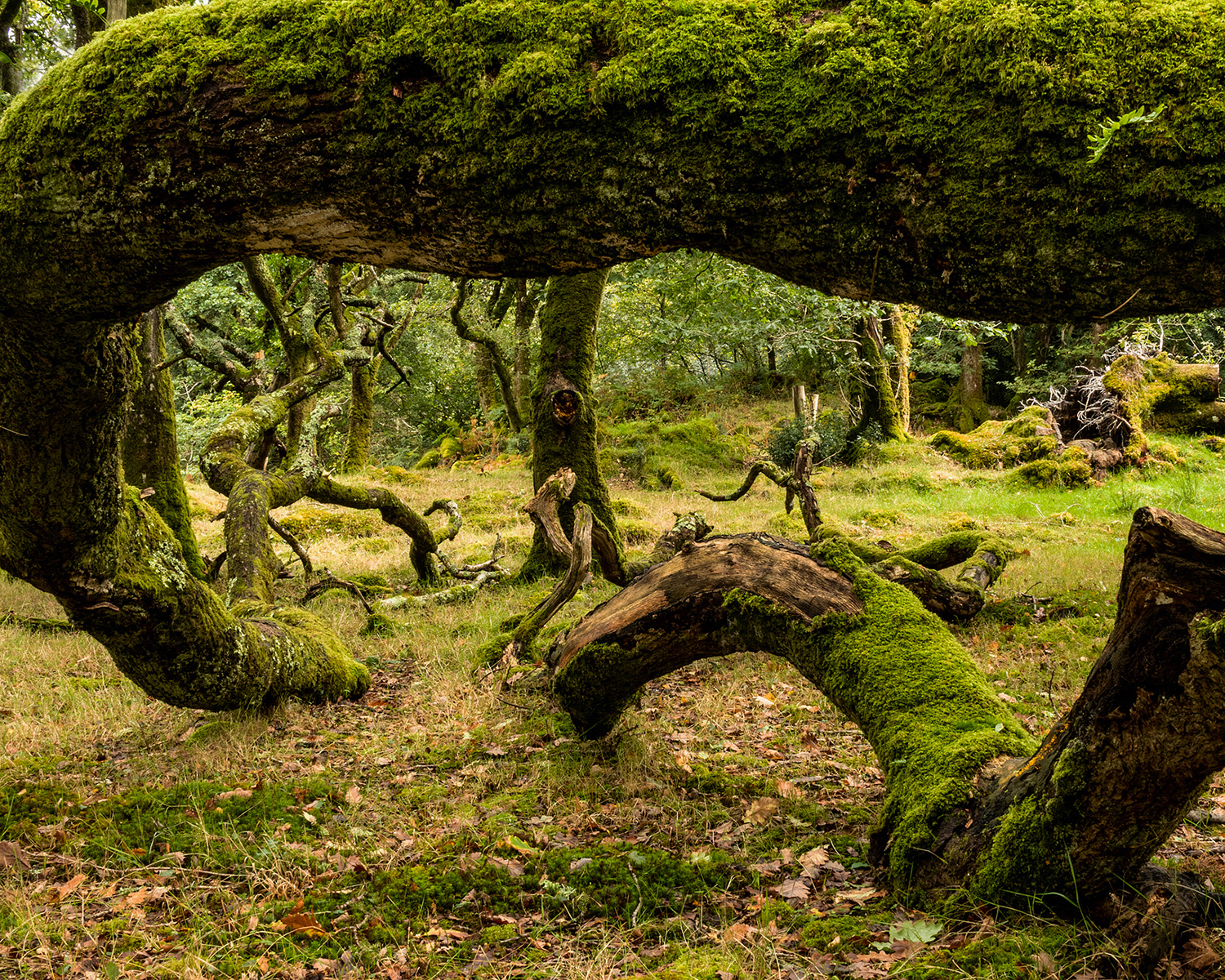
#Chaos… or Adaptation
_________

#Discord… or Diversity
_________

#Mayhem… or Cooperation
_________

#Partnerships… or Anarchy
_________

#Peace… or Disorder
_________

#Muddle… or Balance
_________

#Collaboration… or Disarray
_________

#Confusion… or Harmony
_________
Reflective commentary
This series develops my previous work which positions the ancient woodlands as a visual metaphor for a harmonious community. The motivation for the concept are my observations of the local community who are often disharmonious, driven by difference. The concept is stimulated by humans, though they are not evident in my work.
This approach runs parallel to my contextual studies work on affect (expressing what is in a photographer’s mind) and effect (the reality) in landscape photography. In essence this is the difference between photographing a subject for itself and photographing a subject to give a message about something else. Photographers such as Minor White present images as metaphors for something beyond the subject being photographed.
In this assignment, I want to explore further my ability to transform the abstract ideas in my head, my subconscious, into something concrete, via a physical representation of another subject. Many landscape photographers I have researched talk of combining the world within us and the world outside us, some say that that going out is really going in. Radonjič, (Metascapes,2016) calls this transforming our subconscious into “metascapes”, our personal landscapes, as the real landscape is inside your head. Tom Wilkinson (Wilkinson, 2022) suggests that photography is as much about the photographer as the landscape. I am aware through my previous practice that combining the world within my head with the one in front of me can be cathartic as well as produce intriguing photographs. My concept fits well with the theme of part 3 course work “Showing not telling”, Golding calls this using photography “to transform objective reality” (Golding 2022).
Prior to producing this particular series of images, disharmony in the local community had increased; partly due to the influx of summer tourists. Walking in the woodlands I was struck that there are many different species and great diversity, yet they coexist successfully, adapting to accommodate each other’s needs. Moreover, when I observed closely I saw that although this diversity first appears chaotic, messy, muddled, and disorderly, it is an organised chaos that works successfully. I resolved to to express my discomfort with the discord caused by the differences within the local community, by contrasting this with the harmony that exists in the diverse woodland community, where various elements accommodate each other to mutual benefit.
My intention when photographing was to seek out the visually chaotic, muddled and disordered to focus viewers on this aspect of the woodland community. Radonjic describes this as “visually intertwined living space” (Wesche, 2022). Viewers will need to observe hard just to make sense of what is present in such images, without any distortion by the photographer, and this fits well with another of my intentions that viewers should look closely to find meaning in the images.
I then edited to form a series of images that would communicate my message. My intention is to invite viewers thoughts as to whether what is presented is in fact harmony, or chaos. The images I chose demonstrate disorder and some randomness, but I believe they also have a quality of tranquility. I have signposted the work simply with its title “Harmony or Chaos?” and by each image having a caption denoting antonyms of these. In a way I am asking viewers to consider if chaos and differences are necessarily inharmonious. For myself, the first author of this work I am suggesting that differences and diversity can lead to adaptation, balance, and harmony.
I challenged myself in my last assignment to put something of myself in the landscape without intervening in it, and believe that my voice, my subconscious, is in these images. The viewers must decide for themselves what meaning they take from the images.
“To create a vision of the harmony of the unequal, balance the infinite variety, the chaotic, the contradictions in a unity”. (Hans Richter, German Dada painter, and modern art historian cited at: The painters keys, 2022)
References:
Golding, J.M. (2022) At: https://www.jmgolding.com/before-there-were-words/wigdebnrfagnyp1cf1wr96rfxg7jll (Accessed 09/09/2022).
Radonjič, G. (2016) Metascapes. At: https://gregorradonjic.wordpress.com/metascapes/ (Accessed 30/08/2022).
The painters’ keys (2022) Hans Richter quotes – Art Quotes. At: http://www.art-quotes.com/auth_search.php?authid=3048 (Accessed 25/09/2022).
Wesche, A. (2022) ‘An Interview with Gregor Radonjič’ In: On Landscape (250). Ed. Tim Parkin. pp.97–118. Found at: https://www.onlandscape.co.uk/2022/02/interview-with-gregor-radonjic/ [accessed 30.7.22)
Wilkinson, T. (2022) Tom Wilkinson Art Photography. At: http://www.i-m.mx/tomwilkinson/ArtPhotography/about (Accessed 09/09/2022).
Nicola South Student number:514516
LO1 produce convincing visual products that communicate your intentions, using accomplished techniques in complex and unfamiliar environments, with minimal supervision from your tutor.
LO2 demonstrate comprehensive knowledge of your area of specialisation and be able to situate your own work within a larger context of practice in your field.
LO3 transform abstract concepts and ideas into rich narratives and integrate them in your images.
LO4 critically review your own work and evaluate it against desired outcomes.
Next post: https://nkssite6.photo.blog/2022/11/16/bow-assignment-three-submission/
Nicola South Student number: 514516
BODY OF WORK ASSIGNMENT THREE : SHOW AND TELL
Brief: As you work through Part Three, carry on developing your major body of work. Continue to shoot and reflect on your work so far and build a set of images to submit to your tutor.
Remember that the point of these assignments is to get tutor feedback on the project as a whole so come with your questions on how to move forward and ask for your tutor’s opinion on how the project is working so far.
Submit your work in progress together with a reflective commentary. Your reflection may consider some of the material in Part Three if it has been relevant to your practice. You may also wish to consider how genres are continuing to influence you and how you’re relating what you’re doing in Contextual Studies to your practice on this course.
My body of work is about internal and external passage. When I “go out” to the ancient woodlands, I am really “going in”. My visual representation explores my feelings of discomfort about the tension in my local community, this as a contrast to the successful assimilation of diversity in the woodlands.
This series is an exploration of whether diversity necessarily results in tension and chaos, or whether these differences can be harmonious.
_________
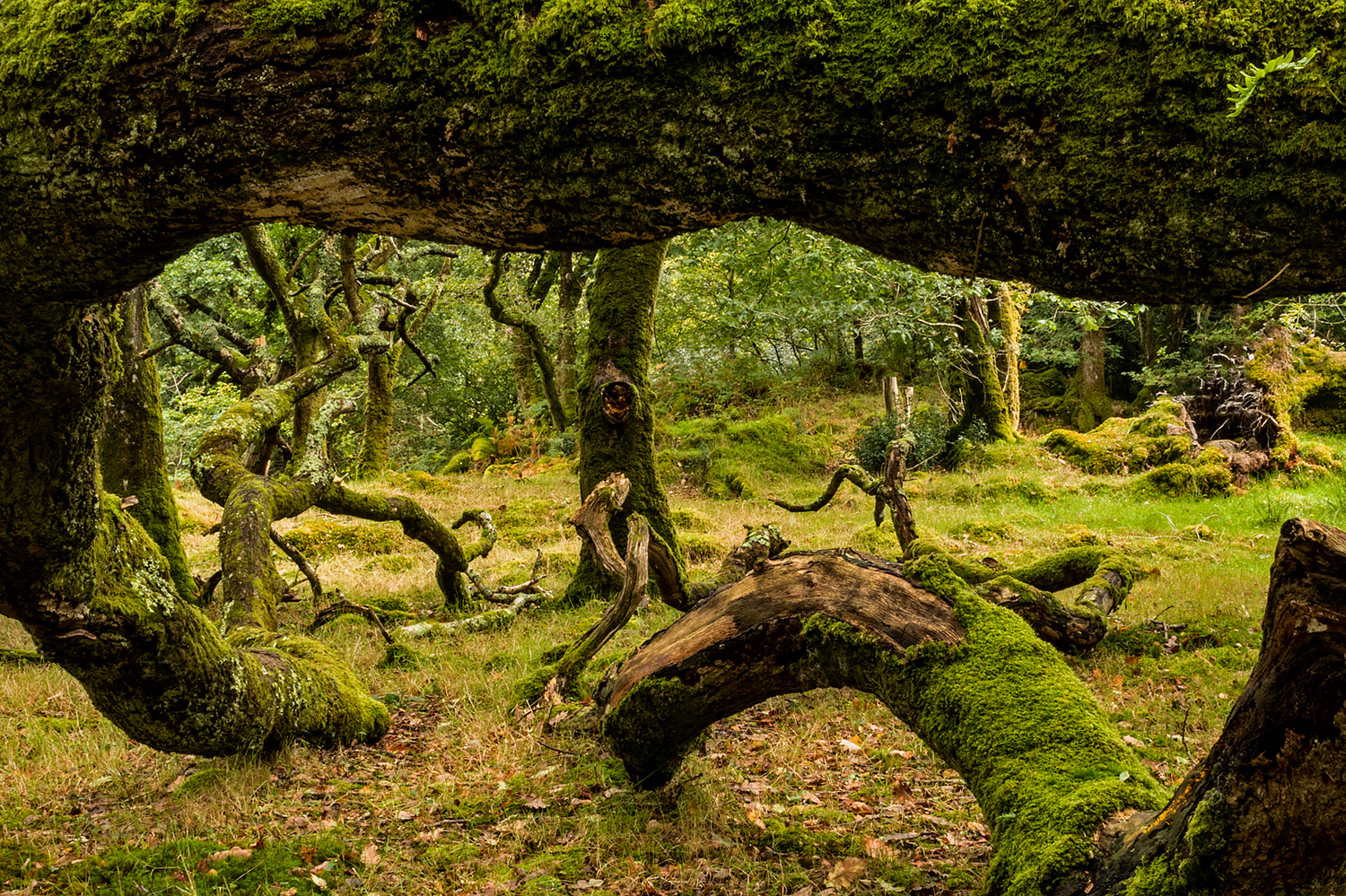
#Chaos… or Adaptation
_________
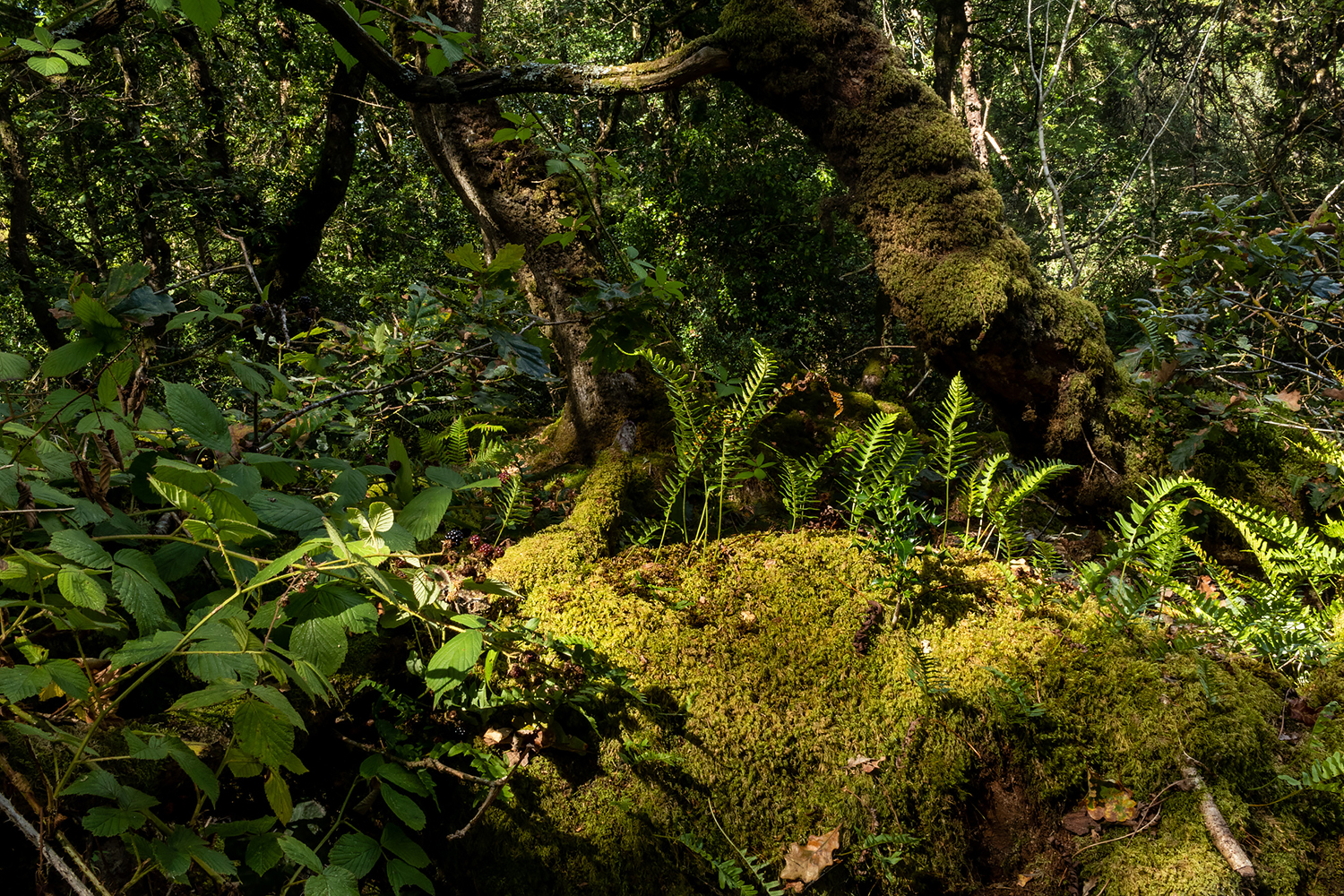
#Discord… or Diversity
_________

#Mayhem… or Cooperation
_________
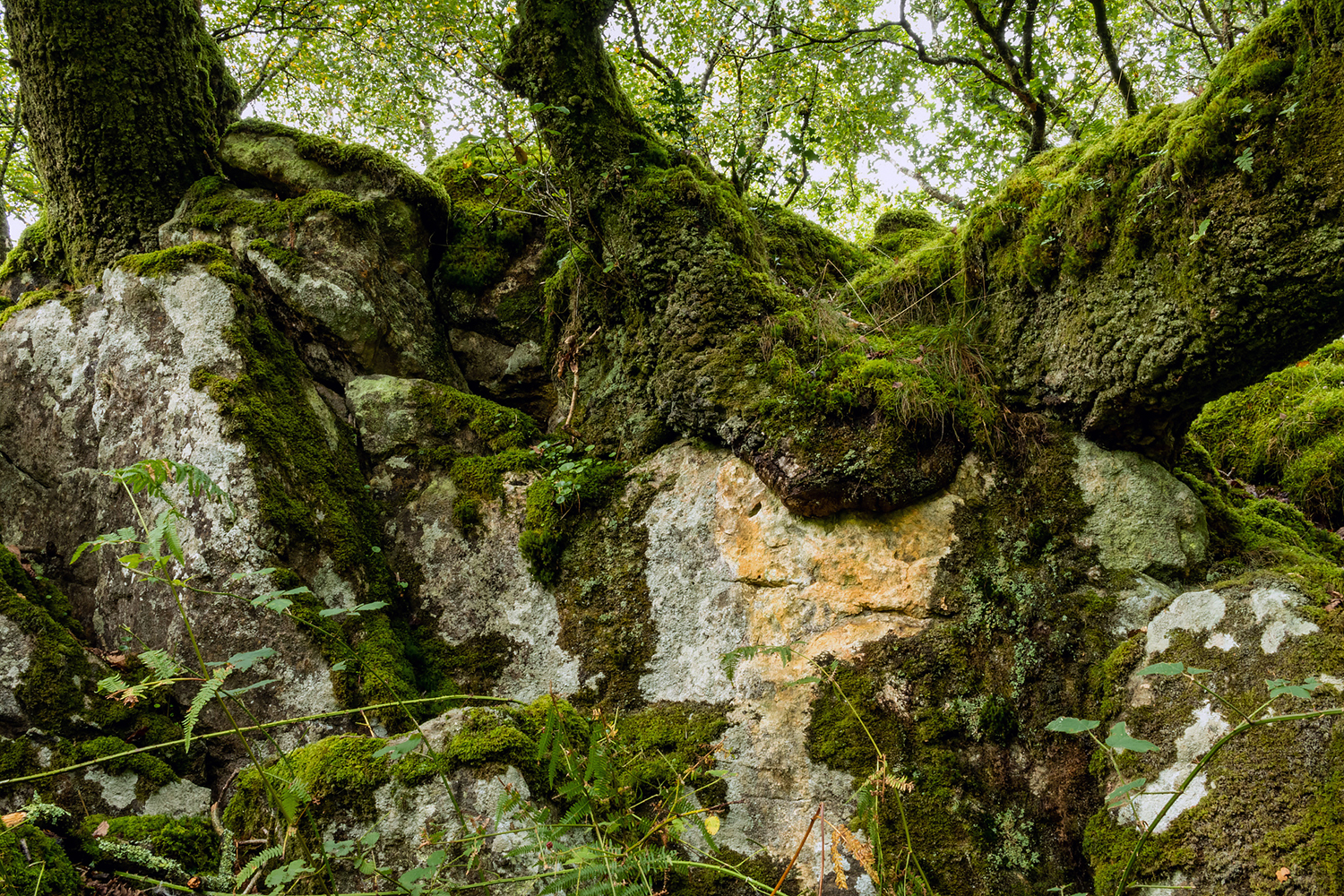
#Partnerships… or Anarchy
_________
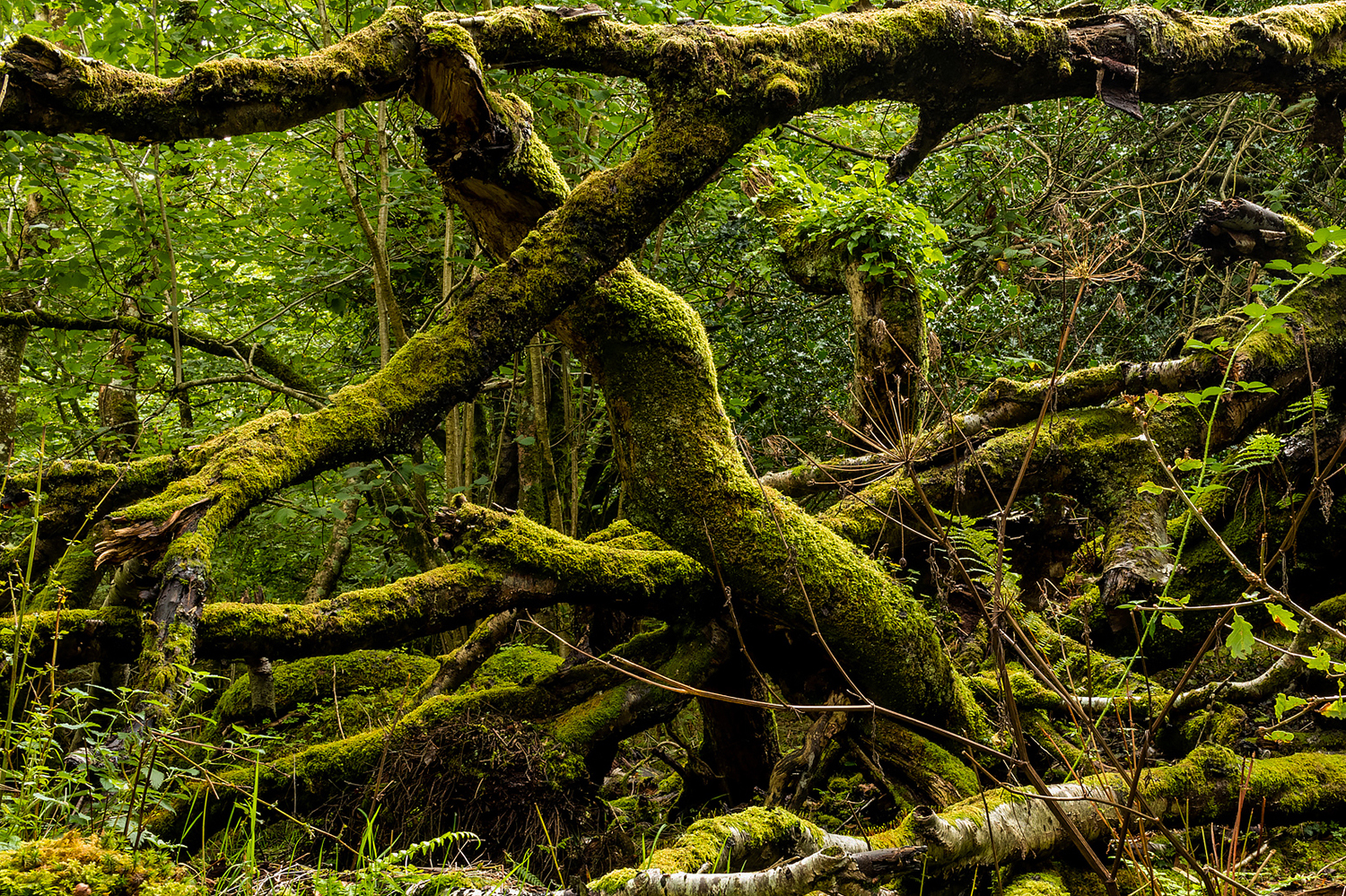
#Peace… or Disorder
_________

#Muddle… or Balance
_________

#Collaboration… or Disarray
_________

#Confusion… or Harmony
_________
Reflective commentary
This series develops my previous work which positions the ancient woodlands as a visual metaphor for a harmonious community. The motivation for the concept are my observations of the local community who are often disharmonious, driven by difference. The concept is stimulated by humans, though they are not evident in my work.
This approach runs parallel to my contextual studies work on affect (expressing what is in a photographer’s mind) and effect (the reality) in landscape photography. In essence this is the difference between photographing a subject for itself and photographing a subject to give a message about something else. Photographers such as Minor White present images as metaphors for something beyond the subject being photographed.
In this assignment, I want to explore further my ability to transform the abstract ideas in my head, my subconscious, into something concrete, via a physical representation of another subject. Many landscape photographers I have researched talk of combining the world within us and the world outside us, some say that that going out is really going in. Radonjič, (Metascapes,2016) calls this transforming our subconscious into “metascapes”, our personal landscapes, as the real landscape is inside your head. Tom Wilkinson (Wilkinson, 2022) suggests that photography is as much about the photographer as the landscape. I am aware through my previous practice that combining the world within my head with the one in front of me can be cathartic as well as produce intriguing photographs. My concept fits well with the theme of part 3 course work “Showing not telling”, Golding calls this using photography “to transform objective reality” (Golding 2022).
Prior to producing this particular series of images, disharmony in the local community had increased; partly due to the influx of summer tourists. Walking in the woodlands I was struck that there are many different species and great diversity, yet they coexist successfully, adapting to accommodate each other’s needs. Moreover, when I observed closely I saw that although this diversity first appears chaotic, messy, muddled, and disorderly, it is an organised chaos that works successfully. I resolved to to express my discomfort with the discord caused by the differences within the local community, by contrasting this with the harmony that exists in the diverse woodland community, where various elements accommodate each other to mutual benefit.
My intention when photographing was to seek out the visually chaotic, muddled and disordered to focus viewers on this aspect of the woodland community. Radonjic describes this as “visually intertwined living space” (Wesche, 2022). Viewers will need to observe hard just to make sense of what is present in such images, without any distortion by the photographer, and this fits well with another of my intentions that viewers should look closely to find meaning in the images.
I then edited to form a series of images that would communicate my message. My intention is to invite viewers thoughts as to whether what is presented is in fact harmony, or chaos. The images I chose demonstrate disorder and some randomness, but I believe they also have a quality of tranquility. I have signposted the work simply with its title “Harmony or Chaos?” and by each image having a caption denoting antonyms of these. In a way I am asking viewers to consider if chaos and differences are necessarily inharmonious. For myself, the first author of this work I am suggesting that differences and diversity can lead to adaptation, balance, and harmony.
I challenged myself in my last assignment to put something of myself in the landscape without intervening in it, and believe that my voice, my subconscious, is in these images. The viewers must decide for themselves what meaning they take from the images.
“To create a vision of the harmony of the unequal, balance the infinite variety, the chaotic, the contradictions in a unity”. (Hans Richter, German Dada painter, and modern art historian cited at: The painters keys, 2022)
References:
Golding, J.M. (2022) At: https://www.jmgolding.com/before-there-were-words/wigdebnrfagnyp1cf1wr96rfxg7jll (Accessed 09/09/2022).
Radonjič, G. (2016) Metascapes. At: https://gregorradonjic.wordpress.com/metascapes/ (Accessed 30/08/2022).
The painters’ keys (2022) Hans Richter quotes – Art Quotes. At: http://www.art-quotes.com/auth_search.php?authid=3048 (Accessed 25/09/2022).
Wesche, A. (2022) ‘An Interview with Gregor Radonjič’ In: On Landscape (250). Ed. Tim Parkin. pp.97–118. Found at: https://www.onlandscape.co.uk/2022/02/interview-with-gregor-radonjic/ [accessed 30.7.22)
Wilkinson, T. (2022) Tom Wilkinson Art Photography. At: http://www.i-m.mx/tomwilkinson/ArtPhotography/about (Accessed 09/09/2022).
Nicola South Student number 514516



My intention to use the Ancient woodland as visual metaphor for harmonious community is currently subverted in my mind. At the moment feel that the community that I live in is more disharmonious than ever as a consequence of summer tourists as well as political and economic threats; it seems to have brought out the worst in some of the local community. I know that this is the opposite to that found in the woodlands. Could my next assignment be a contrast between harmony in the woodlands and dissonance elsewhere?
As I reflected I realised that what I see in the woodlands may not at first appearance seem harmonious and yet in reality it is, as all the different elements work together to achieve a workable balance…unlike my local community.
Walking the woodlands I recognised that much first appears chaotic and yet when you look deeper it’s organised chaos, and it can have an underlying order.
Harmony:
Definition: “the situation in which people live or work happily together without and big problems…
a situation in which people are peaceful and agree with each other, or when things seem right or suitable together…Harmony is the combination of separate but related parts in a way that uses their similarities to bring unity ” (Cambridge Dictionary, 2022).
Synonyms: Collaboration, teamwork, consensus, cooperation, peace, tranquillity, understanding, unity, accord, amicability, compatibility, concord, empathy, sympathy, corporation, nurture, support, mutuality, alliance, co-dependency, partnerships, reciprocal.
Chaos:
Definition: “ a state of total confusion with no order…a state of disorder and confusion ” (Cambridge Dictionary, 2022).
Synonyms: Messy, confused, madness, turmoil, disarranged, disordered, shambolic, bedlam, disarray, mayhem, turmoil, destruction, disaster, random, anarchy, discord, disorder, pandemonium
Turmoil, bedlam, muddle, topsy-turviness, bedlam, disturbed, havoc, maelstrom.
Organised chaos:
Definitions: “a situation in which there seems to be a lot of confusion and no organisation, which makes you surprised that the results are good”. (Cambridge dictionary).
“a complex situation or process that appears chaotic while having enough order to achieve progress or goals” (Burnell, 2022)
REFLECTION: I return to my earlier thought that harmony doesn’t depend on homogenous components, and there is scope for a variety of beings to coexist harmoniously. The many elements of woodlands may at first appear chaotic, but in reality it is a peaceful community.
I will continue with my theme as the woods as a visual metaphor for a harmonious community. However in my photography reflect my current feelings about disharmony in my local community by showing that a community of many varied parts can coexist in harmony.
These confirmed maintaining my original approach for my BOW “internal and external passage:
Mindmap BOW Assignment 3 Brainstorm:
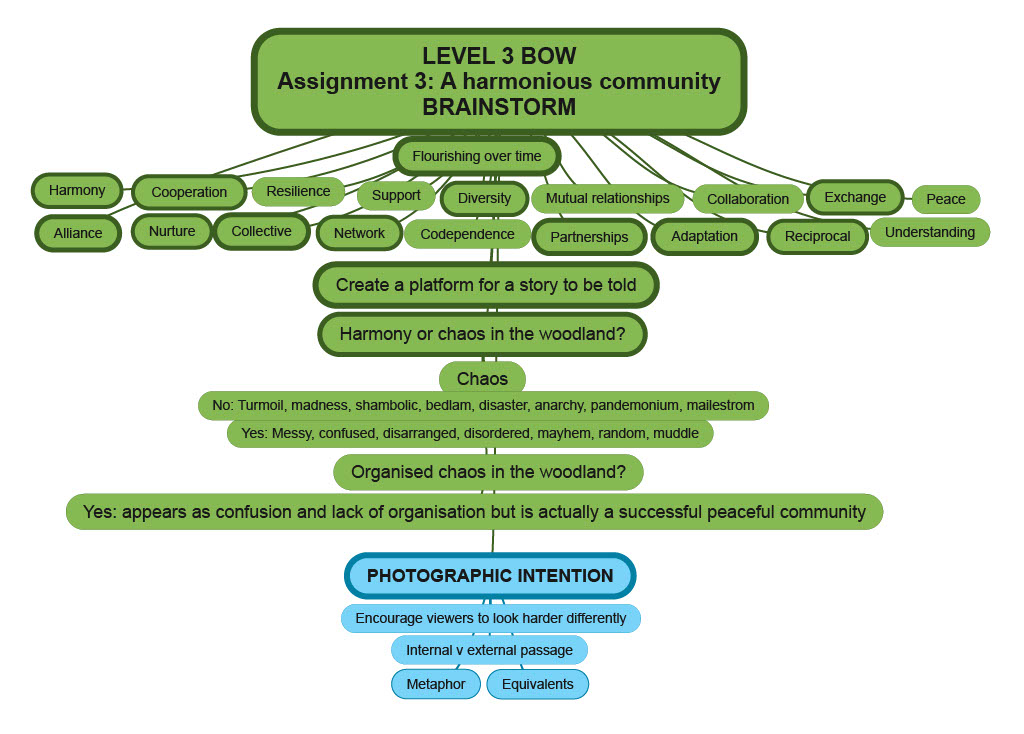
Whilst walking forefront of my mind was the disharmony in my local community and the contrasting harmony in the woodlands. When shooting in the woodlands I was open to scenes that would share visually what a chaotic and complex community it is, and yet illustrate that this “organised chaos” is actually successful and peaceful- diversity is absolutely fine.
My first day of shooting was an unusually sunny day and as the woodlands are shady it seemed visually pleasing, however on reviewing the images I returned on an cloudy day and obtained better results. I returned several times until I had plenty of images that I was happy with.
Mindmap BOW Assignment 3 Shooting:

When editing foremost in my mind was my intention to share the chaotic but peaceful harmony in the woodland community. Backstory – Harmony or chaos?
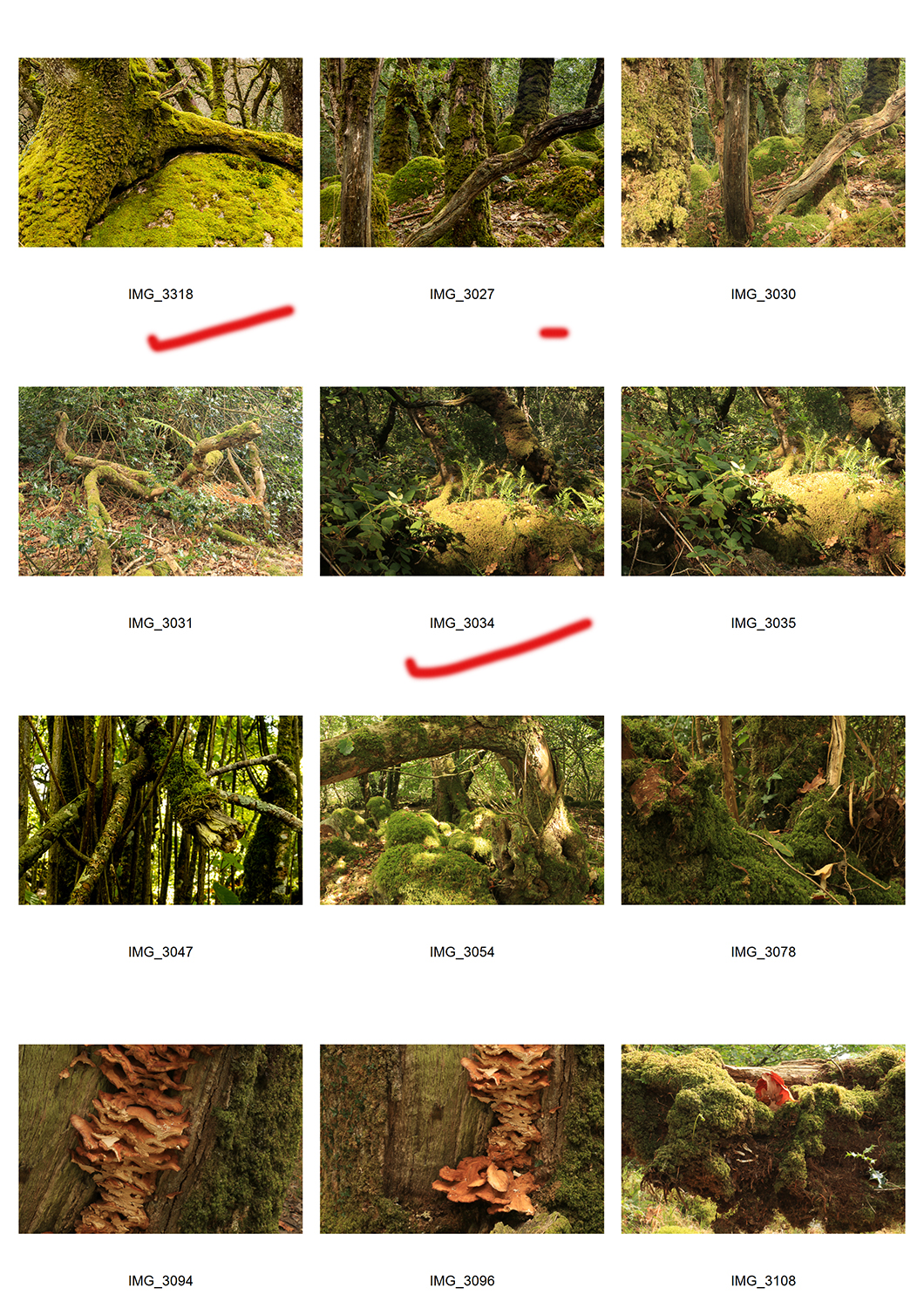
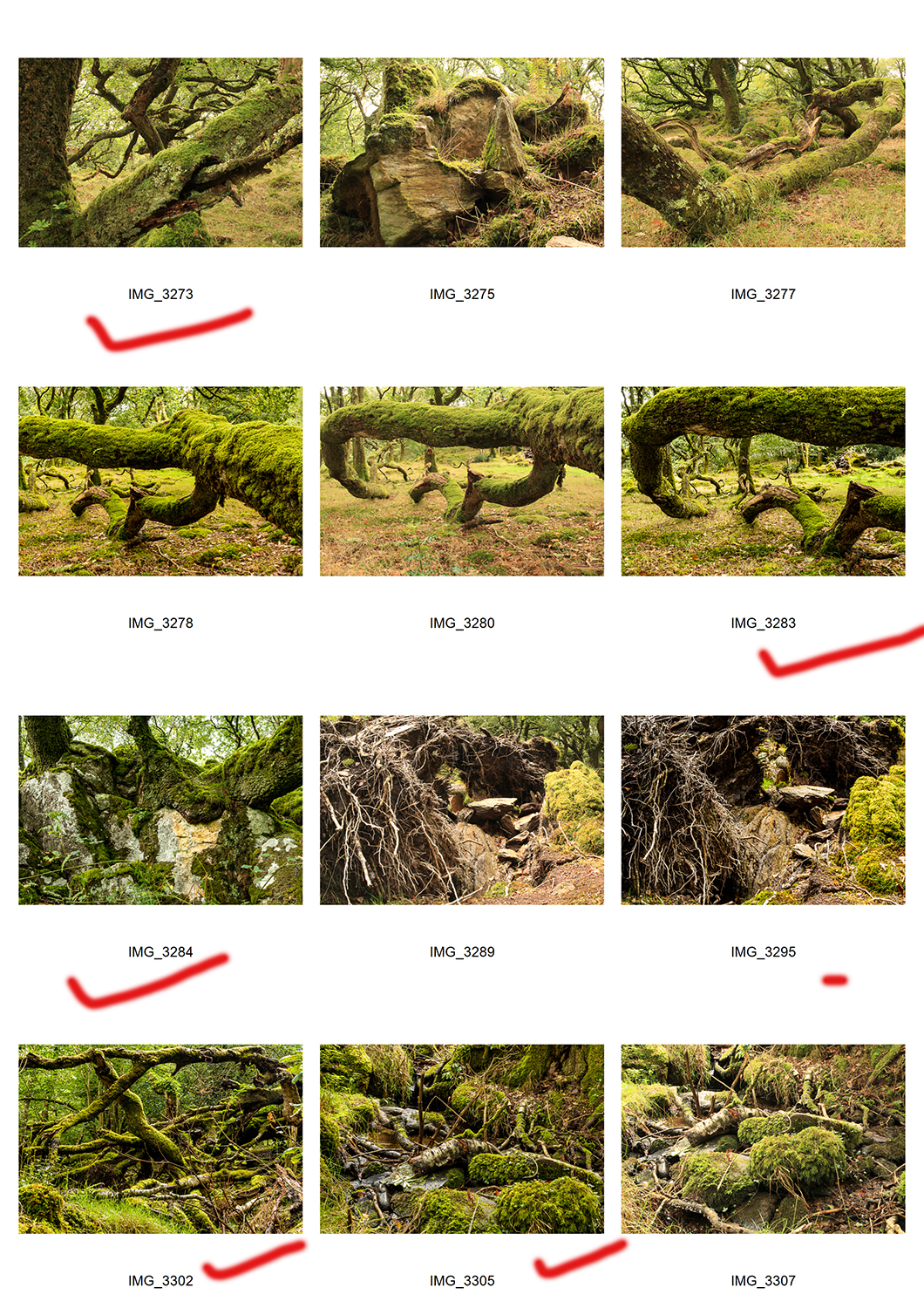
I chose images that shouted: mess, muddle, random, confusion, disorder, but that also looked tranquil. I sought images that were complex and would cause viewers to look closely to find the meaning.
I also considered my use of colour in the light of my research, should I keep the colour true or use it to express my intention? It was obvious to me that the true rich greenness of the woodlands expresses my intention perfectly, so I simply retained the true colour as seen and captured.
I gave time to the editing and once I’d narrowed down to possible images, I started working on which would fit in a series.
I dropped some weaker images such as:
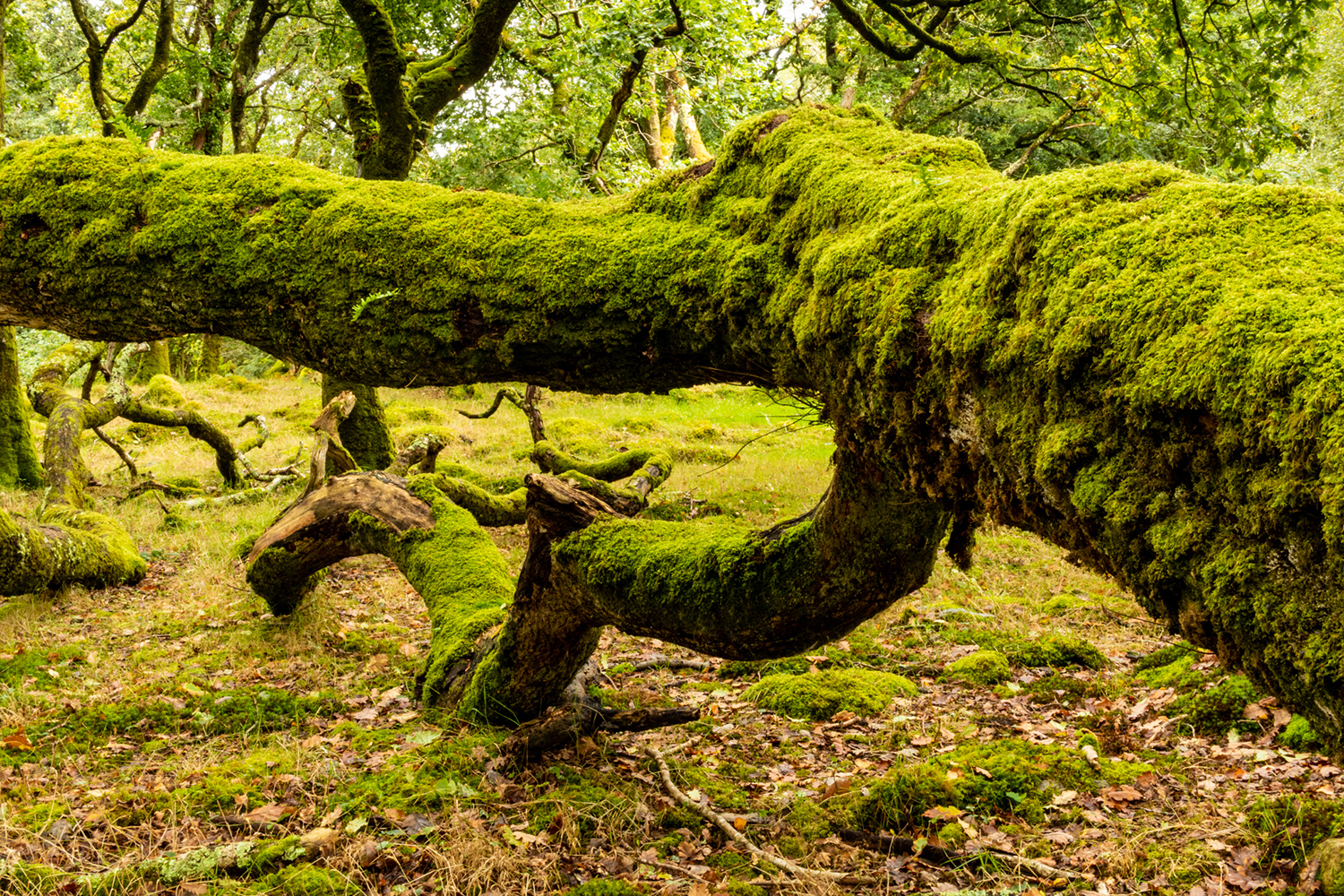
I asked which images fitted in a series? The form of these didn’t:
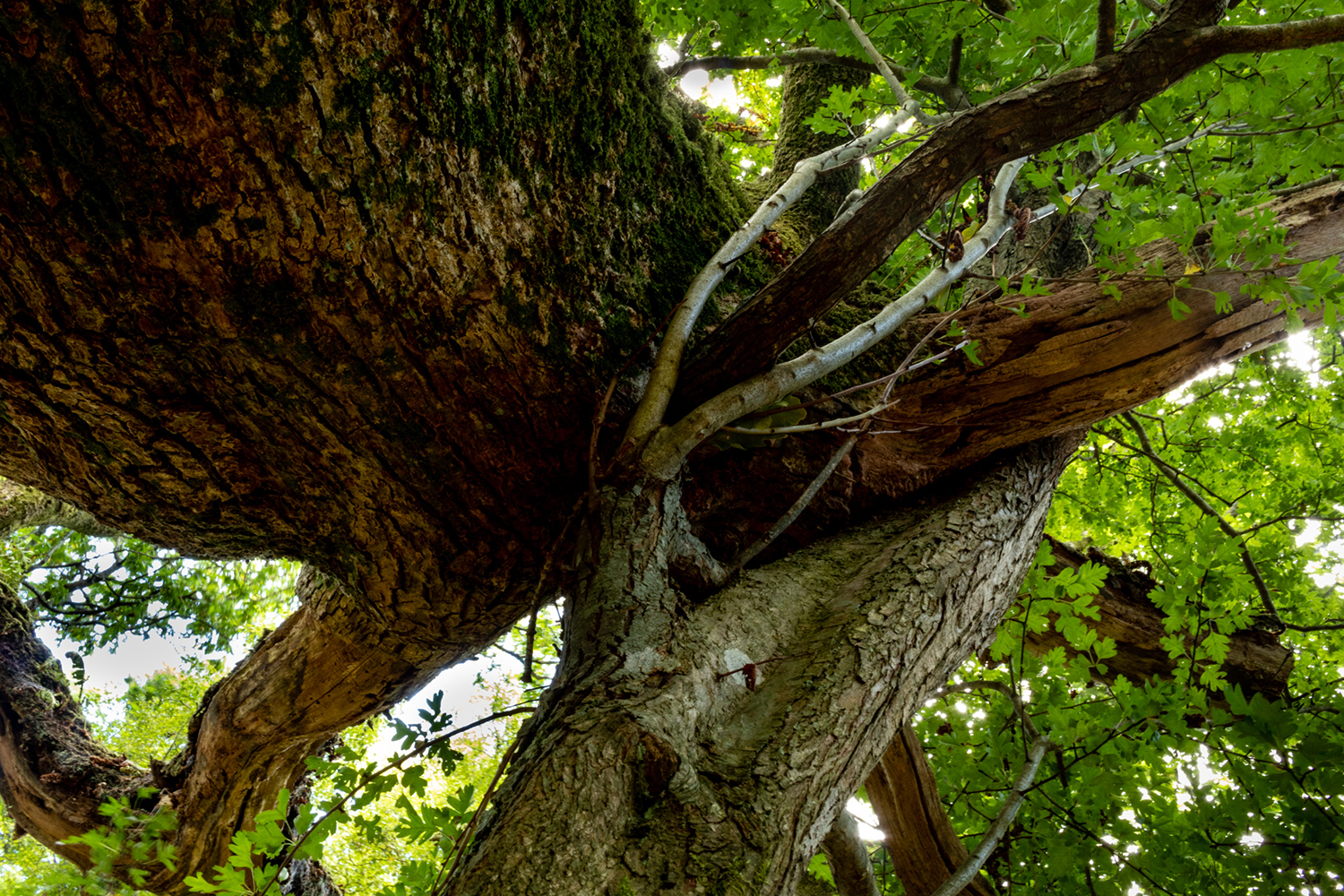
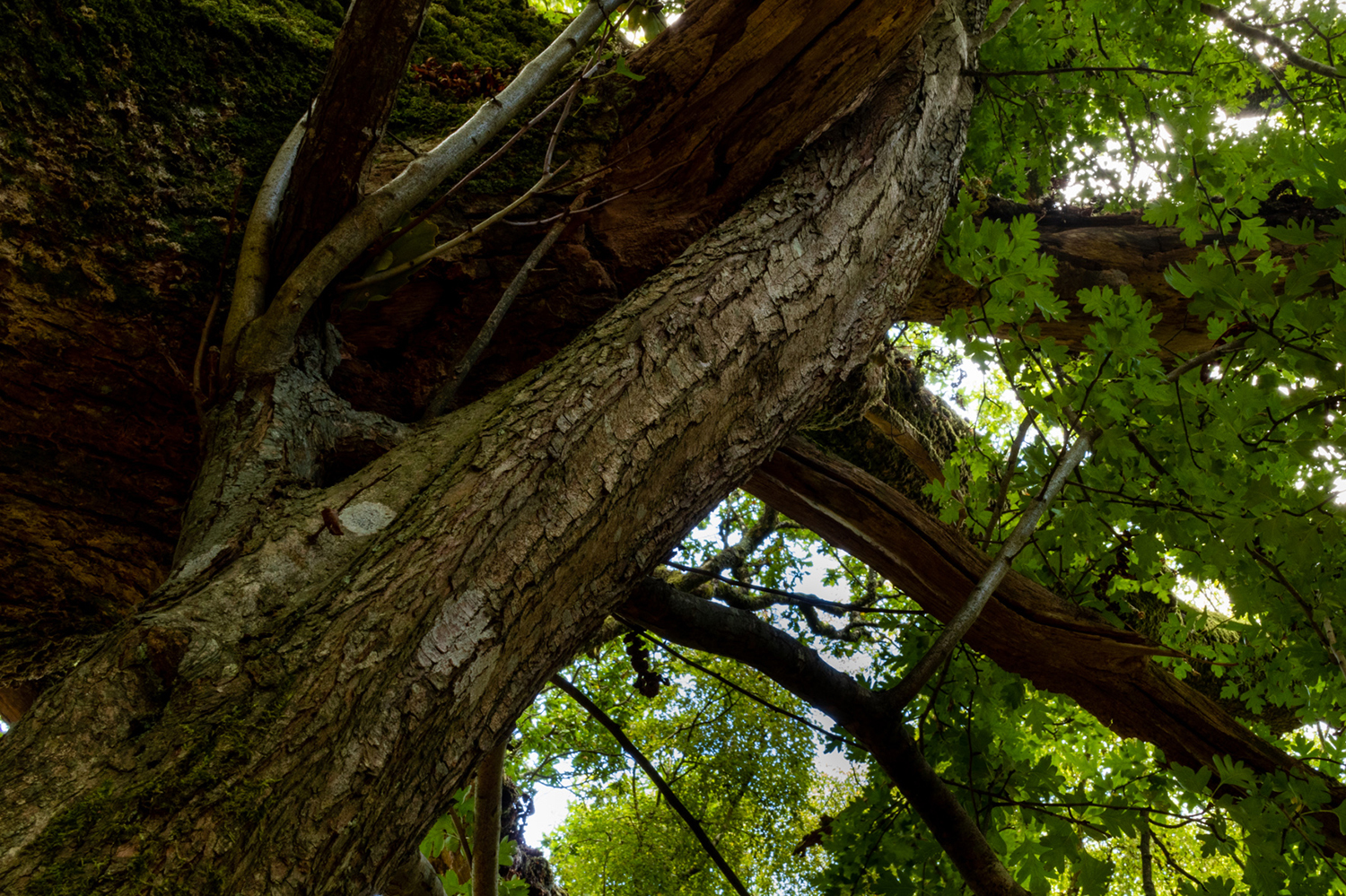
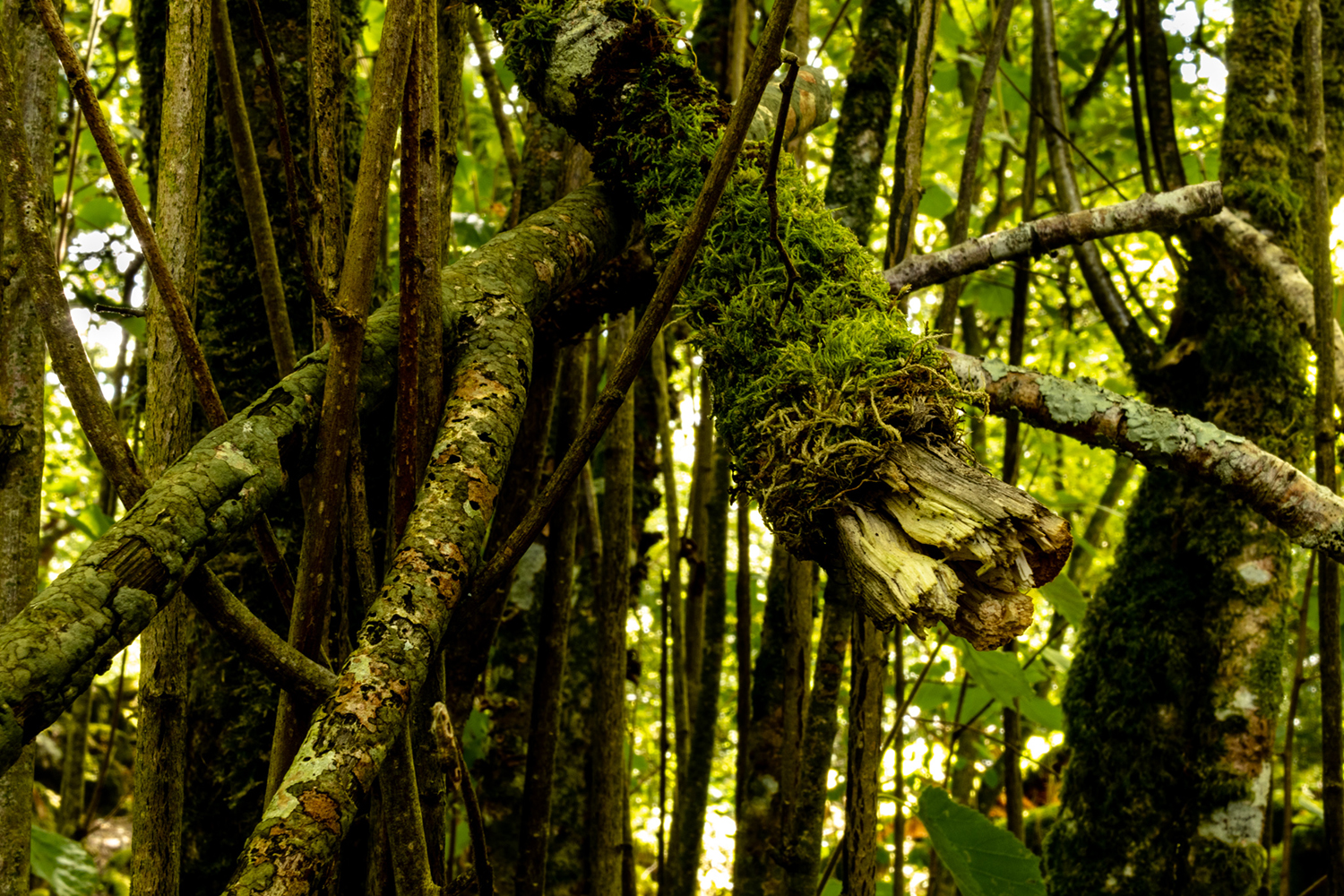


Images : 3047 3254 3295
I asked which images strengthen my ideas or voice and which images slowed the narrative down or weakened my narrative? I dropped:

I looked closely at those I was left with. For instance I vacillated between:
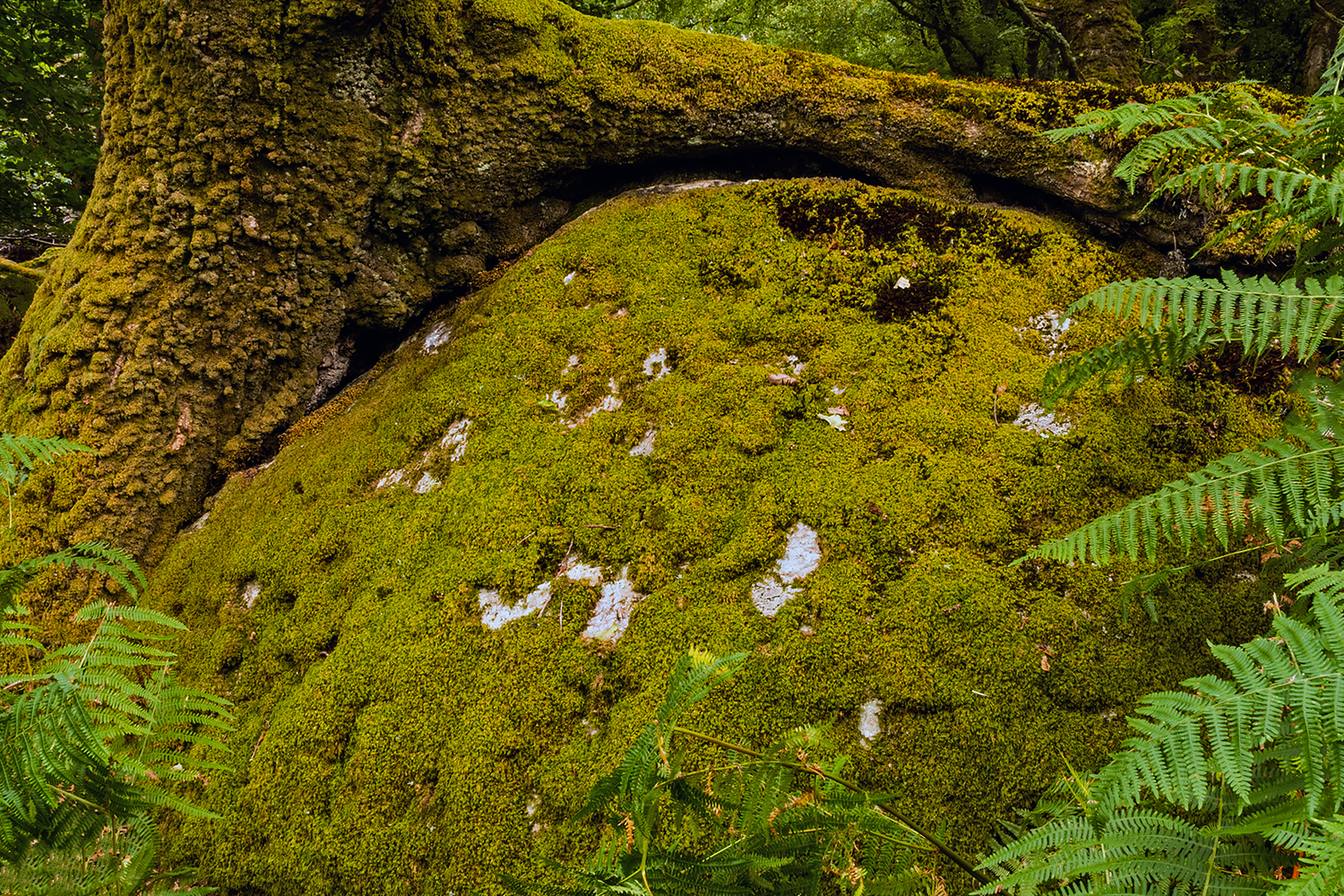
And dropped the 3247 as although it gave more context this diluted the message
I reluctantly dropped one of my “babies” which Id spent much time on as though it clear to me it was a tree lying on its side when I shouldn’t naturally be, it might not be obvious to others and it didn’t fit in the series as well
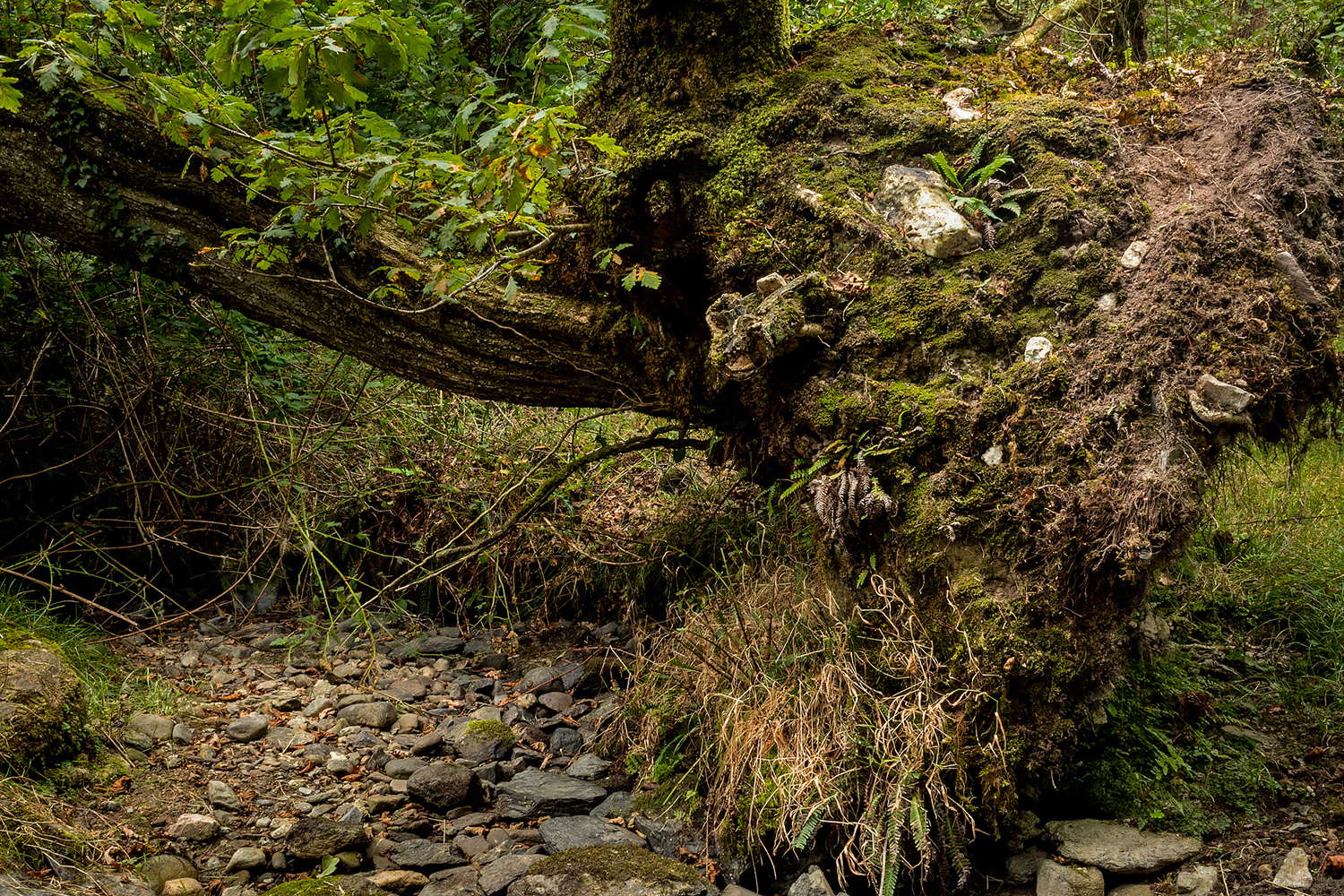
Then this image was dropped to get the series to a cohesive flowing set of 8
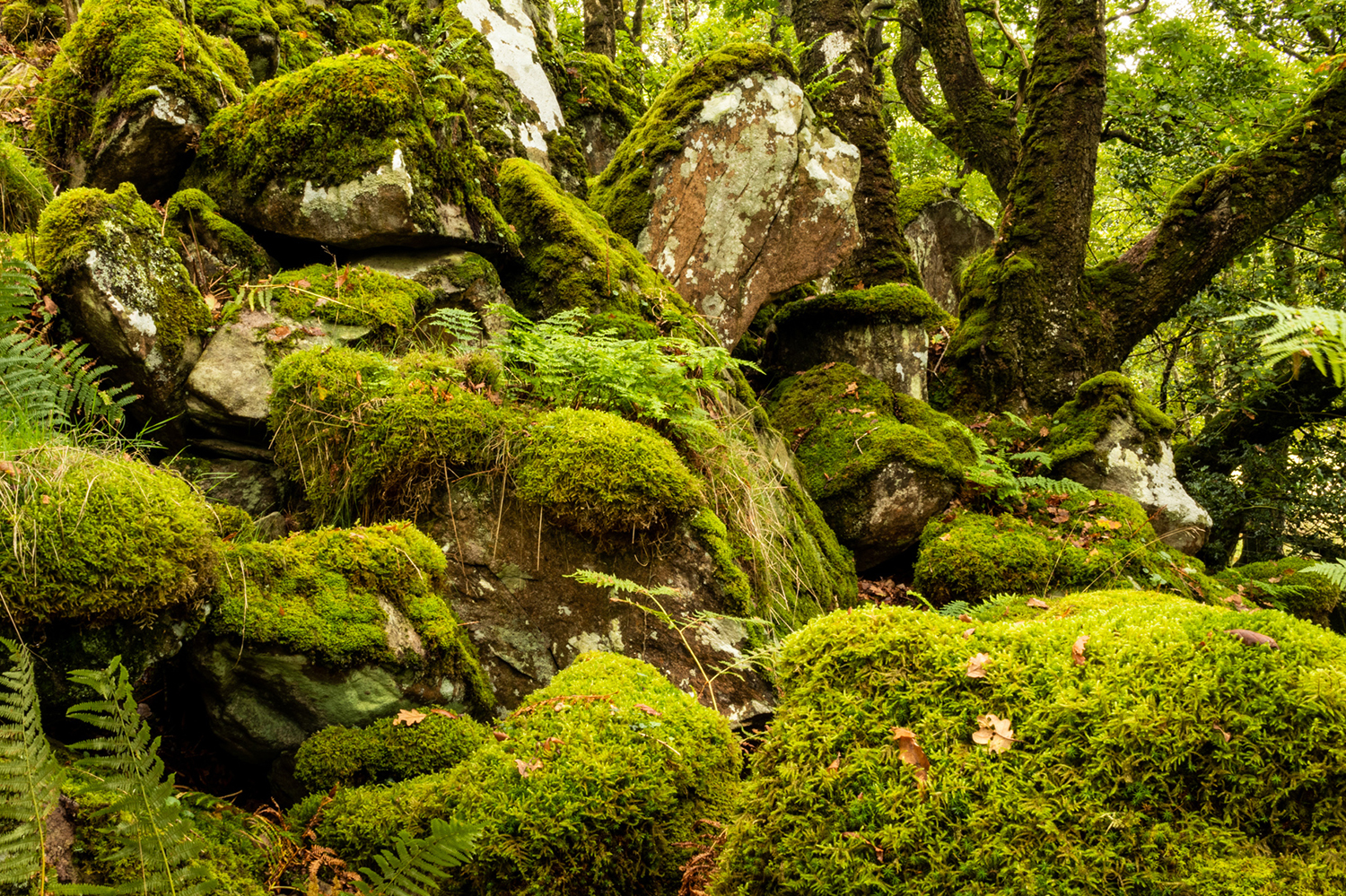
Finally I checked myself by answering as suggested in the coursework:
• Will the image stand as a visual piece on its own?
• Is the image adding anything new or emphasising the point I want it to?
• Is it detracting or contradicting from the rest of the series?
• Am I overlooking any less striking work because of aesthetic concerns that may be secondary to the impact the piece will have on final reading?
I am satisfied with my choice of images in the light of these challenges.
Mindmap BOW Assignment 3 Editing:

When sequencing I tried to provide for a flowing narrative from one image to another and increasing the viewers response.
Aware that I need to signpost the work for my viewers I decided for this work to do so simple with captions. Each image to be captioned with a harmonious and chaotic synonym. I matched the words with the images as I best thought.
(Gregor Radonjič & Alexandra Wesche February 27, 2022)
Finding this interview with Gregor Radonjic led me to an exploration of his work as his motivation for photographing resonates with my own at this time, he says that he is “deeply interested in photography which moves our spirits closer to the silent places beyond what is meant by ‘real” (Wesche, 2022), and that he relies on Alfred Stieglitz’s concept of “equivalency”, where images were intended to be interpreted as metaphors for emotional states. Radonjič comments on the work of Minor White, where symbols in images forms a metaphor for something beyond the subject being photographed, as he also believes that an image can be a transformation as well as a document, and that they should be open to individual interpretations.
Like myself Radonjič is interested in tree-related photography, believing that photographing trees and forests is a serious artwork.One of hisprojects is dedicated to trees and is published as a book ‘Drevesa’ (trees in Slovenian). In the introduction he refers to trees as social beings, as well as individual characters and to the ancient connection that humans have with them. I was interested that Radonjič says that photographs of trees can add to this hidden connection between humans and trees. He describes the liberating feeling of being in a forest where you are all alone without any distractions as well as being attracted to the “visually intertwined living space” (Wesche, 2022); this is something that I feel strongly. He also describes forests as very visually chaotic and complex as place. His photo book combines poetry and images which he considers synergetic.

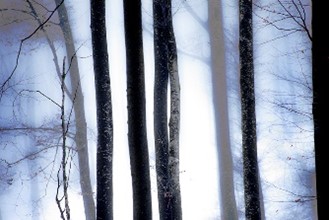

(Radonjič, Trees 2016)
His work Metascapes is about transformation and representing what is in our subconscious. He explains it as transforming places into personal ‘mindscapes’ which reflect his intimate inner relationship with those places. Radonjič describes his images as a mental projection of how we perceive our surroundings, that they “function as “distorted” mirror of the reality we see. They are not pure documentations, but rather artworks somewhere between fiction and abstraction, metaphors of an outlook on the world and beyond” (Radonjič, 2016). On landscapes he quotes the anthropologist Orvar Lofgren“The real landscape is in your head.” Radonjič describeslandscapes as spatially based perceptual units, constructed in our minds as we view the world by means of “aesthetic categories that are socially mediated” (Radonjič, 2016).
You can see in his work Metascapes to achieve this he uses creative intervention in post-production.

He considers colour a very important element in visual art and comments that he uses colours to communicate his vision to the viewers. However, he doesn’t adhere to right or true colours, and this is evident in his work. He explains that he uses postproduction techniques to “transfer inner feelings and memory to photographs”, as he knows what he was experiencing at the moment he pressed the shutter, and using digital tools makes it easier and more effective for me to convey these inner feelings”. He does also point out that using analogue techniques is also a manipulation of reality and believes that using them is another part of a creative path.
His photographic style and final output, particularly his use of post-production work doesn’t particularly appeal to be, but his photographic philosophy does. I sympathise with his ideas on equivalence, metaphor for something beyond the subject being photographed, that there should be room for interpretation by viewers and note his idea that photography can be a transformation as well as a document. His description of place being transformed into personal ‘mindscapes’, that reflect his intimate relationship with those places is part of what I am trying to achieve, but I am also sharing something beyond the forest.
The fact that he enjoys working in forests undistracted and is attuned to Trees as connecting to humans aligns with my practice. His ideas on forests being visually chaotic, is exactly what I am seeking to show in my BOW assignment 3.
I will consider his comments on not using true colour and may see where that takes me sometime in the future.
Overall, I completely concur with his view that the real landscape is in one’s head.
References:
Radonjič, G. (2015) Trees At: https://gregorradonjic.wordpress.com/portfolio/places-perspectives/ (Accessed 31/08/2022).
Radonjič, G. (2016) Metascapes. At: https://gregorradonjic.wordpress.com/metascapes/ (Accessed 30/08/2022).
Wesche, A. (2022) ‘An Interview with Gregor Radonjič’ In: On Landscape (250). Ed. Tim Parkin. pp.97–118. Found at: https://www.onlandscape.co.uk/2022/02/interview-with-gregor-radonjic/ [accessed 30.7.22)
This article interested me as I have recently made the decision to shoot in colour for the rest of this project. Tal outlines the history of colour in photography and I was interested to learn that in 1946 about a decade after releasing colour film Kodak commissioned photographers, including Paul Weston, to use colour for an advertising campaign. Apparently, Weston was surprised that he enjoyed shooting in colour and maybe only didn’t produce much more in colour, as he was at the end of his photographic career by that stage.
Tal explains that Edward Weston understood that black and white and colour were not interchangeable and a deliberate choice was needed depending on subject and form. Weston suggested colour is needed when it separates the objects in the composition more so than other elements like tone, shape, pattern, or texture; and believed the mistake was in not thinking of colour as form. I hadn’t realised that Weston’s son Cole was a pioneering colour photographer, who said “to see colour as form means looking at the image in a new way, trying to free oneself from absorption in subject matter” (Tal,2022:45).
Tal speaks of colour as a means of subjective expression, and interestingly for my work in Contextual Studies the importance of subjective expression over objective representation if artistic expression is an artist’s goal (Tal, 2022:47). He points out that unfortunately some think that the use of colour may attract viewers attention, instead of skillful composition.
Interestingly like Radonjič , he explains that photographer’s do not have to remain true to colour, just as black and white photographers don’t, as colour can be controlled just as tonality can “many photographers consider colour as something to reproduce rather than as something to control and to use expressively” and suggests that “A good way to think about artistic expression in photography is as the act of creating and using form consciously and expressively” (Tal, 2022:47).
Tal suggests form may be:
He ends with a quote from Ernst Haas, “The camera only facilitates the taking. The photographer must do the giving in order to transform and transcend ordinary reality. The problem is to transform without deforming.” (Tal, 2022:55).
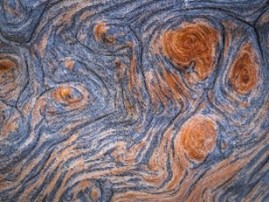

(Tal, 2022)
It is interesting that like Radonjič doesn’t believe that it is important to retain true colour and that it can be used for subjective expression – I should definitely consider this. He also mentions transforming; I like his challenge to transform without distorting.
Reference:
Tal, G. (2022) ‘Colour as Form: Transforming without deforming’ In: On Landscape 254 pp.41–66. Ed. Parkin T. Found at: https://www.onlandscape.co.uk/2022/04/colour-as-form/ [accessed 27.8.22]
TUTOR SUGGESTED RESEARCH/READING
In this interview Giles Peress, he talks about text and images and the new meaning that forms beyond the two. It is a conversation between Peress and Gerhard Steidl publisher of his book Whatever you say, say nothing (2021). This book is a response to his time in Northern Ireland in the 1970s, images combined with much contextual material which he calls “documentary fiction”. Peress sees an enormous gap between language and reality. These are the points that I found most interesting:
Reflection: His ideas give some good advice on book making and narrative.
Reference:
Peress, G (2022) DBPFP22: Gilles Peress (s.d.) At: https://thephotographersgallery.org.uk/dbpfp22-gilles-peress (Accessed 07/09/2022). At: https://thephotographersgallery.org.uk/dbpfp22-gilles-peress (Accessed 07/09/2022).
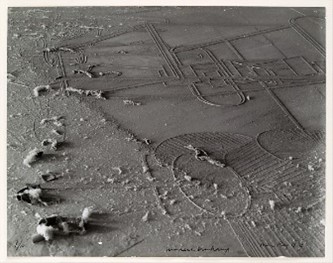
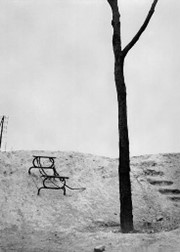
(Man Ray, 1920) (Man Ray, 1929)
Man Ray photographed the large glass sheet in Duchamp’s studio after a years’ worth of dust, using a two-hour exposure to capture the texture and variety of debris on the glass surface. Company tells us that Man Ray cropped the original image down, removing the detail from the contextual details in the background. Company describes it as bearing “little resemblance to the functional photography” and that it was first published in the French surrealist journal Literature, possibly making it the first surrealist photograph (Company, 2005:48).
Man Ray initially titled it “View from an aeroplane,” adding to its ambiguity. As the titles give us information, probably the later title “Dust Breeding” is more informative. Company points put that whether viewed as a macro or micro it looks like a wasteland and his later image Terrain Vague (1929), along with many other images. The subject was eventually set in varnish and sandwiched between glass plates as “The Large Glass.” Apparently, Duchamp wanted it to retain ambiguity with accompanying text as indefinite as possible.
Company sets out that dust is a trace of what was before the camera, and that the photograph can photograph our attention on such transient things. In semiotics this is an “index” a sign caused by its object. He also suggests that a photograph is an index as it is an indication of the presence of a camera.
Ultimately Company uses the image Dust Breeding as an example that photography has two roles in art, as an art form and as and functional way to document and publicise art forms.
I have always been fascinated by this photograph, so it was good to take the opportunity to study it more closely. Most interesting to me is Company pointing out that I can view an image as a macro or a micro, which I’d not thought of.
References:
Man Ray (1920) Dust breeding At: https://www.metmuseum.org/art/collection/search/271420 (Accessed 07/09/2022).
Campany, D. (2005) ‘Dust Breeding 1920’ In: Howarth, S. (ed.) Singular Images: Essays on Remarkable Photographs. London: Tate Publishing. pp.47–53.
Man Ray. (1929) Terrain vague. At: https://www.centrepompidou.fr/en/ressources/oeuvre/cKL8o8 (Accessed 07/09/2022).
This is a landscape photography collective who mediate the liminal space between the world before us and within. The founding members are Al Brydon, Joseph Wright, Rob Hudson and Stephen Segasby, the members explore place making personal representations of landscape, expressing their inner selves and their relationship with the land. Their name was taken from a naturalist and founder of the American national parks’ movement John Muir, who said, “I found that going out was really going in.” (Hudson, 2016).
They use a combination of narrative, metaphor, and investigation, believing that “there’s a big difference between a photograph of something and a photograph about something” (Hudson, 2016).
They are both in the landscape and representing the landscape, so inhabiting two worlds, “the one before us and the one inside us. And when those two worlds collide and intermingle the result can often surprise” commenting on the transformative effect of this combination (ITO, 2016). Referring to a 2016 exhibition by the collective, Hudson says the intention of the photographs often is to make the abstract worlds of thoughts and feelings more concrete through the representation of the physical world around us.
I have been particularly inspired by the work of several of the members, which I now detail below.
References:
ITO (2016) Inside The Outside Collective At: https://www.inside-the-outside.com/about/ (Accessed 08/09/2022).
Hudson, R. (2016) Inside the Outside. At: https://www.onlandscape.co.uk/2016/10/inside-outside-exhibition-photography/ (Accessed 08/09/2022).
Describes himself as a conceptual landscape photographer who uses metaphor and narrative and is often influenced by poetry. He says that landscapes are dependent on how they are imagined through our “intellect”. In photographing them we are representing a physical reality, what we knew before and what we know after being in the landscape and express something of our inner selves.
Hudson explains two ways that we experience the landscape “One is lived, illiterate and unconscious, the other learned, literate and conscious.” (Hudson, 2016).
Talking about his projects he says he has three premises; they are personal, “restrictive” maybe by subject, area, style and or theme and he is passionate about them. To work he develops a backstory to find what he’s trying to convey so he is not overwhelmed when in the landscape. He also shares that contrastingly images can be the start of informing your ideas, though he generally uses words to generate more clarity and more depth about how he feels and what he wants to represent in a project. His preparation method he outlines is similar to my own:
He says this means we produce work that is different, think creatively and look inside ourselves to find a way of expressing our ideas.
Hudson is keen on using series of images to strengthen what a photographer is as this allows viewers to make links and engage their minds. Interestingly he shares that he’s interested in John Berger’s ideas about seeing images in series, “how the force of multiples reinforces the potency of individual images…a series of refrains” (Hudson, 2016). I agree with this.
He also talks of trees saying that trees aren’t in competition with one another, but instead exist in a complex web of interconnecting roots and fungi, exactly as I have talked of. His work ‘The Secret Language of Trees‘ is his search for “visual clues to that connectivity and mutual nurturing” Hudson, 2022). He knows this is not documentary, it is subjective and has multiple layers of visual influences.


The Secret Language of Trees (Hudson, 2022)
His work Mametz Wood, not taken in that actual wood, but based on a poem about the WW1 of the Royal Welch Fusiliers in in the battle of Mametz Wood, a futile fight for just one square mile of woodland in northern France. This was his starting point to explore the effects of war on the mind, Post Traumatic Stress Disorder in particular. Here he used double exposures to “both disturb reality and create a strange, surreal landscape that explores the experience of, or what was then known as shell shock”, saying that it is not obvious what is real and imagined, just as the victim’s experience (Hudson, 2022).

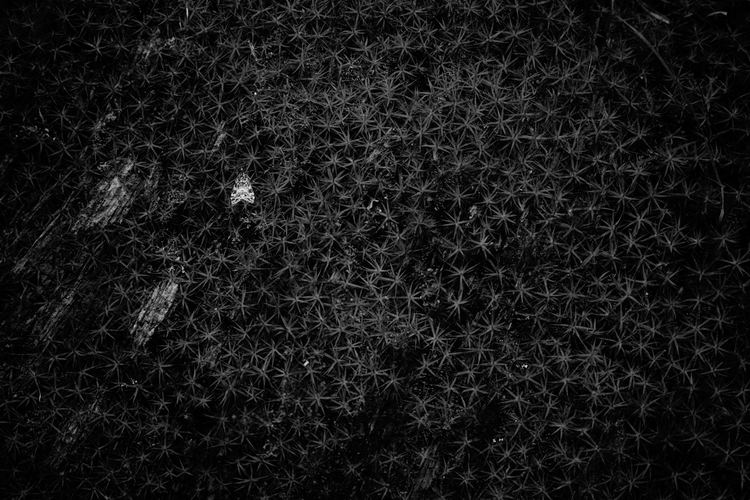
(Mametz Woods (Hudson, 2022)
Many aspects of Hudson’s work interest me: His preparation for photographing, photographic intention, his thoughts on working in series, his philosophy and of course his images.
References:
Hudson, R. (2022) Rob Hudson. At: http://www.robhudsonlandscape.net/about (Accessed 08/09/2022).
Hudson, R. (2011) The Skirrid Hill Project: taking ‘thinking like a poet’ to its logical conclusion?. At: https://www.onlandscape.co.uk/2011/04/the-skirrid-hill-project-taking-thinking-like-a-poet-to-its-logical-conclusion/ (Accessed 08/09/2022).
Hudson, R. (2016) Inside the Outside An exhibition of photography. At: https://www.onlandscape.co.uk/2016/10/inside-outside-exhibition-photography/ (Accessed 08/09/2022).
Responds to the landscape on a physical, mental, and emotional level, using metaphor, impressionism, abstract expressionism, and his emotional response is important. He believes sequences are important and that too many questions that are left unanswered in a single image, where a group of images offers the viewer greater insight into the story or the photographer’s work.
In May 2015 he spent time alone in the Forest of Dean, describing this as the most important of his work, in developing a concept and outcome that was unexpected. When he developed his films, he found most images scattered with dark shadows creeping and oozing across the landscape. The more he looked the more he “began to ‘see’ the very essence of the forest as I had perceived it” (Fotofilmic, 2016). He then printed the images quite small, to draw the viewer in for a personal experience and felt it was most successful as a group of images whilst each one has a narrative of its own.


Malevolence (ITO, 2018)
His work ‘A Process of Reclamation’ was a long-term series developed around the feeling of walking in the footsteps of those who created the slate quarries. It shows the healing of scars in a post-industrial landscape and depicts a landscape’s journey through time and the change abandonment and natural decay bring to bear. However, it also hints at the healing of our inner scars (Hudson, 2016).
Like Hudson he talks of the importance of value of working in a series, uses metaphor in his work, but also shows how unintended outcomes can be used for a good outcome.
References:
Colwyn, O. (2019) Inside the Outside – Out of the woods of thought. At: http://orielcolwyn.org/inside-the-outside/ (Accessed 09/09/2022).
Fotofilmic (2016) Stephen Segasby. At: https://fotofilmic.com/portfolio/stephen-segasby-kings-lynn-uk-2/ (Accessed 09/09/2022).
ITO (2018) Out of the woods of thought. At: https://www.inside-the-outside.com/publications/2018-exhibition-book/ (Accessed 30/09/2022).
Parkin, C. (2019) Stephen Segasby. At: https://www.onlandscape.co.uk/2019/10/stephen-segasby/ (Accessed 09/09/2022).
Tom Wilkinson’s work explores identities of place and of self. He finds he then discovers “something about the nature of how the photograph functions within them and about the nature of the moment of experience” and gains a sense of belonging (ITO, 2016). He says that in photographing landscape you are giving an opinion of it, and so it says as much about the photographer as it does the land.
Talking of his work Nothing remains, says the work suggests the presence of an absence, of something that has been before now only seen within the present, describing it as “both visual and a philosophical enquiry into the way memory and identity function with regard to a sense of place” (Wilkinson, 2022). He says we have a consciousness of the past within the present, and therefore that if the photograph is memory, a displaced moment in time, then our sense of being-in-the-world is also this way. The series is an attempt to connect this area to the landscapes of his past and to question his identity within it.

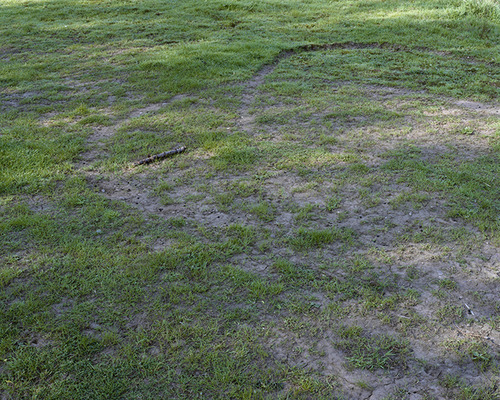
Nothing remains (Wilkinson, 2022)
I like his description of the past within the present and photograph as memory displaced in time.
References:
ITO (2016) THE ITO EXHIBITION (2016) | A virtual tour and review by Tom Wilkinson Nov 6, 2016. At: https://www.inside-the-outside.com/ito-exhibition-review-tom-wilkinson/ (Accessed 09/09/2022).
Wilkinson, T (2022) Nothing Remains. At: https://anotherplacemag.tumblr.com/post/102616659632/nothing-remains-tom-wilkinson (Accessed 09/09/2022).
Wilkinson, T. (2022) Tom Wilkinson Art Photography. At: http://www.i-m.mx/tomwilkinson/ArtPhotography/about (Accessed 09/09/2022).
She uses a variety of cameras and techniques, vintage film camera, pinhole, a plastic Holga or Diana, alternating between single and multiple exposures, to explore and transform her experiences with the world. Golding describes a flow state, an almost automatic, yet highly absorbed state of consciousness, and finds, alters, and creates metaphors to share her subjective experience. She says there is “something compelling about the ways photography can be used to transform “objective” reality” and talks of transcending the literal appearances of subjects to metaphors for internal experience, and share personal meaning (Golding, 2022).
Her images have transformed reality in ways that can be quite surprising to her conscious self. In her work Before there were words, is about proverbial experience that we retain, have in our unconscious minds, and might not share through words. The photographs speak of pure actuality, that moment before verbal labels rush in to change experience (Benbow, 2016).
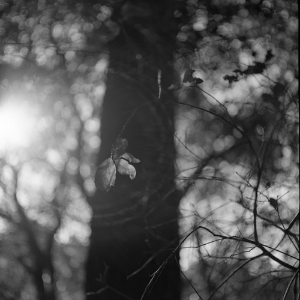
(Golding, 2022)
I was interested in the way she describes the “flow state” that she works in when self-absorbed. I can align with Golding’s photographic philosophy, particularly her description of “transcending the literal appearances of subjects to metaphors for internal experience” (Golding, 2022). Also, her view that the world illuminates what’s in our subconscious and brings it to the fore.
References:
Benbow, C. (2016) Interview with photographer J.M. Golding. At: https://www.fstopmagazine.com/blog/2016/interview-with-photographer-j-m-golding/ (Accessed 09/09/2022).
Golding, J.M. (2022) At: https://www.jmgolding.com/before-there-were-words/wigdebnrfagnyp1cf1wr96rfxg7jll (Accessed 09/09/2022).
Golding, J. M. and LensCulture (2022) Falling Through the Lens – Interview with JM Golding. At: https://www.lensculture.com/articles/jm-golding-falling-through-the-lens (Accessed 09/09/2022).
20.8.22
I have taken some time to complete CS assignment 2 and have been reading a researching widely. I am now ready to re immerse myself in BOW. To do this I have been re-reading my BOW to date. The following notes are to help me proceed with BOW assignment 3:
On Assignment 1:
On preparing for assignment 2:
Note I mentioned in my learning log: Rob Hudson Stephen Segasby, Guy Dickenson, Tom Wilkinson and JM Golding. Also Alfred Stieglitz and Minor White: https://nkssite6.photo.blog/category/body-of-work/bow-assignments/assignment-1/a1-learning-log/ (may need to protect v self-plagiarism in CS Dissertation)
On Assignment 2:
Before assignment 3:
Reread woodland research – https://nkssite6.photo.blog/category/research/reading/woodland-reading/ lead to reminders:
Further reading/research on mushrooms that I’ve scan read but have yet to complete:
And on trees: Takeaways: symbiotic/mutual relationships
Have re-read work of other practitioners https://nkssite6.photo.blog/category/research/bow-research/other-photographers-same-material/ Takeaways: value of finding ways to encourage viewers to look hard/differently at the subject.
Tutor suggested reading:
Next post: https://nkssite6.photo.blog/category/research/bow-research/bow-research-part-3/
 NIKI SOUTH