a final draft of your extended written project (5,000 words or agreed alternative) to my tutor, implementing any changes or taking on board any advice given in their feedback on my draft manuscript.
a covering note identifying the parts of my extended written project that have been most substantially revised or developed. That way my tutor can focus on my revisions rather than re-reading the whole extended written project.
an abstract for my extended written project (maximum 500 words) summarising the subject areas discussed in my extended written project and its key findings or conclusions. This will be used to archive my extended written project at OCA, and to identify appropriate assessors with related subject knowledge to formally assess my submission.
I was given lots of positive feedback, notably my decision to concentrate on Minor White as the artist for the case study, and my decision to drop John Blakemore.
See the constructive feedback given which needs action:
I noted in my A4 Learning log that I now included in my Chapter 3, images of White’s work to articulate how he uses affect in his work; this I have done to help my readers to synthesise both the information on visual methodologies I present in my dissertation and how it can be applied to interpreting meaning in images. I have used a semiotic toolkit and knowledge of symbols White uses to pick apart some of his images – In my dissertation I am applying methods I researched in my literature review. I have described some of what is denoted and connotated in the images, however I note that my tutor suggests that I add further description on what is denoted in them, to enable viewers to give readers space to ask questions.
REFLECTIVE LEARNING LOG: Show what I’ve learnt- not a description of process
DISSERTATION
General advice:
Use PEEL: Paint/Explain/Link back to research question. I’m obviously I’m still not getting there – intro to all terms with clear definitions supported not lead by references and theories.
USE REFERENCES TO UNDERPIN OWN POINTS and to clarify research methods or difficult themes – So do some “reverse engineering”
Also:
Ensure writing makes sense to a reader coming to it cold
Some places are quite dense.
There are some short paragraphs that would be better linked to create flow paragraphs that need linking
Try using an academic phrasebook
Check that it all makes sense to another reader.
Expand where critical terms need explain to a general reader
Ensure I reference practitioners I mention.
Content:
Expand on ‘Context as determinant of meaning’
Reread Clarkson on codes and Bate (2009) p 34 on codes and rhetoric
Add more on objective photographers eg. Blossfeldt, Evans, Rineke Dijkstra
On sequencing images add Colborg reading
Describe images – Denotation into connotationsee Barrett formulansubject+medium+form+context (what’s it about)
Reference:
Bate, D. (2009) Photography: The Key Concepts. New York: Berg publishers.
Following the submission of my CS assignment 4 to my tutor, I worked on the feedback given which I tried to take all into account:
I tried to use PEEL as advised by tutor but I still need to develop this.
I’ve added temporary working subtitles for paragraphs
I added some further reading, including:
Barrett, T. (1986) ‘A Theoretical Construct for Interpreting Photographs’ In: Studies in Art Education 27 (2) pp.52–60.
Bunnell, P. (1991) ‘Minor White’s photographic sequence rural cathedrals. Areading’ In: Proceedings of the American Philosophical Society Published By: American Philosophical Society 135 (4) pp.557–568.
Brower, M. (2018) ‘Photography, Curation, Affect’ In: Journal of Visual Culture 17 (2) pp.177–197.
Clarkson, G. (2014) ‘Photographic codes’ In: OCA (ed.) Photography 2: Documentary fact or fiction. Barnsley: Open College of the Arts. pp.81–85.
Portland Art Museum (2018) LECTURE: Todd Cronan, PH.D. – From Expression to Creation: Minor White’s Theater. At: https://www.youtube.com/watch?v=pBwJG1-XHug (Accessed 06/04/2023).
The only reading that I didn’t find directly useful was the Killip article, though I enjoyed it having visited an exhibition of his work at the photographer’s gallery.
I then revised my assignment 3 drafts of the introduction and Chapter 1.
Before beginning the draft of the remaining chapters I reviewed all tutor feedback for CS and reread many articles.
I have submitted almost 3,000 words to my tutor for the remaining chapters of my dissertation.
After reading and preparing evidence for chapter three – Affect and effect in the work of Minor White and John Blakemore, I decided to restrict my dissertation to the work of Minor White. This partly because I had plenty to evidence my theme in the work of Minor White alone. But more so as after deeper research on both I felt Blakemore’s work didn’t exemplify my theme in such a rich manner.
Blakemore’s work does often explore a theme over time, returning to one subject over a period. He does use some work as a metaphor for his own emotions, such as Wounds of trees (1971) after his marriage break up, and he does include some symbolism, and talks of layers of meaning. Though he does use sequencing to underline meaning, this is not as much as White did.
Overall I felt the main thrust of his work is a contemplation of nature and his relationship with it, but less so about the “something else”, an equivalence to a feeling that a subject evokes that White works into. And it is the affect in the something else, that is in Whites work that interest me and exemplifies my research more fully.
Structure
I have added contents and illustrations tables pages as suggested in the coursebook.
LO1 undertaken research and study demonstrating comprehensive knowledge of your area of specialisation and built a theoretical framework for your creative practice.
Q: Have I researched and studied my specialisation and demonstrated a comprehensive knowledge?
I have evidenced a wide and deep range of reading in my remaining chapter drafts.
Q: Have I built a theoretical framework for my creative practice?
I have advanced from the literature review and assignment 3 (Introduction and 1st chapter) to interrogating and interrelating academic arguments and evidencing against them, from more simply sharing them.
LO2 synthesised and articulated your critical, contextual and conceptual knowledge and understanding into a coherent critique of advanced academic standard.
Q: Have I pulled together research and written using evidence?
This is evidenced in my remaining chapters and I have used PEEL (Point, Example, Explain, Link) to do so as suggested by my Tutor in the last feedback.
Q: Have I referred to my BOW contextualising practise and theory?
I haven’t directly referred as I don’t believe this is necessary, however my BOW practice directly relates to my essay topic, stimulates my CS research and broadens my understanding. I have included artist’s images and articulated using visual methodologies described in Chapter one how White expresses himself and what is connotated.
Q: Have I evidenced in writing my concept thoroughly and how broader concepts have fed into this?
Broad concepts run throughout these chapters as they do in my introduction and Chapter 1 previously submitted. I have reviewed my work as a whole to ensure that these concepts are consistently referred to throughout the work. It is to the required academic standard.
LO3 applied your own criteria of judgement, reviewed, criticised and taken responsibility for your own work with minimum guidance.
Q: Have I reviewed, judged, and critiqued myself? I have reflected as I have worked and have done so here also.
LO4 selected and applied information management skills and used appropriate technology in the production of an accomplished critique with minimal supervision.
Q: Have I used information management skills and technology?
I have used some online sources and referencing mechanisms as well as reference data bases such as paperpile. I have used IT skills to present my work.
Q: Have I produced a good critique myself? This technical aspect has achieved independently.
Reference:
Alexander, J. (2013) Contextual Studies. Barnsley: Open College of the Arts.
Following the submission of my CS assignment 3 to my tutor, I worked on the feedback given which I tried to take all into account:
I tried to use PEEL as advised by tutor but I still need to develop this.
I’ve added temporary working subtitles for paragraphs
I added some further reading including:
Barrett, T. (1986) ‘A Theoretical Construct for Interpreting Photographs’ In: Studies in Art Education 27 (2) pp.52–60.
Bunnell, P. (1991) ‘Minor White’s photographic sequence rural cathedrals. Areading’ In: Proceedings of the American Philosophical Society Published By: American Philosophical Society 135 (4) pp.557–568.
Brower, M. (2018) ‘Photography, Curation, Affect’ In: Journal of Visual Culture 17 (2) pp.177–197.
Clarkson, G. (2014) ‘Photographic codes’ In: OCA (ed.) Photography 2: Documentary fact or fiction. Barnsley: Open College of the Arts. pp.81–85.
Portland Art Museum (2018) LECTURE: Todd Cronan, PH.D. – From Expression to Creation: Minor White’s Theater. At: https://www.youtube.com/watch?v=pBwJG1-XHug (Accessed 06/04/2023).
The only reading that I didn’t find directly useful was the Killip article, though I enjoyed it having visited an exhibition of his work at the photographer’s gallery.
I then revised my assignment 3 drafts of the introduction and Chapter one:
Before beginning the draft of the remaining chapters I reviewed all tutor feedback for CS and reread many articles.
I have submitted almost 3,00 words to my tutor for the remaining chapters of my dissertation.
I changed my dissertation title:
After reading and preparing evidence for chapter three – Affect and effect in the work of Minor White and John Blakemore, I decided to restrict my dissertation to the work of Minor White. This partly because I had plenty to evidence my theme in the work of Minor White alone. But more so as after deeper research on both I felt Blakemore’s work didn’t exemplify my theme in such a rich manner.
Blakemore’s work does often explore a theme over time, returning to one subject over a period. He does use some work as a metaphor for his own emotions, such as Wounds of trees (1971) after his marriage break up, and he does include some symbolism, and talks of layers of meaning. Though he does use sequencing to underline meaning, this is not as much as White did.
Overall I felt the main thrust of his work is a contemplation of nature and his relationship with it, but less so about the “something else”, an equivalence to a feeling that a subject evokes that White works into. And it is the affect in the something else, that is in Whites work that interest me and exemplifies my research more fully.
Content
I have applied relevant research on visual methodologies to my dissertation by expanding on images added to the literature review of Minor White’s work, and articulated how semiotics and knowledge of context and symbolism can expose expression and affect in his images
Structure
I have added contents and illustrations tables pages as suggested in the coursebook.
Assignment 4 Remaining Chapters (Draft)
Submit the remaining draft manuscript for your extended written project, (chapter 2 onwards) observing the following submission guidelines:
● 2-3,000 words in length or equivalent alternative. This includes quotations, but excludes footnotes and bibliography. Please do not submit work that is above the allowed word limit as this will impact on the available time tutors have to spend reviewing work. Check with your tutor on appropriate word count, for example you might submit a fully developed 2,000 words, or 3,000 words that still needs some editing.
● Please note that your draft is not a ‘rough’ draft – the very first draft that you have done – but a completed first draft. Edit carefully to ensure that your draft meets the word count, and that you have answered your research question. It is helpful to break this longer assignment into 1 – 3 separate chapters of c.1,000 – 1,500 words each with a conclusion.
Reference: Alexander, J et al. (2020) Contextual Studies. Barnsley: Open College of the Arts
Barrett, T. (1986) ‘A Theoretical Construct for Interpreting Photographs’ In: Studies in Art Education 27 (2) pp.52–60.
Clarkson, G. (2014) ‘Photographic codes’ In: OCA (ed.) Photography 2: Documentary fact or fiction. Barnsley: Open College of the Arts. pp.81–85.
Brower, M. (2018) ‘Photography, Curation, Affect’ In: Journal of Visual Culture 17 (2) pp.177–197.
Comments on my evidence against learning outcomes:
LO1 undertaken research and study demonstrating comprehensive knowledge of your area of specialisation and built a theoretical framework for your creative practice
Make temporary subheadings to signpost my main themes
LO2 synthesised and articulated your critical, contextual, and conceptual knowledge and understanding into a coherent critique of advanced academic standard
A suggestion to look at Chris Killip’s note taking system.
LO3 applied your own criteria of judgement, reviewed, criticised and taken responsibility for your own work with minimum guidance
Remember that I don’t have to bring new knowledge but to show that I comprehend the ideas.
LO4 selected and applied information management skills and used appropriate technology in the production of an accomplished critique with minimal supervision
Make another submission of work in progress as a tightly edited, sequenced series. You may have continued to shoot; you may have changed direction since your last feedback report. However your project has developed, make the development clear in the image selection.
Pay particular attention to how you will use words alongside your images (captions, titles or additional ‘relay’ type text) and re-frame your images accordingly.
As in previous assignments, include a short commentary outlining the development of your ideas during your work on this part of the course.
Artist statement
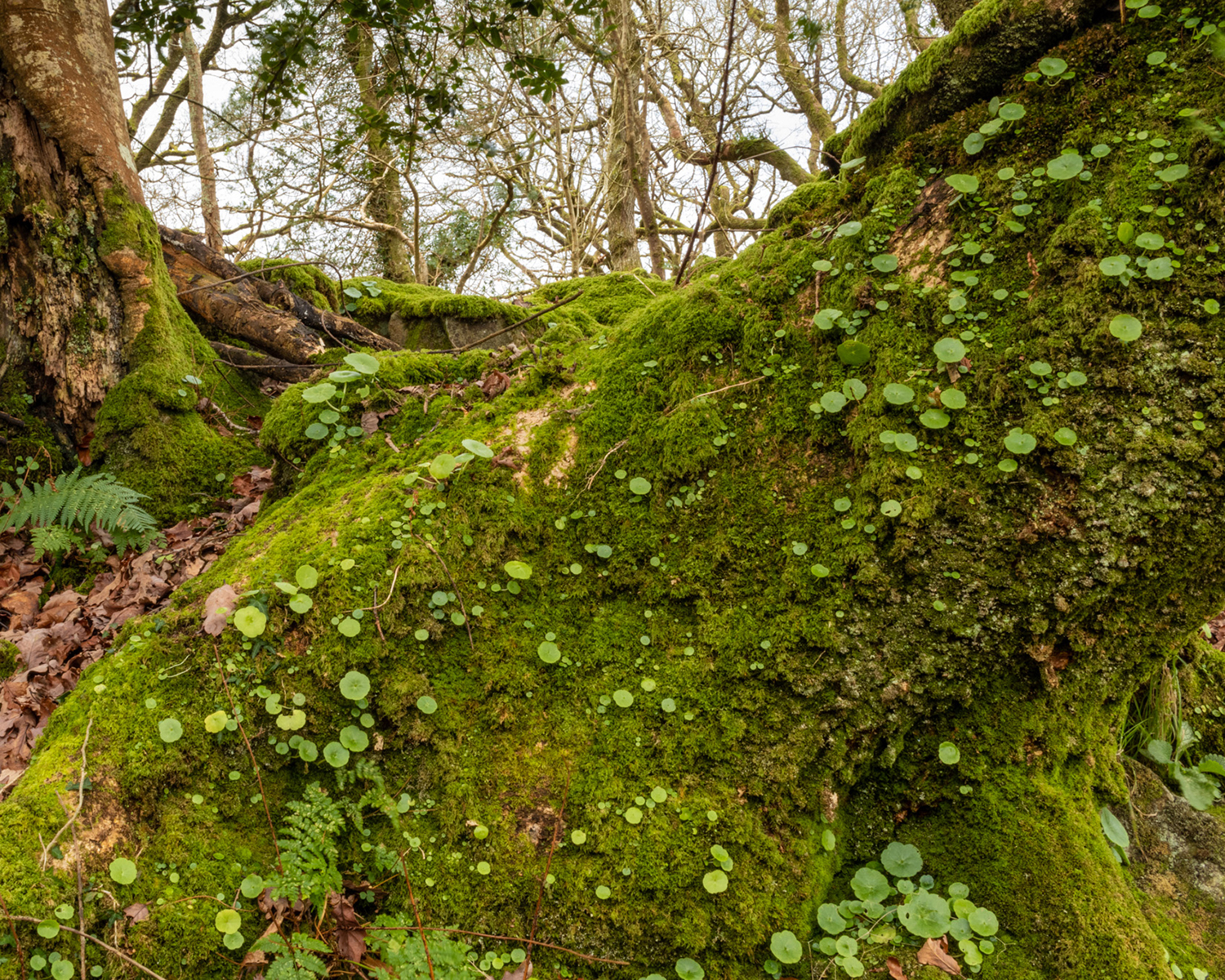
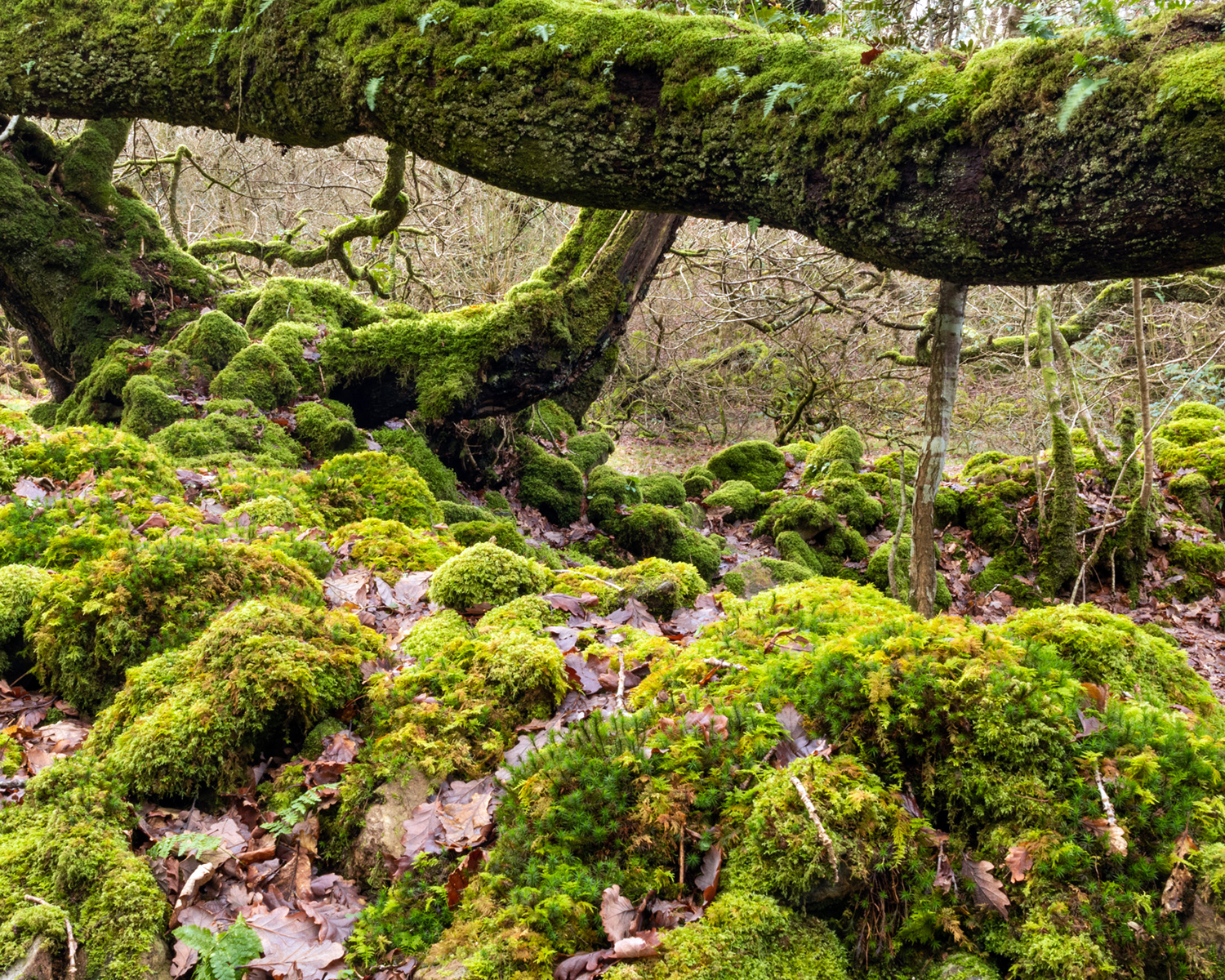
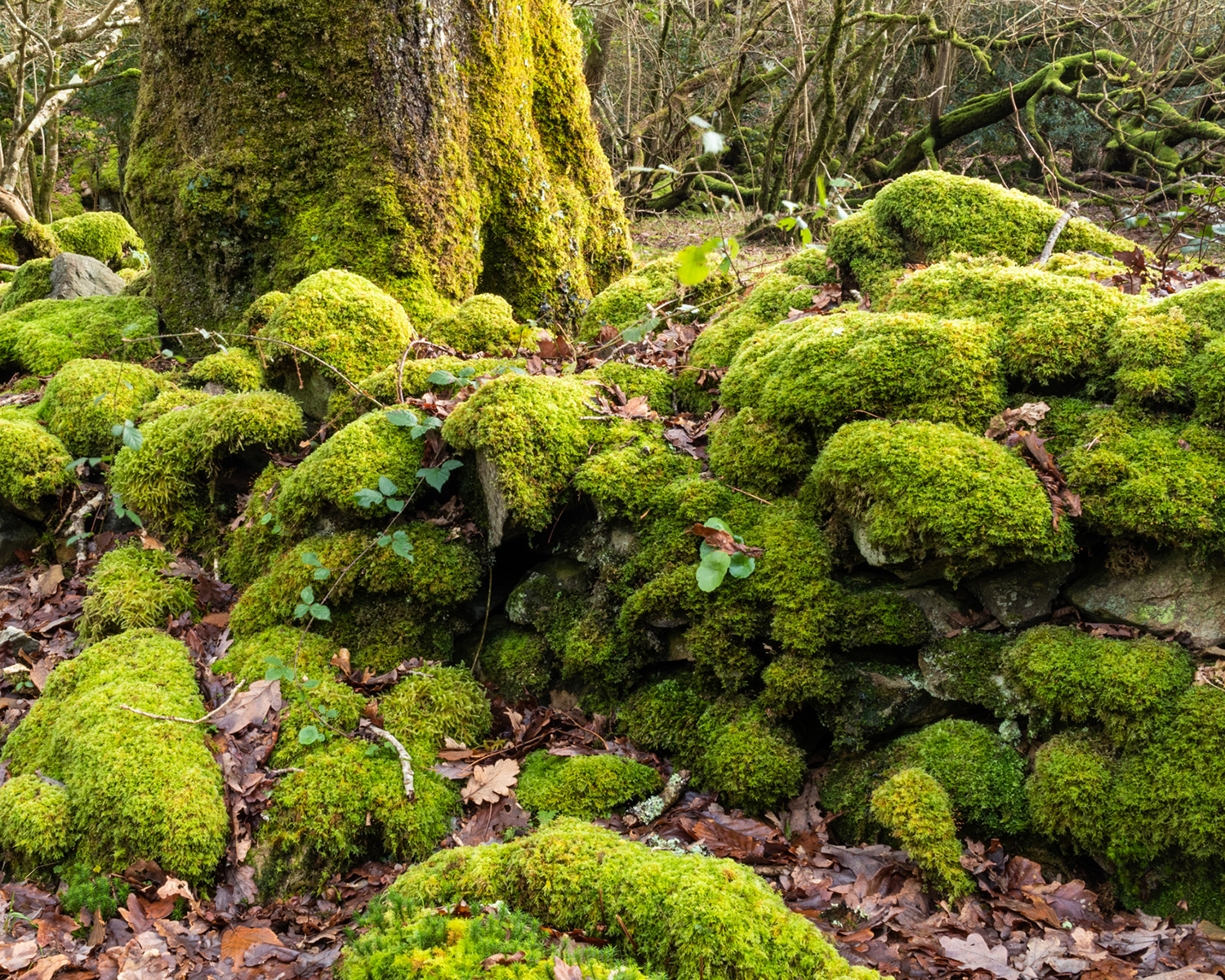
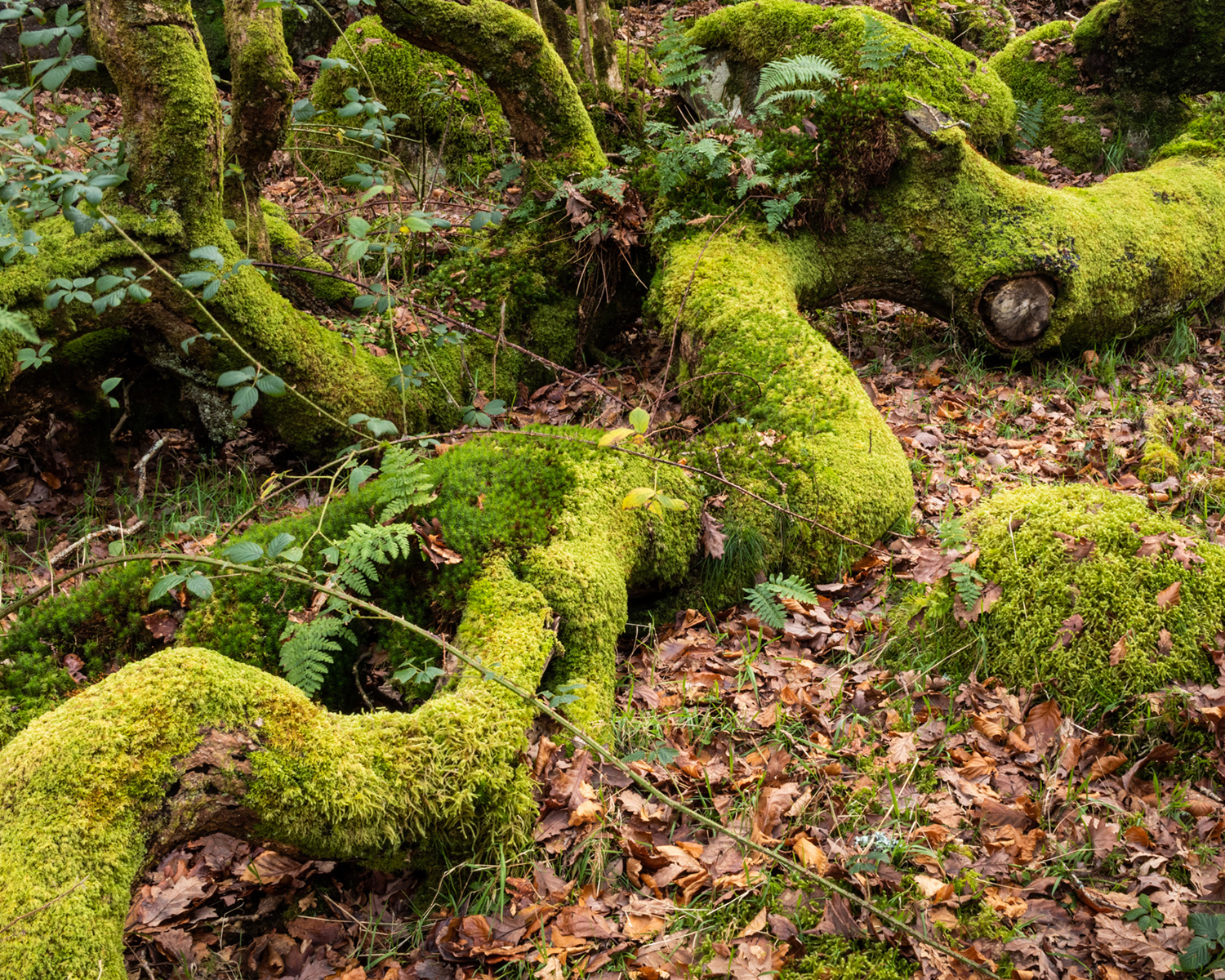
This work is a continuation of my photography within an ancient woodland. It serves as a photographic celebration of cooperation and harmony within the community, along with a submerged representation of my internal discomfort on the divisions in my local community. “What lies beneath” is a visual exploration of a diverse harmonious woodland community, that in contrast to a divided and malcontented nearby human community.
What lies beneath
What lies here beneath the abundant enveloping eiderdown, slumbering peacefully together? What lies elsewhere beneath structural facades, sheltering but murmuring malice?
———-
What lies here beneath the verdant creeping coverlet, collectively sharing comfort? What lies elsewhere beneath community spirit, concealed but festering?
——-
What lies here beneath the luminescent selfless sheath, accepting mutual benefit? What lies beneath shared need, acknowledged but resented?
——-
What lies here beneath the softest downy dress, sharing nourishment contentedly? What lies elsewhere beneath mans’ disguised demeanor, civil but deliberately divisive?
——-
What lies here beneath the soothing snaking sleeve, insulated from harm by another? What lies elsewhere beneath deceitful welcomes, smiling but spewing spite?
——-
What lies here beneath the willing emerald wrapping, acknowledging their collective realm? What lies elsewhere beneath acceptable appearances, charming but prejudiced?
——-
Commentary
This series of work was a progression from my previous series. Still with the overarching theme of harmony, set against the antithesis of the disharmony in the local community, which is the driver for portraying the ancient woodlands as a visual metaphor for a harmonious community.
Working with a natural subject through natures cycles, caused me to reassess my photographic intention at the outset, which had been to develop the story of harmony in a musical sense as a collective of choral parts. It was December and the woods were bare, except for the prolific moss, which covered and protected the more dormant species hidden below itself. This is a time of nurture, acceptance and sleep in the woodlands, against a continuing backdrop in local village life of festering resentments and division. I reassessed how I could use this as a metaphor to communicate my concept.
So, I photographed moss in its various guises, accentuating it’s vibrant, abundant blanket and it’s welcome benefit and mutual exchange and respect to the rest of the diverse woodland community.
Having discounted my original intention to experiment with musical terms as descriptors and context for the woodland elements, I searched for a way to signpost my work, to add some context, but not too much. My research led me to experiment with combining my images with poetry. Could poetry bring something else into being? Could my images made up of visual nouns represent something else? Would words in a form of poetry give more clarity and depth without being too restrictive to the meaning?
Experimenting with words led me to connect my visual representations to the local community beyond the woodlands; this the original trigger for my visual work. Would combining poetry develop these images in another dimension, bringing “a third creative personality”? (Hurn and Fuller, 2010:11). After some experimentation I have added my own poetry to unravel the images a little, amplify my internal dialogue, whilst not giving too much directional context – this I hope will create third personalities, beyond the images and the poetry.
Reference:
Hurn, D. and Fuller, J. (2010) Writing the Picture. Bridgend Wale: Seren.
I described how I have taken what is evident currently in the ancient woodlands and used this as a metaphor for my feelings about the harmony in the woodlands as the antithesis of discord in the local human community. This concept of something physical as a metaphor for something invisible to the subject of my CS work.
I adapted my photography to use the predominant feature in the woodland at this time, moss. Moss covers most other plant species in the woodlands during the winter, protecting, absorbing, and stabilising the ecosystem. My intention was to showcase its important role in its community.
I shared how I researched poetry and photopoetry as a possible method for signposting my work, and that this also led me to thinking and behaving like a poet when photographing, being self-aware and stimulating my imagination.
Technically I explained that I took on board previous advice to crop to a 5:4 ratio and so when shooting I allowed for later cropping to this ratio. I share that the low sun and the lack of foliage made the harsh light a challenge to photograph with the softness that I prefer – however I worked around this.
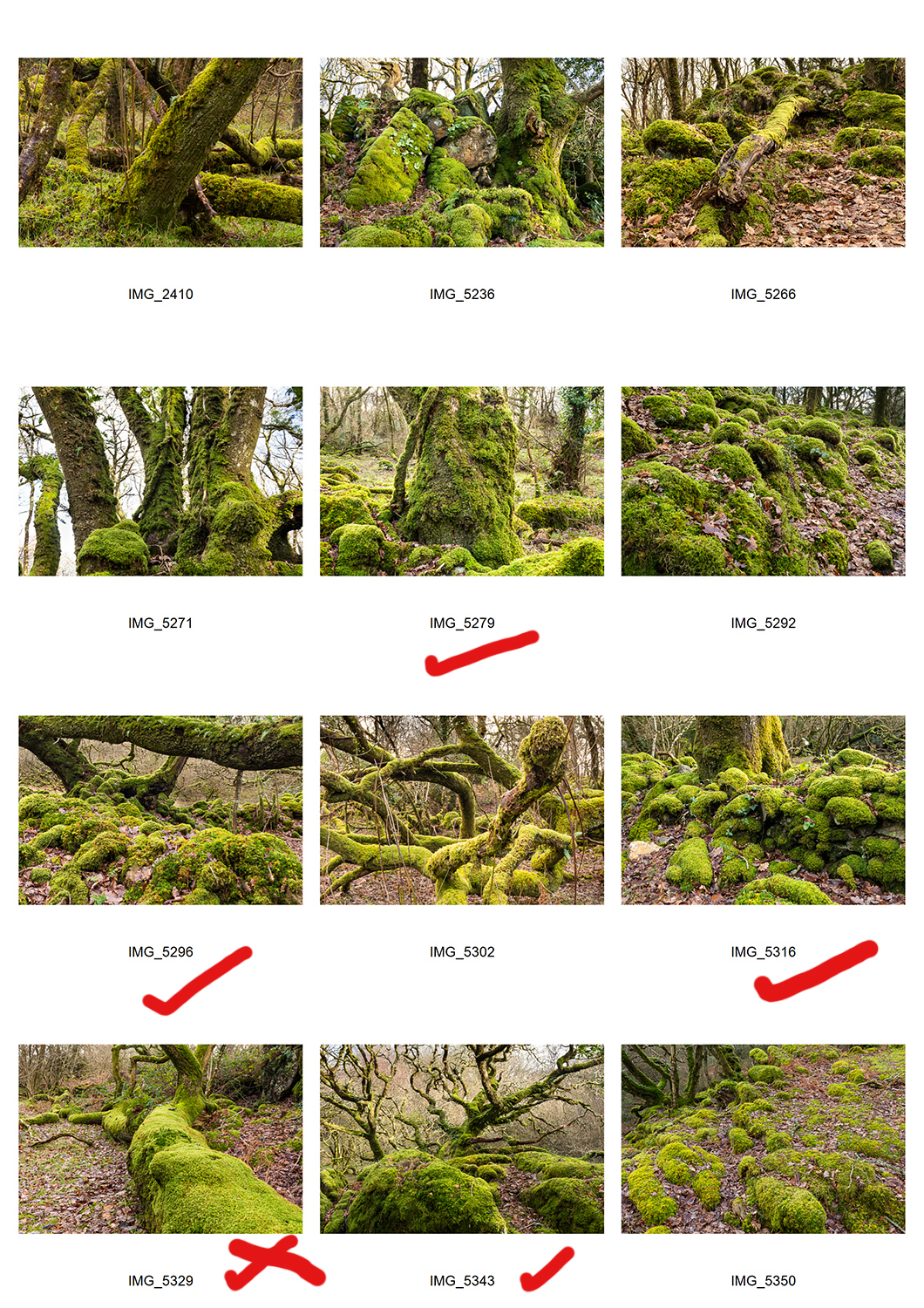
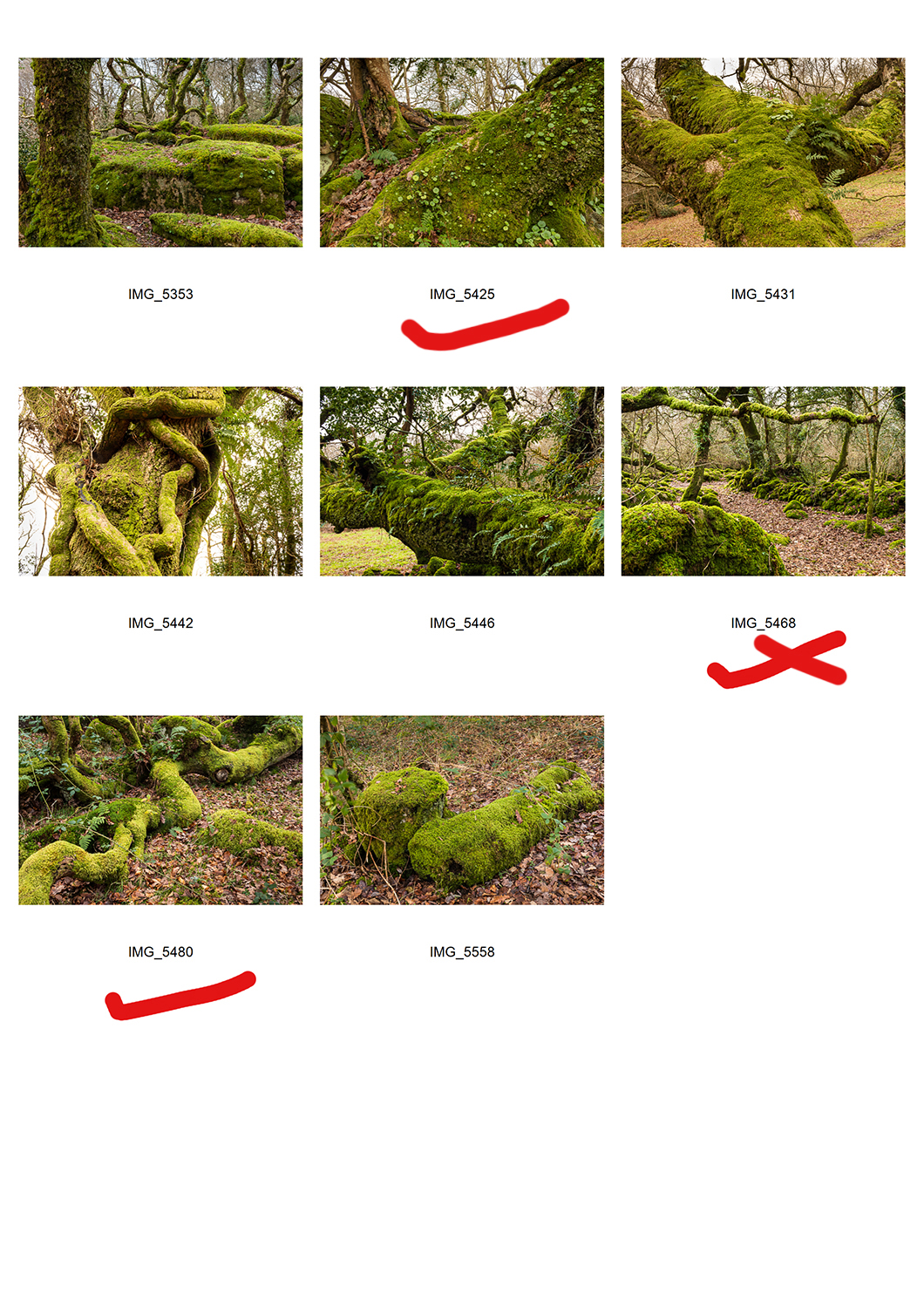
I used a padlet to edit and share with my tutor as previously suggested and this was very helpful to myself during the process.
We discussed some of my thoughts about the next and last assignment.
Tutor’s comments:
• Images are good
• we worked through my editing process, and she suggested that revisit one or two of those I dropped towards my final edit. Firstly to change one or two images that have an amount of brown leaves in them for others that are more predominantly green (amount of green pixels). Interestingly this is something I began then I edited and then moved away from.
• We discussed my use of poetry. My tutor thought my poetry good in itself but invited me to consider:
– Does the second couplet in each verse that refers to the community elsewhere confuse the narrative of the photograph it is placed against? Are the references too oblique?
– I should check whether the words and images are working together well?
– I could experiment with other approaches such as a wall text which explains the background to the images and text. Or placing a poem ahead of the images and leaving each image in the series without accompanying text, leaving the images to express themselves.
-Review Alec Soth’s work sleeping by the Mississippi
Assignment Four: reflections against learning outcomes
LO1 produce convincing visual products that communicate your intentions, using accomplished techniques in complex and unfamiliar environments, with minimal supervision from your tutor.
I have increasingly learnt that I am working with a living changing subject, both metaphorically and visually. The landscape had transformed at this time to sparse vegetation except for abundant carpets of moss. So I had to swivel my perspective, which I did by focusing on the moss as a protector of other woodland species, a nurturer and homogeniser of the various elements.
I photographed the same woodland subject, but with even more of an internal emphasis on my internal dialogue and intention as a poet would, as I photographed. This sharpened my attention as I chose my subjects and perspective. This fits with my intention to use the ancient woodlands as a metaphor for my feelings about community.
In terms of visually capturing my woodland subject, I have moved through various stages of experimentation from, psycho-geography, from Macro to Micro, contemplate constructionism and abstraction, and have distorted with perspective and scale. This time I chose to progress my work by continuing with a low to mid distance perspective which I am finding enhances the subject.
Technically I have now tried a variety of approaches with a variety of lens. This time I shot with my prime lens and have become dexterous with my tripod adapting to the difficult terrain heightened in the winter by heavy rain and frosts. The low winter sun took some adapting to also.
I also shot for the first time intending to crop to a 5:4 ratio, having seen to effectiveness of this ratio after cropping to this after my last shoot.
Using padlets when editing images and combining with my images proved helpful.
It has been suggested that generally images are full of visual nouns but not the adjectives and adverbs that we need to signify emotions – I don’t agree with this however I do see now that combining images and text as poetry has strengthened my concept – my feelings about harmony and disharmony in communities.
LO2 demonstrate comprehensive knowledge of your area of specialisation and be able to situate your own work within a larger context of practice in your field.
This work continues to build alongside my contextual studies work on affect and effect and other photographers.
I have researched landscape photographers who use the landscape to share their internal and external passage.
This assignment I researched Poetry and photography for the first time. I learnt from various photographers and writers how poetry can aid reflection, focus thoughts and like images be a metaphor for something else.
For this series my outcome combines my learning from both photographic and poetic contexts.
LO3 transform abstract concepts and ideas into rich narratives and integrate them in your images.
The visuals, the photographs came first, but I realise that they need signposting to transform them from my abstract thoughts in a narrative for readers.
So, this assignment I have experimented for the fist time with using poetry to add to the narrative of my series of images.
I asked myself whether the accompanying poetry is intrusive or provoking. I don’t want it to tell viewers what to think but to provoke thought. I believe my poetic narrative helps to unravel the images – but hopefully not too much.
My narrative and visuals are integrated in the photopoetry I have created. Though the poetry and photography retain some independence, but together creates something new – possibly a third personality? I think a richer overall narrative, drawing the reader beyond the frame of the photograph
LO4 critically review your own work and evaluate it against desired outcomes.
I have reflected as usual throughout this work. Using poetry from the shooting through to the final product added clarity and depth to my work. Thinking like a poet has helped me to self-examine my intentions and concept at every stage.
Using padlets helped me to be critical at various stages.
LO5 demonstrate management, leadership and communication skills and have deployed them during the negotiation and production of the final body of work with your tutor and third parties.
I have managed this work and communicated both within it and about it.
I have yet to discuss with my tutor, but I have reviewed the work against the course learning objectives and my personal intentions.


 NIKI SOUTH