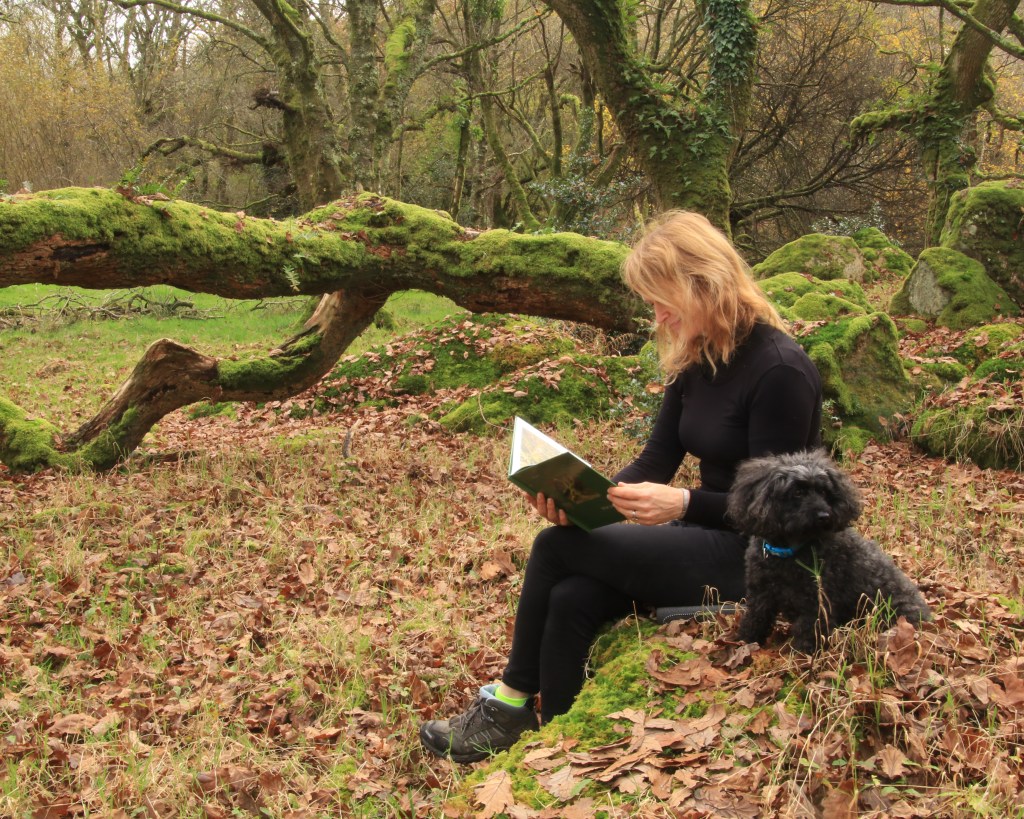
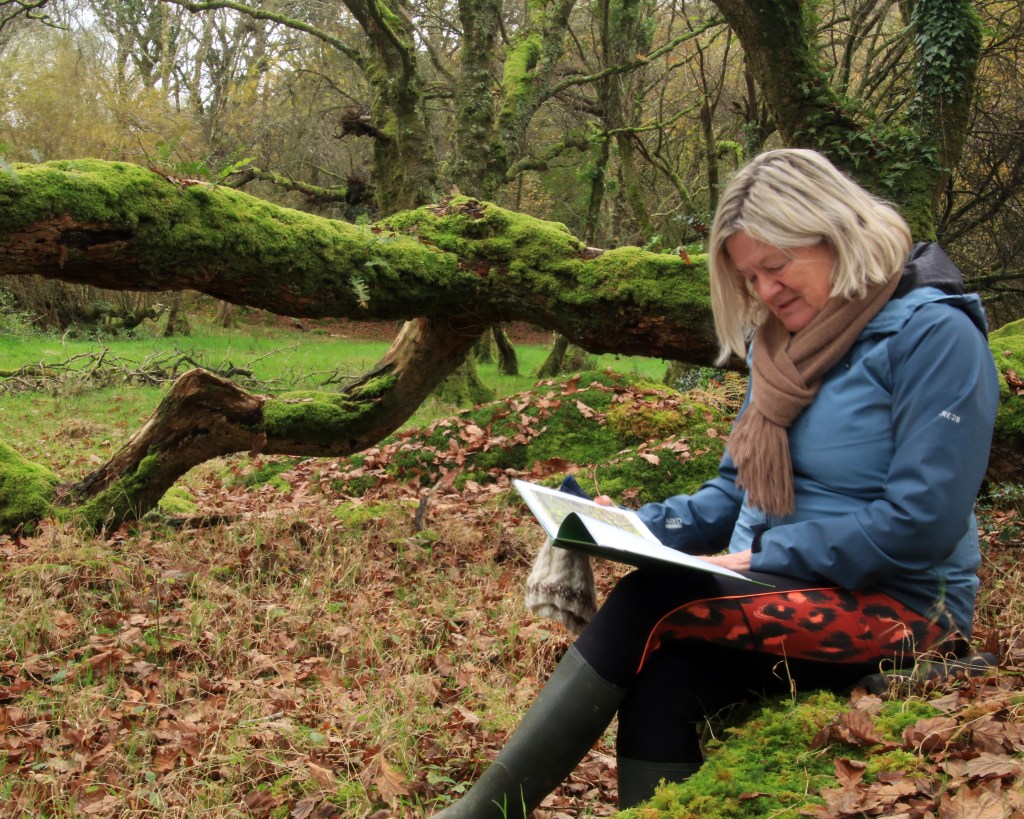
Evidence of operating in the Photography Industry in a commercial context

Obtaining Primary research for assignment 3 analytical text (Assessment 3 CRS Padlet) on the photo book publishing industry & to increase my knowledge

I chose to focus my research on the publishing area of the photographic industry as I am publishing a book, and at the outset of my publishing journey I had no idea whether I would self-publish or be published-in fact frankly I had no understanding of the processes at all.

To network and obtain primary sources I used my interpersonal skills at a professional level.

Things began to fall into place when I attended at photobook fair at Ffoto Gallery in Cardiff and spoke with  publishers, self-publishers, book sellers and photographers. I visited to gain more in-depth knowledge of a publishing and how the role fits into the broader economy and/or arts community. My focus was already on exploring the differences between self-publishing and publishing.

I was also looking for inspiration/angles for an essay on publishing. Are there any publishers working with students at an affordable level? What are the current developments in publishing?, and ideas on how to publish myself. Visit notes if needed: https://nkssite6.photo.blog/category/sustaining-your-practice/syp-research/ffoton-gallery-cardiff-book-art-fair-13-7-24/

I had particularly useful conversations with Brian Carroll, publisher or Offline Journal (documenting Welsh photography), David Mayne self-publisher and Walter Waygood, a prolific photobook self-publisher and photography lecturer, see my blog entries above.

This visit completed the gaps in terms of how I would publish my own project. It gave me some good ideas and leads for this assignment:

  • Publishing in Wales, or Welsh based photographers? too niche
  • Reasons why photographers chose to publish or self-publish
  • Why photographers publish zines rather than books?
  • Funding for photobook publishing? not an area that I need to explore myself
  • Affordable publishing? hard if impossible to find anyone doing
  • Sustainable publishing?  too niche
  • How the future is looking for photobook publishing? too broad

My conversation with OCA postgraduate photographer Anna Sellen (17.6.24) also fed into these ideas: Where is publishing going? What new is happening? Doing it differently or sustainably? Why do we have to pay so much to get books published? Small publishing houses? Any publishers working more cheaply with students?

Making my dummy book for assignment 4 gave me more insight into publishing, especially self publishing, and helped me to frame my questions to put to those in the industry for my primary research.

Primary Research Survey contact record

The survey was sent to 32 in the photobook publishing industry:

  • To 15 publishers – 4 responded
  • To 18 published photographers:
  • 5 who use publishers, 1 responded
  • 7 who use both routes, 3 responded
  • 6 who self publish, 5 responded

This gave me a good range of views/experience to analyse.

Primary Research Questions and responses

Summary (Main findings are incorporated in my essay):

  • Motivations for publishing photobooks, photographers V publishers. The later are more focused on financial viability.
  • Publishers say the photo book market is over saturated & their professional services are essential for success.
  • Those using publishers agree this.
  • The self-published primarily mention control of the end product and affordability.

These research findings led me to self publish my own book, but to be aware of audience & quality as well as costs.

Industry interview:

As a result of this I was invited to interview a photobook photographer who had been published many times, and had some useful responses to my questions, see blog post:

Al Brydon – Photographer and published photobook photographer interview 10.9.24

Al responded to my email survey questions saying he was happy to take a call instead of answering by email. I prepared for the call by doing more background research on him.

Record of interview:

This opportunity to interview a often published photographer was invaluable. It gave me deeper information:

  • benefits of collaboration & good working relationship with publisher & objective eyes.
  • the importance of questioning the suitability of each project for a book.
  • understanding that publishers don’t want work aimed a photographer’s ‘followers’.
  • He has to work hard to promote his work as well as the publisher

Outcome:

After this primary research, I made an informed choice to self publish myself and was able to confidently write the assignment 3 analytical text, backed up with secondary sources.

LO3: operate in complex commercial contexts requiring the application of specific interpersonal, professional and business skills within an ethical framework

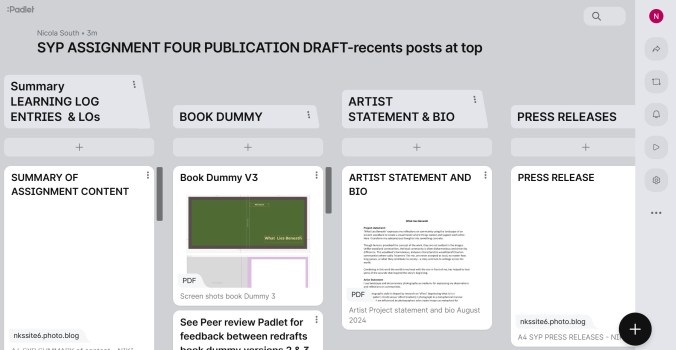
SUSTAINING YOUR PRACTICE: ASSIGNMENT 3 SUBMISSION

REFLECTIONS AGAINST FORMATIVE FEEDBACK

This was written feedback from my cover Tutor:

My Tutor’s feedback was very complimentary about the scope and presentation of my project/analytical text “sound account of self publishing…very detailed with excellent research and bibliography” (Clarkson, 2024:2)

He suggested some useful actions:

  • Add in reading of Bruno Caschel’s Self Publish Be Happy. I was not aware of this book, only his website and movement -Done
  • Reduce to below the 2000 word count by shaving the intro – Done (and reduced elsewhere by summarising and editing)
  • Mention in introduction that I have conducted primary research and point to the summaries in the appendix – Done
  • Use some bullet points instead of paragraphs/sentences in places to make it easier for the general reader and emphasise my reflections/findings – Done
  • Reverse engineer:

All of these revisions definitely aids readability and brings more clarity to my analysis

SUSTAINING YOUR PRACTICE: ASSIGNMENT 5 SUBMISSION

Publication evaluation and preparing for assessment

This Essay has been submitted via the G drive and on my Critical Reflective Padlet for assessment

SUSTAINING YOUR PRACTICE: ASSIGNMENT FIVE REFLECTIONS ON FORMATIVE FEEDBACK

It was useful to have a fresh pair of eyes on my work. He was complimentary about and commented that the project is very interesting. Advice given was all around presenting my work in assignment 5 and the assessment shorter evaluation, to evidence my learning and dissemination of the work.

Video feedback session: 9.11.24

My learning points:

Assignment 5:

  • Show don’t tell make it clearer for assessors
  • What I’ve learnt not what I did
  • Begin with the actual project rather than the context – reverse engineer
  • Output book engagement with professional practice A3 & research
  • Reduce BOW material
  • Minimise context- This should emerge from subject and rendering (Killip, 2001) Barrett (2010) subject- medium-form-context
  • maximise how I disseminated the work
  • Outcomes: integrate my book making padlet and impact on audience
  • Edit to 2000 words
  • Use some bullet points
  • Use direct vimeo links (rate Vimeo video public so can be accessed), rather than directing to my blog, where possible
  • Use extra reading on writing & presenting
  • PEEL: Point (clear opening sentence) Evidence (examples), Explain (how evidence supports point) Link (connect to main argument/ how I got my work out there

Pre-assessment advice

Reflective evaluation

  • Write as if a cold reader. Lead them through the learning outcomes.
  • Start with the final product and work back.  Barrett (2010) advice- let the work lead
  • Concentrate on how I’ve disseminated the project, this will confirm I’ve met learning outcomes.
  • How moving through supported me to put the work out there
  • Output: book – engagement with professional practice A3 & research – Use book dummy book is an output as well as, at beginning
  • Outcomes: my original intention is evidenced as an outcome in the artist talks – Use my feedback from artist talks as an outcome
  • Use A3 appendices as outputs in padlet

Make a critical reflective padlet (CRS) to bring everything together

  • Comments/bullet points on main revisions only of documents on my CRS padlet. Use last paragraph summaries from A3/5 essays
  • Learning objectives – 2/3 bullets per LO and don’t describe what I did – say what I found/learnt
  • Grist not detail summarise links for assessor to check, if needed for evidence
  • Use direct vimeo links
  • Blog is just a repository of information

References:

Barrett (2010) Principles Interpreting Photographs, In: The Weight of Photography: Photography History Theory and Criticism, Johan Swinnen and Luc Deneulin, Editors. Brussels: ASP, 2010, pages 147-172.

Killip (2001) interview 55 Journal, Phaidon


SUSTAINING YOUR PRACTICE: ASSIGNMENT TWO SUBMISSION

See original draft prior to Tutor feedback here:

And Tutor feedback here: https://nkssite6.photo.blog/2024/08/21/assignment-2-reflections-on-formative-feedback/

LO1 demonstrate comprehensive knowledge of the professional context(s) relevant to your practice and have an understanding of the professional dimensions that underpin a successful photographic practice.

SUSTAINING YOUR PRACTICE: PUBLISHED BOOK AND EVALUATION

Video of published book

The purpose of my book:

To combine the images and poetry in a way that offers audiences a platform to reflect on the nature of community. It is intended for two purposes:

  1. To accompany artist talks in the woodland where shot, with local audiences
  2. For exposure to professional via open calls, networking and reviews.

EVALUATION:

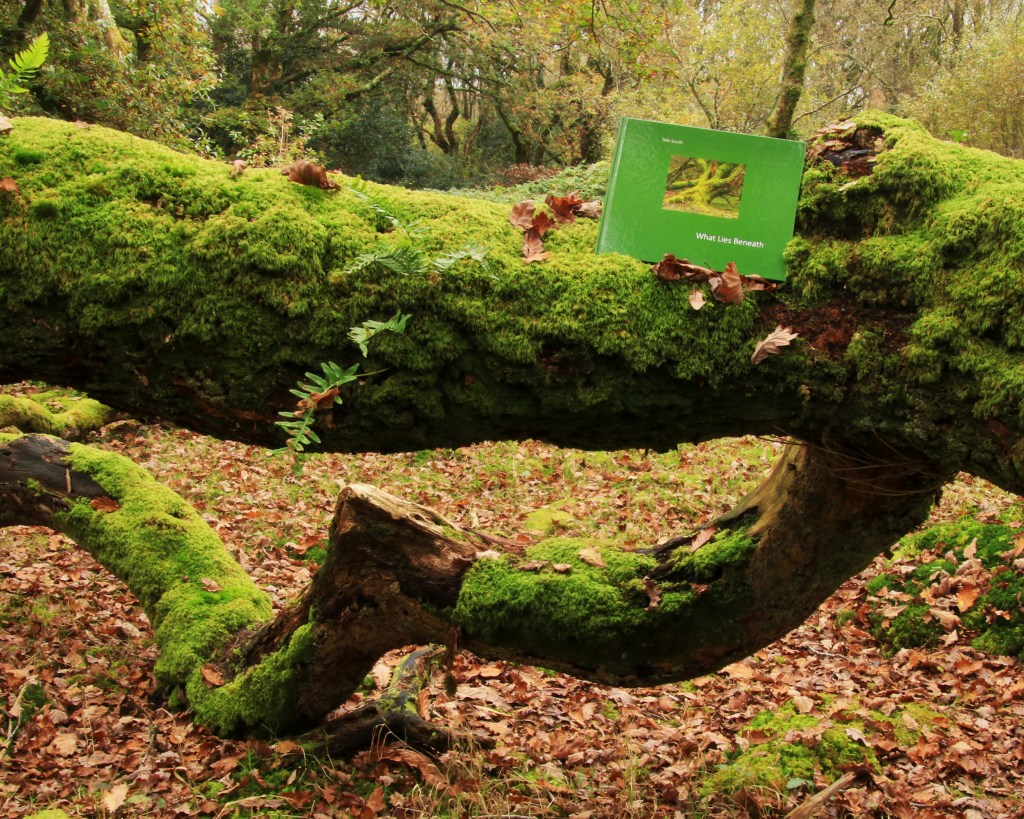
  • I am pleased I paid for a laminated hardback cover as this gives it the durability it needs to be handled and used in the woodland.
  • The green end pages give it a professional look.
  • The section dividing pages in green provide good punctuation.
  • The alignment and margin revisions work well, especially the tip to have a larger margin underneath an image.
  • Advice given to print text in only 85% black to help the images to ‘pop’ works well
  • The change to a lighter font (I used Calibri light instead of Garamond) is effective.
  • The change of label ‘Introduction’ to ‘preface’ in this final version gives a more professional tone to the page and book, as does the considerably shortened ‘preface’.
  • The sub title ‘Residents’ instead of ‘footnotes’ or ‘Constituents’ hits the right note.
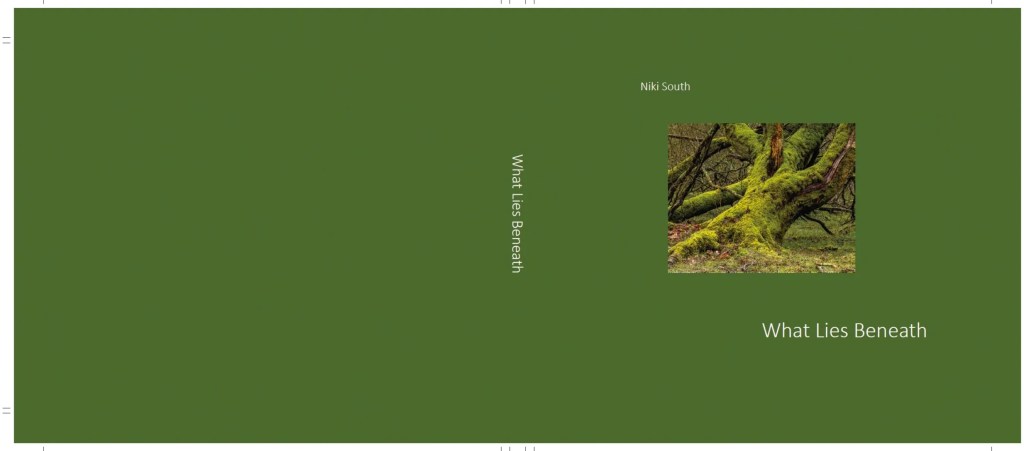
  • I am glad that I added an image to the cover, looks more interesting and creates some intrigue.
  • The quality when delivered as my order: inner pages silk 170gsm not 115 gsm, and the cover laminated not un-laminated were important and I am glad that I picked these order errors and insisted on a reprint.

Professional feedback:

I showed the finished book to a printer, framer, photobook publisher who was impressed with the design, layout quality and content. He commented favourably on:

  • The way that the 85% black text is softer on the eye and makes the images ‘pop’
  • The uneven top/bottom margins like Polaroid pictures
  • The tone of the green colour used for the cover, end pages and section breaks
  • The small size of the text
  • The placement of text on facing page not below the images
  • That the design complements the subject and message well

Overall he was surprised at the professional outcome I’l achieved whilst self publishing.

Final reflections

Revising the design and product over time seems to have paid off. Some compromises are inevitable. Had the budget been limitless:

  • I would have chosen a linen embossed cover, I was quoted an extra £250 for this.
  • I would have experimented with end pages and section breaks in a natural brown paper, for texture and look.

However I believe I found the best solutions for my budget for the final product.I paid a total of £278 for 5 copies. Quite an outlay but I budgeted £350 and saved £60 bu using affinity software 6 month trial.

It is a good quality hardback book, with the durability needed for artist talks. It gives the professional look needed for audiences and the final images, text content and overall design exactly meet my intention to provide a platform for audiences to reflect on the nature of community.

PDF Proof copy of book:

LO5: confidently engage a public audience with your practice and analyse, review and evaluate information relevant to your practice, identifying opportunities for professional development

SUSTAINING YOUR PRACTICE: ASSIGNMENT 5 ARTIST TALKS

MOTIVATION, EXECUTION and EVALUATION

(Evaluation details below in Part 3)

Part 1: MOTIVATION

At the outset of the project (Project Proposal draft Assignment 2) I was adamant that wanted to attract limited local attention, due to local sensitivities. My Tutor challenged this as did my peers as my work began to take shape. I revised my intention a few months later as feedback told that the narrative was common to many localities, and decided to offer artist talks to a range of local people, to engage with an audience and offer the opportunity for them to reflect on the nature of community

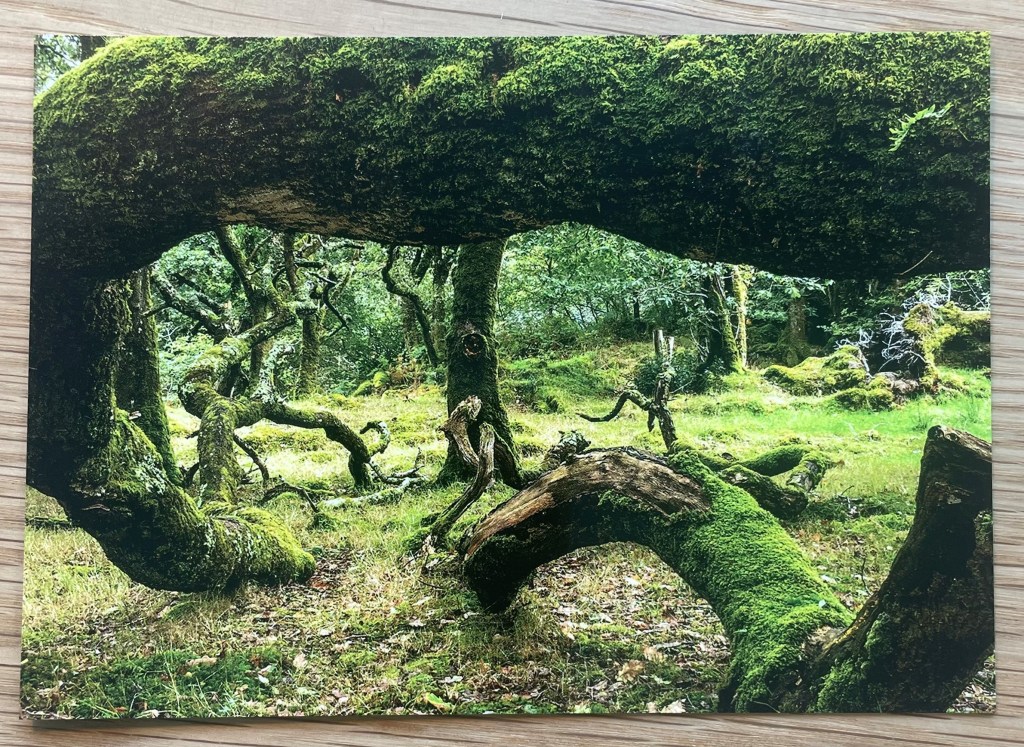
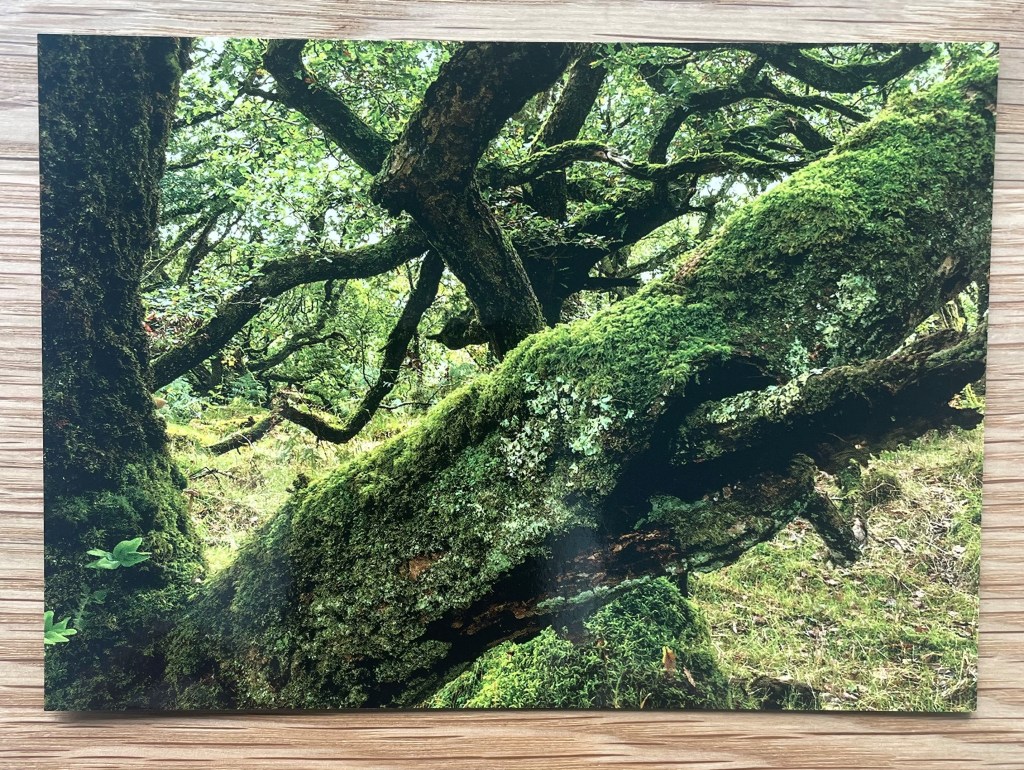
I chose initially to do these 1:1 as I thought this would be more likely to give frank responses. I invited people via promotional postcards and offered another of their choice to takeaway and as potential promotional material:

As I gave publicity postcards away, word got around and I had locals ask me if they could see my book

Part 2. EXECUTION

Artist talks in the woodland where the images were photographed

21.10.24 with Kathryn

She said that the preface prepared her for the upcoming content well – the what and the why.

As she viewed the main images and couplets, she said “it made me reflect on my previous experience of human relationships, in fact ones away from this locality”. She spoke of her experience of others often not being generous, and how a lot of social etiquette is in fact ‘bollocks’. She liked many of the word choices such as ’festering’ which she called evocative. Kathryn said that the images and words relating to the woodlands conveyed a softness and peacefulness which is what she experienced in the woods at that moment, and of a sadness that is evident in the work. She particularly like the ‘residents’ images and definitions, saying it brought it home that diversity in a community can be quite simple.

She offered an interesting suggestion that the ‘residents’ images would be good behind ’flaps’ as readers may expect to see human portraits next to the definitions, and then be surprised.

My learning from this first artist talk was that the 1:1 talks are an effective method for sharing and gaining personal feedback on the work. It seems to create a mirror for a reader to reflect on human relationships in a fruitful way as well as offering an opportunity to enjoy the woodland community featured in it.

A big learning point was that the work is not obviously about one particular place (e.g. This local community) as the experience described in the work is very generic and applicable to most locations and networks; she believes I am reading too much into it with my fear of discovery.

Kathryn also said that the work doesn’t come across as harmful in any way, as it is sensitive, and not at all negative; it just has a feeling that it was made by someone who has experienced sadness and wishes for better relationships. She actually said I had “boiled the pettiness out of it”. I was able to explain about ethics in photography and how this project meets my aims.

She said she was very ‘affected’ by the photography, and enjoyed the self-reflection it provoked.

23.10.23 with Marianne

Beginning with the preface she immediately recalled a conversation with some tourists she bumped into recently and a conversation shared about locals an incomers. They related that where they have lived for 30 years they will never be considered local. Marianne referred to herself a ‘blown in’ though she’s lived here for years. She concurred with a line in the preface that incomers contribution to communities are rarely acknowledged.

Viewing the 1st image, and looking around herself at the woodland, she reflected how diverse the woodland is and it yet adapts over time; conversely that humans seem resistant to change. Reading on she commented on the layering there is in the words and how it draws her into the images.

When musing on the ‘residents’ section of the book, she reflected on how in small human communities there can be a lack of perspective as they lack context, and the feeling that you can’t sneeze without someone knowing. This led her on the recount an experience she’d had with a local neighbour.

Marianne said that she found the book very honest and that I had done well to share my thoughts in a way that isn’t harmful to others but causes you to reflect and respond.

We discussed how I could share with a broader audience locally as she thought it could be shared more widely and that it could be beneficial for others. I said I should be conscious not to restrict my sharing to certain sectors. She commented that we have a very eclectic mix of people living here and that actually to tick all bases would be impossible.

29.1.24 with Jane

She remarked straight away on the quality of the book and paper. Then the strength of the images.

She pointed out that you could construct the same work and point to a different view of human community. Also, that those with less friendly behaviours are just an element of the community and that it is possible that thier expressions are simply their way of functioning in a community – you get gossipers in every community.

She went on to say “the work is very thought provoking as I don’t normally dwell on community behaviours”. She has lived here for 30 years and said she is aware of conflict in the community, but tries to insulated herself from it, by not dwelling on it.

We talked at the end about how the woodland might respond if it had ‘incomers’, aka invasive species; this was a reflection point for myself.

2.11.24 with Rachel

As sat in the woodland the leaves fell around us. Rachel read the book to the end of the ‘community’ section before asking me the background. She then commented that the poetry made her feel sad.

She queried that all is harmonious in the woodland if you widen out from the flora I focused on, for instance the elements and the fauna (food chain) but agreed that for such a diverse community it is relatively harmonious.

She then focused on the images and said the 1st image conjured up a feeling of protection. and spotted that main images 2 & 5 appear chaotic on the surface, though they were ordered underneath. She also commented that image 6 seemed hopeful and spring like. I shared that she was perceptive as images 2 & 5 were taken when I photographed elements that appear chaotic and image 6 for a subset I called rebirth.

She noted how the top and bottom couplet lines are the extremes of positive and negative, and the language used evocative, e.g. Contentedly and festering. She shared her own always positive attitude to human community, saying it made her consider that all may not be as it appears on the surface and there be other that have different views.

She continued with the ‘resident’ section of the book and enjoyed the close-up images. Her observation was that they could just carry a headline title each, like nourish, and not have the definition as well, leaving more to the viewers imagination.

Overall, apart from loving the images, she commented “the book has made me reflect on the nature of community and consider how others might feel about it”. She read the book quietly several times and said she would like to reread again, saying she enjoyed the layers in it and the reflection it was provoking.

6.11.24 with Sharon

She initially commented that the woodland ‘just is’, whereas words like prejudice and ….are labels that we have in human communities, as humans seem to need to put limits/labels on things. She said that the images made her realise how nature coexists naturally whilst humans need to work hard to come together/ be together.

She said the images showed the diversity and richness of the woodland community.

I asked if she thought my signposting text was harsh on humans, and she replied that no she thinks it’s a reality in communities generally, and agreed that the contrasting words chosen for the poetry was completely appropriate.

  • I will continue with and expand my artist talks to local audiences
  • Experiment with Artist talks outside of the woodland, where and will be open to holding group sessions
  • Capture feedback.
  • I have been asked to present my work to a group audience, at a County organisation, and will look for similar opportunities.

Had I not disseminated my work through Artist talks I would not know that I’d met my project intentions, nor would have evidence of this:

” The book has made me reflect on the nature of community and consider how others might feel about it” (Rachel at artist talk)

LO5 confidently engage a public audience with your practice and analyse, review and evaluate information relevant to your practice, identifying opportunities for professional development