NOTE TO THE ASSESSORS (SPRING 2025)

SPRING ASSESSMENT 2025: PH6PRO Sustaining Your Practice

Dear Assessors,

My Sustaining Your Practice Submission for the Autumn Assessment 2023 is presented via my padlet, What Lies Beneath: Sustaining Your Practice PRO CRS Assessment. This is the recommended method of viewing my submission. The link can be found in my Assessment G-Drive.

PLEASE NOTE that in case of IT failure, my submission is also uploaded to my Assessment G-Drive. These folders contain only the final versions of each document. To view previous versions, please see my Assessment CRS Padlet.

Contents of Assessment G Drive Folders:

Folder 1: Selection of Learning Log entries

Folder 2: Selection of Creative Work, in individual folders:

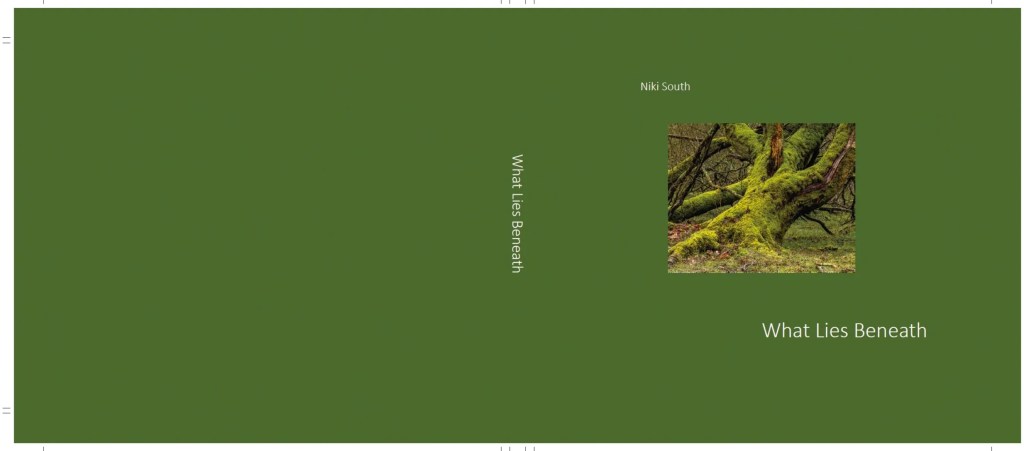
  • Book: Video of published book, Pdf of book cover, Pdf of book inner pages (double page spread)
  • Publicity Material: Press Releases Artist Talks and Book Launch, Publicity PDF, Publicity Postcards
  • Website: address

Folder 3: Written Elements

  • Assignment 2: Project Resolution Proposal
  • Assignment 3: Analytical Text on the benefits of publishing or self-publishing
  • Assignment 5: Evaluation of the Resolution of my Publication

Folder 4: Reflective Evaluation (written)

Folder 5: Tutor Reports

My Artist Website is at: https://nikisouth.myportfolio.com/

My Learning Log (https://nkssite6.photo.blog ) has a dropdown menu Labelled Sustaining Your Practice, with submenus as below which gives access to my all Sustaining My Practice work.

My Learning Outcomes document for assessment, can only be found in the Assessment G drive folder 1 and my Assessment CRS Padlet.

My Reflective Evaluation (Written) can only be found in the Assessment G drive folder 4 and my Assessment CRS Padlet.

ASSIGNMENT 5: REFLECTIONS AGAINST LEARNING OUTCOMES

ASSIGNMENT FIVE REFLECTIONS AGAINST LEARNING OUTCOMES

LO2 coherently present a body of work, making creative presentation decisions that complement your subject and/or your artistic strategies.

The decision-making process taken to make my creative output (book) with presentation to meet my artistic strategies and project intentions; from revising BOW images, final image selection, sequencing, to presenting them with complimentary text and book design: https://nkssite6.photo.blog/2025/01/20/assignment-four-publication-draft-learning-log-mark-2/                                         

LO3 operate in complex commercial contexts requiring the application of specific interpersonal, professional and business skills within an ethical framework


  • The process of submitting my work to my printer shows ability to operate within a commercial context using interpersonal and business skills. I met printer specifications using professional publishing software, liaised on physical proof checks, negotiated discount, and overcame commercial difficulties when there were errors on their part https://nkssite6.photo.blog/2024/10/06/sustaining-your-practice-assignment-4learning-log-part-2/                                

LO5 confidently engage a public audience with your practice and analyse, review and evaluate information relevant to your practice, identifying opportunities for professional development

FURTHER RESEARCH ON COMMUNITY

Gemeinschaft und Gesellschaft -Ferdinand Tönnies

Sociologist Tonnies, wrote on Community and Society types, human relationships, and social structures. He describes:

  • Gesellshaft: Impersonal, transactional, and self-interested communities

He suggests as societies modernise, communal bonds weaken giving way to more individualistic relationships.

His concepts have implications for individuals’ sense of identity and belonging, especially with globalisation, the rise of digital communities, urbanisation, modernisation, and the erosion of traditional communities. Here there is a tension between preserving ‘Gemeinschaft’ like bonds and embracing ‘Gesellshaft.’

Tonnies ideas are tools for understanding dynamics of social organisations under the impact of Modernisation. His work inspires reflection on the nature of human relationships identity and social change.

Its relevance to my work:

My ‘town’ (population only 1000) is rural and the ‘locals’ are traditional and close knit. However elements of Gesellshaft (self-interest) are more evident now than in time past. I would attribute this more to the rise of digital communities, than ‘incomers’ moving in. Though incomers bring elements of modernisation they are no more self-interested or lacking social conscience than the ‘locals.’ Certainly, during Covid 19 and continuing on using  social media the ‘locals’ hide behind comments and posts that are divisive and self-interested. This I evidenced in a previous body of work ‘Layers of Truth.’

Reference:

Sociologylearners (2023) Gemeinschaft und Gesellschaft by Ferdinand Tönnies | Unveiling the Social Structures of Modernity. At: https://www.youtube.com/watch?v=gVmKi3g9DTw (Accessed 09/11/2024).

Evidence of operating in the Photography Industry in a commercial context

Obtaining Primary research for assignment 3 analytical text (Assessment 3 CRS Padlet) on the photo book publishing industry & to increase my knowledge

I chose to focus my research on the publishing area of the photographic industry as I am publishing a book, and at the outset of my publishing journey I had no idea whether I would self-publish or be published-in fact frankly I had no understanding of the processes at all.

To network and obtain primary sources I used my interpersonal skills at a professional level.

Things began to fall into place when I attended at photobook fair at Ffoto Gallery in Cardiff and spoke with  publishers, self-publishers, book sellers and photographers. I visited to gain more in-depth knowledge of a publishing and how the role fits into the broader economy and/or arts community. My focus was already on exploring the differences between self-publishing and publishing.

I was also looking for inspiration/angles for an essay on publishing. Are there any publishers working with students at an affordable level? What are the current developments in publishing?, and ideas on how to publish myself. Visit notes if needed: https://nkssite6.photo.blog/category/sustaining-your-practice/syp-research/ffoton-gallery-cardiff-book-art-fair-13-7-24/

I had particularly useful conversations with Brian Carroll, publisher or Offline Journal (documenting Welsh photography), David Mayne self-publisher and Walter Waygood, a prolific photobook self-publisher and photography lecturer, see my blog entries above.

This visit completed the gaps in terms of how I would publish my own project. It gave me some good ideas and leads for this assignment:

  • Publishing in Wales, or Welsh based photographers? too niche
  • Reasons why photographers chose to publish or self-publish
  • Why photographers publish zines rather than books?
  • Funding for photobook publishing? not an area that I need to explore myself
  • Affordable publishing? hard if impossible to find anyone doing
  • Sustainable publishing?  too niche
  • How the future is looking for photobook publishing? too broad

My conversation with OCA postgraduate photographer Anna Sellen (17.6.24) also fed into these ideas: Where is publishing going? What new is happening? Doing it differently or sustainably? Why do we have to pay so much to get books published? Small publishing houses? Any publishers working more cheaply with students?

Making my dummy book for assignment 4 gave me more insight into publishing, especially self publishing, and helped me to frame my questions to put to those in the industry for my primary research.

Primary Research Survey contact record

The survey was sent to 32 in the photobook publishing industry:

  • To 15 publishers – 4 responded
  • To 18 published photographers:
  • 5 who use publishers, 1 responded
  • 7 who use both routes, 3 responded
  • 6 who self publish, 5 responded

This gave me a good range of views/experience to analyse.

Primary Research Questions and responses

Summary (Main findings are incorporated in my essay):

  • Motivations for publishing photobooks, photographers V publishers. The later are more focused on financial viability.
  • Publishers say the photo book market is over saturated & their professional services are essential for success.
  • Those using publishers agree this.
  • The self-published primarily mention control of the end product and affordability.

These research findings led me to self publish my own book, but to be aware of audience & quality as well as costs.

Industry interview:

As a result of this I was invited to interview a photobook photographer who had been published many times, and had some useful responses to my questions, see blog post:

Al Brydon – Photographer and published photobook photographer interview 10.9.24

Al responded to my email survey questions saying he was happy to take a call instead of answering by email. I prepared for the call by doing more background research on him.

Record of interview:

This opportunity to interview a often published photographer was invaluable. It gave me deeper information:

  • benefits of collaboration & good working relationship with publisher & objective eyes.
  • the importance of questioning the suitability of each project for a book.
  • understanding that publishers don’t want work aimed a photographer’s ‘followers’.
  • He has to work hard to promote his work as well as the publisher

Outcome:

After this primary research, I made an informed choice to self publish myself and was able to confidently write the assignment 3 analytical text, backed up with secondary sources.

LO3: operate in complex commercial contexts requiring the application of specific interpersonal, professional and business skills within an ethical framework

ASSIGNMENT FOUR PUBLICATION DRAFTS: Review/revision process for creative presentation of images

LO2 coherently present a body of work, making creative presentation decisions that complement your subject and/or your artistic strategies.

Process of revising images & creating complimentary presentation for final SYP output – Photobook

I had a clear concept in mind- A woodland community as a model for inclusive harmonious behaviour. Through my various stages of editing my Body of Work images for each photograph, I asked ‘how does this relate to my concept?

Part 1: Transforming BOW images into a coherent series of images

(See final Pdfs book proofs sent to printer at bottom of post)

I began by editing my BOW images for SYP. I asked my peers for their input as well. Peer critique session 24.2.24

Brief for peers and their comments:

Made with Padlet

Editing board shared with peers:

Made with Padlet

Outcomes: They suggested I exchange 2 images for those with extra dimensions of woodland for context. I asked their thoughts about the ‘signposting’ in the work & consensus was that it was the right level. They thought my reworked ‘footnote’ images didn’t need any changes. They are now more consistent than before (lighting/perspective). I fed their review ideas into my next editing decisions:

Bow images chosen after editing for SYP:

Made with Padlet

I revisited the ‘footnote images to try the definitions off of the borders of the footnotes:

Part 2: Presenting the body of work images with complimentary text and book design

Following this and photobook research I revised the sequencing for the book layout. I wanted a rhythm and a tempo, with quieter images punctuating the ‘louder’ images; a sequence for my narrative.

Made with Padlet

A mock up of book sizes drove my choice of book size: 260mm x 210mm to echo my 5:4 images, and to accommodate the size of the ‘footnote’ images (2 a page).

From here I created and revised book dummies (using Blurb self publisher only to produce PDF review purposes).

Book dummy version 1:

Resulting changes:

  • Moved poem to the back of the book.
  • Changed black text on green background to off white
  • Lined couplet start points up
  • Took borders off of images and put text in wrapped text beside them to place vertically
  • Changed ‘footnote’ label to constituents.
  • Changed section break background colour to green

Changes for Book Dummy 3:

  • Title in bold
  • Changed font
  • Changed position of text on cover

Book Dummy version 3

I shared this version with my tutor, and asked:

  • Should I have an image on the front cover? A. Can leave without
  • Are font sizes correct? Advised to keep font as small as readable, will look professional. Great tip & enabled me to reduce the font size of some of the text- done
  • Can I mix fonts headings/subheadings/text? -Took advice to use the same throughout

Also discussed & made some of these revisions in my final book CRS Padlet output 1:

  • make cover margin at bottom larger than top & move text in a little- Done
  • Realign text and try Futura font. I realigned but decided against futura font, I don’t like the’?’ & have alot of them.
  • Chose Calibri light as (similar to futura), Tutor recommended light
  • Do I need the Introduction heading? Check other’s books – Done I changed the heading from ‘introduction’ to ‘Preface’
  • Use thirds to place on page, imagine a 3×3 grid on a page and position elements in the centre box then move a bit upwards eg. p11 -done
  • Make page margins smaller- and text wider -done
  • Page 11 couplets move text lower to 1/3s -done
  • Is subheading, ‘constituents’ too political/formal? – I changed to ‘residents’
  • Footnotes: consider realigning – done
  • Think about how the book will look when pages turn, ensure that all text has the same bottom margin -done
  • Justify to the left, not ‘blocking – done
  • leave more space at bottom of page than top, like a polaroid photo -done
  • Make text 85% black only. This doesn’t conflict with the black in the images and makes the images ‘pop’. I adjusted to 88% black as advised by the printer – done

I revised the previous 3rd draft as above using affinity software with my chosen publisher Exwhyzed.

Final book PDFs:

The revisions I made with creative/artistic choices using feedback and personal reflection took many hours but resulted in a book which complemented the images, set off the narrative of the project and enabled my final outcomes.

PEER HANGOUT 3.10.24

Another useful catch up. Lots of discussion around Sues upcoming post graduate exhibition.

I shared my progress and asked how others had approached assignment 5. Matt shared that he reverse engineered his blog to link to Learning Outcomes rather than the other way around.

SUSTAINING YOUR PRACTICE: ASSIGNMENT 3 SUBMISSION

REFLECTIONS AGAINST FORMATIVE FEEDBACK

This was written feedback from my cover Tutor:

My Tutor’s feedback was very complimentary about the scope and presentation of my project/analytical text “sound account of self publishing…very detailed with excellent research and bibliography” (Clarkson, 2024:2)

He suggested some useful actions:

  • Add in reading of Bruno Caschel’s Self Publish Be Happy. I was not aware of this book, only his website and movement -Done
  • Reduce to below the 2000 word count by shaving the intro – Done (and reduced elsewhere by summarising and editing)
  • Mention in introduction that I have conducted primary research and point to the summaries in the appendix – Done
  • Use some bullet points instead of paragraphs/sentences in places to make it easier for the general reader and emphasise my reflections/findings – Done
  • Reverse engineer:

All of these revisions definitely aids readability and brings more clarity to my analysis