BODY OF WORK RESEARCH: PART TWO GENRE DEVELOPMENT

Brief background on lichen, ferns and mosses

Lichen

Are composite organisms made up of fungus and algae living together in the lichen body. The algal partner produces by photosynthesis nutrients (simple sugars) for the fungus and the fungus the body for the algae to live in protected from extreme conditions of heat or drought– a symbiotic partnership.

Lichens are extremely sensitive to environmental changes and are natural indicators of the health of our environment. They are affected by pollutants such as sulphur dioxide from coal burning and industry, as well as nitrogen compounds from intensive farming activities.

They form numerous shapes, sizes and structures ranging from tiny ‘pinheads’ to porridge-like crusts, to large leafy structures. They colonise most habitats on earth, even your car, but are very evident in ancient woodlands, where the levels of sunlight and moisture are ideal for lichens.

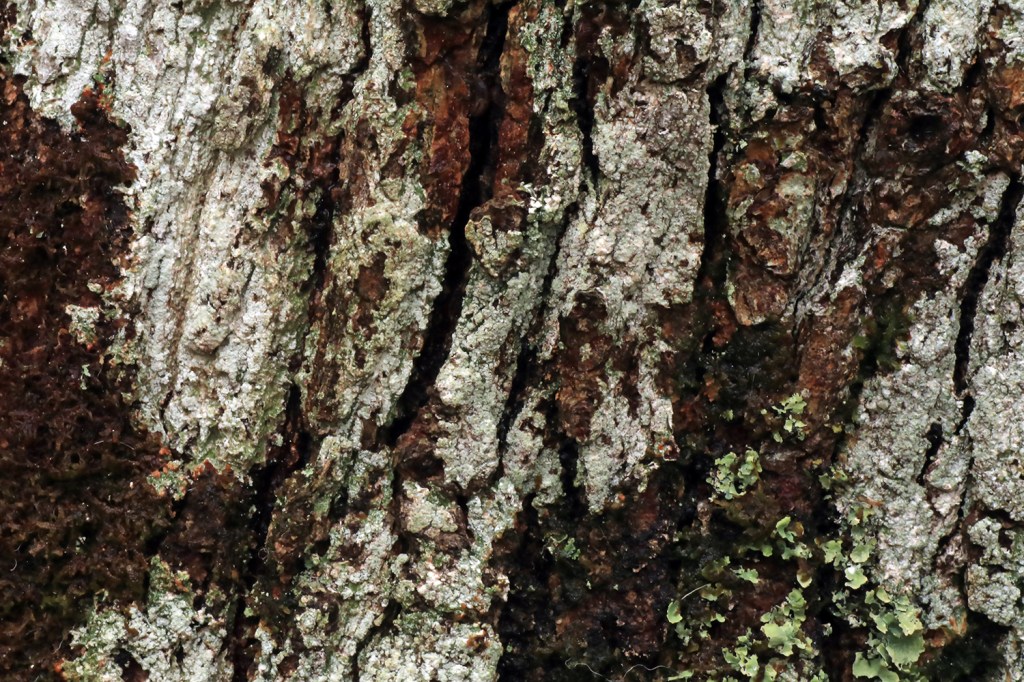
On twigs epiphytic lichens will quickly colonise new growth on branches but must compete with mosses and algae. There are three types of lichen, Crustose which looks like a crust on a bark, such as this one on a deciduous tree:

(South, own collection 2022)

Foliose which attaches like a leaf and Fruticose that attaches to twigs with a sucker like stem and grows like a mini shrub, both can be seen here:

(South, own collection, 2021)

Merlin Sheldrake, author of “Entangled Life: How Fungi Make Our Worlds, Change Our Minds and Shape Our Futures”, gives a good description of lichens saying:

 “They flicker between “wholes” and “collections of parts.” Shuttling between the two perspectives can feel strange. The word individual comes from the Latin meaning “undividable.” Is the whole lichen the individual? Or are its constituent members, the parts, the individuals? This confusion is healthy.” (Look at a lichen, 2021).

References:

Burt, E. (2018) Haloing, lichens and our ancients. At: https://naturebftb.co.uk/2018/03/14/haloing-lichens-and-our-ancients/ (Accessed 07/03/2022).

Woodland Trusts (2021) Look at a lichen At: https://www.wildlifetrusts.org/blog/guest/look-lichen (Accessed 07/03/2022).

Mosses

Also known as Bryophytes, there are 20,000 species around the world which may be microscopic or over a metre in size. They grow in many climates and environments. Tiny, non-flowering mosses are one of the oldest land plants known to Earth, believed to have first appeared around 350 million years ago, long before dinosaurs, and even though they grow slowly, about ¼ inch per century, they are virtually unchanged. In ancient woodlands they grow as green carpet-like mats across forest floors or covering tree trunks. Instead of seeds, mosses have evolved spores to give rise to new plants. They have no vascular system to move substances up through their roots, or move liquid around the plant, and depend on obtaining their water and nutrients by directly absorbing the resources into their leaves while using threadlike rhizoids instead of roots to anchor themselves into the ground. This means that in they need to be almost completely saturated with water. Moss leaves are only one cell thick so have complex leaf structures to maximize photosynthesis.

When in unfavourable, hot conditions: they can almost completely halt their metabolism when stressed. By slowing their biological processes, they just wait until water is available again. As mossy mats can help to prevent soil erosion and increase soil enrichment.

Uses of moss 

Moss has been used for drinking water, decoration, food, fuel, and shelter over the years. In World War I, Sphagnum mosses (the most widespread moss) were used to dress wounds and stem bleeding from injuries. It is the major constituent in peat, a slowly renewable fossil fuel, though emitting more carbon dioxide than coal or natural gas.

References:

Evans, C. (2018) Mighty moss: how these ancient plants have survived for millenia. At: https://www.howitworksdaily.com/mighty-moss-how-these-ancient-plants-have-thrived-for-millenia/ (Accessed 07/03/2022).

Moss: The 350-million-year-old plants that turn the unsightly ‘into things radiant of beauty’ (2019) At: https://www.countrylife.co.uk/nature/moss-350-million-year-old-plants-turn-unsightly-things-radiant-beauty-203327 (Accessed 07/03/2022).

Ferns

Ferns are common in woodlands as most are shade tolerant and can grow all year round.

Hard fern is common in the wet conditions of west and north of Britain, preferring acidic rocks and walls, and are found growing amongst other plant species in ancient woodlands.

(South, own collection 2022)

The epiphyte fern grows on trees and are very common in ancient woodlands. This fern lives half its life cycle on another plant such as a tree, usually the bark and the other rooted in the soil. These ferns start as epiphytes, low on the trunk of a tree, and later grow a single root down to the soil. Though rooted in the soil the fern continues to grow up the tree. Interestingly these ferns cannot live on the bark or on the soil alone and are an exception to the general rule that plants are adapted to live in just one habitat. In this case the fern must cope with living with both water poverty, on the bark, and water excess in the soil. Also, there are less nutrients that the fern needs to survive on the bark, so it must be very efficient at nutrient uptake before its root reaches the soil. What an amazing plant!

(South, own collection 2021)

Reference:

Salt, A. and Salt, V. A. P. by (2019) A fern thought to grow on trees still keeps a root on the ground. At: https://www.botany.one/2019/10/a-fern-thought-to-grow-on-trees-still-keeps-a-root-on-the-ground/ (Accessed 10/03/2022).

Next post: https://nkssite6.photo.blog/category/research/bow-research/other-photographers-same-material/

BODY OF WORK RESEARCH: PART TWO GENRE DEVELOPMENT

FUNGI RESEARCH

Mushrooms: The Art, Design and Future of Fungi (2020) Exhibition Somerset House

I visited this exhibition in 2020. In just a small couple of rooms the works of over 40 artists, musicians and designers inspired by fungi were brought together, collages, watercolours, recipes, illustrations as well as new ways of using mushroom materials especially mycelium.

According to the exhibition catalogue fungi having been objects of witchcraft and decay, became prevalent in art and design in the 1960s, especially after their appearance in children’s literature and botany and recently even more so

Background:

Fungi are closer to animals than plants. There are 2 types, those that carry water and those that break down organic matter. The mushroom that we see are the fruiting bodies of mycelium. Mycelium is the thread like underground root network of fungi, sometimes called the wood wide web. It passes nutrients and messages between plants. Chemically the substance that mycelium uses is similar to the neurotransmitters in our brain.

Plants, animals, humans, bacteria, and mushrooms live symbiotically, and such an “entanglement” are necessary for life. Fungi are needed also for creating products such as cheese, bread, penicillin, and vaccines. Mushrooms are also known for their psychedelic qualities and ritualistic and medicinal uses. Fungi are even used for cleaning oil spills and rehabilitating radioactive sites.

Mycelium can also be nurtured in laboratories by mycelium engineering as a biodegradable alternative to plastic and can be used to make shoes, clothing furniture and so on.

Notable mushroom artists:

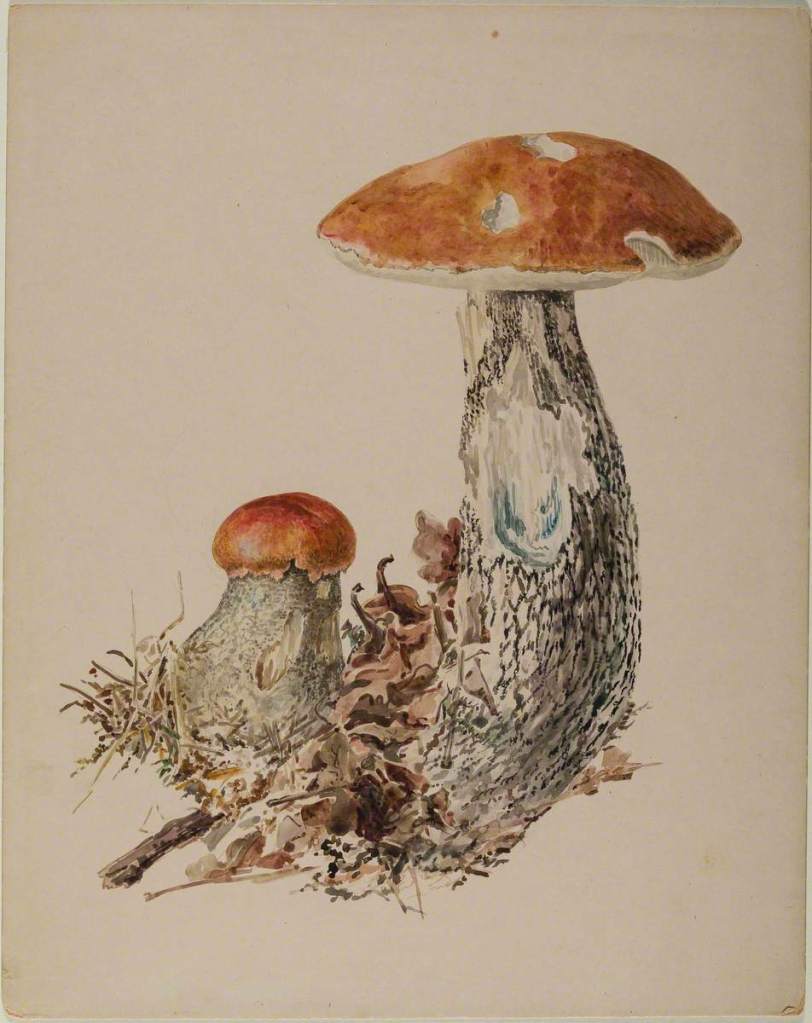
Beatrix Potter had a fascination with mushrooms and painted over 300 water colours of them; her detailed analysis of them was a starting point for her illustrations of nature and landscape in her books. It is suggested that interest in them is partly due to out of interest in the fragility of the natural world and wanting to connect ourselves to nature.

Potter, (Leccinum versipelle, 2022)

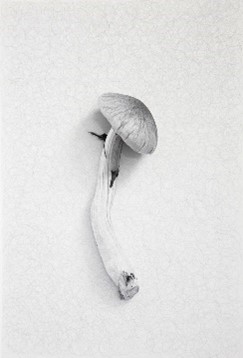
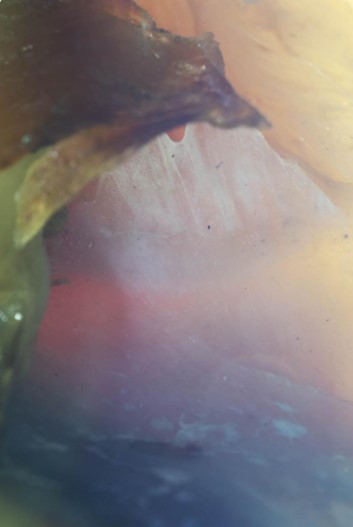
Annie Ratti’s series of overdrawn photographs are part of a larger body of work on psilocybe mushrooms, where she uses photography, drawing, installation, and text to explore their significance and how they grow in a rhizomatic way.

Psilocybin mushroom (The shroom project, 2022)

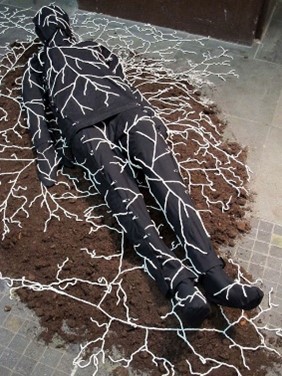
Jae Rhim Lee a Korean American artist, has designed an organic cotton, wood, and biomaterial burial suit, where she has sewn in mushroom spores to help a body decompose and deliver nutrients but not toxins to the environment.

Psilocybin mushroom (The shroom project, 2022)

The exhibition made me look at mushrooms in different ways as well as rethink their potential in areas from art to industry. It illustrates that the mushroom has become a figure of resilience, and points to new ways of living as humans become more disconnected from the natural world.

References:

Catterall, C. and Gavin, F. (2019) Mushrooms: The Art, Design and Future of Funghi. (s.l.): Somerset House Trust.

Hintz, C. (2016) Mushroom Death Suit: Funerals Go Fungal. At: https://www.cultofweird.com/death/mushroom-burial-suit/ (Accessed 04/03/2022).

Leccinum versipelle (2022) At: https://artuk.org/discover/artworks/leccinum-versipelle-312447 (Accessed 04/03/2022).

Mushrooms: The Art, Design and Future of Fungi (2019) At: https://www.somersethouse.org.uk/whats-on/mushrooms-art-design-and-future-fungi (Accessed 06/02/2022).

The Shroom Project (2022.) At: https://www.slashseconds.co.uk/annie-ratti/14/210/submission/the-shroom-project/ (Accessed 04/03/2022).

Further reading/research on mushrooms I’m yet to complete:

ECOLOGY WITHOUT NATURE (2022) At: http://ecologywithoutnature.blogspot.com/2011/04/david-reids-mushrooms.html (Accessed 10/03/2022).

Hall, S. et al. (2006) ‘Dr Derek Reid’ In: The Daily Telegraph 28/01/2006 At: https://www.telegraph.co.uk/news/obituaries/1508984/Dr-Derek-Reid.html (Accessed 10/03/2022).

Netflix (2020) Fantastic fungi. Director: Louie Schwartzberg Writer: Mark Munroe 2019.

Sheldrake, M. (2021) Entangled Life: How Fungi Make Our Worlds, Change Our Minds and Shape Our Futures. (s.l.): Vintage Penguin Random House.

Tsing, A. L. (2021) The Mushroom at the End of the World: On the Possibility of Life in Capitalist Ruins. (s.l.): Princeton University Press.

Weston, P. et al. (2021) ‘Why is it hard to get our head around fungi? (Part one) – podcast’ In: The Guardian 30/03/2021 At: http://www.theguardian.com/science/audio/2021/mar/30/why-is-it-hard-to-get-our-head-around-fungi-part-one-podcast (Accessed 26/10/2021).

Next post: https://nkssite6.photo.blog/category/research/reading/woodland-reading/lichen-ferns-and-moss/

BODY OF WORK RESEARCH: PART TWO GENRE DEVELOPMENT

TREES RESEARCH

A NOTE ON ANCIENT WOODLANDS:

Ancient woodlands are woods that have been continuously wooded for a minimum of 3-400 years (AD 1600 in England and Wales) and this is just half the lifespan of a large oak tree. Britain has lost almost half its ancient woodland since the 1930s, and it makes up only 2 % of British woodland. Ancient trees are recognised as exceptionally valuable, which may be due to their: size, age, condition, or biodiversity.

Ancient woodlands are temperate, not tropical rainforests but their biodiversity is as rich and there are less of them. These old trees provide great micro habits for other species, and the absence of disturbance here provides good habitats for rarer species. Ferns and mosses, species that need damp conditions can thrive on the woodland floor and on the bark of trees. Lichens are a good indicator of ancient woodlands due to their extremely slow growth and need for unpolluted environments. Fungi, usually invisible unless in fruit penetrate and then decompose rotting trees, whether standing or fallen, though mostly hidden are essential to the success and maintenance of ancient woodlands.

Podcast: The hidden language of trees with Suzanne Simard 14.5.21

Simard is a scientist, Professor of Forest Ecology at University of British Columbia. She wrote a PhD thesis and as researched tree connectivity and communication, and its impact on the health and biodiversity of forests (1997), written about in her book: Finding the Mother tree: uncovering the wisdom and intelligence of the forest (Simard, 2021).

  • Forests are not just natural resources, or commodity based, they have memories, wisdom, complex communities, web of fungi through the mother tree. A mother tree is the biggest oldest in the forest. They have vast root systems with old fungi networks which nurture the new seedlings and enhance their defence chemistry, which gets passed onto multiple generations- this is teaching the next generation how to survive.
  • Forests are complex systems showing, interconnectivity, diversity, clean air, hold water, resilient, transport systems.
  • Value the non-resource elements: Carbon, water biodiversity, rather than as a commodity.
  • There are parallels with the brain an example of a not a neurological network, but a biological neural network with conduits for transporting resources, glutamate, serotonin, synapses. When you map the networks in the forests they are constructed like neural networks with interlinked nodes and synapses (where exchanges happen), with glutamate moving throughout the network, these are highly evolved, resilient, efficient networks.
  • There is a symbiotic mutual relationship between fungi and trees mycorrhizal (which means fungal root) below ground network, trees provide the photosynthesis, the fungi provide nutrients from the soil – a physical connection. All trees form these relationships as they are essential for their fitness, whilst fungi rely on trees as they collect nutrients and water from the soil for the trees who provide the fungi with energy from photosynthesis.
  • Trees have a way of communicating, for instance communicating against threat with biological neural network.
  • Trees are also conduits for transporting resources. E.g., Douglas firs have been found to warn ponderous pine about injury and herbivores in the environment that are causing them to die back.
  • Climate change is adapted to and recorded in their seeds, if you destroy trees, you lose this adaptability record.
  • Don’t short circuit natural selection, as when planting conifer forests. Single species ae not resilience. Don’t isolate trees, use the connections between species, collaboration is important. Birch and Fir transport carbon back and forwards between themselves, the community is helping the individual – arboreal socialism? They compete but collaborate, are diverse and resilient forming productive community. Other species don’t grow in isolation, a society with dominant individuals would not succeed. Diversity is strength, and with this tree’s productivity and resilience increases. Single species are more open to destruction by disease, as you often get in cities.
  • Trees in old growth forests hold carbon that have accumulated for centuries. When cut two-thirds disappears into the atmosphere fairly immediately, not to mention the system below ground. This can’t be recaptured within the time we have left to change the course of climate change.
  • Need to increase old woodlands, rather than replant trees. Challenge consciousness and business models. In Monkswood in East Anglia, Wilderness plots were established (1960s), where a barley field was left next to ancient woodland and now has a variety of ancient species growing there – natural regeneration. Stop cutting down old growth forests. If encouraging recovery of old forest, leave oldest trees in place, take out smaller trees to boot strap the natural regeneration to make a healthy diverse eco system. As climate changes more rapidly than trees can adapt, evolve, and migrate, if they can’t achieve this they’ll die, so to help them to survive and hold carbon, we need to enable a mix of naturally regenerated seedlings to support migration by scaffolding to create a viable ecosystem. Naturally, regenerated trees are more successful than planted forests, they hold adaptations in their seeds.
  • Consumption: use alternatives or less. At least, use only second growth forest where losses have already been made and enhance them by leaving any older trees.

My reflections:

  • Forests are about connections, resilience.
  • Species don’t grow in isolation diversity is important for the strength of both individuals and communities, they compete but they collaborate, and resilience and productivity increases.
  • We should value forests by their true impact on our lives, for example producing water, carbon, clean air. Convert and preserve what we have left.

References:

Intelligence Squared (2021) The Hidden Language of Trees with Suzanne Simard (Subscribers only). At: https://www.youtube.com/watch?v=bIn4CWSjiEg (Accessed 01/03/2022).

Simard, S. (2021) Finding the Mother Tree: Discovering the Wisdom of the Forest. (s.l.): Penguin Books, Limited.

Other books that I will write about later:

Beresford-Kroeger, D. (2019) To Speak for the Trees: My Life’s Journey from Ancient Celtic Wisdom to a Healing Vision of the Forest. (s.l.): Random House of Canada.

Deacon, A., and V. D. A. (2020) For the Love of Trees. (s.l.): Black and White Publishing Limited.

Deakin, R. (2008) Wildwood: A Journey Through Trees. (s.l.): Penguin UK.

Geddes, L. and Finlay, M. (2021) ‘Unearthing the secret social lives of trees – podcast’ In: The Guardian 29/04/2021 At: http://www.theguardian.com/science/audio/2021/apr/29/unearthing-the-secret-social-lives-of-trees-podcast (Accessed 26/10/2021).

Next Post: https://nkssite6.photo.blog/category/research/reading/woodland-reading/fungi/

CONTEXTUAL STUDIES: ASSIGNMENT 1-RESEARCH

ADDITIONAL RESEARCH FOR ESSAY

This is a “light touch” on essays/books, where I have reread and made notes that will be of help to me for assignment 1.

CAMERA LUCIDA ROLAND BARTHES (1981)

This book written by French theorist and philosopher Roland Barthes, is both an investigation into how a photograph affects the viewer (photographer or spectator), as well as being a reflection on the death of his mother.

Camera lucida was an optical apparatus used by artists, which facilitated drawing an object through a prism, with one eye on the model and one on the paper. Barthes asserts that a photograph is more like this than the camera obscura; it cannot be penetrated because it is flat, and the power of the image prevents penetration. Barthes shares his belief that photography cannot be reduced to codes of language, how it acts emotionally on the body as well as the mind.

He says that the photograph is the object of three practices/intentions: to do, to undergo, to look. The operator is the photographer, the spectator is us and others, and the object photographed is the target or spectrum (Barthes, 1981:10).

He develops his concepts of studium and punctum:

What I feel about these photographs derive from an average affect”, and a French word for general human interestexists in Latin, stadium,It is by stadium that I am interested in so many photographs” (Barthes, 1981:26).

Punctum is a Latin word for wound, prick, mark, or a puncture point,a photograph’s punctum is that accident which pricks me” is poignant to me (Barthes, 1981:27). However, if such a puncture is deliberately placed by the photographer, then he says they don’t cause punctum “the detail which interests me is not…intentional” (Barthes, 1981:47). He also describes punctum as “a kind of subtle beyond” (Barthes, 1981:59), without which images are relatively inert to Barthes.

In his view by recognising the stadium the spectator is identifying the photographer’s intentions and does allow an understanding of the operator (Barthes, 1981:27).  

The stadium is ultimately always coded, the punctum is not” (Barthes, 1981:51). He believed that punctum should occur by chance rather than by creative composition. He suggests that you should shutting your eyes to let the image speak in silence, without considering technique, reality, art etc, “to allow the detail to rise of its own effect” (Barthes, 1981:55).

If the punctum creates what Barthes refers to as a blind field, a subjectivity outside of the image, then I would ask whether the photographer can control the interpretation of the image? P57

Barthes view was that the key gesture of the operator is to surprise with something rare, something the eye wouldn’t normally see, by perspective contortion, luck, or technique. It can be that there is a defiance in making it obvious as to why a photograph is taken, I would call this ambiguity. Barthes asks do these make photography notable, or in reverse does this make what is photographed notable? (Barthes, 1981:34).

I like the expression Barthes uses as the expression of a truth, “The air(Barthes, 1981:109) whichis not present when photographing an object, but it is for a person apparently. Barthes talks about the air of a face as unanalysable, “the luminous shadow which accompanies the body” Barthes, 1981:110).

He writes of how society tries to “tame” photography. One way is by making photography into art, which he says is possible when its “noeme” essence, is no longer present, the other is to generalise the image and make it banal (Barthes, 1981:118).

I am interested in theories about realism, Barthes says tame photography has relative realism, when tempered by aesthetic or empirical habits, however he calls photography “mad” if the realism is absolute, saying the choice is his or now ours, (Barthes, 1981:119).

Reference:

Barthes, R. (1981) Camera Lucida: Reflections on Photography. (1999): Farrar, Straus, and Giroux.

WAYS OF SEEING JOHN BERGER (1972)

This book was based on a television programme by the same name, and has become an important text on art criticism, which puts photography in the context of western art. These are the points I now find particularly relevant to my assignment 1 work:

Berger explains that seeing comes before words, then words are used to explain what we see. We never look at just one thing, but always in relation to ourselves and “things” and “the relation between what we see and what we know is never settled” (Berger et al, 1972:7). “When we “see” a landscape, we situate ourselves in it” (Berger et al, 1972:11).

As well as personal experience, our seeing is also affected by history and culture, and how this gives meaning to our lives; this in turn changes the way we see things. “The photographer’s way of seeing is reflected in his choice of subject” (Berger et al, 1972:10), but also appreciating an image depends on the viewers way of seeing. Therefore, Berger asserts that art needs approaching in a holistic way, that relates to the photographer’s and viewers experiences.

Reference:

Berger, J. et al. (1972) Ways of Seeing. (s.l.): British Broadcasting Corporation.

Understanding a Photograph (Berger, 2013)

Understanding a Photograph is a collection of writings on photographs presented by John Berger. Withing this is his essay on understanding a photograph.

Berger says that photographs are evidence of human choice, the result of a photographer’s decision that this is worth recording (loc 434). He says that at the simplest level the message decoded means “I have decided that seeing this is worth recording” (loc 434), furthermore that the important time is the moment of photographing. He explains that the difference between memorable and banal images is how well the photographer explains the message (loc 434), “photography is the process of rendering observation self-conscious” (loc 434). Berger believes that an effective photograph is one that has a “quantum of truth” (loc 458) essentially some ambiguity.

Every photograph is in fact a means of testing, confirming and constructing a total view of reality” (loc 469)

The introduction is by Geoff Dyer and sets out how Berger was influenced by the writings of Sontag and Barthes. Whilst Barthes was influenced by Sontag and Sontag by Barthes. Also, all of them were influenced by Walter Benjamin, and interestingly that for all four writers’ photography was not their specialism. Dyer speculates whether Berger’s fascination with photography was with how its meaning can best be drawn out (Berger, 2013: loc 140), a goal shared by Barthes, what is the essence of photography? (Berger, 2013: loc 140)

Reference:

Berger, J. (2013) Understanding a Photograph. [Kindle edition] From Amazn.co.uk (accessed on 25.11.21).

Seeing photographically Edward Weston (1943)

Weston is just one photographer who believed that photography could reveal emotional insights. He recognised that the challenge in photography isn’t using the technology but understanding its capabilities so that he can translate the elements into what he wants to share). Weston goes o to list the variables that a photographers can use to achieve his composition: “the position of the camera, his camera angle, or the focal length of his lens” (Weston, 1943:173). He also comments that few photographers master their medium but are instead controlled by it. Weston talks about using simple equipment and considering the whole process. On composition again he espouses simplicity, not following set rules, to enable revealing photographic sight.

Weston suggests that photography does enable deep looking at subjects and presenting their reality. Most interesting to me is his assertion that photography can “reveal the essence of what lies before his lens” with clear insight (Weston, 1943:175).

Reference:

Weston, E (1943) Seeing Photographically in The Encyclopaedia of Photography, vol 18 (1964) At: https://cupdf.com/document/seeing-photographically-edward-weston.html (Accessed 24/11/2021).

Liz Wells The Photography reader

Well’s introduction to the meaning and interpretation of photography (Wells, 2019:123) gave me a helpful overview of the idea of semiotics. How the movement grew from its emergence by Saussure in 1916, and development by Barthes and Pierce in the 1950-60s, from an examination of non-verbal communication, to how meaning can be drawn. Initially semiotics proposed that the image positioned the reader, with no allowance for meaning and interpretation. Later Barthes in “the death of the author” and other writers looked at the effects of individuals and social groups on meaning, to the point where “the image maker was merely an agent for the recirculation of conventional imagery” (Wells,2019:125). Wells points out that now semiotics is often used in conjunction with other disciplines and less rigidly.

Wells shares the viewpoints of other theorists such Walker, Jussim and Edwards, that meaning isn’t fixed in an image, but is arrived at by our own experiences and how we encounter an image. Reading this led me to the theories of Ian Walker, see below.

Reference:

Wells, L. (2019) The Photography Reader: History and Theory. (s.l.): Routledge.

Ian Walker. Looking through the picture plane: On looking into photographs (2005)

Walker offers another way of reading and interpreting through the ways in which our eyes enter the picture; what is going on in the space around us. He says that “reading the space” – or reading into it- is a problem of visual perception” (Walker, 2005: 15). How we interpret spatial distance in images, through the gradients of texture, overlapping objects and so forth is one part of visual perception. However not only where and how an image is presented but also the influence of our memory of our own lived experience, perception, memory, and imagination affects our visual perception Ultimately, he asks, is a picture an object in itself or is it a window onto the world? You could argue that a photograph is both of those.

Reference:

Walker, I. et al. (2005) Image & Imagination: Le Mois de la Photo À Montréal 2005. (s.l.): McGill-Queen’s Univ.Press.

The Ontology of the Photographic Image’ (Bazin, 1960)

Andre Bazin was a French intellectual and theorist (1918-58), who was interested in the relationship between photography and reality. Ontology is the branch of metaphysics dealing with the nature of being. It studies concepts such as existence, being, becoming, and reality. 

In this essay Bazin outlines the changes in western painting from spiritual expression to imitation of the world, with the advent of the camera obscura in the 15th century giving the artist the technology to “create the illusion of 3-dimensional space within which things appeared to exist as our eyes in reality see them” (Bazin, 1960:6). He goes on to say that painting was then torn between creating reality and creating a spiritual symbolic reality. These he calls two different phenomena which great artists have always been able to combine, and yet the question of realism had been more easily satisfied with film and photography.

Bazin explains that the thought that photography is objective was linked to the French term for lens “objectif”. The personality of the photographer was thought only to intervene with the selection of the photographed object, thought to be a lesser influence than the role of the painter.

However, Bazin sets out that “by the power of photography, the natural image of a world that we neither know nor can know, nature at last does more than imitate art: she imitates the artist” (Bazin, 1960:8). More so he says that photography can surpass art in creative powers, evidenced by surrealist photographers who combine the mechanical and aesthetic effect of photography on our imaginations. Bazin believes that photography is highly creative as it produces images that are both reality and hallucinatory, in a surrealist fashion.

Whilst Bazin acknowledges the physical relationship between the object photographed and the photograph, as the image separates the object from the time, space, place that it exists in. Therefore, the photograph is not exactly reality, nor is it imaginary. This is gives lots of possibilities to photography. The idea of photography as a meeting of the real and the imaginary will work well for me in my photography.

Reference:

Bazin, A. and Gray, H. (1960) ‘The Ontology of the Photographic Image’ In: Film Quarterly 13 (4) pp.4–9. At: https://www-jstor-org.ucreative.idm.oclc.org/stable/1210183?seq=6 (accessed 1/12/21).

NOTES ON LANDSCAPE GENRE from Photography a critical introduction (Wells, 2015:344).

Modern landscape photography was associated with American Photographers such as, Ansel Adams, Minor White, and Edward Weston who believed in pure photographic seeing. These modernist photographers emphasised the spiritual and aesthetic aspects of landscape.

Postmodern landscape photography engages with social economics and politics as well as aesthetics. Landscape can be used with content and aesthetics coming together to tell a story.

Robert Adams in Truth in Landscape suggested the best landscape pictures involve geography, autobiography, and metaphor -aesthetics and the cultural resonances (Adams, 1996: 14). Wells suggests this is a good starting place to critique landscape photography.

References:

Adams, R. (1989) Beauty in Photography: Essays in Defence of Traditional Values. (s.l.): Aperture.

Wells, L. (2015) Photography: A Critical Introduction. Abingdon: Routledge.

Next post: https://nkssite6.photo.blog/2021/12/14/contextual-studies-assignment-one-draft/
REFLECTIVE JOURNAL: PERSONAL REFLECTIONS

21.11.21

Finally I am moving forwards. I feel like I have been studying various parts of a whole, but couldn’t see the bigger picture. I have been reading, and reading and thinking….

Having submitted BOW assignment 1, I am now working  on CS assignment 1. I have been over my notes and reread parts of Rose’s Visual methodologies as I know understand how I can apply this.

I have decided that I will use compositional analysis combined with semiology to analyse images for my essay. Having reread my coursework and can now see that of the concepts from part 1, I am likely to be researching poststructuralism and the language of photography, but combining this with research on photography and reality. I can see that I am reflecting back to earlier interests on different ways of seeing and responding to visual materials, provoked in both my Landscape and Documentary courses.  

There is much more to read and re read, however I think that now is the time to write my assignment 1 C&S essay, understanding that I am only at the beginning of this journey and that I will be able to expand my research further soon.

REFLECTIVE JOURNAL- RESEARCH: READING

My tutor suggested reading Gillian Rose’s Visual Methodologies: An interpretation to the Interpretation of Visual Materials (2001) to look at a method you might use (or two) to articulate the work I am going to study in CTS.

This text does give a useful range of methods that can be used to interpret visual images. Here I am extracting from my more extensive notes, thoughts that are most pertinent me at this stage.

When introducing ways of looking at visual material she clarifies that:

  • Vision is what the human eye is physiologically capable of seeing.
  • Visuality refers to the way in which vision is constructed- what is seen and how it is culturally constructed.
  • Ocular centrism: the apparent centrality of the visual to contemporary Western life.
  • Simulacrum: There are different ways of seeing the world and the critical task is to differentiate between the social effects of those different visions (p9 pdf.

Rose suggests 5 aspects of recent literature that engage with visual culture which are useful for thinking about the social effects of images:

  1. Images should do something, have their own visual effect.
  2. These effects may affect the way images visualise or make invisible social difference.
  3. Consider how images they are looked at and the relationship between things and ourselves.
  4. Visual images are embedded in a wider culture.
  5. The importance of audience and their response.

Rose proposes that to understand the importance of visual images:

  1. Take images seriously.
  2. Think about the social conditions of images.
  3. Consider your own way of looking at images.

Visual imagery is always constructed in some way and therefore we should always take a critical approach to it. Any approach should think about the agency of the image, the social practices and effects of its viewing, and reactions on the viewing by various audiences including the academic critic.

Rose suggests we should consider three sites of the meaning of images:

  1. The production
  2. The image itself
  3. The sites of the image (audience) and different aspects of these, technological apparatus, compositional, and the social, economic, and political context.      

Theoretical debates about how to interpret images, is about which of these sites and modalities is most important for understanding an image. Rose suggests these methodologies:

Compositional interpretation: Colour (hue, saturation, values), spatial organisation, light and expressive content. This is mostly concerned with the image itself in its compositional modality. It does pay some attention to the production of images, especially their technologies.

Disadvantage: It isn’t interested in the social practices of visual images,  

Content analysis “counting what you (think you) see”, a quantitative methodology, which developed as a social science research method to be scientific, repeatable and therefore valid. It offers clear methodological guidelines.

Disadvantages:

  • It doesn’t use reflexivity of the viewer or researcher.
  • The relative significance and context are difficult to address.
  • content analysis has no way of dealing with those sites at which the meanings of  images are made other than that of the image itself.

Semiology (semiotics) are analytical tools for seeing how images relate to broader systems of meaning. It is the study of signs, which depends on the distinction between the signifier and the signified of the sign, and focuses on the image itself. It is not simply descriptive. Semiological studies focus on the image itself, with attention to audiencing and reflexivity.

Psychoanalysis is a range of theories dealing with human subjectivity, sexuality and the unconscious, and has a vocabulary for the effects of these on audiences.

Disadvantage: Psychoanalysis does not address the social practices of the display and the viewing of visual images.

Discourse analysis 1: The site of the image itself (text, intertextuality and context)

This is a complex theoretical legacy of Foucault that has contributed to methodological practices. Discourse analysis I, uses `discourse’ referring to all forms of talk and texts. It uses the notion of discourse to address the rhetorical organisation and social production of visual, written and spoken materials.

Disadvantage: It doesn’t consider the social practices and institutions through which discourses are expressed.

Discourse analysis II: Site of production (institutions and ways of seeing)

Uses similar methods to discourse 1, but is more about the way discourse is produced by institutions and their practices, rather than to the visual images and verbal texts. It is more concerned with issues of the articulation of discourses through institutional apparatuses and technologies and power. Who, when and why is it produced for?

Disadvantages:

  • Less interested in the site of the image itself.
  • Not concerned with reflexivity

Rose suggests questions to use when interpreting visual images, these are the ones that most interest me:

The production of an image:

Was it made for someone else?

What technology did it depend on?

What are the social identities of the maker, owner and the subject?

What are the relations between the maker, owner and the subject?

Does the form of the image reconstitute these identities and relations?

The image itself:

How are the components of the image arranged?

Where is the viewers eye drawn to?

What do the different components of the image signify?

What knowledges are being employed or excluded?

Is it a contradictory image?

The audience:

Who was the original audience, the current audience?

How was it displayed originally?

How is it circulated, re displayed, stored?

What is the relationship between the image and its viewers?

Where is the spectator situated?

What reaction does it provoke in viewers?

How has its interpretation been affected by text, circulation, publicity, display?

Is more than one interpretation possible, especially by different audiences?

As Rose states each of these methodologies have limited focuses, and if combining them you should consider theoretical accuracy, but that overall it is important to recognise the effects of both an image’s way of seeing, and your own.

At this stage the method that I am most likely to use is semiology. It offers a way of looking at images carefully, including social differences and the effect of images. However, I do have reservations. Reflexivity, will be important in my work, not only my own, but my viewers and it seems semiology may not allow much for this. In semiology the image causes the audience’s position.  

I may also use compositional interpretation, though it “concentrates almost entirely on the compositional modality of the image itself “(Rose,2001 :191), she does recommend that the detailed viewing of an image is essential initially for a critical understanding and that hence this method may be a good method to use before moving onto other methods. I am interested the expressive content of images, which Rose calls the feel of an image … as `the combined effect of subject matter and visual form’ (Rose,2001:52). She suggests that compositional interpretation may address an image’s possible effects on a spectator (Rose, 2001:52), and that this is useful, provided it doesn’t obscure other factors when analysing the meaning of an image.

Possibly mixing these methodologies for interpreting visual materials might be useful for me.

Reference:

Rose, G. (2001) ‘Visual Methodologies. An Introduction to the Interpretation of Visual Materials’ In: PDF At: https://www.miguelangelmartinez.net/IMG/pdf/2001_Rose_Visual_Methodologies_book.pdf

Next post: https://nkssite6.photo.blog/category/contextual-studies/coursework/cs-assignment-1/cs-assignment-additional-research/

REFLECTIVE JOURNAL: EXHIBITION

Coming up for air: A retrospective- Stephen Gill 16 October – 16 January 2021, ARNOLFINI, Bristol


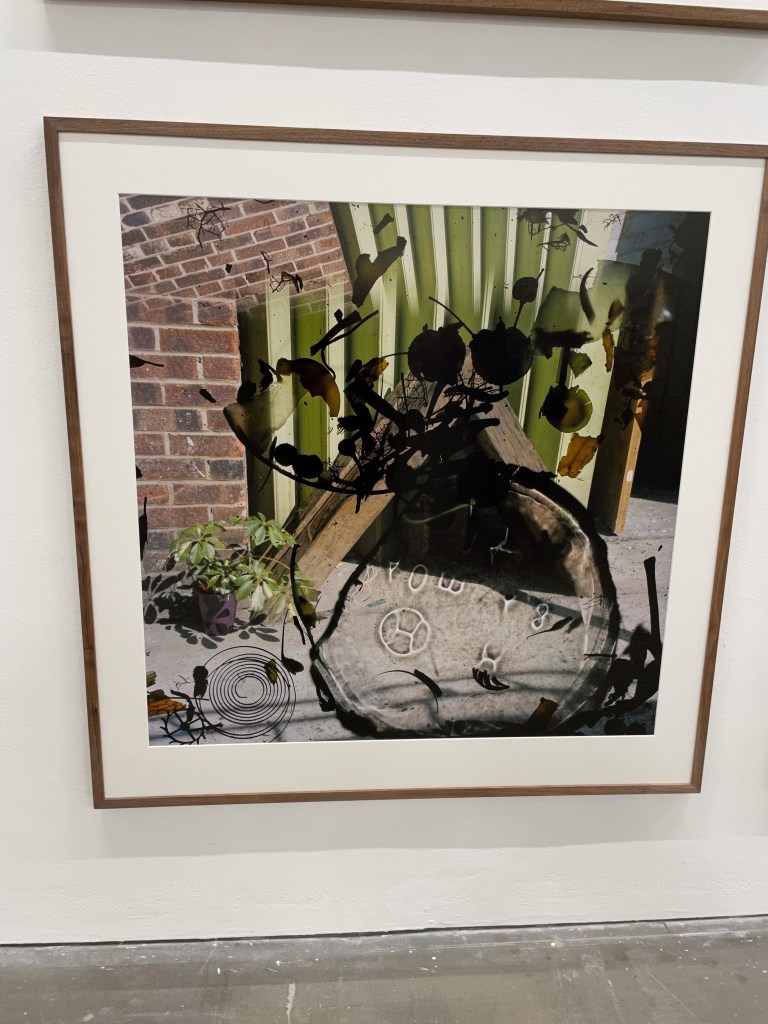
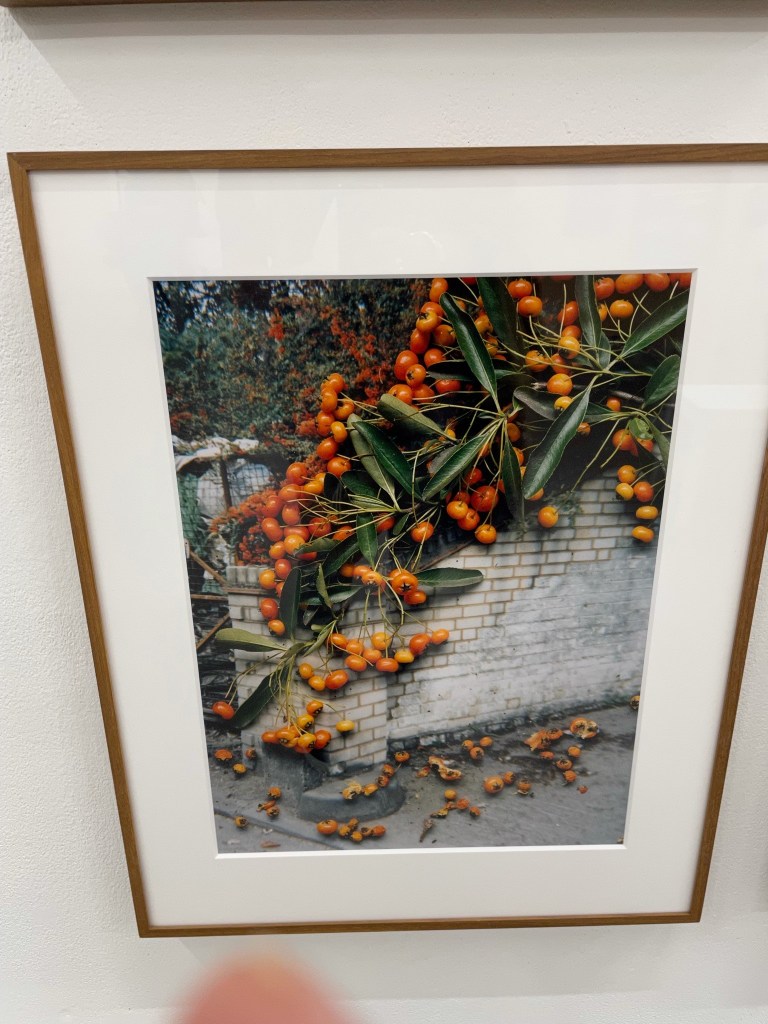
This exhibition draws together new and previously un-exhibited work from the Bristol born and based photographer. He is described as a “‘documentarist’, ‘anthropologist’ and ‘dazzling visual poet’”, Bristol Photo Festival (2021) his over-arching ethos is experimentation, which has led to chemical and alchemical experiments such as photographic burials, floral collage, in-camera photograms and submerging work. His experimentation takes his work beyond the usual boundaries of photography.

The exhibition presented a huge amount of his work, I detail below the series that were of particular interest to myself or my practice:

Please notify the sun (2020):

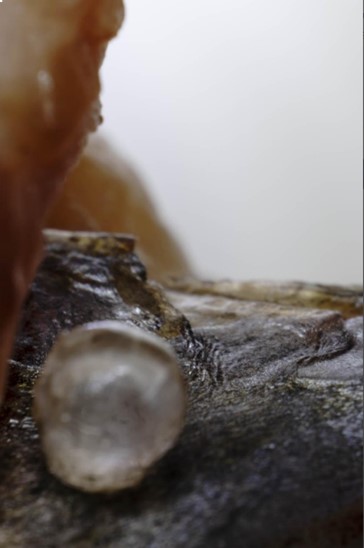
is a good example of what the gallery guide describes his work as exploratory journeys. For this he repeated a journey 9 times over 10 weeks to photograph a decaying fish he’d caught. To achieve this, he prepared the equipment he’d need beforehand, worktop, fridge, microscope, and lights. The gallery description describes the series revealing an unknown but somehow unfamiliar environment as you travel through the fish. The images are microscopic photographs of a fish, although they would be unrecognisable as a fish if you didn’t know this. They appear as unusual abstract shapes in a variety of colours some quite strong, with textures; through these images Gill creates a whole new landscape through the fish’s body.

Words, B. (s.d.) Please notify the sun. At: https://beyondwords.co.uk/please-notify-the-sun (Accessed 09/11/2021).

Night procession 2014-17:

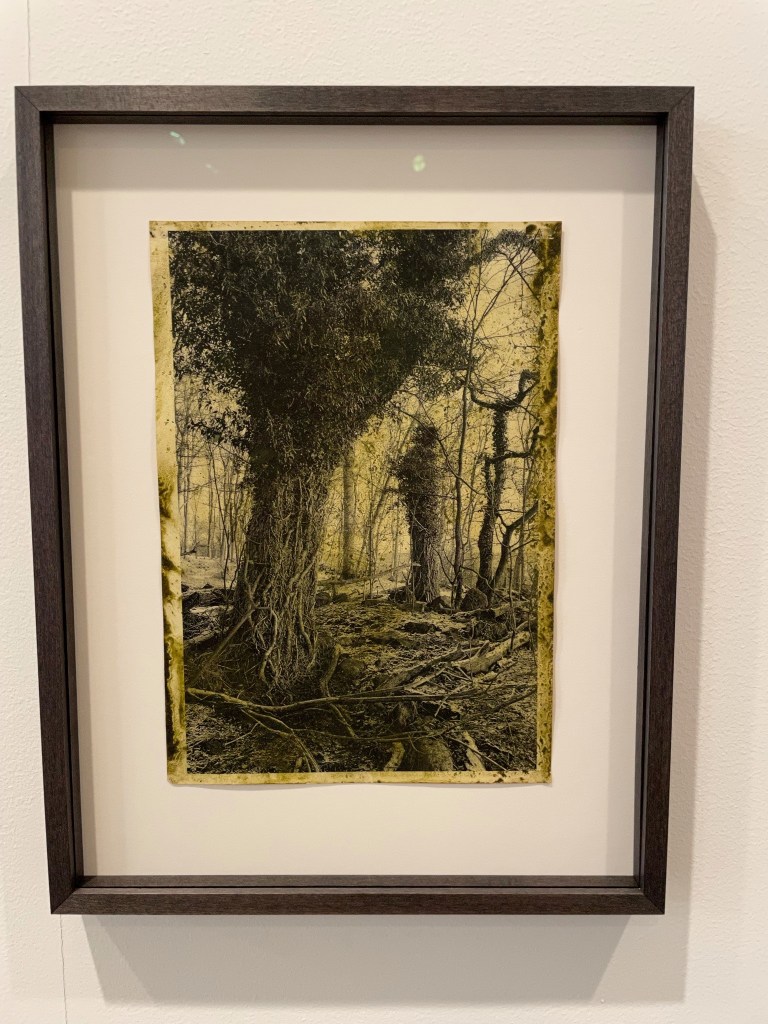
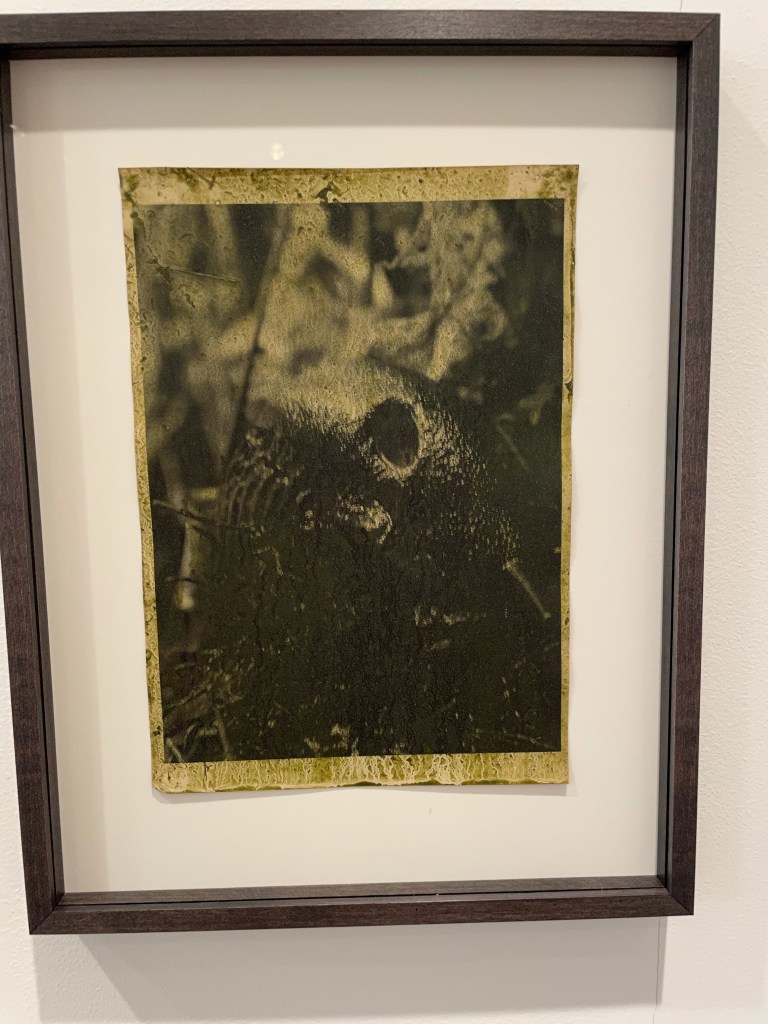
Gill took these images in a Swedish forest by attaching cameras with motion sensors to trees at a low level to capture creatures at night. Here he uses chance as a method, relinquishing to a degree his authorship of the photographs, encouraging the subjects to present themselves. These are printed with locally collected plant pigments, it was the beauty in the organic black and white prints now as collotypes which attracted me, the plant and tree subjects rather than the animal subjects.

Gallery installation images

Buried 2005-6:

The gallery text describes this as a:

collaboration between myself and the place. I would make half the work and the place would make the other half. It was an early attempt to step back as the author” (Gill, 2021).

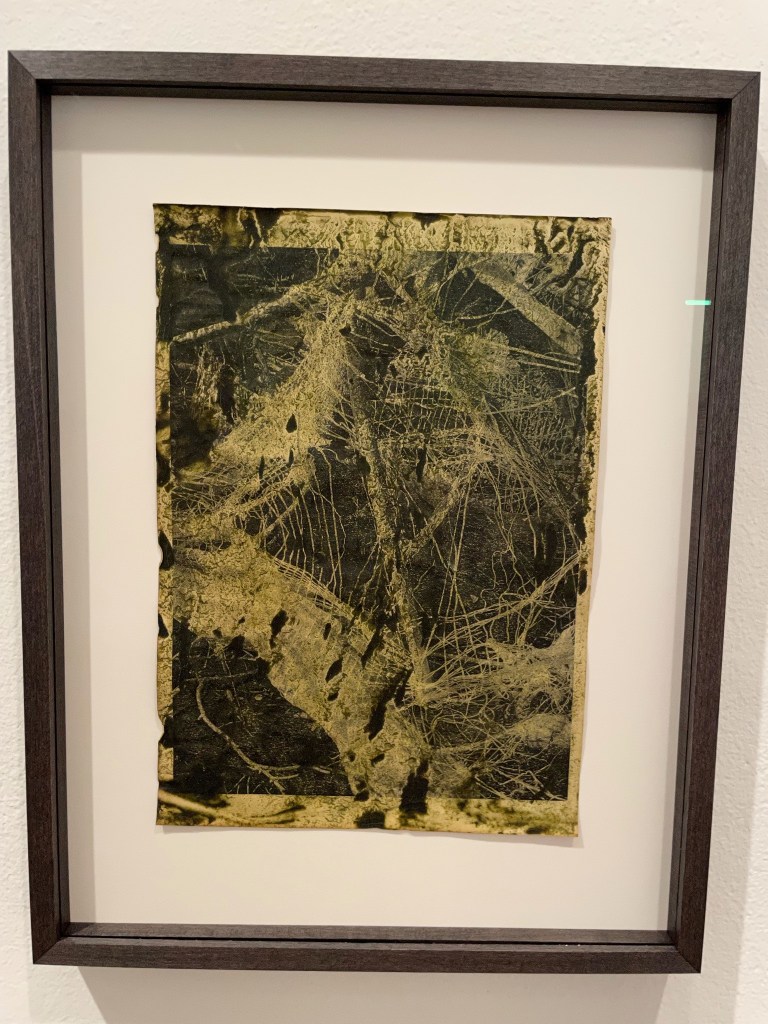
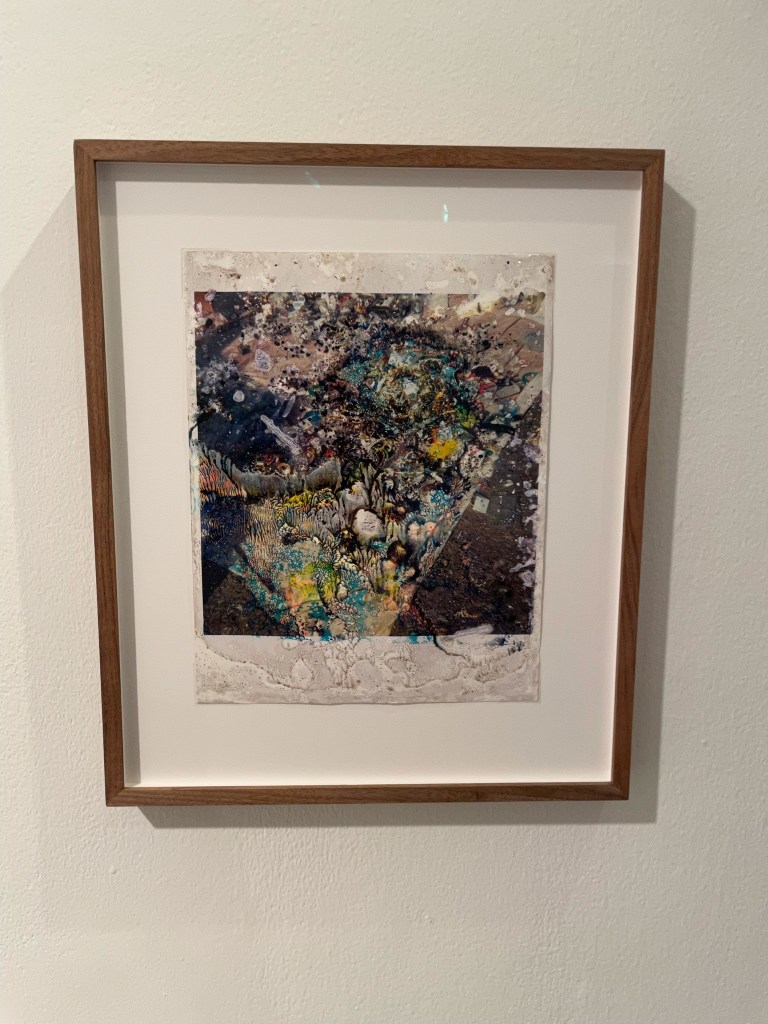
After taking the images he buried them beneath the ground for varying lengths of time, dictated by the amount of rainfall, and varying depths and positions; allowing the “place” to make its mark upon the work. Each photograph bears individual traces of time. The original images are now very distorted:

Gallery installation image

Off ground 2011:

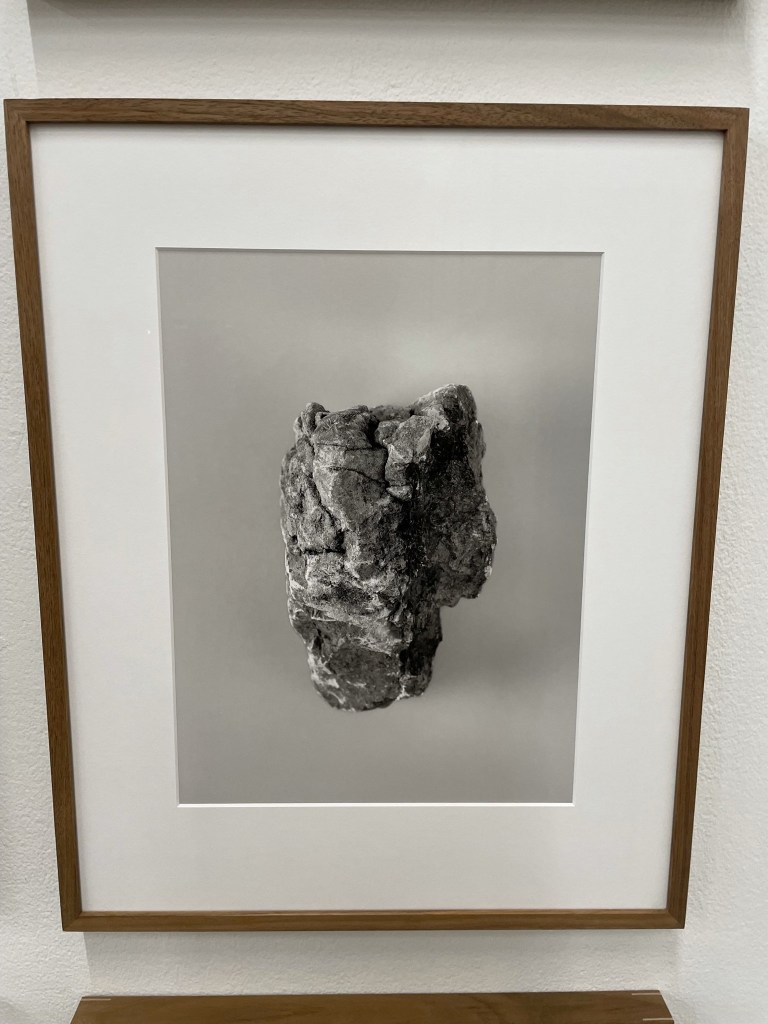
This was Gill’s way of responding to the aftermath of the 2011 London riots. Not wanting to add to the film and stills footage of the violence he collected fragments of thrown rocks and rubble. These he took back to his studio and made photographic portraits of them. An interesting method of capturing an event, Gill says “I see such studies as starting points for reflection, that are pinpointed to a certain time and place” (Gill, 2021).

Talking to Ants 2009-2013:

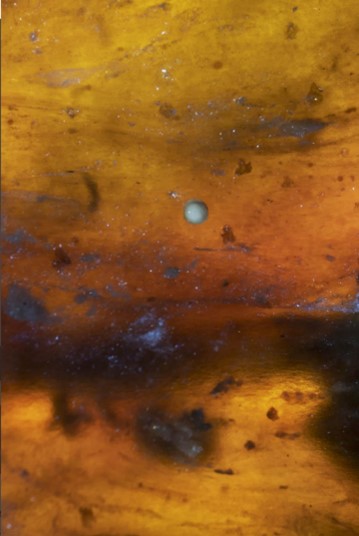
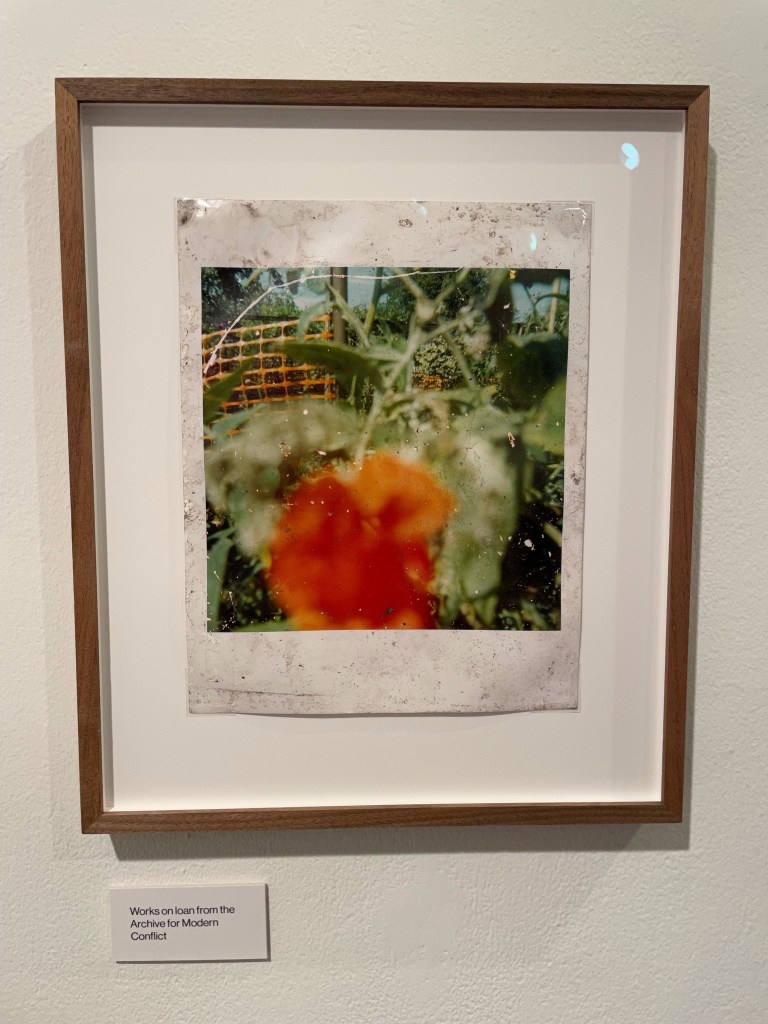
Is described as work that is both in front and behind the lens. Gill scooped up objects and inserted the detritus (dust, glass, plastic, insects, plant life and so on) into the body of the camera, resulting in surprise outcome again, with both chance and intention colliding in the images he knew the ingredients, but not the outcome. He describes this as incapsulating the spirit of the place in film emulsion “like objects embedded in amber” (Gill, 2021). Here again is confusion of scale, lack of information and ambiguity. The background objects are obscured by the items in front of them from inside the camera. The colour of the objects changes the landscape behind and the size of them alters the sense of scale; the layering creates new landscapes.

Hackney flowers 2004-7:

This is an attempt to describe what a place feels like beyond a visual description, an attempt to capture the essence of it. Taken in Hackney like many of his series, he added organic matter, such as flowers to the images, whilst he also buried some of the images. For this series he used a medical camera which resulted in a strange and confusing sense of scale. Base images with people place and objects overlayered with organic matter often to deliberately create an illusion.

My learning:

I was amazed at the breadth of Gill’s work. I had briefly researched Gill for my BOW genre coursework and then commented that his techniques did not appeal to me but that it demonstrates how broad a photographic response to a place can be. However, having viewed his work firsthand I found aspects that I should note:

  • Value in letting your curiosity lead you.
  • Playing with scale, whether that is with the equipment used (Camera, lens, lighting) or other methods.
  • Revealing and denying
  • Finding ways of allowing chance and intention to work together- possibly relinquishing authorship in some way.
  • Experimentation
  • Finding alternative ways of place making its mark on work

Reference:

Bristol Photo Festival (2021) Coming up for Air: A Retrospective – Stephen Gill. At: http://www.bristolphotofestival.org/coming-up-for-air-a-retrospective-stephen-gill/ (Accessed 09/11/2021).

Next post: https://nkssite6.photo.blog/category/contextual-studies/coursework/part-one-visual-culture-in-practice/walter-benjamin/

REFLECTIVE JOURNAL: EXHIBITION

HELEN SEAR EXHIBITION WITHIN SIGHT Bristol 23.10.21

This was part of a shared exhibition with 2 distinct series with Robert Darch called Turn to Return. I was interested inDarch’s exhibition The Island, as he made the landscape images as a response to Britain’s vote to leave the European union; interested in that he has used landscape to represent his feelings about a tangible other subject – just as I am contemplating doing in my BOW.

Helen Sear’s series of black and white photographs were made in December 2019 whilst she repeatedly walked a mountain route, Sear says “the photos explore imitation and contagion as forms of magic through repetition and contact…they reveal a path whilst simultaneously denying a view” (Sear, 2021).

I understand from her exhibition notes that the visual denseness of the trees and the contours of the boulders should lead us on and off of the path, and cause us to ask what lies behind them, however without this narrative I would struggle to find meaning in them. Though in relation to myself intending to use landscape as metaphor it reinforces that an artist’s intention may not be taken on by the viewer.

Reference:

Sear, H (2021) Exhibition notes. Within Sight, Bristol. Centre Space Gallery.

Next post: https://nkssite6.photo.blog/category/reflective-journal/exhibition/stephen-gill-23-10-21/

REFLECTIVE JOURNAL: EXHIBITION

Study day Bristol Photo Book Fair 24.10.21

This was extremely useful to me on many fronts.

Firstly, the material provided before- hand by the tutor Jayne Taylor on the padlet that she created for the study event.

The pre reading suggested on Photo Books was excellent, see my review on the padlet: https://oca.padlet.org/jayne_taylor2/d4orvu9j0b2o028l

Photobook Reviews

I am glad that I had done the course prereading on Photo books before the exhibition and as I enjoyed the books, I was able to assess the books for different criteria. There were those that I appreciated not for their content or concept but for their design.

There were those the design and their concept fitted.

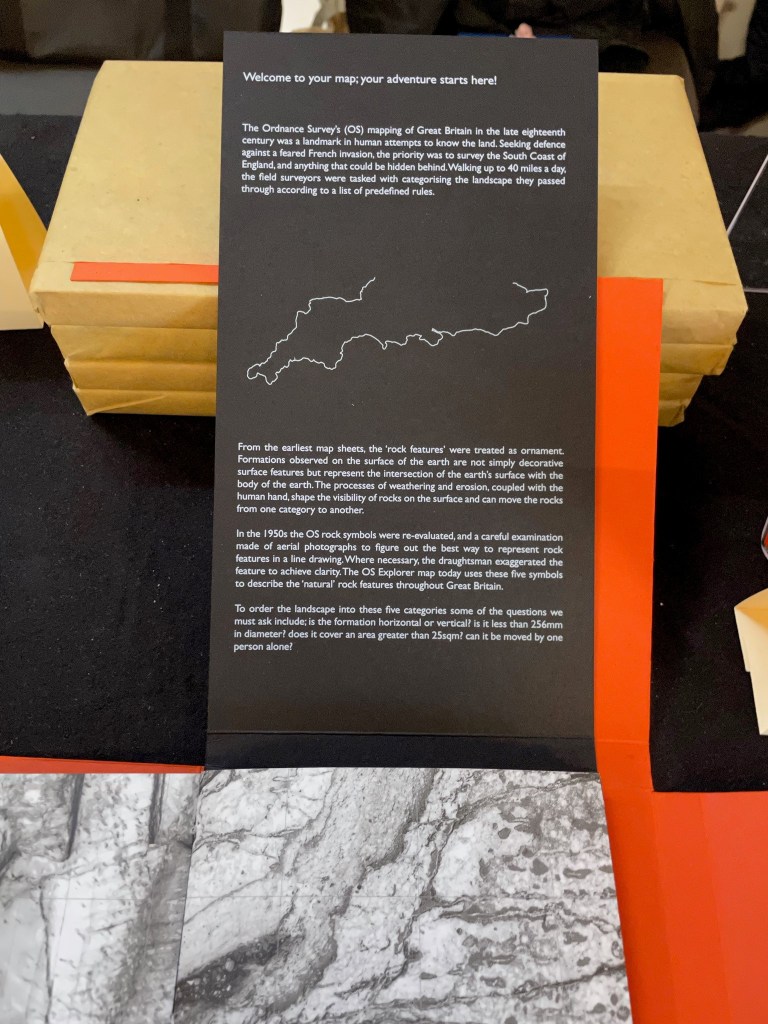
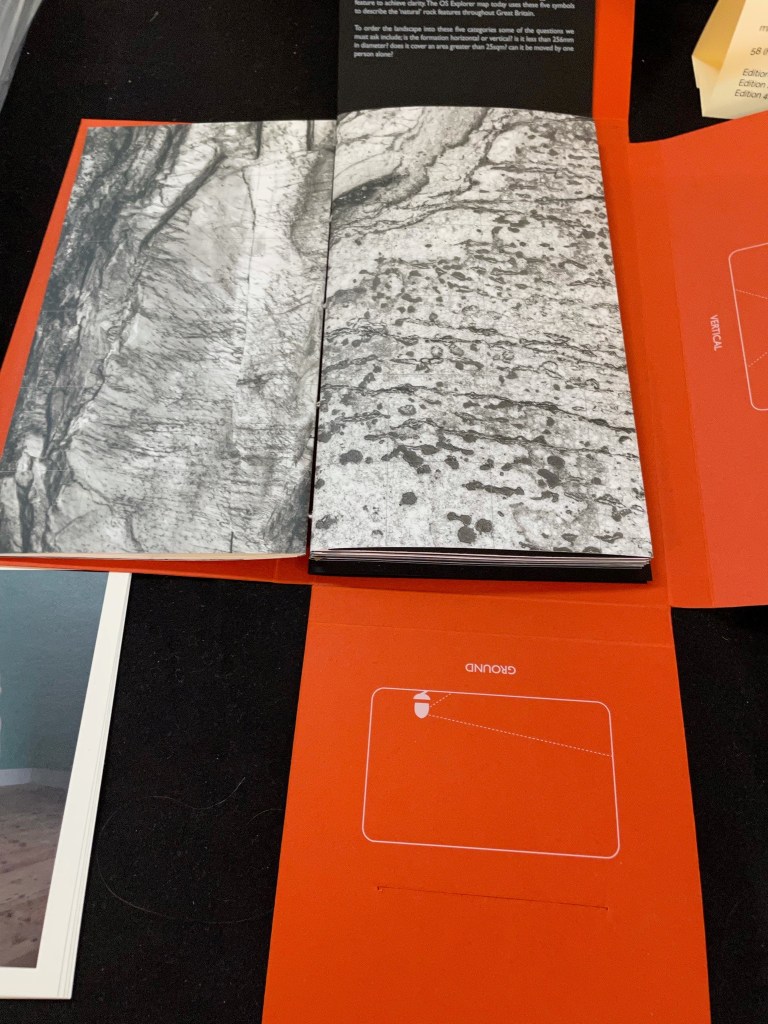
Tamsin Green’s this is how the earth must see itself, was my favourite. She made it whilst repeatedly walking the South Coast of England. It contains her images as well as archival material and uses the Ordinance Survey mapping system and symbols. In her walks she follows rock outcrops and photographs them in different scales. Green says that she:

oscillates between seeking to know and name the land, and melting into aimless wandering, loosing sense of time and scale. The process of ordering the images into these pre-defined categories throws up questions as pebbles become boulders, flowing water becomes outcrop…As with all classification systems, the rules are subjective, leading to their own telling of the story.”

The handmade book design emulates the shape of an OS map, the haptics has the same tactility and folds. Unfortunately, its price meant that I was unable to buy it to explore it fully, such a shame for me as the content was relevant to the work that I am doing. There is a vimeo video referenced below which takes you through the work, and the beautiful black and white landscape and still life images of rocks can be viewed on her website listed below.

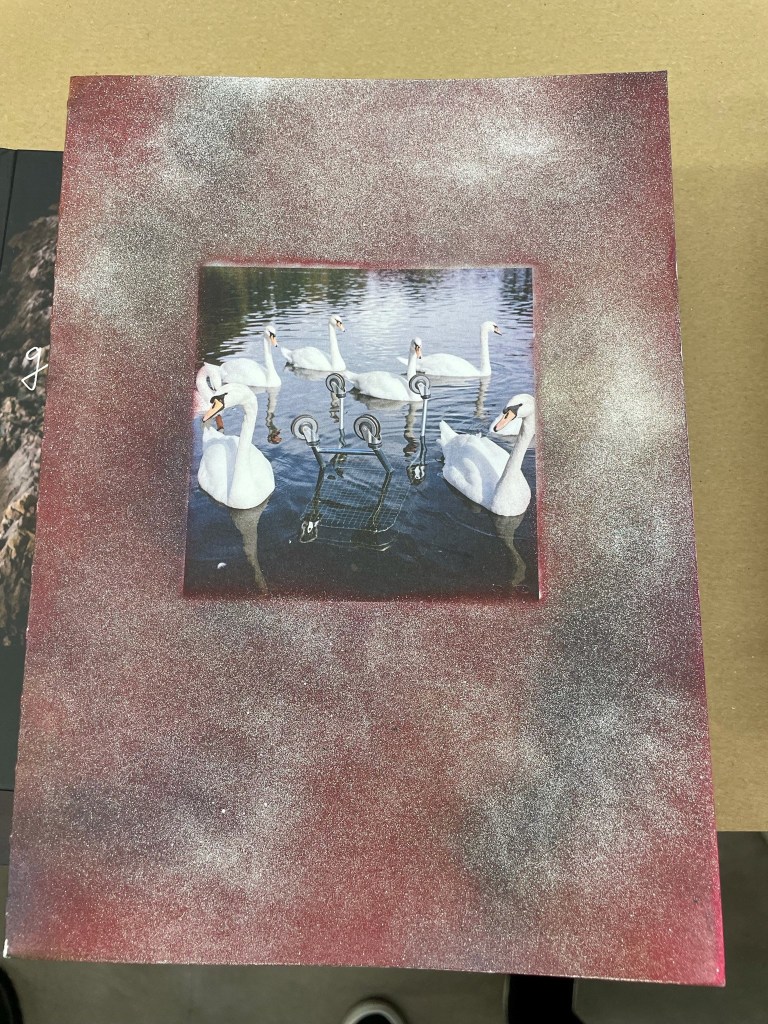
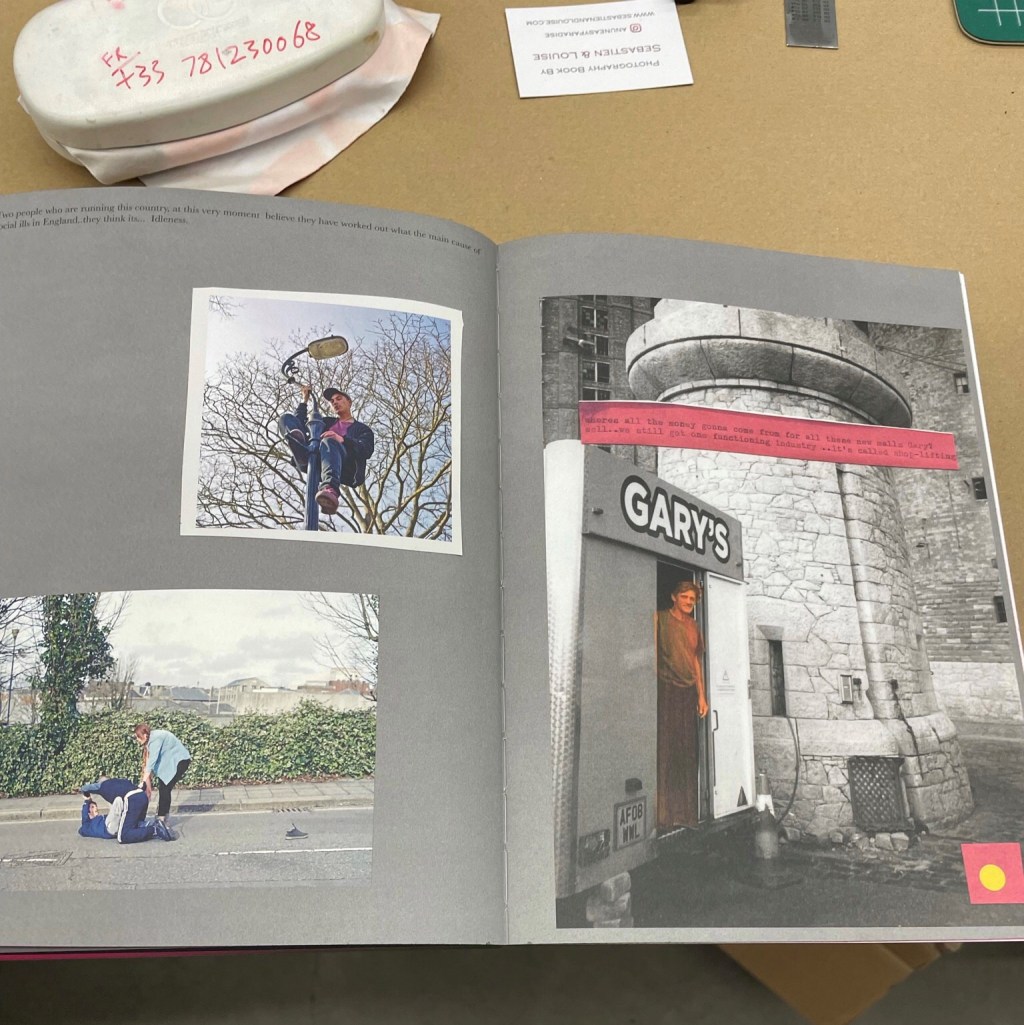
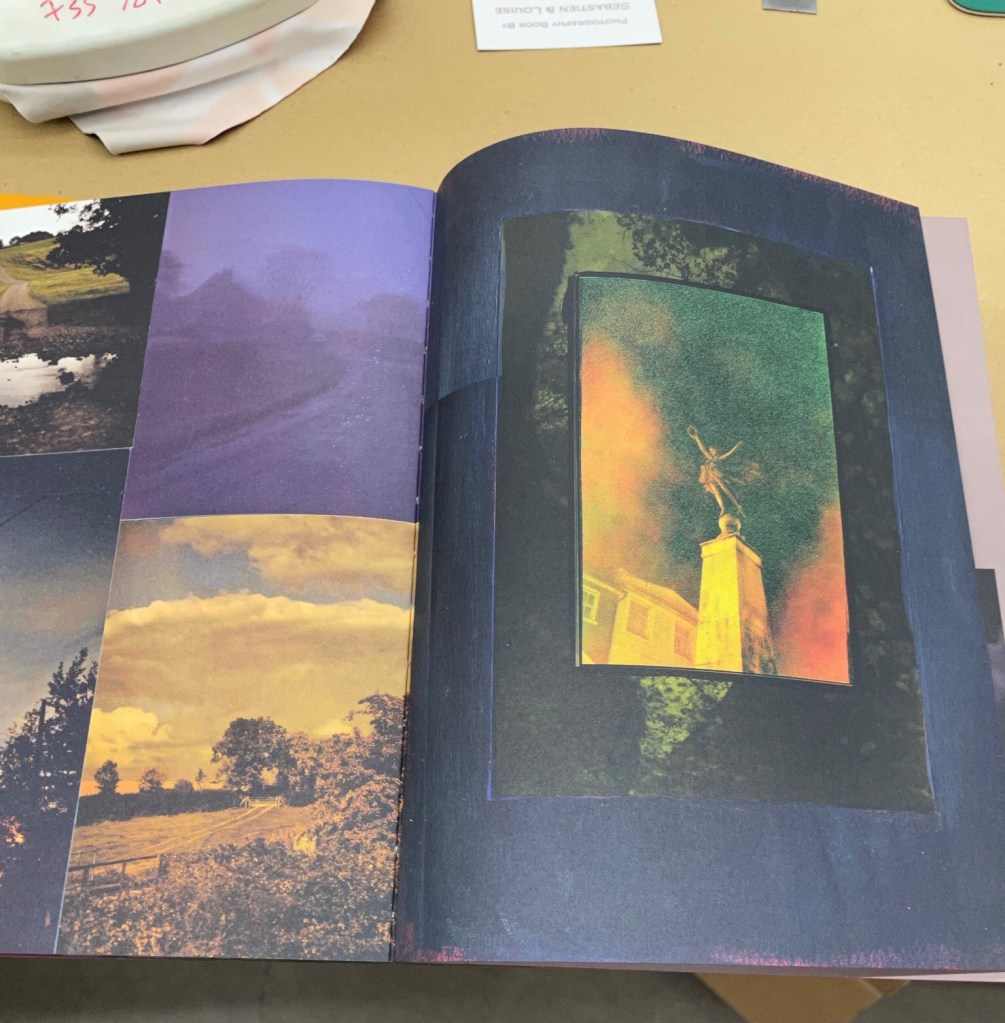
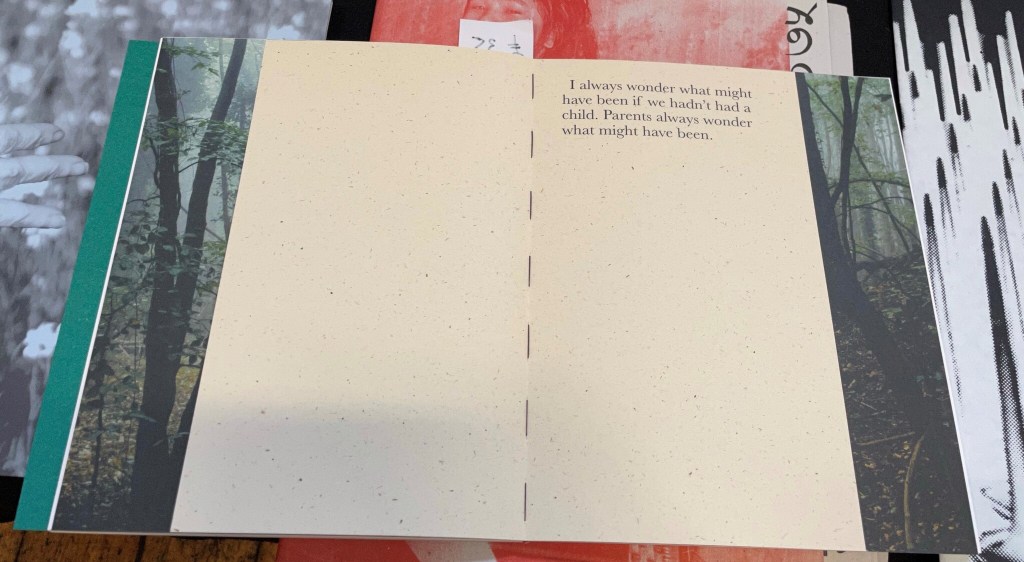
Robin Maddocks England. I was attracted by the tactile and handmade nature of his book, each cover individually spray painted by him, and each with four pages removed by him because he thought the book better without them. I thought that the variety of bold background colours used, and the varied text and image layouts fitted his images which were bold, graphic, and chaotic.

Billy Barraclough’s Murmuration’s, with poems and images of a variety of sizes, where the largest folds out to an A2 image. I would have bought this and been able to describe and comment on it further but unfortunately, he had sold out. From what I remember I think his subject the mass gathering of starlings did suit the book design; murmuration’s come in many different forms and their black and white natural colours was echoed in the black and white minimal book design.

Some designs I noted as interesting were:

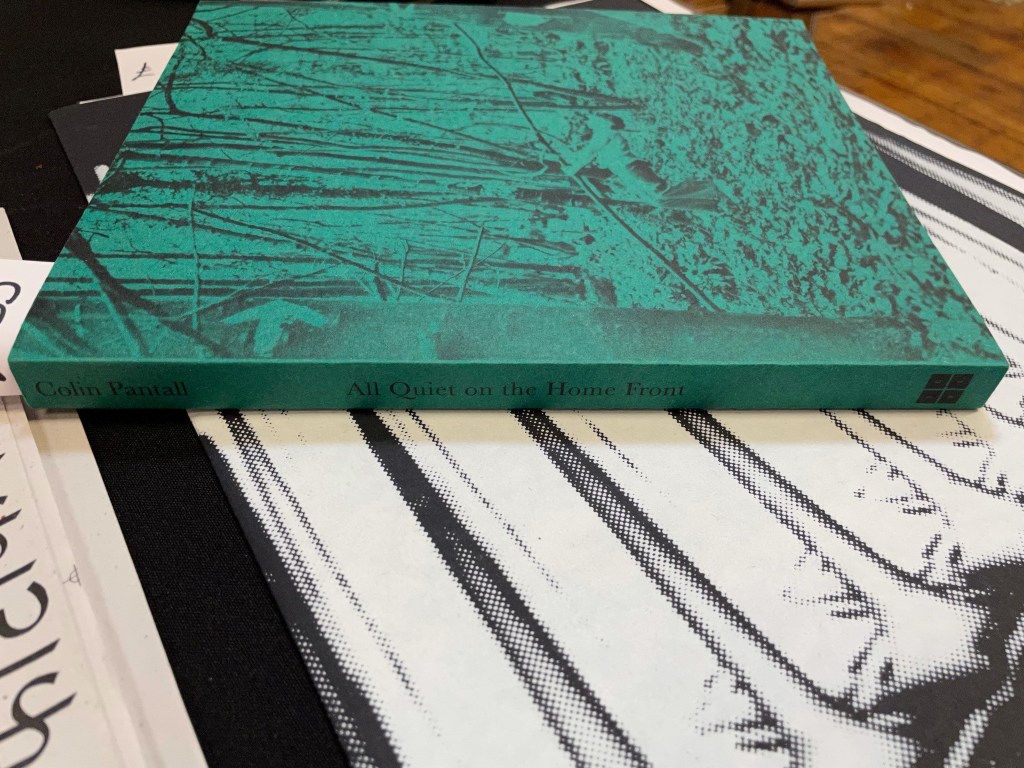
Colin Plantall, All Quiet on the Home front, where I liked the tactile raw, smaller text pages inserted into the book.

There were those that I took things away that were useful to me:

Mark Mattock Spring in the temple of plastic pillars and Where rude boys never think to look, both landscape photography of edge lands. I was taken by the gate folds in the later book of scrubby woodlands. Mattock described to me how he had chosen the gatefolds to emulate the feelings of claustrophobia in those woodlands, and once described this did enhance my experience of his book.

References:

THIS IS HOW THE EARTH MUST SEE ITSELF – Tamsin Green (s.d.) At: https://www.tammidori.com/thisishowtheearthmustseeitself (Accessed 31/10/2021).

Green, T. (2021) this is how the earth must see itself: A walk with Natural Features – Tamsin Green. At: https://vimeo.com/567428495 (Accessed 31/10/2021).

EVENT PRE-READING REVIEW

The history of the photobook provided by David Company (Company, 2014) gave me lots of background information. I enjoyed the discussion on editing photobooks and his view that photographers are generally lousy editors of their own work. His final paragraph discussing a move from the recent widespread use of the term photo book to something more definable was thought provoking. Campany calls for some discipline around the term. Which led me nicely onto my next read below.

Towards a Photobook Taxonomy (Colberg, 2018), made me reflect on what a photo book actually is and I found his categorization really useful:

  • Catalog- Structured presentation of bodies of work.
  • Monograph- presentation of one body of work, usually financed by the artist.
  • Journalistic- text is often heavy and relies on journalist conventions includes Photojournalistic, Documentary, Encyclopedic,
  • Lyrical- the images are foremost, and the text is separated, if it does include an essay it is separated. Four types are suggested:
    • Poetic, without a story but with facets of one, close to a monograph, interpretive.
    • Elliptical, narrative ambiguity, not a linear story, possibly with visual symbols.
    • Linear, combines elements of the poetic and elliptical but reliant on its sequencing, more easily decoded.
  • Narrative driven: Text is often integral:
    • Photo novel.
    • Linear.
    • Elliptical. Subjective documentary.
    • first person narration

At this stage I would be most interested in Lyrical, elliptical or a narrative driven elliptical or lyrical for my current work.

The Photobook (Steptoe, 2020) also discussed the history of the photobook. But goes on to explain the history of photobook events, sales, fairs, competitions, and exhibitions. Again, it was the discussion it provided on the nature of photobooks which caused me to reflect on them in a new way. I had not thought before about the difference between a book of photographs and a photobook. These are set out here as that the photobook should have a purpose or concept, use physical prints when edit and sequencing, and have limited text, no text or a large amount of text.

In terms reviewing a photobook the description of the process of assessing them in competitions was useful: The value of the concept, the photography, the sequencing, the placement and design of the book spreads and the total look and feel of the book. It was also good to read the view that in terms of the form of the book almost anything can be called a book, even single or folded sheets. If I am to produce a photo book, I will look deeper at this and read Understanding Photobooks (Colberg, 2016).

Overall, I now realise I’d not really considers what makes a photobook, and the varied forms that they can take. This was useful to reflect on before going to the event but also will be invaluable should I decide on a photobook as an outcome for my Body of Work.

References:

Campany, D. (2014) The ‘Photobook’: What’s in a name? – David Campany. At: https://davidcampany.com/the-photobook-whats-in-a-name/ (Accessed 31/10/2021).

Colberg, J. (2016) Understanding Photobooks: The Form and Content of the Photographic Book. (s.l.): Taylor & Francis.

Colberg, J. (February 26, 2018) Towards a Photobook Taxonomy. At: https://cphmag.com/photobook-taxonomy/ (Accessed 31/10/2021).

Steptoe, B. (2020) The Photobook. At: https://rps.org/media/bj3ediin/photobook-article-apr-2020-pdf-for-issuu.pdf (Accessed 31/10/2021).

HELEN SEAR TALK AT BOP 24.10.21

Her talk was more useful for my practice and was about a work much different to that which I had researched on her previous work on her website, where it describes her work as focusing on the co-existence of human, animal and natural environments with a rooted interest in magic, realism, surrealism and conceptual art. Particularly of interest to me is her description of photography which “often challenges the dominance of the eye and the fixed-point perspective associated with the camera lens, and explores the potential of the artwork to activate and elicit feeling” (Sear, 2011). I must research her work more deeply.

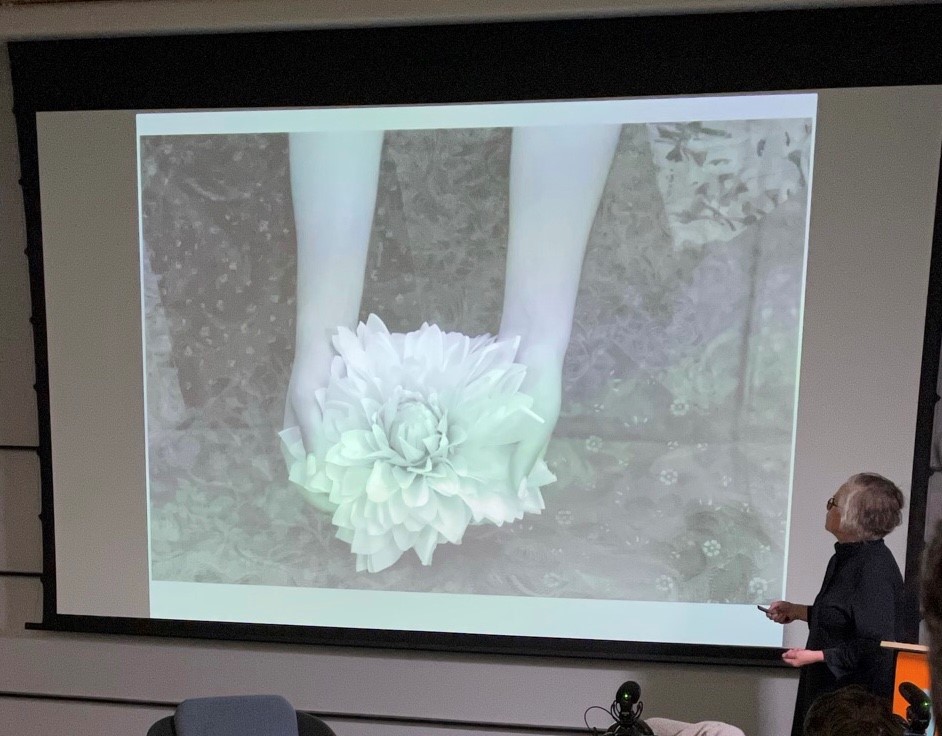
Her talk at the BOP was on the development of her new book Era of Solitude (Dewi lewis publishing, 2018). The project was based in a warehouse premises of The Scrap Exchange, an organisation dedicated to re-diverting surplus materials from landfill. Sear saw it as a microcosm for our human relationships with, and impact on the environment and our immediate surroundings. In a makeshift studio she took portraits of visitors with hands holding chosen objects and photographed the place.

(Dewi lewis publishing, 2018)

She didn’t begin with the idea of making a book, it developed. She asked herself, how do you archive/capture/arrange something? Her process was intriguing:  

How do you archive/arrange something?

  • She put her own story in text
  • Used layering with scrap fabric as a process to bring texture to portraits
  • To connect BW and colour images used off white backgrounds
  • She used monochrome portraits to reduce visual overload which she described as paring back
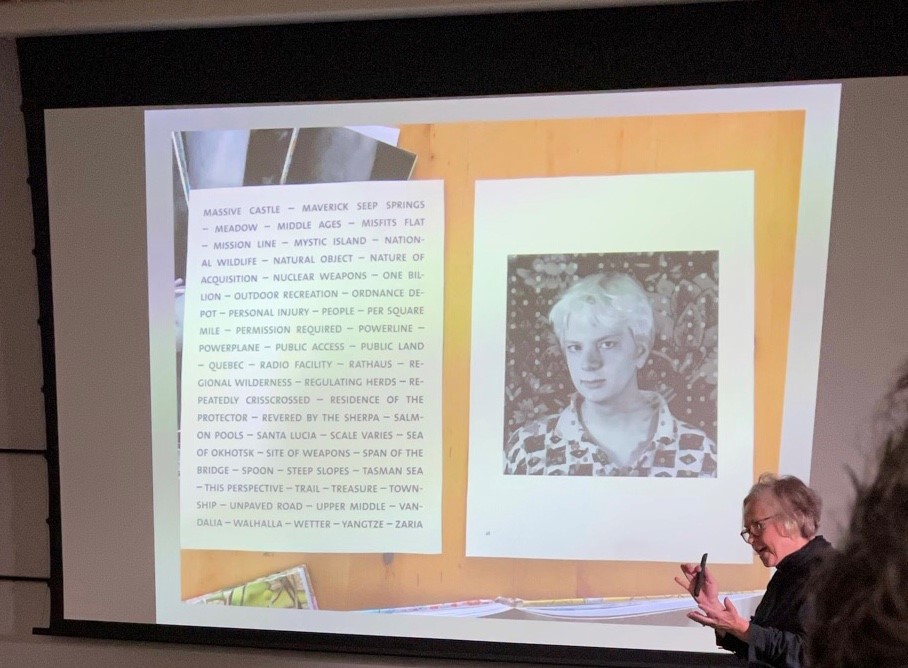
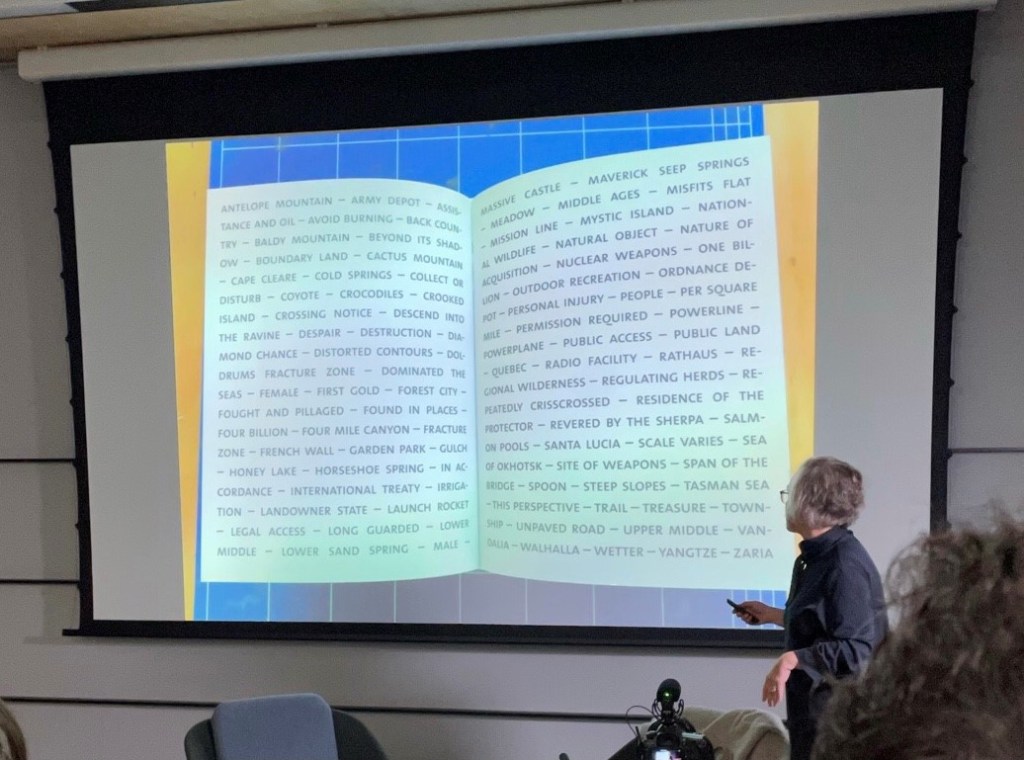
  • I took away her idea of putting associated words densely on a page, as a strategy.  
  • She made dummy books before choosing the format.

Also of interest to me is her current work in the ancient forests in France photographing the foresters’ marks on the trees.

My response

  • It was good to hear from an artist that an idea developed that was not the road they intended to go down initially; meaning when they had the subject, they had no idea how they would execute or present it – comforting to my situation.
  • Dummy books
  • How to bring texture to work with fabric, collage and layering.

References:

Sear, H (2011) Helen Sear. About At: https://www.helensear.com/about/ (Accessed 08/11/2021).

Dewi lewis publishing (2018) Era of Solitude. At: https://www.dewilewis.com/products/era-of-solitude (Accessed 08/11/2021).

Next post: https://nkssite6.photo.blog/category/reflective-journal/exhibition/helen-sear-within-sight-23-10-21/

REFLECTIVE JOURNAL: PERSONAL REFLECTIONS

BOW Introductory meeting Tutor 25.8.21

We discussed my initial ideas for my BOW and how this might translate into my 1st assignment. My Tutor described the work on the course as being “egg timer” shaped; beginning with broad strands, deciding what to focus on in a broad way and then expanding out again with detail.

Particular routes I might go down initially are psycho-geography, metaphor and journeys.

I asked what her expectations are for the delivery of assignment 1. She suggested that I shoot loads, possibly just with an I-phone, then develop 20-30 images on my camera.

My tutor suggested sharing my work with her via a padlet (using “Canvas” as a blank space, and a mid-grey background). There I can put an assortment of experimental shots and show my concept germinating – possibly 2 or 3 perspectives on a concept. 

She also suggesting looking at some other level 3 work, such as Judith Bach, who I know.