This was a video feedback session. It was the first meeting that we had since beginning SYP, so it was useful to have my Tutor’s feedback and advice at this point.
The details of the feedback session are in the Formative feedback document below:
This was a video feedback session. It was the first meeting that we had since beginning SYP, so it was useful to have my Tutor’s feedback and advice at this point.
The details of the feedback session are in the Formative feedback document below:
This version is changed from my draft submitted to my Tutor.
The introduction to my work below is also included in the presentation of the work in my slideshow included below.
This body of work is a personal response to a dynamic landscape, both internally and externally. Ancient woodlands are complex communities, with trees at their heart; they envelop your senses, encouraging you to slowly absorb what you see and feel, wake your subconscious, and inspire reflection.
The photography here explores the possibility of transforming abstract ideas in a photographer’s subconscious into something concrete, via a visual representation of another subject. It positions an ancient woodland as a visual metaphor for community.
Through this work I have learnt that combining the world within my head, with the one in front of me, can be cathartic. This internal and external passage through the landscape, has helped me to accept and heal some of the wounds that inspired it’s beginning. This said it is important to acknowledge that a photograph carries no fixed meaning, and that viewers themselves may complete gaps in the meaning.
The work is informed by research on ‘affect’ (expressing what is in a photographer’s mind) and ‘effect’(realism), in landscape photography. In essence this is the difference between photographing a subject realistically, and photographing to represent something else, including abstract ideas.
This has been influenced by twentieth century and contemporary photographers who created images as metaphors for something beyond the subject being photographed; thereby combining photographically the world within us, and the world outside us.
The concept of the work is stimulated by humans, though they are not evident in the images. The stimulus is my experience of the local community which seems often disharmonious and driven by difference, in contrast to the many harmonious characteristics of these ancient woodland societies. Qualities such as cooperation, support, diversity, resilience, inclusion, networking, mutual exchange, and adaptation, could in my opinion be beneficially applied to some human communities.
______________________________
My final Submission as a slideshow can be seen in the video below:
South, N. (2023) What Lies Beneath At: https://vimeo.com/864896760 (Accessed 15.9.23)
I now need to ensure that my intention for the work, combined with feedback from others meets the learning outcomes for the unit. To do this I must review and ensure any changes support:
Taking on board advice from my peers and my tutor, I should now review, reduce, and therefore strengthen the series of images that I share in my major project portfolio. This will help to ensure that I am communicating what I intend.
Reviewing my draft A5 submission I edited the images again focussing on the images alone at first, rather than as images for a final product.
My original product had 14 images, I wanted to make a tighter set of main images. First I removed the greener “rebirth images,” which I have decided I won’t use at this point but may incorporate later in SYP. So omitted: #11, #12, #13, #14.
Then I rejected images #7, #8, & #9, as they are lesser immersive woodland images.
I added an image that I had earlier rejected (now #6) and reordered #1, #2, #3, #4, #5, #6, #10 and the new image to form a series of 8 images. Ultimately I rejected image #10 to form a final group of 7.
The final order for the images were 1) #3, 2) #1, 3) #4, 4) #2, 5) #6, 6) new, 7) #5.
See submission editing padlet: https://oca.padlet.org/nicola514516/revised-bow-a5-submission-image-edits-w07q1li6855xas1o
My editing was harsh, I really stepped back and reviewed my whole body of work, which did result in my redacting some of my later images. However, I am now pleased with the remaining images as they form a strong and cohesive group, as well as each being strong images each themselves.
Next my presentation of this series transforms these images which represent my abstract concepts into a narrative for the viewer.
During feedback, my Tutor focused, and in turn focused me on my images, rather than my method of presentation of them. This changed my perspective for the presentation of my work for assessment. Reviewing my presentation against the learning outcomes now, I can see that my book dummy was over complicated. I need to focus on more simple narration of my abstract ideas, but include some signposting to help convey my intention.
Having edited down to seven main images for what lies beneath and eight images with definitions for various components of the community, I have decided that I will present these as a slideshow rather than a book at this stage. This will simplify the presentation around the images, and as my tutor said, “let the images speak for themselves.”
My power point slideshow will include:
Whilst making my slideshow I carefully considered the font, text size and placement.
Change of project name: At some point during reviewing these elements of the work it occurred to me that the project name would be better returned to ‘What lies ‘beneath’ rather than ‘within’ – beneath is a better description I feel, as it points more to the invisible. This is the term I used when composing the poetry, and up to assignment 4.
Now this is done I will turn to the other elements needed for Submission for assessment.
This was a video feedback session.
I described the journey that I’d taken after shooting and editing for assignment 5 which formed new series ‘rebirth and healing’. And from this how I had developed my final Body of Work portfolio, and a dummy book to showcase this work.
My Tutor focused and caused me to refocus on the work alone initially which has helped me to re edit the work for submission.
Since the feedback I have rethought the way that I will present the work for submission and have switched from a book dummy to a slideshow, this to simplify the presentation and allow the images to speak for themselves.
The purpose of this assignment is to enable you to explore and develop initial ideas and research as part of
a dissertation scoping and planning process. It is a key moment to reflect on possible relations between your ongoing research of visual culture with ideas relating to your photographic practice. The assignment
requires you to reflect on how visual culture research and practice can weave together and support each other. Write a 1000-word essay (+/- 10%) (or 5 minute equivalent presentation) that relates your Body of Work to an aspect of visual culture, discussed in Part One. (Alexander, 2020:37)
Alexander, J. et al. (2020) Contextual Studies. Barnsley: Open College of the Arts.
Next Post: https://nkssite6.photo.blog/2022/06/05/contextual-studies-update/
This was by video and later written.
The overall feedback was that I’d tried to do too much too soon. The advice I was given below was really useful.
General advice given:
Actions from the feedback:
Look at the annotations and summarise the key points that I want to review in the contextual literature. Send to Tutor and he will review and revise/suggest others
1.Find a key premise or theme: Minor White expand on. Minor White and Szarkowski as a possible. enquiry. Realism representation or expression? Note: It’s the process of representation that that allows interpretation by the viewer.
2. Find a visual methodology to analyse, without going off on a tangent.
From part 2, for Lit review:
Other comments against learning outcomes:
LO1 undertaken research and study demonstrating comprehensive knowledge of your area of specialisation and built a theoretical framework for your creative practice
LO2 synthesised and articulated your critical, contextual and conceptual knowledge and understanding into a coherent critique of advanced academic standard
LO3 applied your own criteria of judgement, reviewed, criticised and taken responsibility for your own work with minimum guidance
LO4 selected and applied information management skills and used appropriate technology in the production of an accomplished critique with minimal supervision
Could have begun by defining as a genre – Alexander, Bate, Clarke good for this.
Next post: https://nkssite6.photo.blog/2022/06/05/contextual-studies-assignment-one-submission/
Nicola South Student number: 514516
Brief: Spend some time reviewing your personal reflection and your tutor feedback. Develop a series of carefully considered images that moves your idea forward. Hand in this series to your tutor together with a new reflective commentary setting out where you plan to go from here.
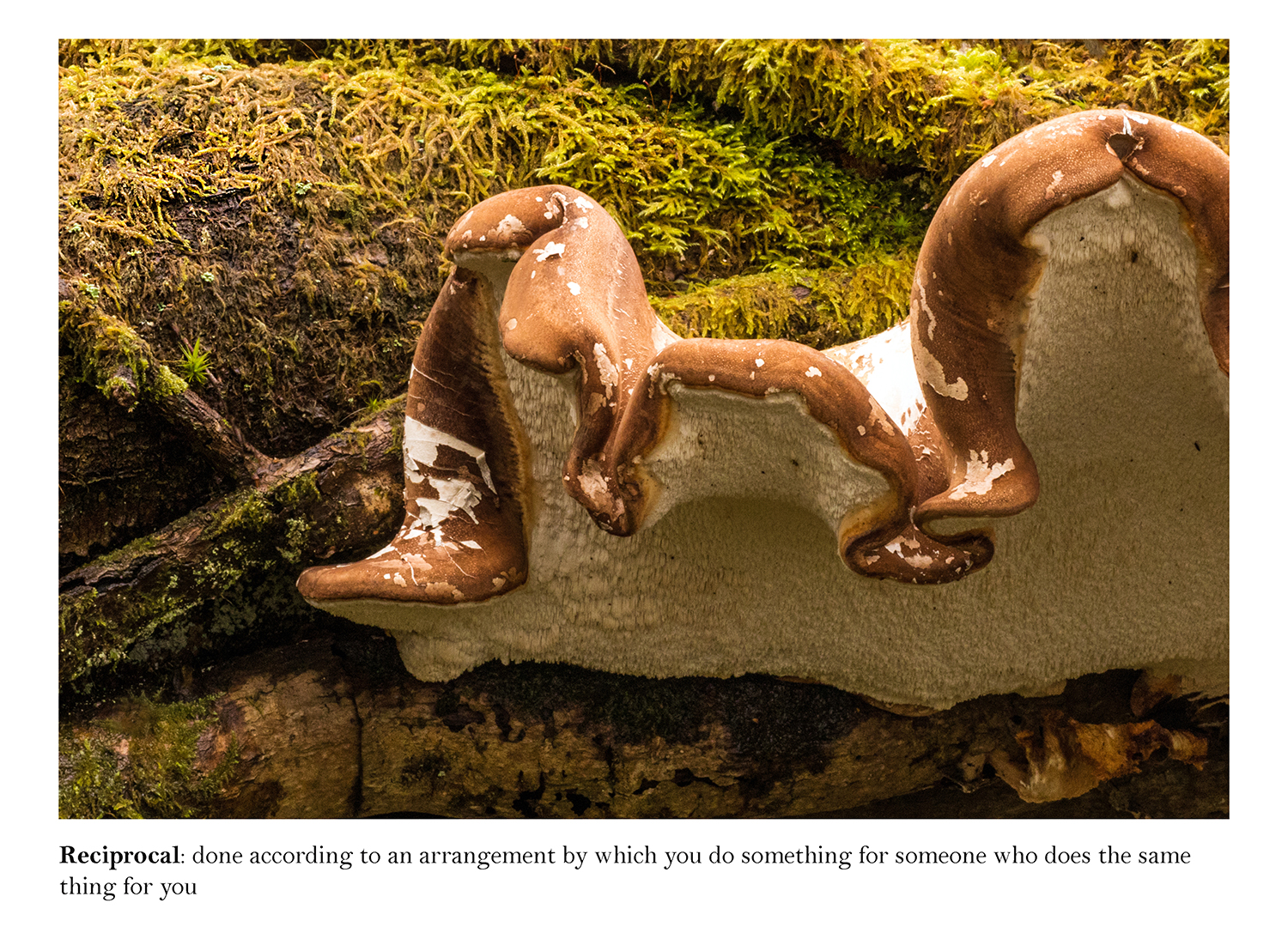
These images follow on from my first genre shoot developing my exploration of my concept, the ancient woodlands, as a visual metaphor for my theme of community. I was encouraged after my last assignment, to get to the knub of my idea and form a working title; I have decided on “A harmonious community”. The how and why of sharing my concept is still developing.
I reread and found new material on woodland species I photographed, trees, lichen, moss, ferns, and fungi. This increased my respect for them as individual subjects and enhanced my understanding of how they work together to create this harmonious woodland community. Sheldrake’s quote about lichens being undividable “They flicker between “wholes and “collections of parts”” (Wildlife Trusts, 2021), could equally apply to all these woodland species. This time as I photographed, I shuttled between the perspectives of the whole and the parts, but increasingly focused on individual woodland species. When I reflected on my images it became obvious that it is almost impossible to separate these parts from the whole, as the woodlands are all about the collective working together.
Photographing these species was a process I needed to go through to understand the parts that make the whole harmonious community. I tried different ways of looking and using unusual perspectives but returned to simply showing the close relationships the species have with each other. I considered various text to signpost my intention, settling on simply adding a border combined with a dictionary definition to add definition to the images. Interestingly these definitions of words that relating to a harmonious community, mostly refer to people or persons. My concept is inspired by humans, they are not evident in my images, although they are the stimulus to my intention and observations, they do not need to be visually evident, I am sure of that.
These images were not inspired by the photographers I researched, however returning to this research, when reflecting on my outcomes, helped me to consider on ways forward now. Of those, I identify with the work of Ellie Davies, particularly her practice where she “walks, thinks, sits, listens then creates” (Davies, 2018). Although her outcomes are created by intervention and construction in the woodlands which I don’t lean towards, I share her desire to photograph to explain the landscape’s effect on the photographer; this is something I will focus on going forwards- an intention to communicate the woodland’s exceptional quality of harmony and mutual relationships. Can I put something of myself in the space as Davies does without intervening in the landscape?
After this close focus on interrelationships in the ancient woodlands, I now want to return to a wider view of the moss-covered landscape to express my feelings about this community. I may try like Thomas Struth’s work in forests and jungles to present so much information that viewers will surrender to just looking. I have a thought to try mixing into each image, both the “whole” and the “parts”.
Wildlife Trusts (2021) Look at a lichen At: https://www.wildlifetrusts.org/blog/guest/look-lichen (Accessed 07/03/2022).
Davies, E. (2016) Ellie Davies. At: https://elliedavies.co.uk/statement/ (Accessed 07/02/2022).

___

___

___

___

___

___
___

___
This was video Feedback
I outlined my BOW ass 2, in particular my intention to use my thoughts and experiences of the local community as a stimulus only, not featuring humans in it, in my work on the woodland community.
Since assignment 1, I have honed the knub of my idea for my BOW to “a harmonious community”. I have stayed with my original intention of using the woodland as a visual metaphor for community, and a way of expressing my inner thoughts and emotions as well as my response to place.
I explained that I am inspired by the photographers of the Inside the Outside, landscape photography collective, as well as the work of Minor White and John Blakemore. Also that I want to put myself in the landscape without intervening in it like conceptual photographers such as Ellie Davies. In discussion we drew out that this work is about close up scrutiny of parts of a community, though moving on I will be sharing both the macro and the micro. We talked about looking at the patterns and relationships that emerge from this, as well as considering possible poetic elements to the work.
• She liked my approach using dictionary definitions juxtaposed by images of close-up parts of the woodland, which communicates my inferred reflection of the woodland community to human communities.
• The type face I used is effective, though it was suggested that I could make the definitions more authentic by ensuring that they consistently using verb or nouns and by using the same respected source such as the Oxford English Dictionary. This is not something I need to do now, but that I could do before my final submission.
• She suggested that I continue to dig down into my theme of harmonious community that is at the centre of my work
• In the future I could use the separate parts of the woodland community that I’ve photographed this time, somewhere in my final work- possibly in an appendix, inserts or overlays.
• To experiment with my idea to represent the macro and the micro, we talked about using digital or physical overlays.
• My tutor suggested that I might think about patterns and settlements also to combine with my woodland images.
• I should check out the writings of Edward Weston.
• Ensure my images are of the correct quality to stand enlarged printing if required.
My tutor was encouraging about the work and the developing concept, saying that I am showing that I am open to development and open to inspiration. I should not be afraid to present aesthetically pleasing images, and not look for an alternative way of presenting just to show a point of difference; just to find one that communicates my message. She described my work as slightly poetic, and that I should continue with my photographing, whilst experimenting with methods of communicating the parallels of the woodland community to the human community.
She suggested I should look at:
• Man Ray’s Dust Breeding. David company essay on: https://davidcampany.com/dust-breeding-man-ray-1920/
• Giles Perez conversation with Gerhard Steidl where he talks about text and images and the new meaning that forms beyond the two: https://thephotographersgallery.org.uk/dbpfp22-gilles-peress
Next post: https://nkssite6.photo.blog/2022/06/04/body-of-work-assignment-two-submission-genre-development/
REFLECTION ON THESE IMAGES AND THEIR INSPIRATION:
These images are first explorations of my subject ancient woodlands as a visual metaphor for my theme of community.
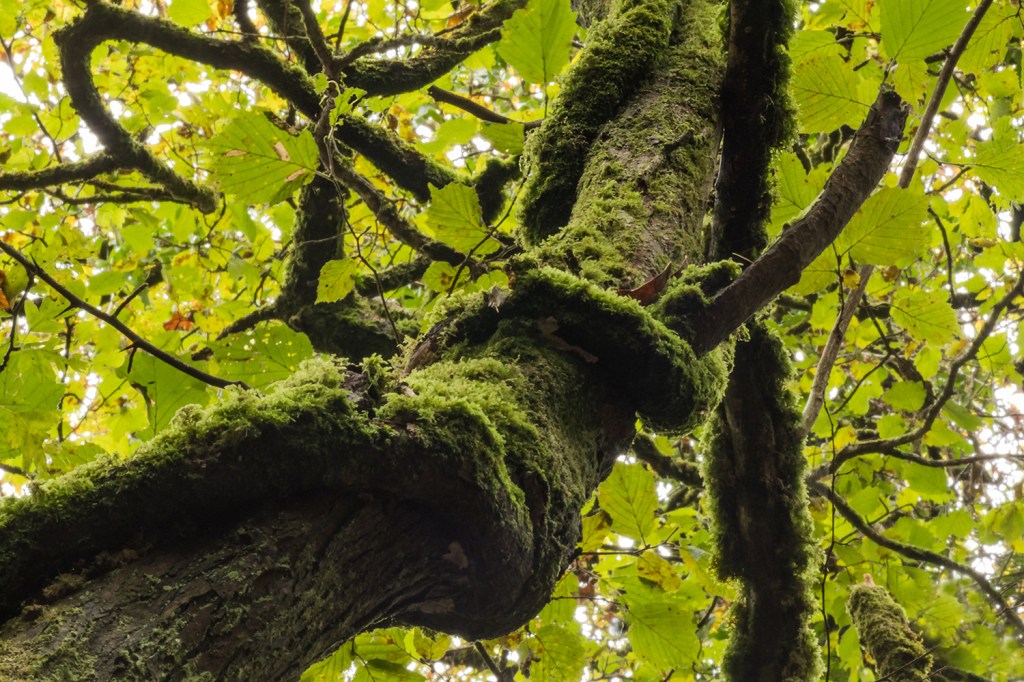
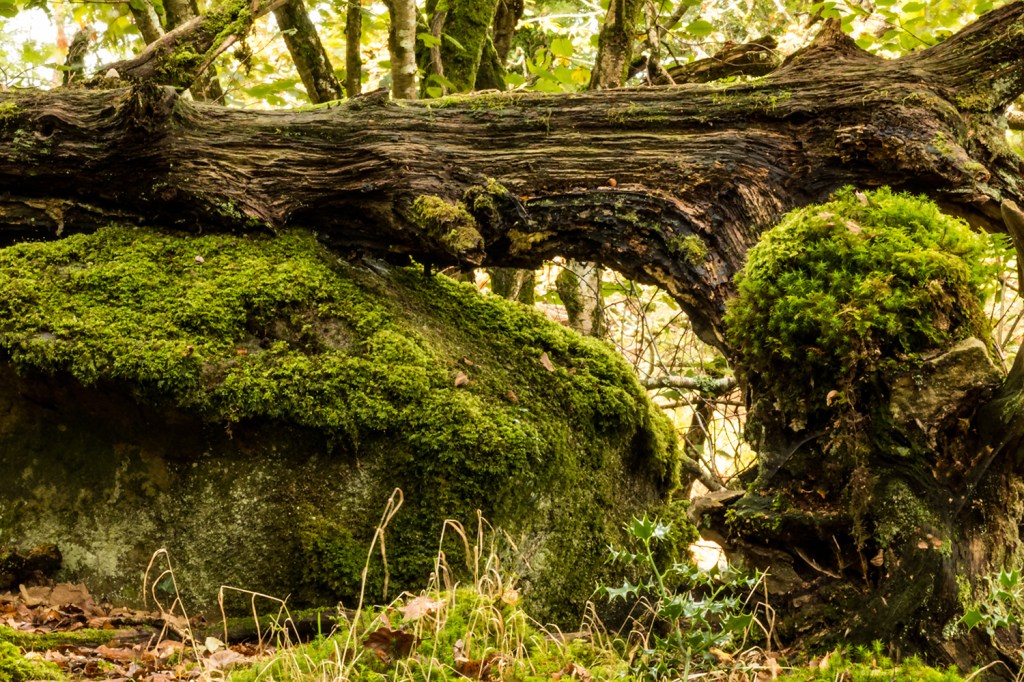
I began shooting with the genre of psychogeography, photographing my longer/wider viewpoint unfocused whilst moving, and stopping to shoot still and with clarity and in detail subjects that caught my eye. In this way I emulated my external and internal passage through the place. I photographed as I saw, in colour. My later shoots continued with a psychogeography backbone but certainly with an increasing less objective sight as I worked into my topic, and I began to genre hop. I was aware that I was also thinking conceptually as I looked.
I was influenced in my way of seeing by practitioners such as Minor White and Stieglitz who used the landscape to express ideas and emotions in a representational way. Contemporary landscape photographers such as Rob Hudson, Stephen Segasby, Guy Dickenson, Tom Wilkinson and JM Golding of the Inside Out collective gave me further inspiration to explore space as an internal and external passage. As I shot, I increasingly found ways to enhance the aspect of community that the subject before me spoke to me of and shot as much what was in my sight as what was in my head.
The images I share here can fall into 3 groups (there are some that overlap):
From these I can reflect further about my next steps, but at this moment I feel it is towards a mixture of landscape, abstract and close up. I may dabble with constructivism and conceptualism which I will do more research into, but I’m not convinced that I need to go down these routes to say what I want to in my work. I feel I need to work more into photographic styles that I have begun to develop so far in particular, landscape in abstract and close up, and use my absorption and new perspectives to share what I am seeing and feeling.



______

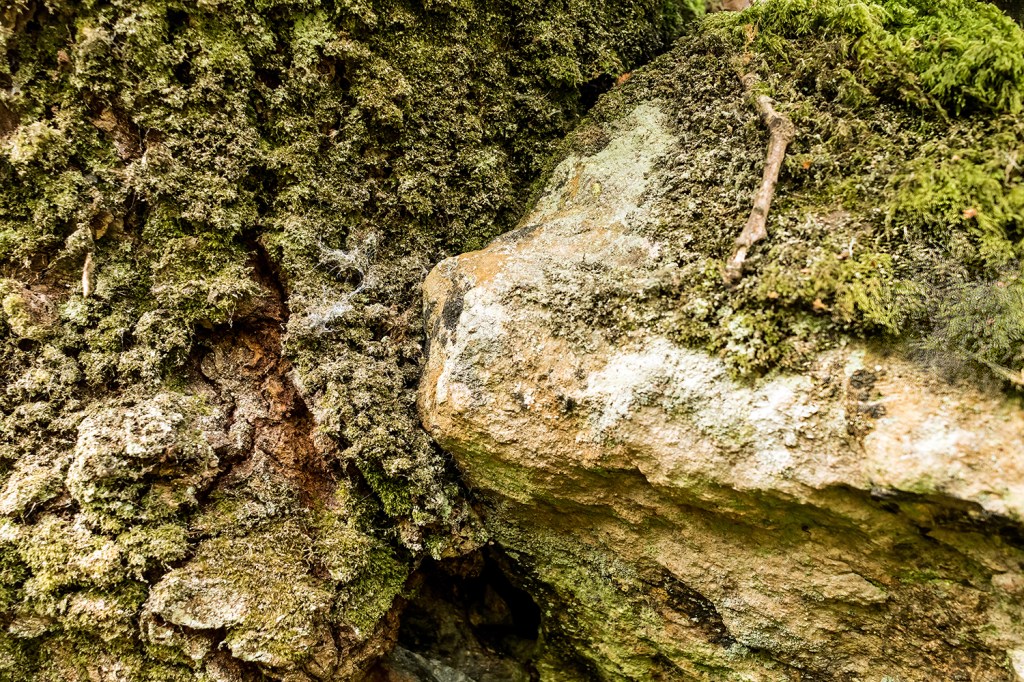

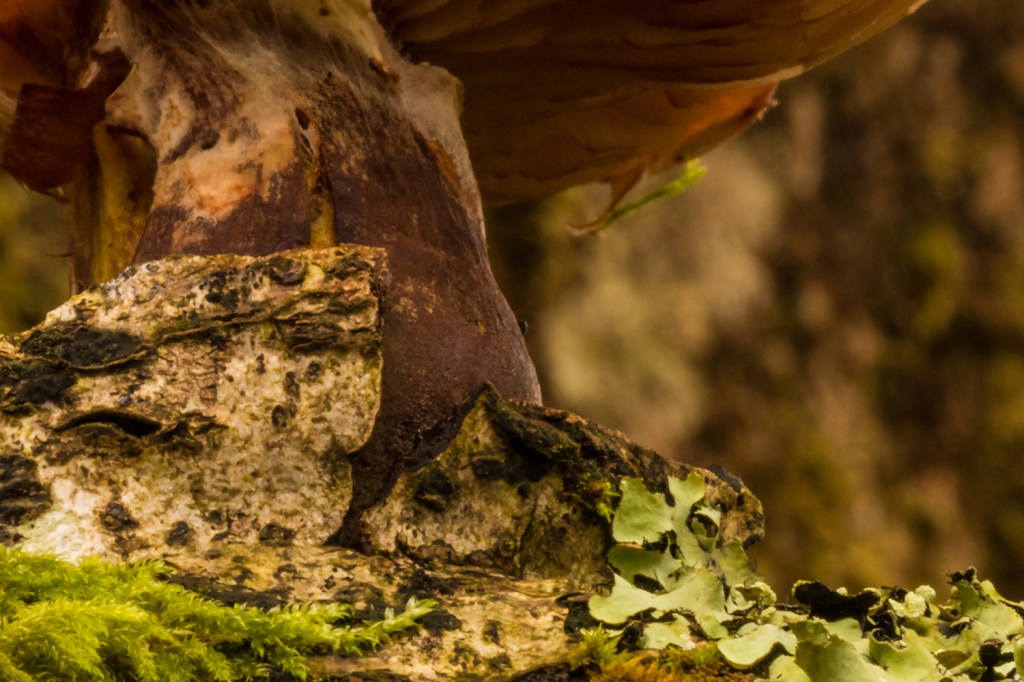

No changes were suggested by my tutor so this as posted as was my original draft, but see previous post on my reflections on the formative feedback:
Next Post:
Nicola South Student number 514516
Tutor report: This was a video feedback session followed up with written feedback:
MY REFLECTIONS:
It was an extremely useful session. We looked at work on my blog. I went through the photos and explained my work, as set out in my learning log and my reflections on my images. Jayne responded and posed questions to enable me to reflect further.
I was pleased that my Tutor could sense in my images the positive and nurturing environment of the ancient woodlands. We discussed the concept behind my using the woodlands as a visual metaphor for community and I explained that I am interested in representation, different ways of seeing.
The strand that wove throughout for me was the need to get to the essence of my message/ meaning of my work, and the need to provide an entry point for my viewers so that they can access this.
ACTION POINTS:
I’m now feeling inspired and ready to photograph and research again.
Next post: https://nkssite6.photo.blog/category/research/reading/woodland-reading/trees/
 NIKI SOUTH