BODY OF WORK ASSIGNMENT 4: SUBMISSION

Assignment Four: Major Project Edit

Make another submission of work in progress as a tightly edited, sequenced series. You may have continued to shoot; you may have changed direction since your last feedback report. However your project has developed, make the development clear in the image selection.

Pay particular attention to how you will use words alongside your images (captions, titles or additional ‘relay’ type text) and re-frame your images accordingly.

As in previous assignments, include a short commentary outlining the development of your ideas during your work on this part of the course.

Artist statement

This work is a continuation of my photography within an ancient woodland. It serves as a photographic celebration of cooperation and harmony within the community, along with a submerged representation of my internal discomfort on the divisions in my local community. “What lies beneath” is a visual exploration of a diverse harmonious woodland community, that in contrast to a divided and malcontented nearby human community.

What lies beneath
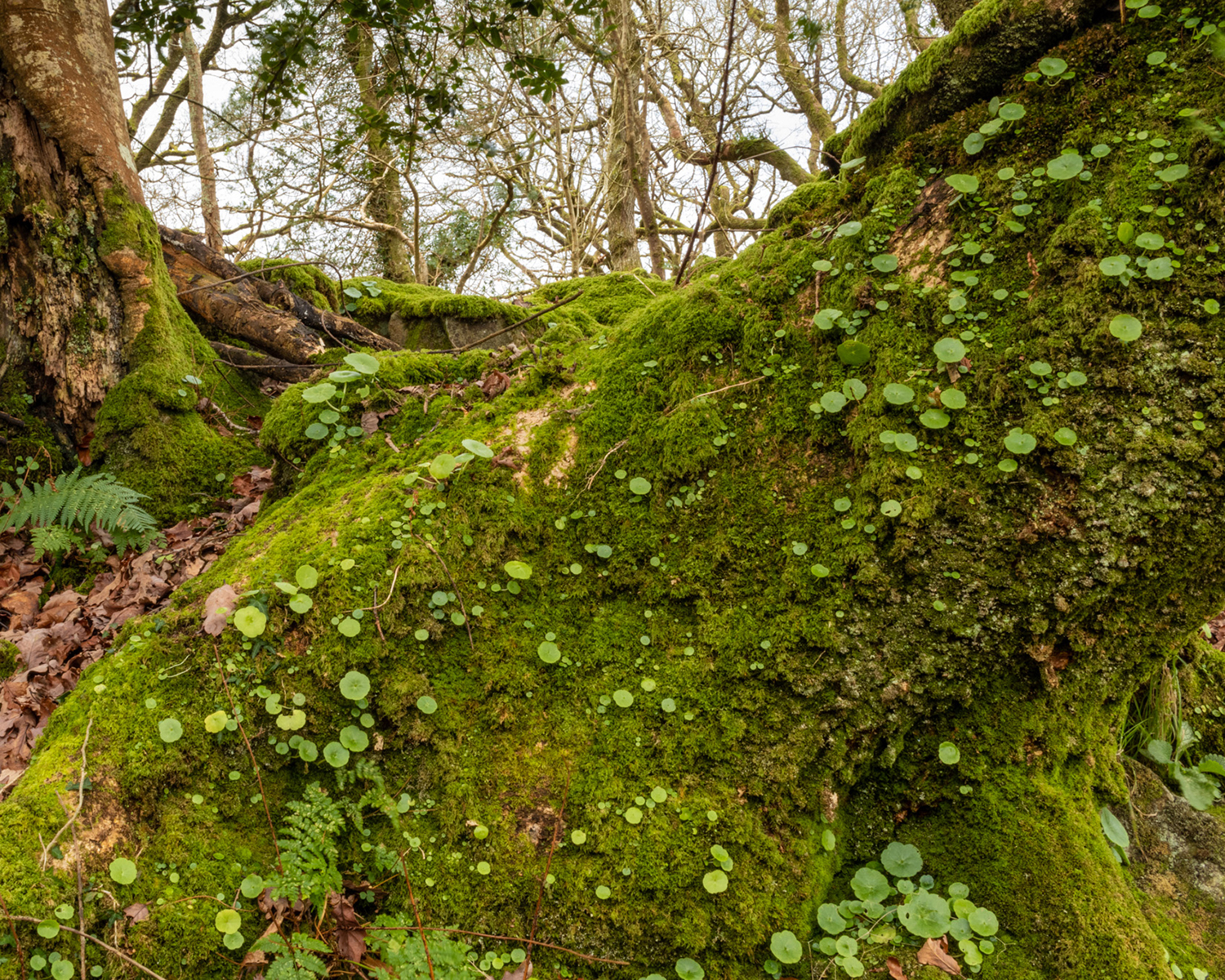
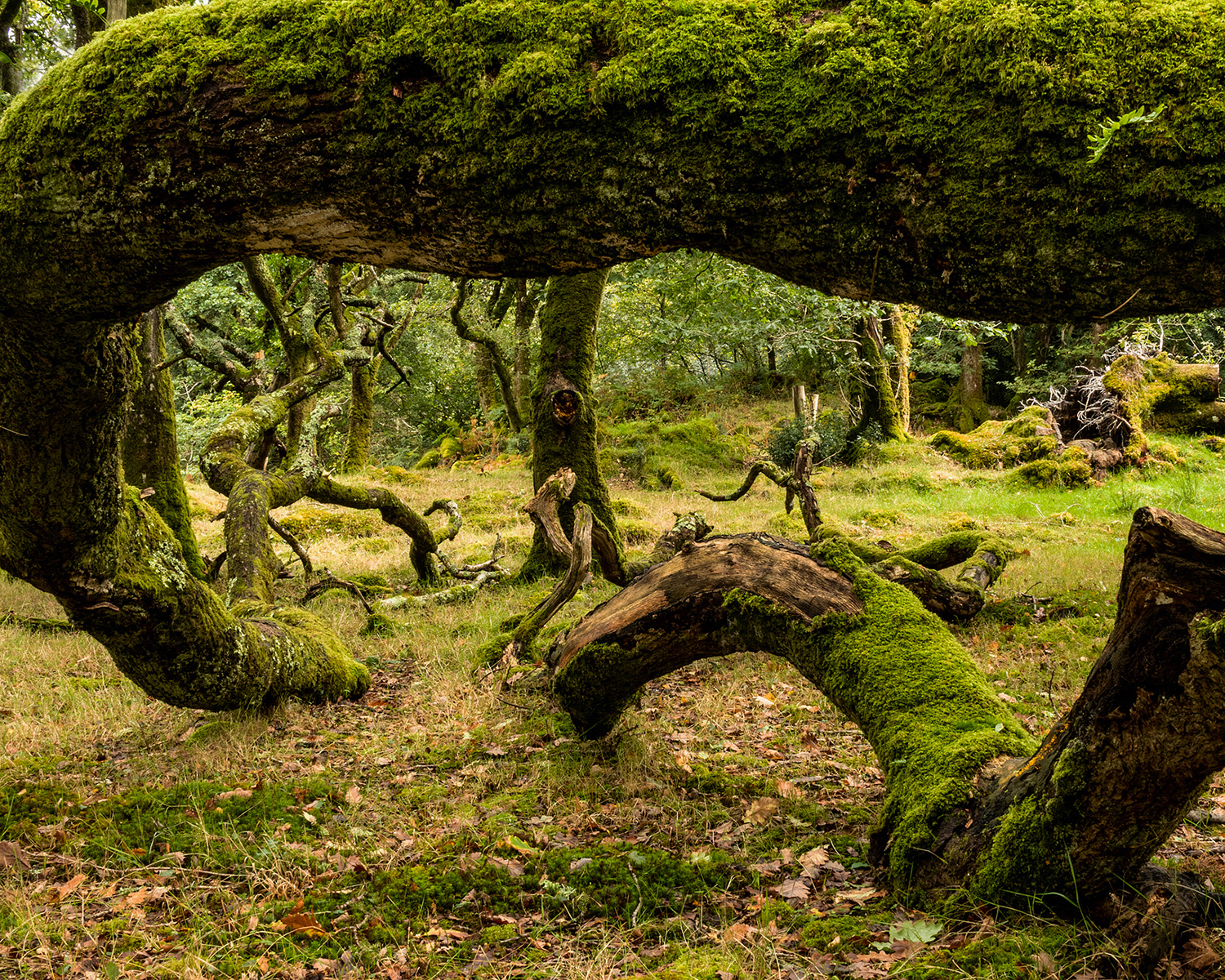
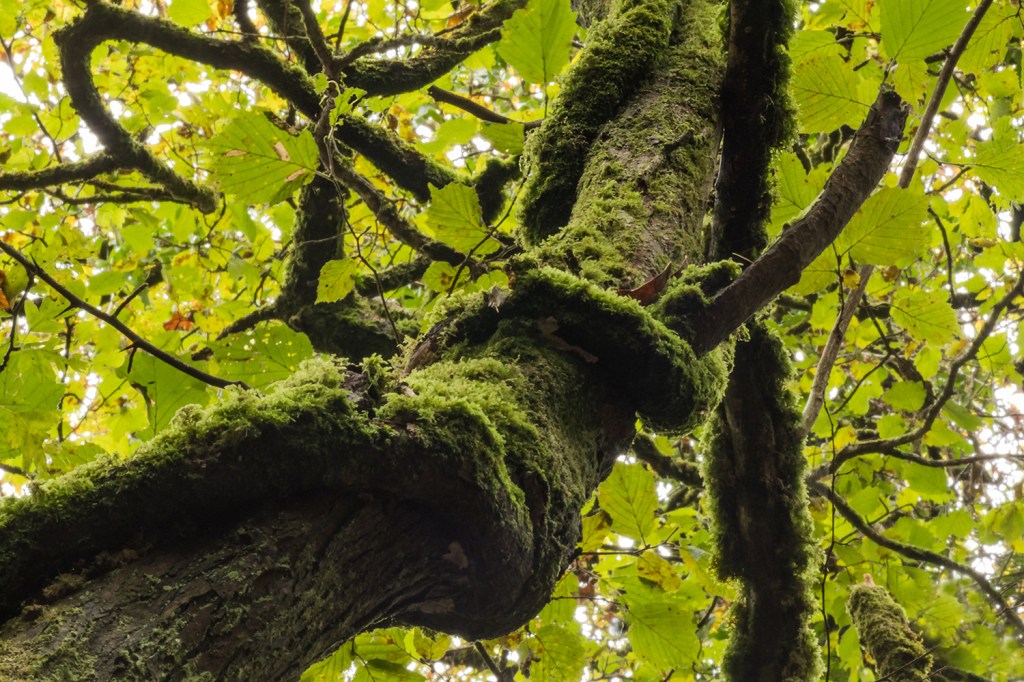
What lies here beneath the abundant enveloping eiderdown, slumbering peacefully together? What lies elsewhere beneath structural facades, sheltering but murmuring malice?

———-

What lies here beneath the verdant creeping coverlet, collectively sharing comfort? What lies elsewhere beneath community spirit, concealed but festering?  

——-
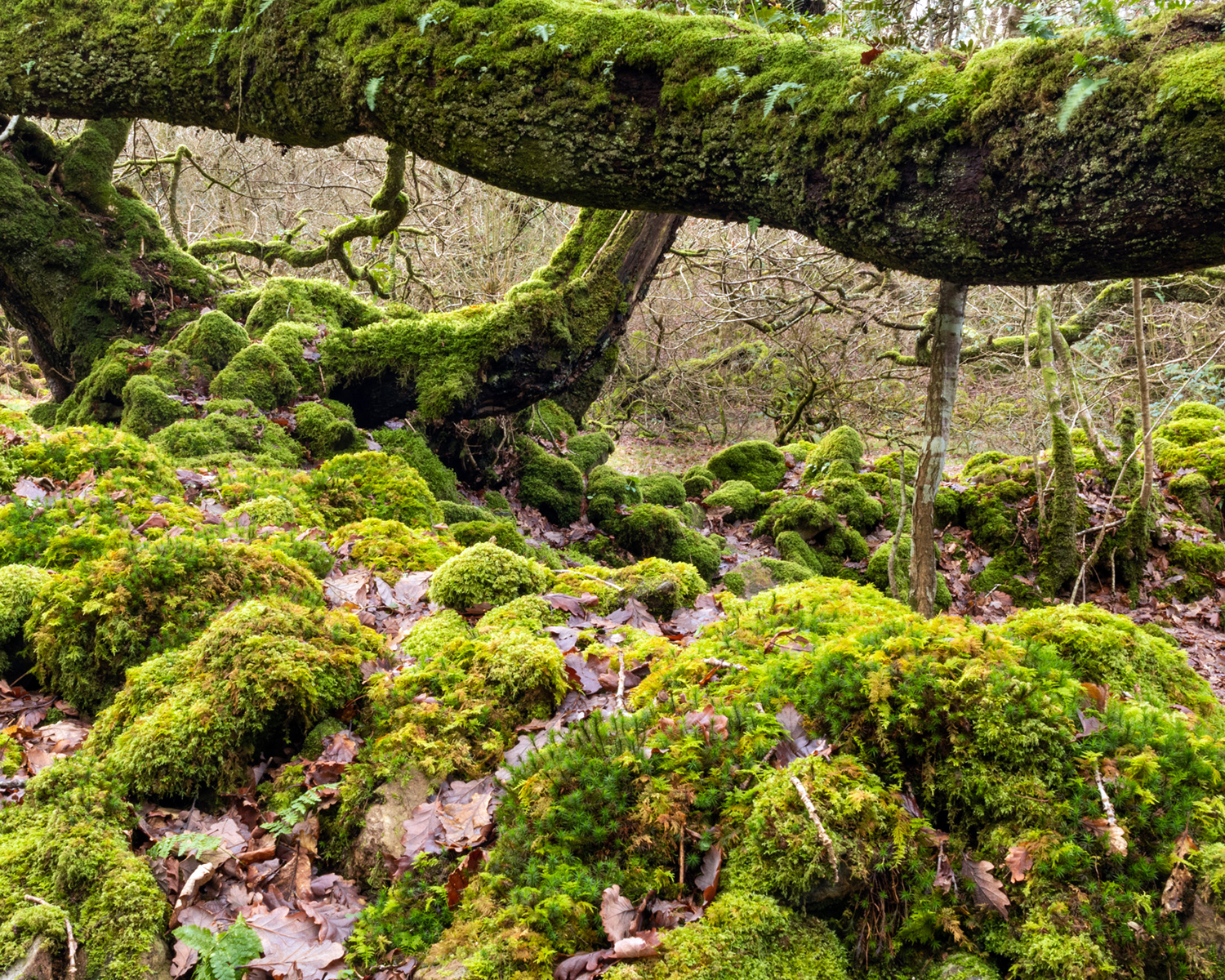
What lies here beneath the luminescent selfless sheath, accepting mutual benefit? What lies beneath shared need, acknowledged but resented?

——-
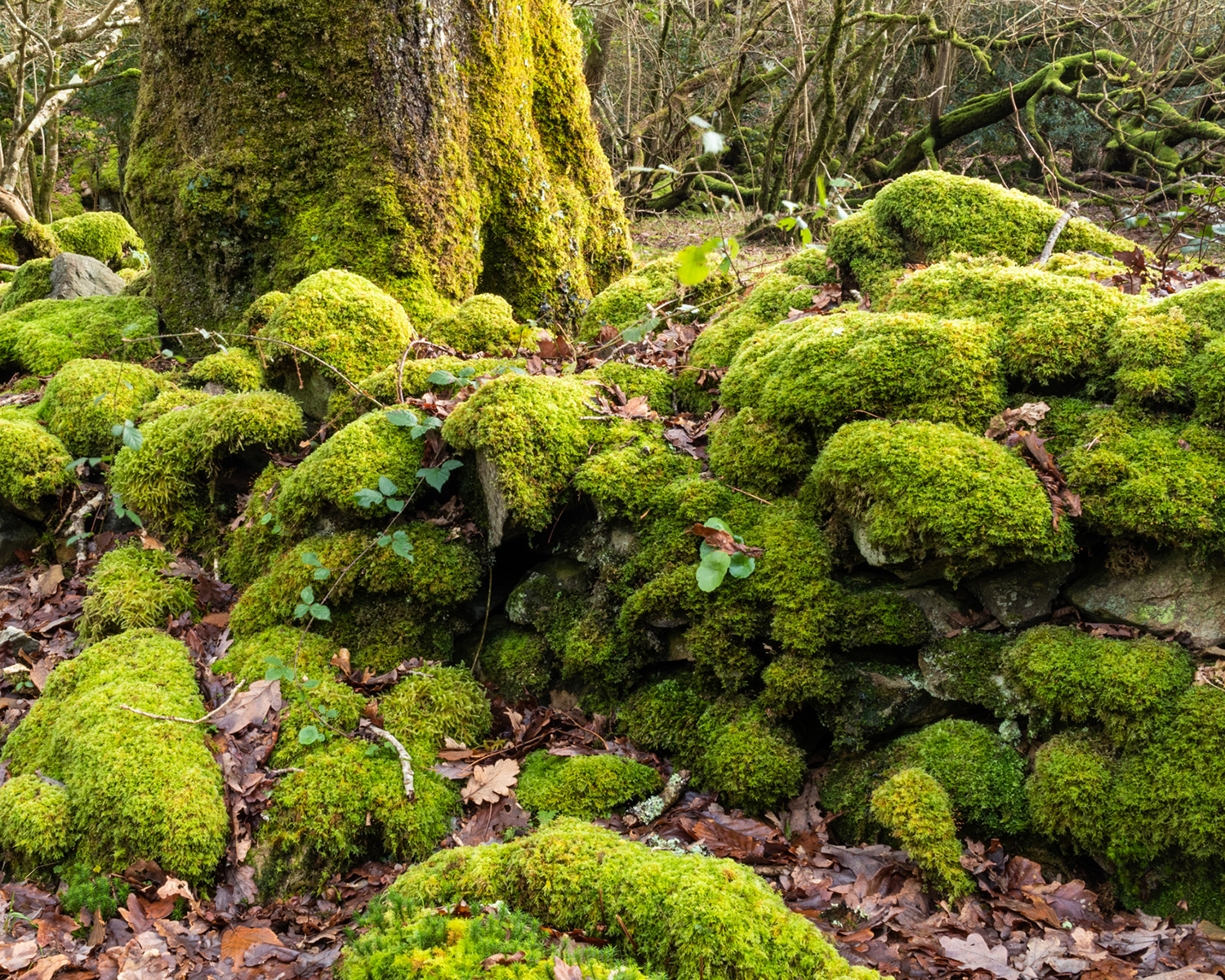
What lies here beneath the softest downy dress, sharing nourishment contentedly? What lies elsewhere beneath mans’ disguised demeanor, civil but deliberately divisive?

——-
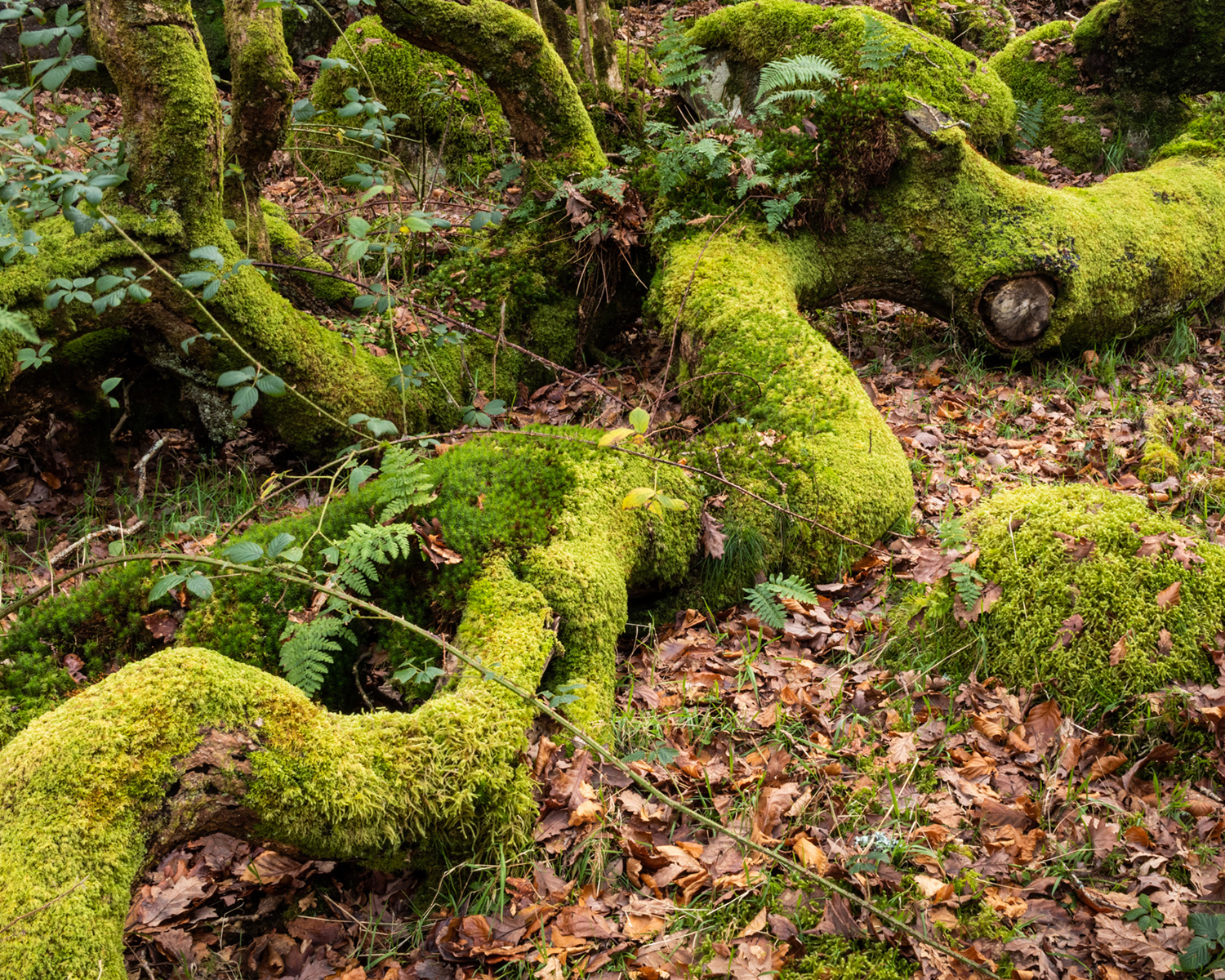
What lies here beneath the soothing snaking sleeve, insulated from harm by another? What lies elsewhere beneath deceitful welcomes, smiling but spewing spite?

——-

What lies here beneath the willing emerald wrapping, acknowledging their collective realm? What lies elsewhere beneath acceptable appearances, charming but prejudiced?

——-

Commentary

This series of work was a progression from my previous series. Still with the overarching theme of harmony, set against the antithesis of the disharmony in the local community, which is the driver for portraying the ancient woodlands as a visual metaphor for a harmonious community.

Working with a natural subject through natures cycles, caused me to reassess my photographic intention at the outset, which had been to develop the story of harmony in a musical sense as a collective of choral parts. It was December and the woods were bare, except for the prolific moss, which covered and protected the more dormant species hidden below itself. This is a time of nurture, acceptance and sleep in the woodlands, against a continuing backdrop in local village life of festering resentments and division. I reassessed how I could use this as a metaphor to communicate my concept.

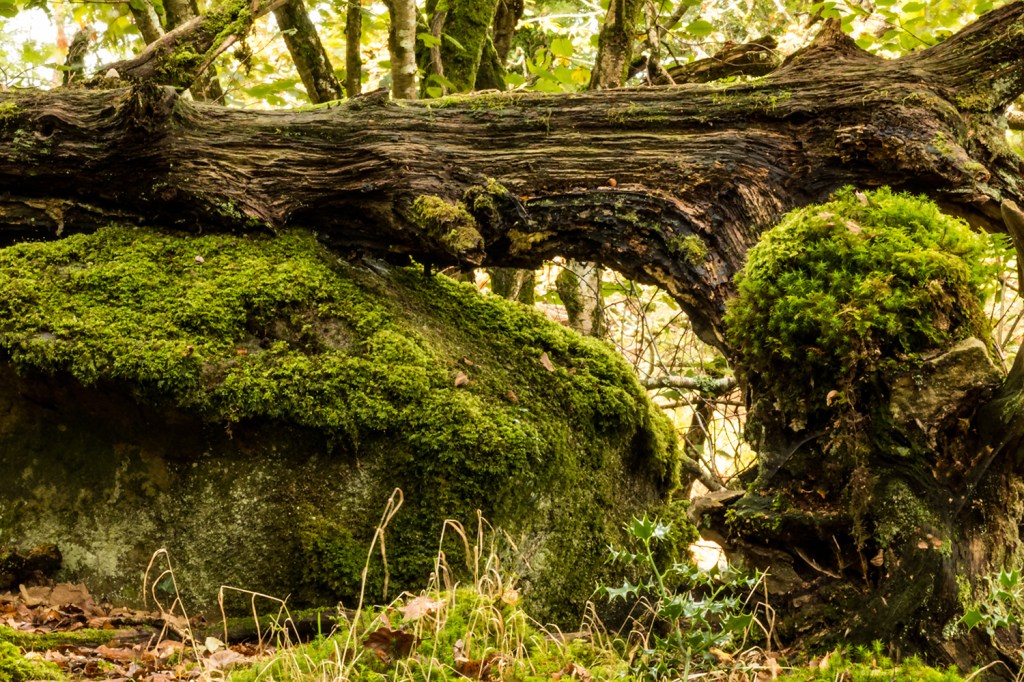
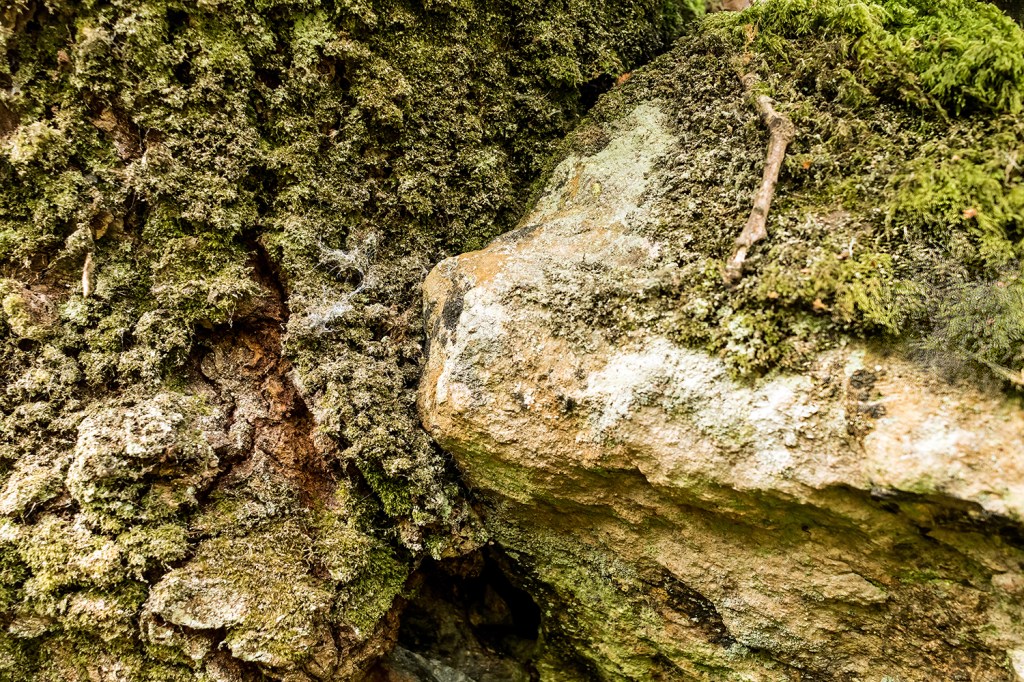
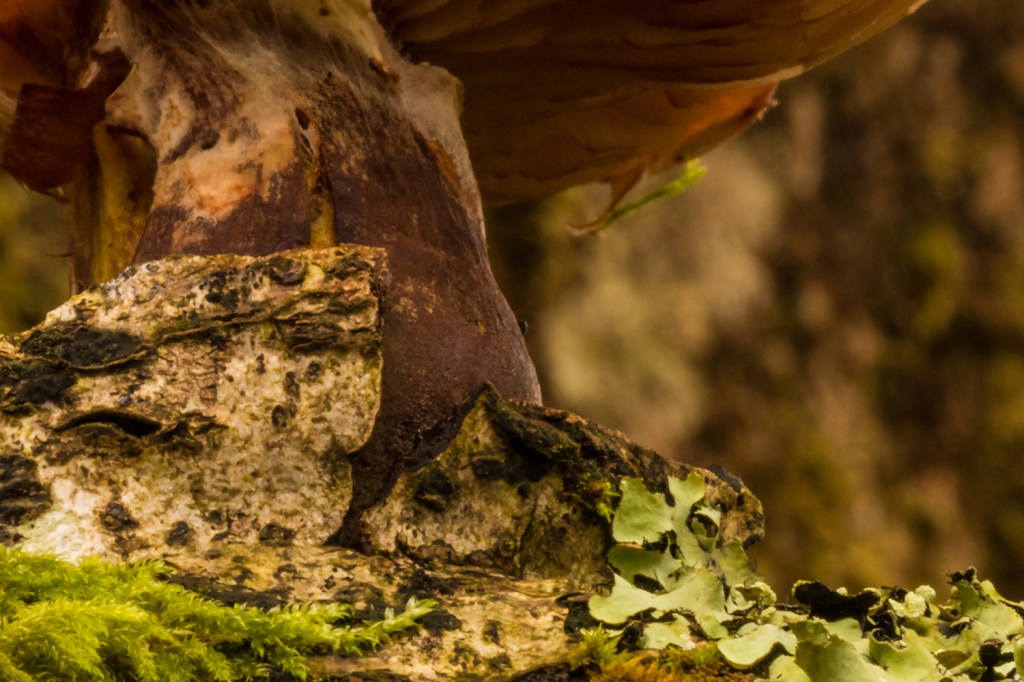
So, I photographed moss in its various guises, accentuating it’s vibrant, abundant blanket and it’s welcome benefit and mutual exchange and respect to the rest of the diverse woodland community.

Having discounted my original intention to experiment with musical terms as descriptors and context for the woodland elements, I searched for a way to signpost my work, to add some context, but not too much. My research led me to experiment with combining my images with poetry.  Could poetry bring something else into being? Could my images made up of visual nouns represent something else? Would words in a form of poetry give more clarity and depth without being too restrictive to the meaning?

Experimenting with words led me to connect my visual representations to the local community beyond the woodlands; this the original trigger for my visual work. Would combining poetry develop these images in another dimension, bringing “a third creative personality”? (Hurn and Fuller, 2010:11). After some experimentation I have added my own poetry to unravel the images a little, amplify my internal dialogue, whilst not giving too much directional context – this I hope will create third personalities, beyond the images and the poetry.

Reference:

Hurn, D. and Fuller, J. (2010) Writing the Picture. Bridgend Wale: Seren.

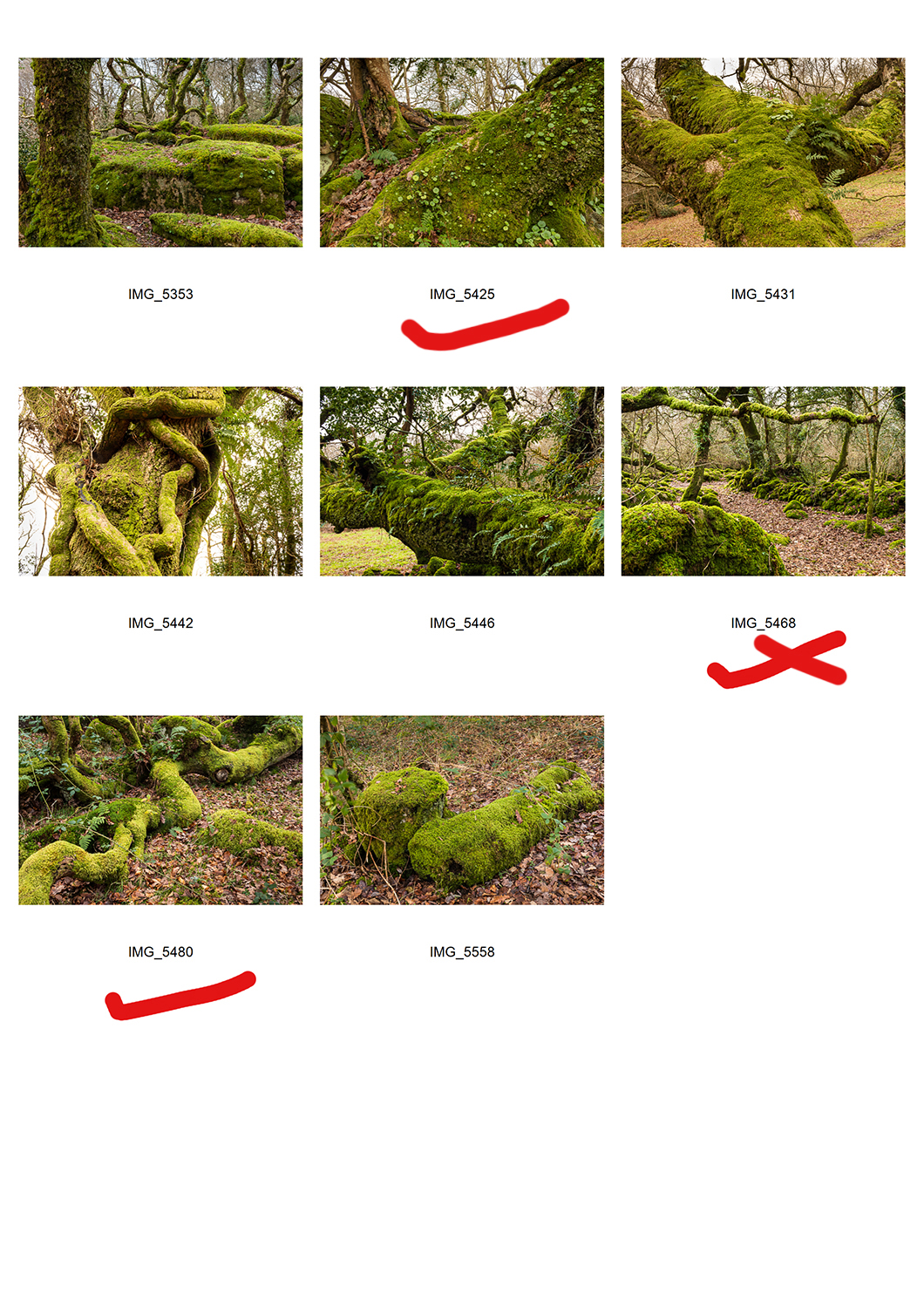
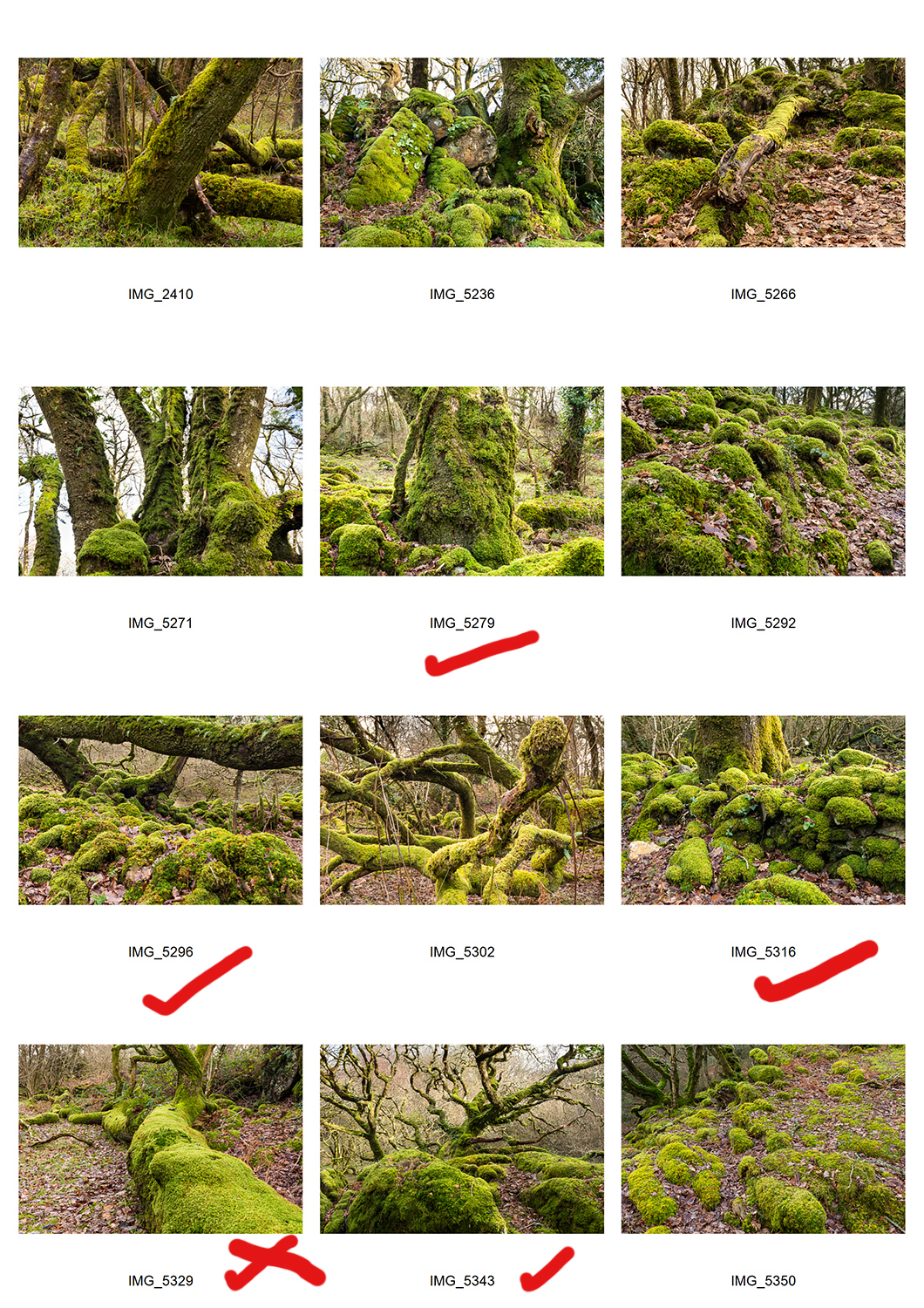
Contact sheets
BODY OF WORK ASSIGNMENT 4: REFLECTIONS ON FORMATIVE FEEDBACK

This was a video feedback session.

I described how I have taken what is evident currently in the ancient woodlands and used this as a metaphor for my feelings about the harmony in the woodlands as the antithesis of discord in the local human community. This concept of something physical as a metaphor for something invisible to the subject of my CS work.

I adapted my photography to use the predominant feature in the woodland at this time, moss. Moss covers most other plant species in the woodlands during the winter, protecting, absorbing, and stabilising the ecosystem. My intention was to showcase its important role in its community.

I shared how I researched poetry and photopoetry as a possible method for signposting my work, and that this also led me to thinking and behaving like a poet when photographing, being self-aware and stimulating my imagination.

Technically I explained that I took on board previous advice to crop to a 5:4 ratio and so when shooting I allowed for later cropping to this ratio. I share that the low sun and the lack of foliage made the harsh light a challenge to photograph with the softness that I prefer – however I worked around this.

I used a padlet to edit and share with my tutor as previously suggested and this was very helpful to myself during the process.

We discussed some of my thoughts about the next and last assignment.

Tutor’s comments:

• Images are good

• we worked through my editing process, and she suggested that revisit one or two of those I dropped towards my final edit. Firstly to change one or two images that have an amount of brown leaves in them for others that are more predominantly green (amount of green pixels). Interestingly this is something I began then I edited and then moved away from.

• We discussed my use of poetry. My tutor thought my poetry good in itself but invited me to consider:

–    Does the second couplet in each verse that refers to the community elsewhere confuse the narrative of the photograph it is placed against? Are the references too oblique?

– I should check whether the words and images are working together well?

– I could experiment with other approaches such as a wall text which explains the background to the images and text. Or placing a poem ahead of the images and leaving each image in the series without accompanying text, leaving the images to express themselves.

-Review Alec Soth’s work sleeping by the Mississippi

Actions post feedback:

BOW A3 Reflections on formative feedback

Feedback Tutor meeting 4.11.22

I described how my BOW is stimulated by my current life experience- disharmony in the community I live in, this at several levels, currently particularly by my committee work. The BOW is a physical representation of an area of my subconscious in an ongoing way, using the woods as a visual metaphor for this work is a cathartic process for myself – a personal project.

Though separate entities I described how my CS research on affect and effect in landscape photography helps to feed my BOW.

Tutor’s suggestion to read Sophie Howarth’s The Mindful photographer

Tutor’s comments:

  • Images are good and speak of the harmony that I am meaning to convey
  • I could put them on a padlet to experiment when editing so that I can see them all together, and this would aid our discussion next time.
  • I should experiment cropping them to a 5:4 ratio to mimic a full format camera. I will try this with these images but as I crop I camera I may not be able to achieve the composition I would like with these images at 5:4 – I will see. I will photograph so I can crop to a 5:4 ration for my next series.
  • A suggestion I experiment with image 4: #Partnerships… or Anarchy, to see if it would be better or not with more context.
  • We discussed my captions, whether they are too binary and reductive, do they suggest there is an answer to the question is this harmony or chaos? I should reflect to see if there is an alternative signposting that supports my approach but is looser? I don’t think it was a directive to change the captions, but to reconsider them.
  • My Tutor pointed out that my eye has moved from macro to a wider view since my last work. I may want to take this further with the next series.
  • We discussed my idea for the next series where I intend to share the idea that harmony is a chorus made up of different parts. My tutor suggested I might look at the etymology of musical terms to support this.

I will be able to refer aspects of this work to the Learning Objectives when I have completed the actions from this feedback.

Actions

Now:

  • Try cropping to a 5:4 ratio- I did this and found the overall effect was much stronger. I was surprised that the images that I’d not shot envisaging to crop to a 5:4 ratio, worked so well. This ratio seems to draw the viewers eye in more centrally into the scene. SEE MY PADLET: https://oca.padlet.org/nicola514516/td51x6mcq2sijad0
  • After experimenting with image 4: #Partnerships… or Anarchy I was not able to give any more context with as the image wasn’t previously cropped and I don’t have a wider view image. I can only bear this in mind if I don’t want to be too ambiguous in future with an image.
  • I reconsidered my captions but have stayed with my originals which I am happy with’ But again I will take this onboard for future images.

Next assignment:

  • Use a padlet when editing photos
  • Consider sharing a wider view of the woodlands
  • Consider using musical terms if still working with the idea of harmony in another series.

Reference:

Howarth, S. (2022) The Mindful Photographer. London: Thames and Hudson.

Next assignment submission end Jan 2023.

Next post: https://nkssite6.photo.blog/category/reflective-journal/hangouts/tutor-led-group-work-online-all-sessions/

BOW ASSIGNMENT THREE SUBMISSION

SHOW AND TELL

ARTIST STATEMENT:

My body of work is about internal and external passage. When I “go out” to the ancient woodlands, I am really “going in”. My visual representation explores my feelings of discomfort about the tension in my local community, this as a contrast to the successful assimilation of diversity in the woodlands.

This series is an exploration of whether diversity necessarily results in tension and chaos, or whether these differences can be harmonious.

IMAGES

Harmony or Chaos?

_________

#Chaos… or Adaptation

_________

#Discord… or Diversity

_________

#Mayhem… or Cooperation

_________

#Partnerships… or Anarchy

_________

#Peace… or Disorder

_________

#Muddle… or Balance

_________

#Collaboration… or Disarray

_________

#Confusion… or Harmony

_________

Reflective commentary  

This series develops my previous work which positions the ancient woodlands as a visual metaphor for a harmonious community. The motivation for the concept are my observations of the local community who are often disharmonious, driven by difference. The concept is stimulated by humans, though they are not evident in my work.

This approach runs parallel to my contextual studies work on affect (expressing what is in a photographer’s mind) and effect (the reality) in landscape photography. In essence this is the difference between photographing a subject for itself and photographing a subject to give a message about something else. Photographers such as Minor White present images as metaphors for something beyond the subject being photographed.

In this assignment, I want to explore further my ability to transform the abstract ideas in my head, my subconscious, into something concrete, via a physical representation of another subject. Many landscape photographers I have researched talk of combining the world within us and the world outside us, some say that that going out is really going in. Radonjič, (Metascapes,2016) calls this transforming our subconscious into “metascapes”, our personal landscapes, as the real landscape is inside your head. Tom Wilkinson (Wilkinson, 2022) suggests that photography is as much about the photographer as the landscape. I am aware through my previous practice that combining the world within my head with the one in front of me can be cathartic as well as produce intriguing photographs. My concept fits well with the theme of part 3 course work “Showing not telling”, Golding calls this using photography “to transform objective reality” (Golding 2022).

Prior to producing this particular series of images, disharmony in the local community had increased; partly due to the influx of summer tourists. Walking in the woodlands I was struck that there are many different species and great diversity, yet they coexist successfully, adapting to accommodate each other’s needs. Moreover, when I observed closely I saw that although this diversity first appears chaotic, messy, muddled, and disorderly, it is an organised chaos that works successfully. I resolved to to express my discomfort with the discord caused by the differences within the local community, by contrasting this with the harmony that exists in the diverse woodland community, where various elements accommodate each other to mutual benefit.

My intention when photographing was to seek out the visually chaotic, muddled and disordered to focus viewers on this aspect of the woodland community. Radonjic describes this as “visually intertwined living space” (Wesche, 2022). Viewers will need to observe hard just to make sense of what is present in such images, without any distortion by the photographer, and this fits well with another of my intentions that viewers should look closely to find meaning in the images.

I then edited to form a series of images that would communicate my message. My intention is to invite viewers thoughts as to whether what is presented is in fact harmony, or chaos. The images I chose demonstrate disorder and some randomness, but I believe they also have a quality of tranquility. I have signposted the work simply with its title “Harmony or Chaos?” and by each image having a caption denoting antonyms of these. In a way I am asking viewers to consider if chaos and differences are necessarily inharmonious. For myself, the first author of this work I am suggesting that differences and diversity can lead to adaptation, balance, and harmony.

I challenged myself in my last assignment to put something of myself in the landscape without intervening in it, and believe that my voice, my subconscious, is in these images. The viewers must decide for themselves what meaning they take from the images.

To create a vision of the harmony of the unequal, balance the infinite variety, the chaotic, the contradictions in a unity”. (Hans Richter, German Dada painter, and modern art historian cited at: The painters keys, 2022)

References:

Golding, J.M. (2022) At: https://www.jmgolding.com/before-there-were-words/wigdebnrfagnyp1cf1wr96rfxg7jll (Accessed 09/09/2022).

Radonjič, G. (2016) Metascapes. At: https://gregorradonjic.wordpress.com/metascapes/ (Accessed 30/08/2022).

The painters’ keys (2022) Hans Richter quotes – Art Quotes. At: http://www.art-quotes.com/auth_search.php?authid=3048 (Accessed 25/09/2022).

Wesche, A. (2022) ‘An Interview with Gregor Radonjič’ In: On Landscape (250). Ed. Tim Parkin. pp.97–118. Found at: https://www.onlandscape.co.uk/2022/02/interview-with-gregor-radonjic/ [accessed 30.7.22)

Wilkinson, T. (2022) Tom Wilkinson Art Photography. At: http://www.i-m.mx/tomwilkinson/ArtPhotography/about (Accessed 09/09/2022).

Next post: https://nkssite6.photo.blog/category/body-of-work/bow-submissions/bow-a3-reflections-on-formative-feedback/

ASSIGNMENT ONE: SUBMISSION

GENRE SHOOT

REFLECTION ON THESE IMAGES AND THEIR INSPIRATION:

These images are first explorations of my subject ancient woodlands as a visual metaphor for my theme of community.

I began shooting with the genre of psychogeography, photographing my longer/wider viewpoint unfocused whilst moving, and stopping to shoot still and with clarity and in detail subjects that caught my eye. In this way I emulated my external and internal passage through the place. I photographed as I saw, in colour. My later shoots continued with a psychogeography backbone but certainly with an increasing less objective sight as I worked into my topic, and I began to genre hop. I was aware that I was also thinking conceptually as I looked.

I was influenced in my way of seeing by practitioners such as Minor White and Stieglitz who used the landscape to express ideas and emotions in a representational way. Contemporary landscape photographers such as Rob Hudson, Stephen Segasby, Guy Dickenson, Tom Wilkinson and JM Golding of the Inside Out collective gave me further inspiration to explore space as an internal and external passage.  As I shot, I increasingly found ways to enhance the aspect of community that the subject before me spoke to me of and shot as much what was in my sight as what was in my head.

The images I share here can fall into 3 groups (there are some that overlap):

  • Psychogeography/drifting
  • General landscape representation
  • Abstract representation
  • Close up representation

From these I can reflect further about my next steps, but at this moment I feel it is towards a mixture of landscape, abstract and close up. I may dabble with constructivism and conceptualism which I will do more research into, but I’m not convinced that I need to go down these routes to say what I want to in my work. I feel I need to work more into photographic styles that I have begun to develop so far in particular, landscape in abstract and close up, and use my absorption and new perspectives to share what I am seeing and feeling.

ASSIGNMENT ONE IMAGES

Psychogeography:

______

Landscape representation:

Abstract:

Close up:

No changes were suggested by my tutor so this as posted as was my original draft, but see previous post on my reflections on the formative feedback:

Next Post: