LO1 produce convincing visual products that communicate your intentions, using accomplished techniques in complex and unfamiliar environments, with minimal supervision from your tutor.
I began the process with reconsidering the knub of my idea, this enabled me to focus on harmony in the community
I realise that this work is fairly straightforward on the surface however I had to break down the context, woodlands, into smaller “parts” to understand their relationships, so that I can later work with the “whole” and communicate more fully about the community.
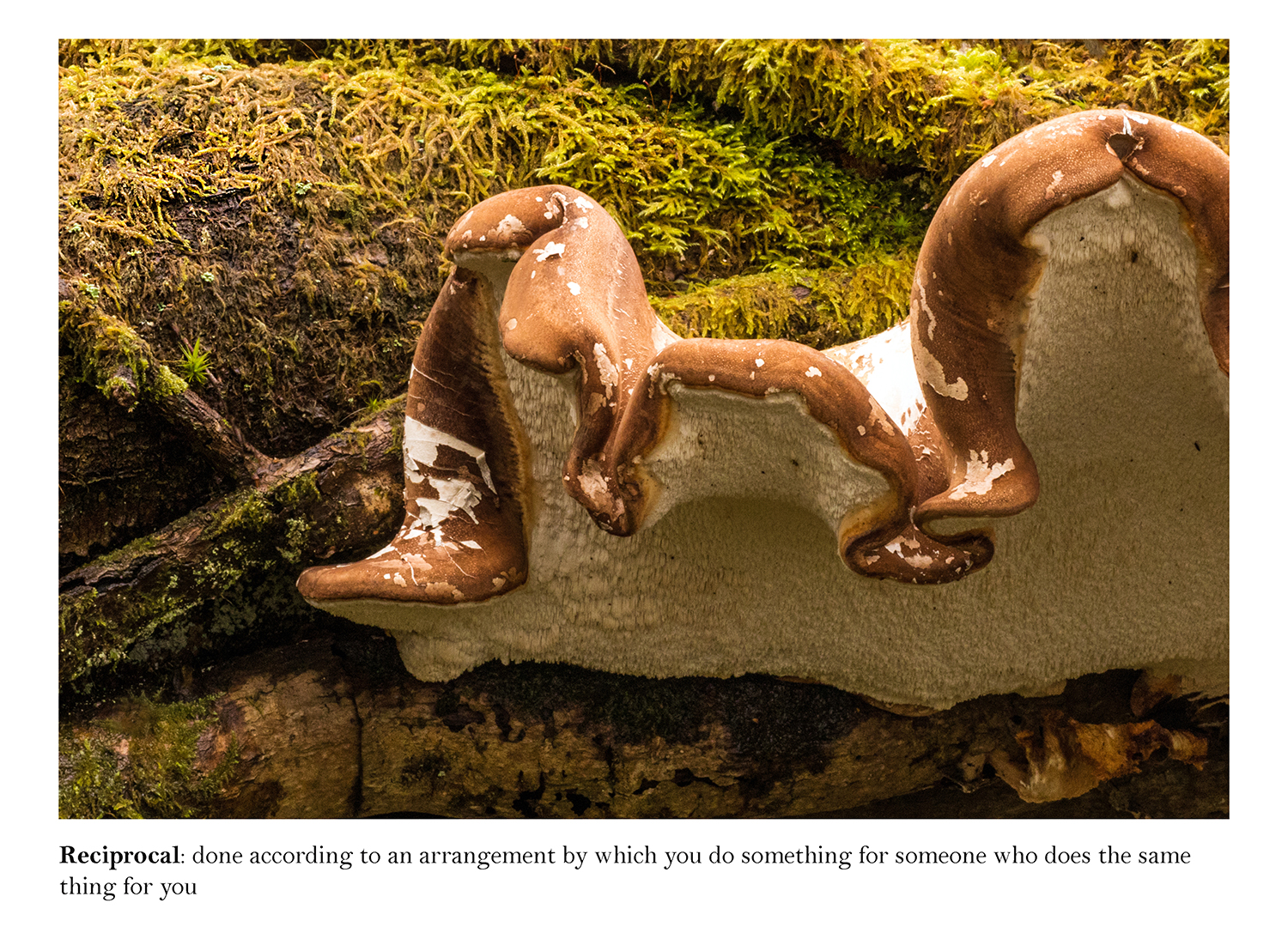
The signposting using a border with a dictionary definition is to aid the communication of this notion and to tenuously draw a parallel to human communities.
LO2 demonstrate comprehensive knowledge of your area of specialisation and be able to situate your own work within a larger context of practice in your field.
To aid my work I researched the species, photographers who photograph these subjects. and photographers who use text to signpost their concepts.
LO3 transform abstract concepts and ideas into rich narratives and integrate them in your images.
I used dictionary definitions pertaining to community adjacent to my images to narrate and integrate my images with my concept.
LO4 critically review your own work and evaluate it against desired outcomes.
These images were a process that I needed to go through to be able to understand the relationships that exist in the ancient woodland. They are a step along the way to my intention to communicate the harmony in the community. As such the work develops my genre development, but importantly leads me to my next stage.
Peer reviews made me reflect on my outcomes along the way, but I have stuck to my intention of not using humans in my work, preferring to know they have stimulated my concept, but that I will find a way to show this without their inclusion visually.
Editing was a good reflection point, and where I realised the importance of what I’d shot, the parts, and relationships, so that I have a clearer understanding how to move on now and use this with more context.
LO5 demonstrate management, leadership and communication skills and have deployed them during the negotiation and production of the final body of work with your tutor and third parties.
Brief: Spend some time reviewing your personal reflection and your tutor feedback.Develop a series of carefully considered images that moves your idea forward.Hand in this series to your tutor together with a new reflective commentarysetting out where you plan to go from here.
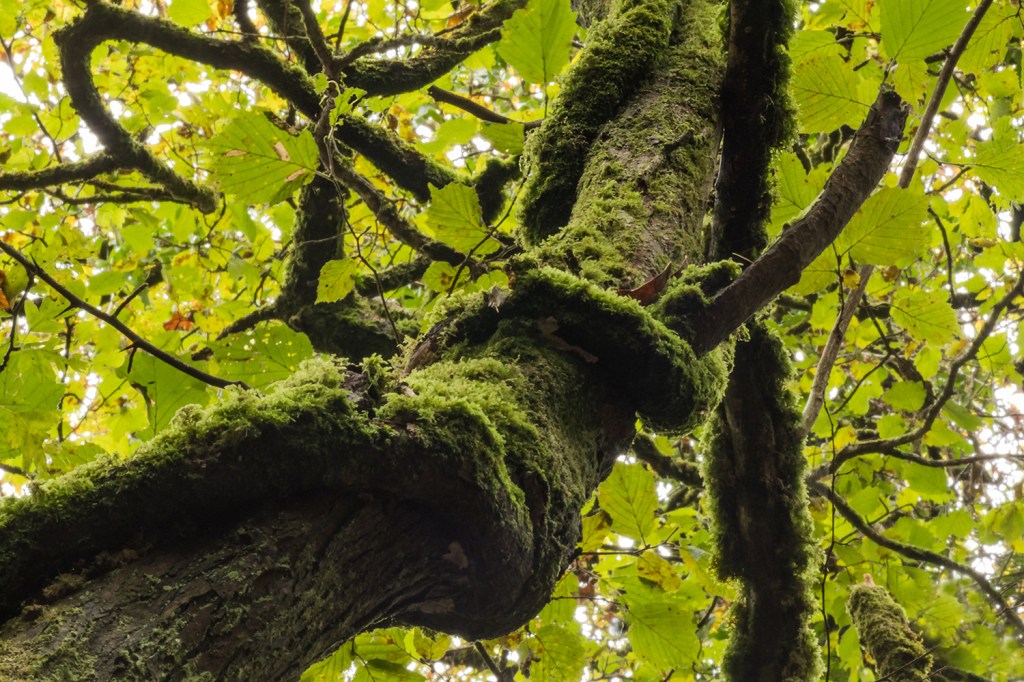
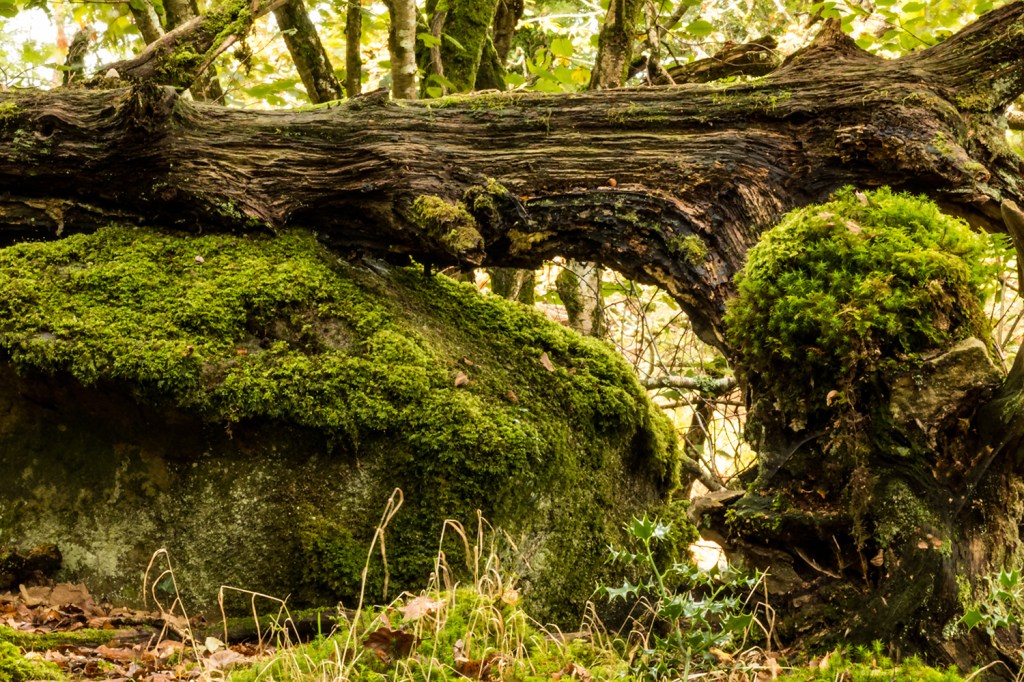
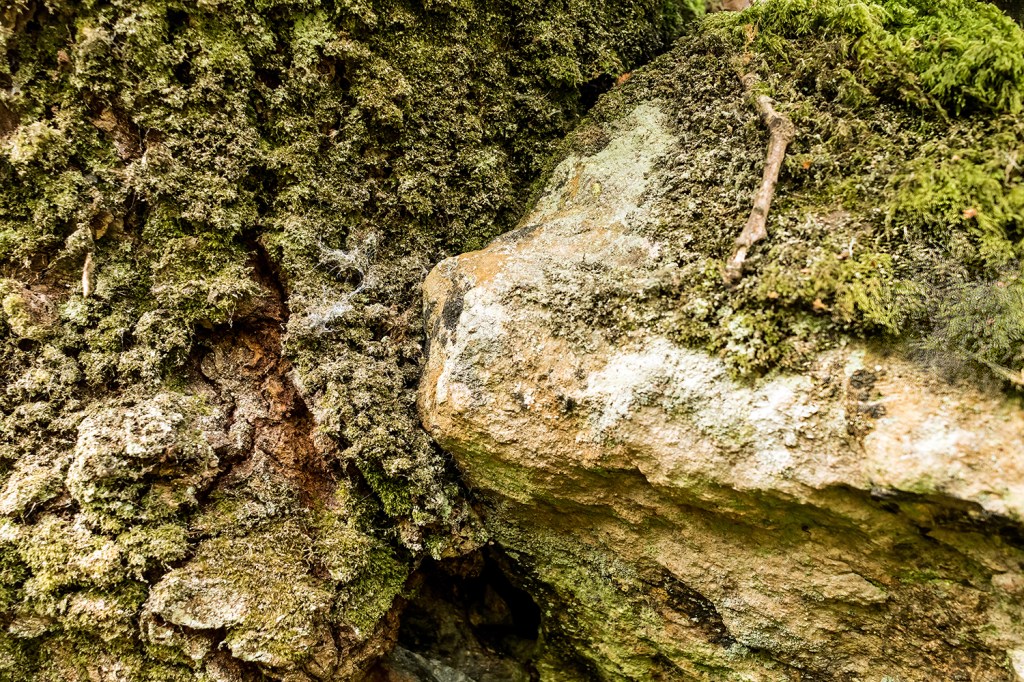
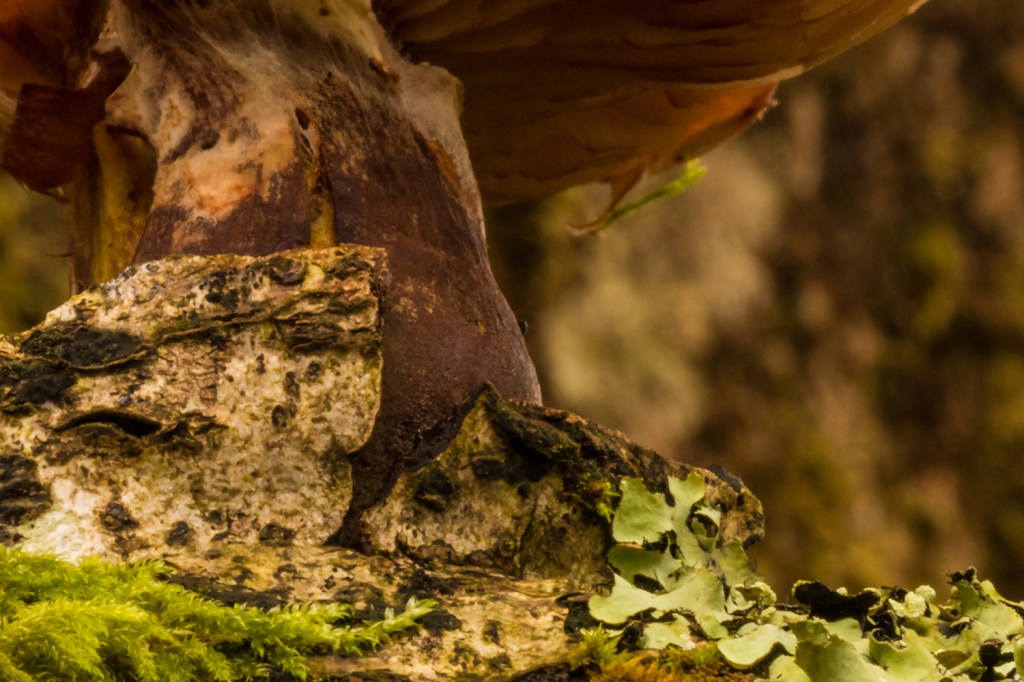
These images follow on from my first genre shoot developing my exploration of my concept, the ancient woodlands, as a visual metaphor for my theme of community. I was encouraged after my last assignment, to get to the knub of my idea and form a working title; I have decided on “A harmonious community”. The how and why of sharing my concept is still developing.
I reread and found new material on woodland species I photographed, trees, lichen, moss, ferns, and fungi. This increased my respect for them as individual subjects and enhanced my understanding of how they work together to create this harmonious woodland community. Sheldrake’s quote about lichens being undividable “They flicker between “wholes and “collections of parts”” (Wildlife Trusts, 2021), could equally apply to all these woodland species. This time as I photographed, I shuttled between the perspectives of the whole and the parts, but increasingly focused on individual woodland species. When I reflected on my images it became obvious that it is almost impossible to separate these parts from the whole, as the woodlands are all about the collective working together.
Photographing these species was a process I needed to go through to understand the parts that make the whole harmonious community. I tried different ways of looking and using unusual perspectives but returned to simply showing the close relationships the species have with each other. I considered various text to signpost my intention, settling on simply adding a border combined with a dictionary definition to add definition to the images. Interestingly these definitions of words that relating to a harmonious community, mostly refer to people or persons. My concept is inspired by humans, they are not evident in my images, although they are the stimulus to my intention and observations, they do not need to be visually evident, I am sure of that.
Next steps
These images were not inspired by the photographers I researched, however returning to this research, when reflecting on my outcomes, helped me to consider on ways forward now. Of those, I identify with the work of Ellie Davies, particularly her practice where she “walks, thinks, sits, listens then creates” (Davies, 2018). Although her outcomes are created by intervention and construction in the woodlands which I don’t lean towards, I share her desire to photograph to explain the landscape’s effect on the photographer; this is something I will focus on going forwards- an intention to communicate the woodland’s exceptional quality of harmony and mutual relationships. Can I put something of myself in the space as Davies does without intervening in the landscape?
After this close focus on interrelationships in the ancient woodlands, I now want to return to a wider view of the moss-covered landscape to express my feelings about this community. I may try like Thomas Struth’s work in forests and jungles to present so much information that viewers will surrender to just looking. I have a thought to try mixing into each image, both the “whole” and the “parts”.
Following my tutor feedback on assignment 2 I first focused on refining my project ideas.
I worked to clarify the how and why of my concept.
The why I am clear about already: my appreciation of the effectiveness of the woodland community, as a contrast and stimulated by my general disappointment in human communities. The how is more difficult and I am still working into.
I then focused on developing a working title, which was at first harmony in the woodland versus dissonance in the human community; as I worked into it this became, A harmonious community.
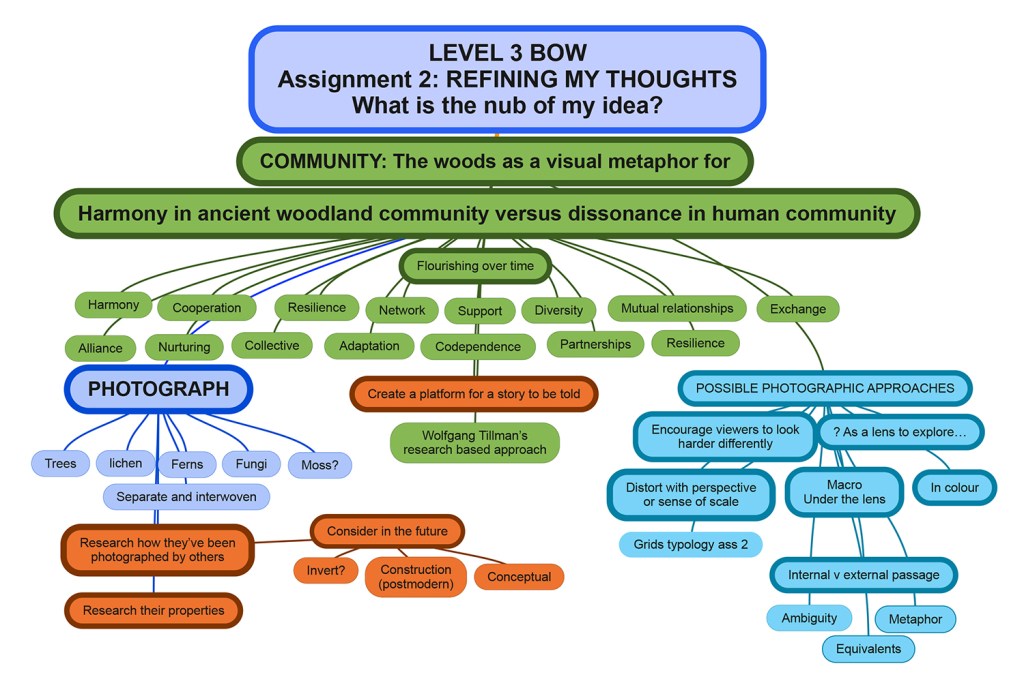
My key words were: Flourishing, harmony, cooperation, resilience, network, diversity, exchange, mutual, nurture, partnerships, mutuality, collective, co dependence.
I briefly noted down some of my previous reading on ancient woodlands, trees, fungi, moss, and lichen. By noting down some of my reading I was able to check that nothing important in their nature or relationship had escaped me. I have noted down further material that I may return to. Reading the science and the ecology behind the species reinforced my feelings about the uniqueness of ancient woodlands.
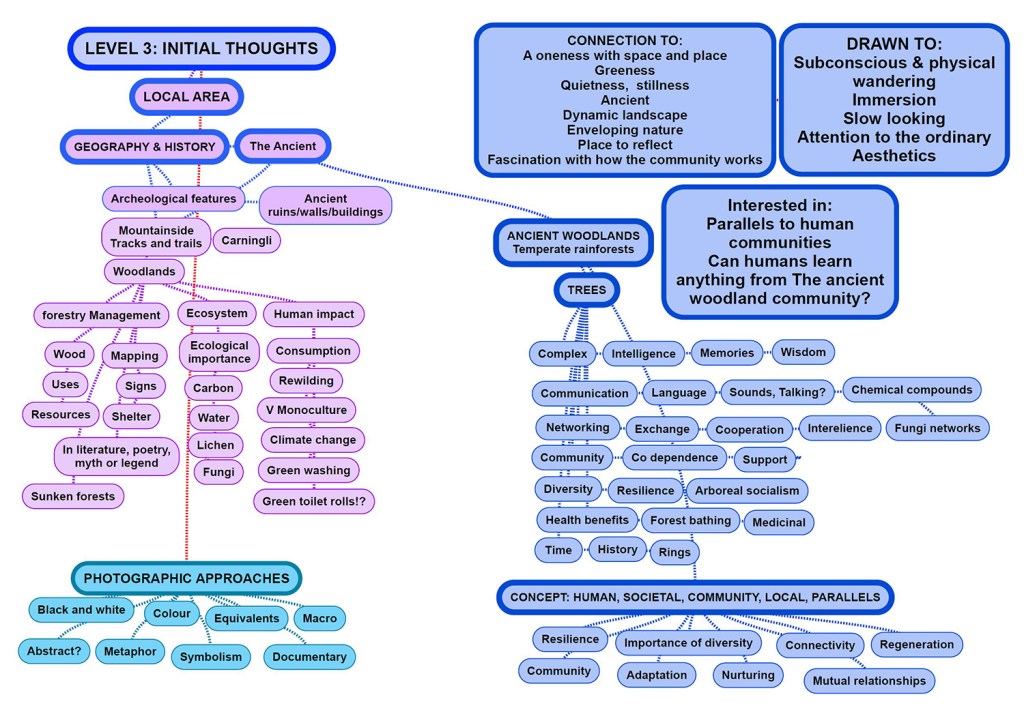
Refining thoughts mind map:
Shooting
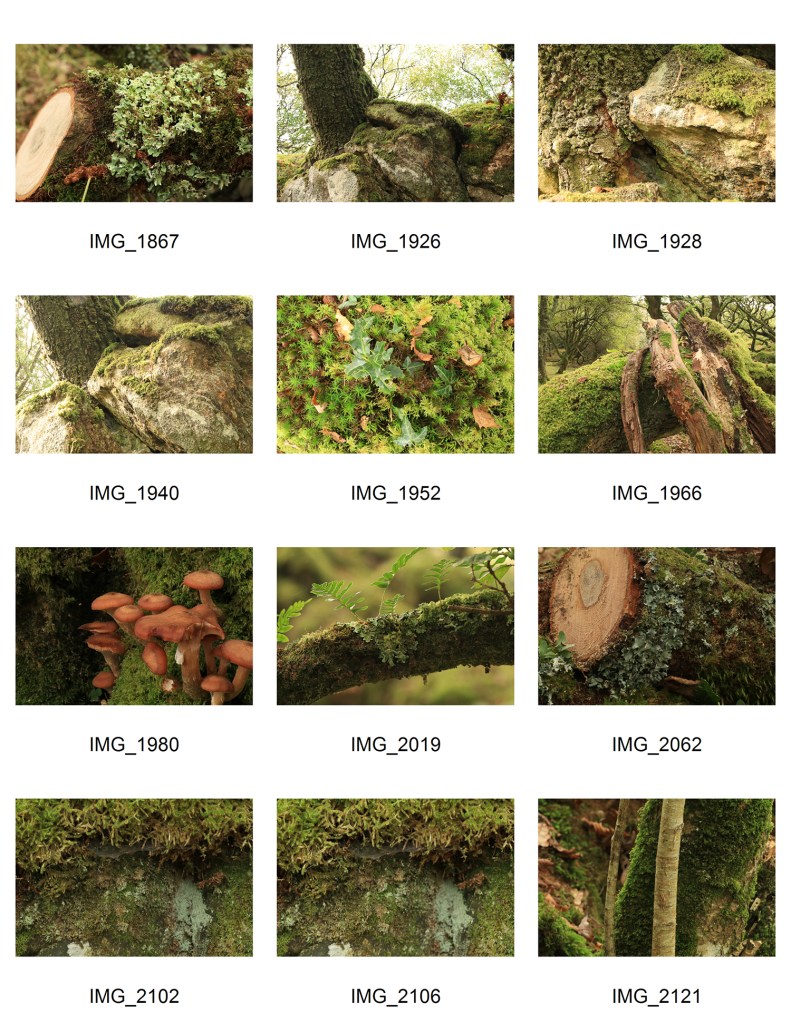
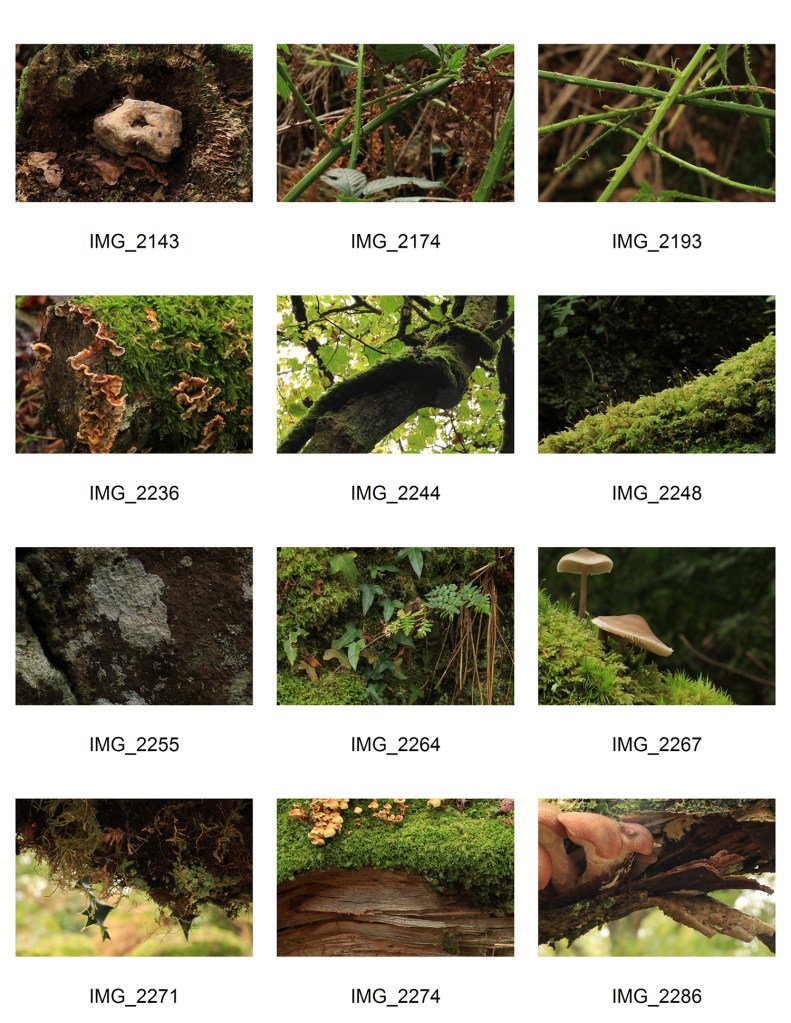
In assignment 1 I shot and shared a variety of aspects of the ancient woodlands that signify community to me, general landscapes, close up, and abstract studies. This time I set out to shoot to capture the various types of organisms that make up this ancient woodland community, trees, lichen, fungi, ferns, moss. Of course, it proved impossible to separate these species as they are interwoven together in many forms. This proved to be the point eventually, the harmonious coexistence of these various parts into a thriving community. For their success they depend on each other, they provide for each other, they exchange and nurture.
I had planned to experiment with scale, perspective, and distortion. However, when photographing I found I was keener to expose the details than disguise them. I shot closer and closer to expose these details, until I had accidentally collected almost a typology of the woodland community.
I returned to shoot many times, but within the same month. Each time I had reviewed previous images and sought to improve technically. Sometimes I returned to the same subject, though I learnt that this usually proved impossible as the landscape changes quickly in response to weather, even though many of these species are slow growing.
Fungi was naturally the most aesthetic, but other subjects gave a strong message of a harmonious community. Moss was always there in the background, and I only realised with hindsight that this is becoming of more interest to me.
At the same time, I considered the methods that I would use to signpost my message and give an entry point to my viewers. I focused mainly on definitions of the keywords that apply to the ancient woodland community. I narrowed down those that I would use by checking actual dictionary terms, and decided that the most relevant were exchange, network, diversity, interdependent, nourish, harmony, reciprocal, and cooperation. I reviewed the images that I’d shot to check whether I had some of each species that would align with the definitions, which I had and then began to edit.
Editing
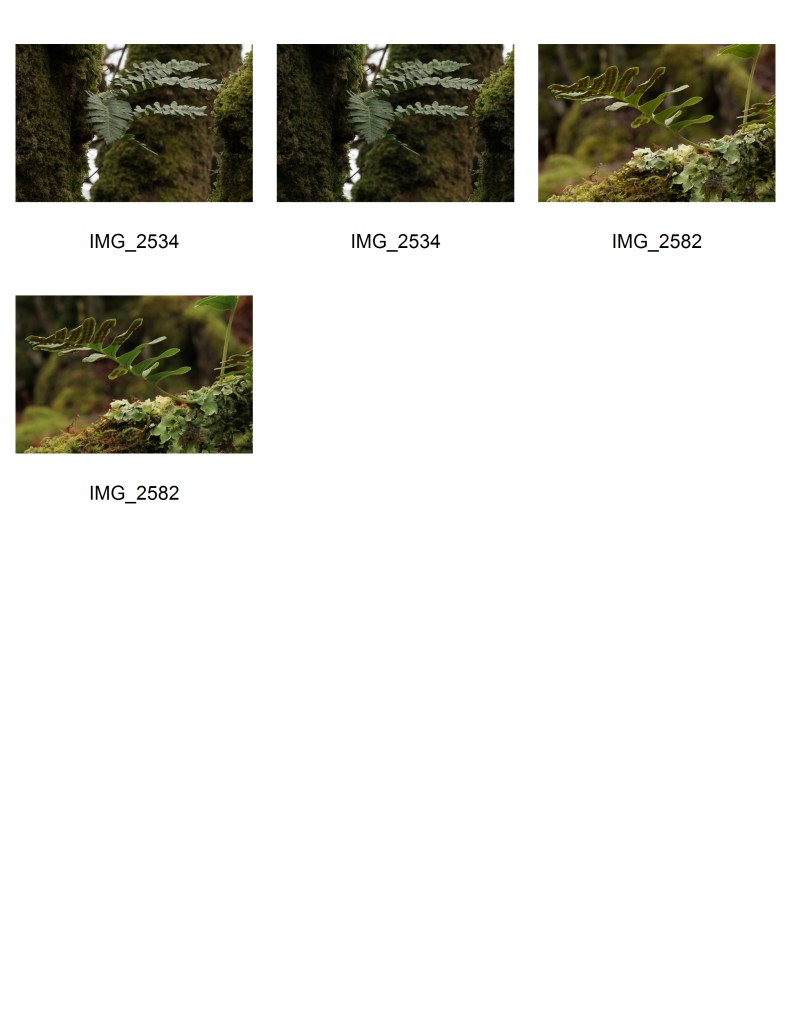
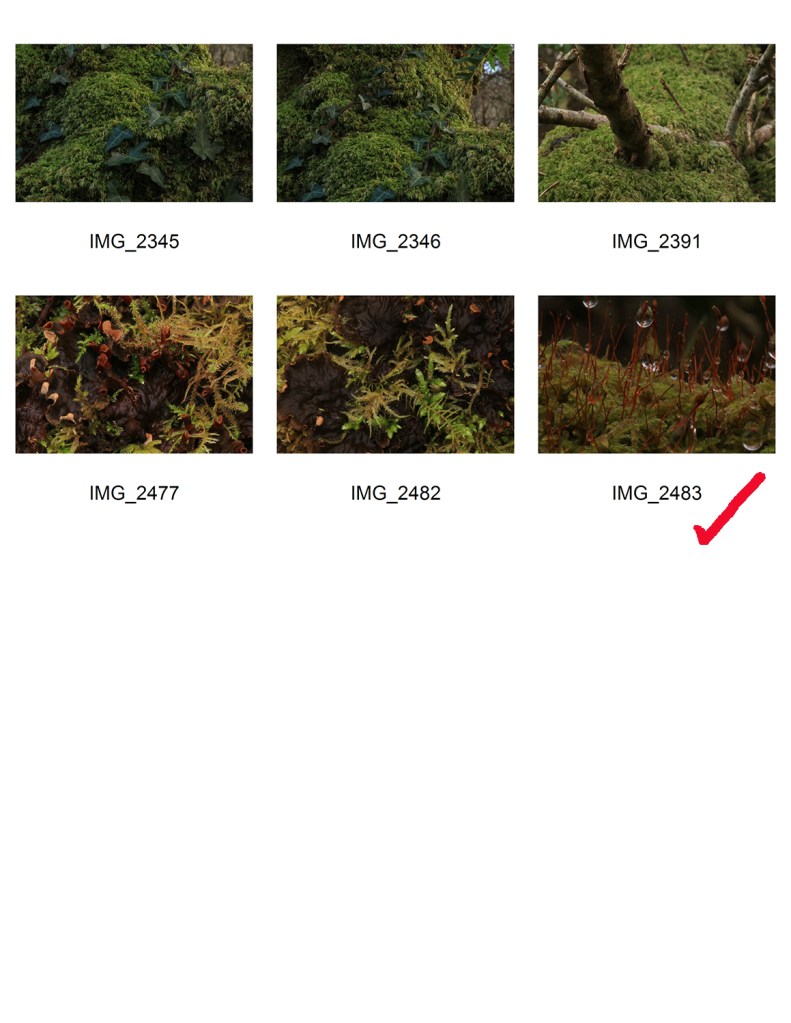
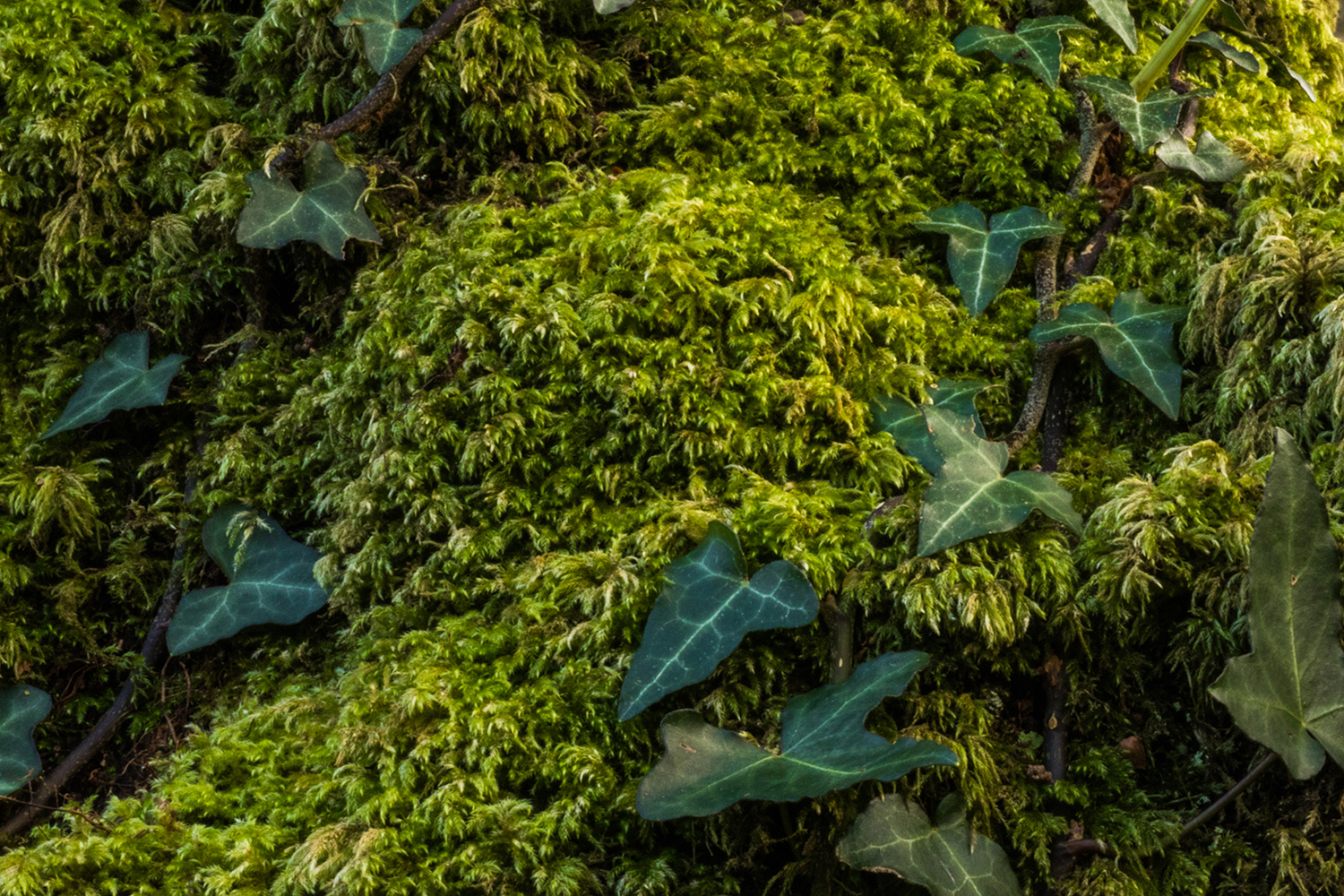
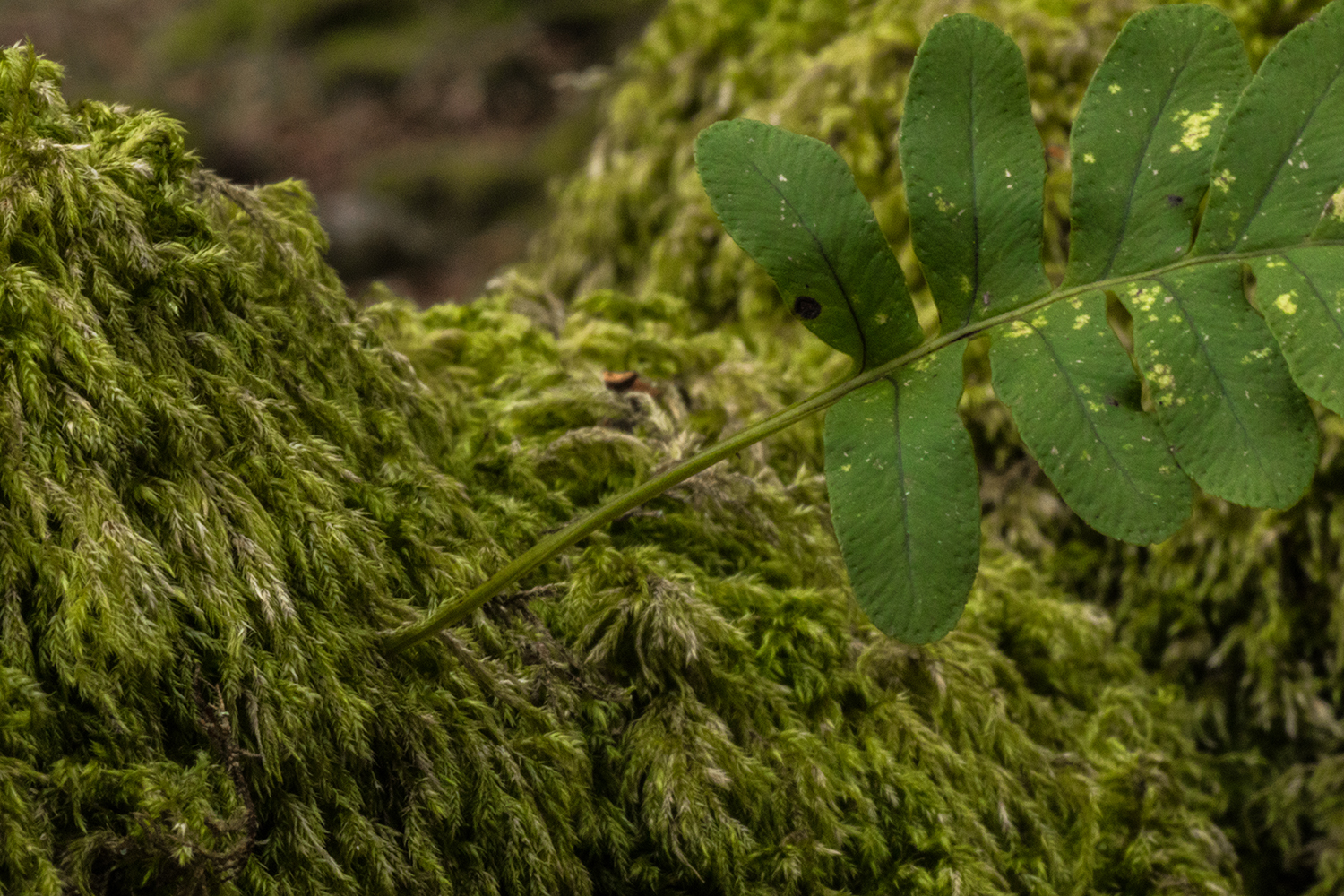
I reflected on the images and their meaning, for instance which of these two fern images I should use:
I considered what they each might be saying and decided that the fern emerging from the moss signalled harmony, whilst the ivy and the moss had less desired meaning.
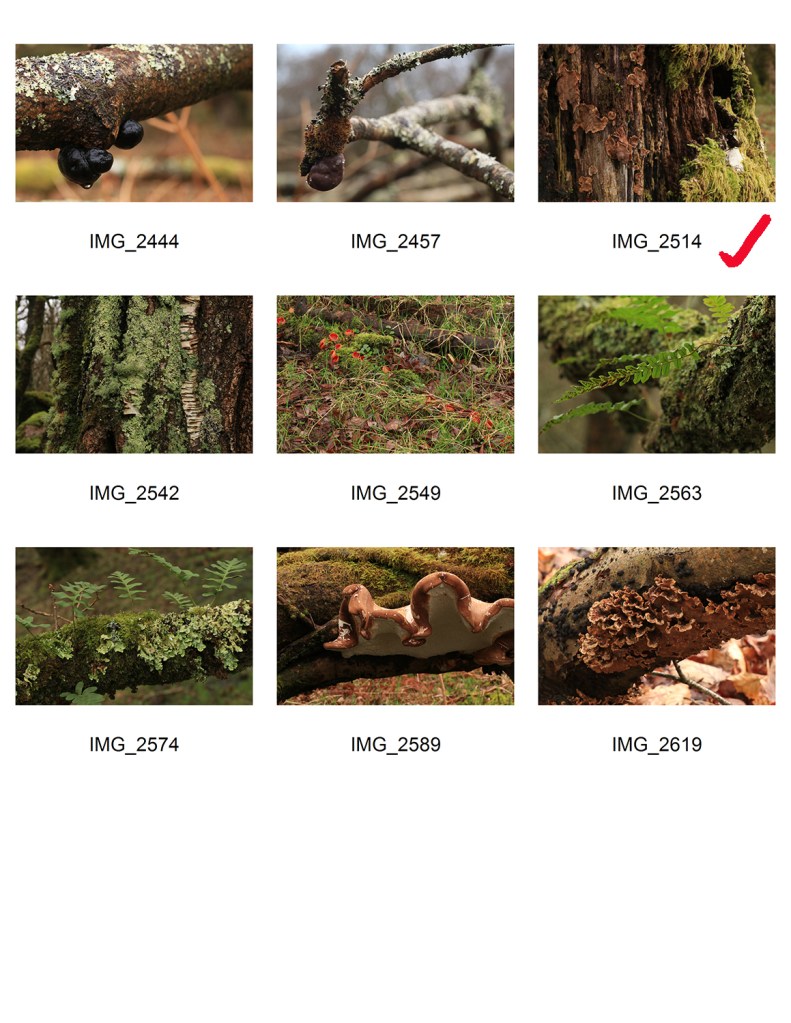
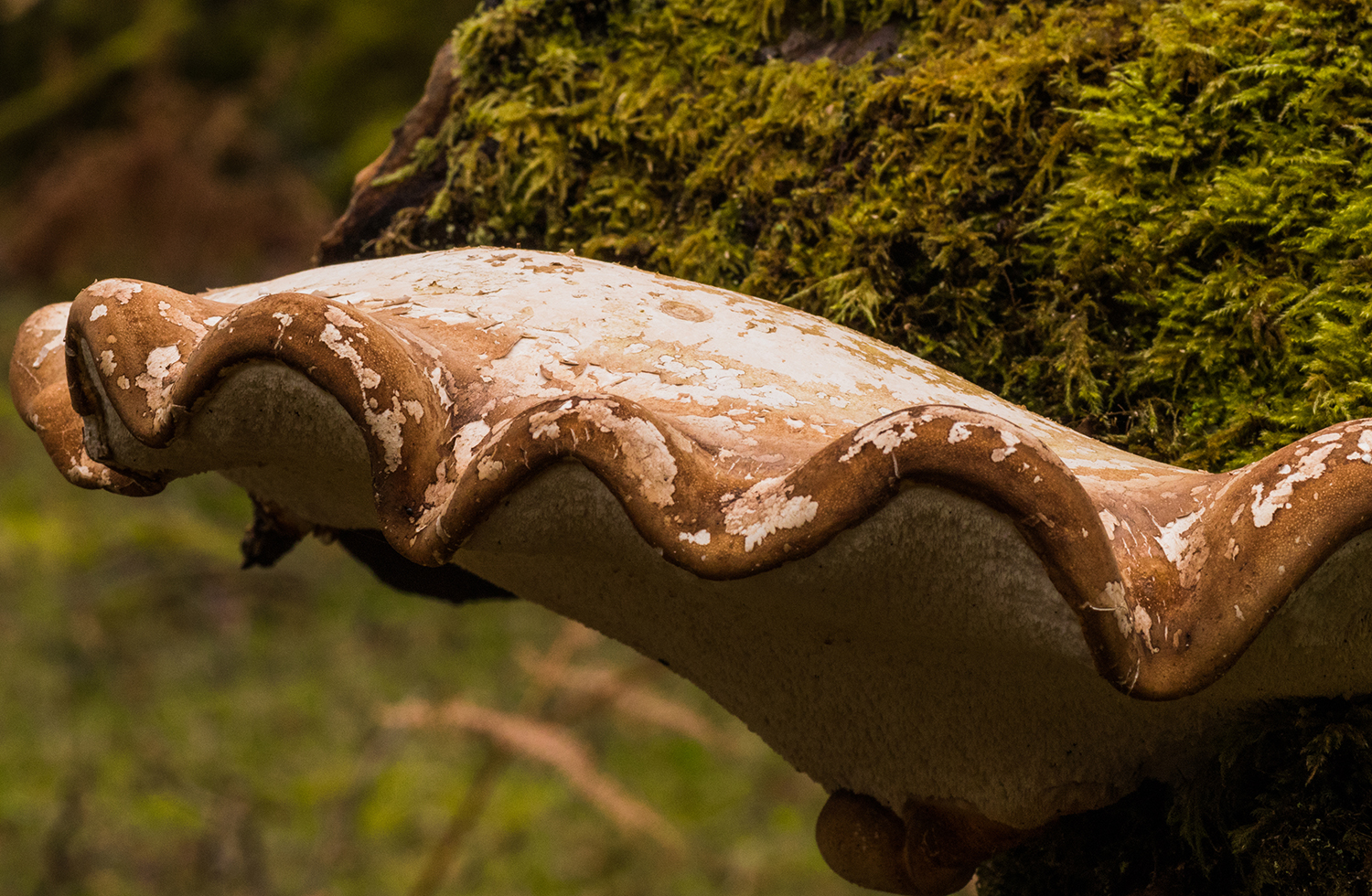
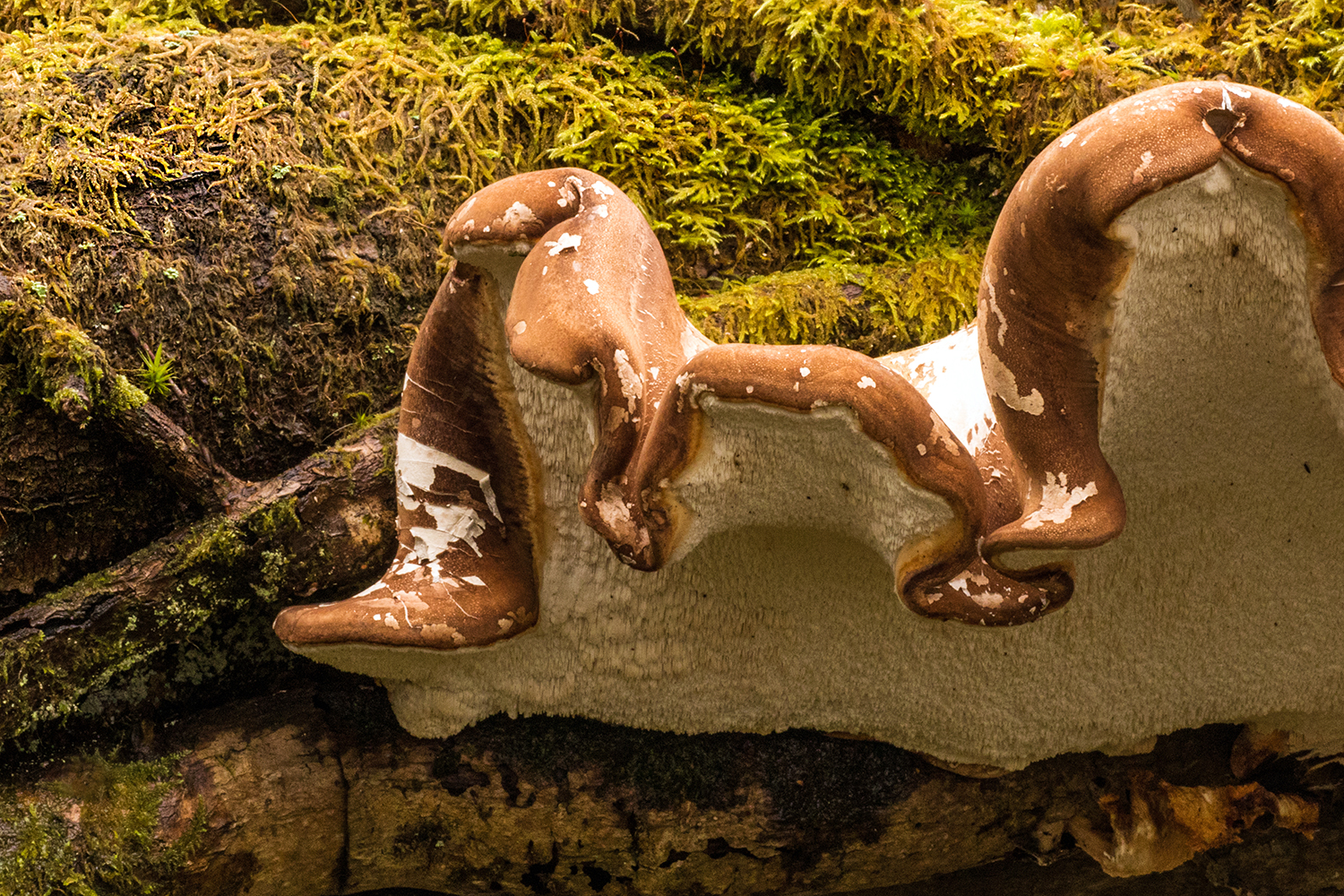
I asked myself whether this image of the fungi said anything about community, so I substituted it for another image which I cropped tighter to show the relationship between the fungi, tree, and moss.
When I shared the images without text, some of my peers were underwhelmed and suggested that the needed more of an angle of some link. Also, I was concerned that the images were rather “straight”, and did think to reshoot in more artistic manner as portrayed below:
However, on sharing this possibility with peers again they like myself preferred the original images. I felt disillusioned when my peers I might add humans as comparisons to the images in some way, but I knew this was not where I wanted my work to go. I know that I will not be producing a documentary project, but that my work sits between the genres of landscape and expressionism. I do realise that I need to find a point of difference so to speak, however I do not want to do this to merely tick a box, or make my work look unusual. Therefore, I decided to stick to my own path. This work is in any case this is nowhere near the final product of the course, merely a steppingstone along the way.
My intention was strengthened when I referred to my tutors’ words that though dissonance in human community may have stimulated my work on the harmony in woodland communities, that doesn’t mean that they must be present in my work – this motivation may just underpin the work.
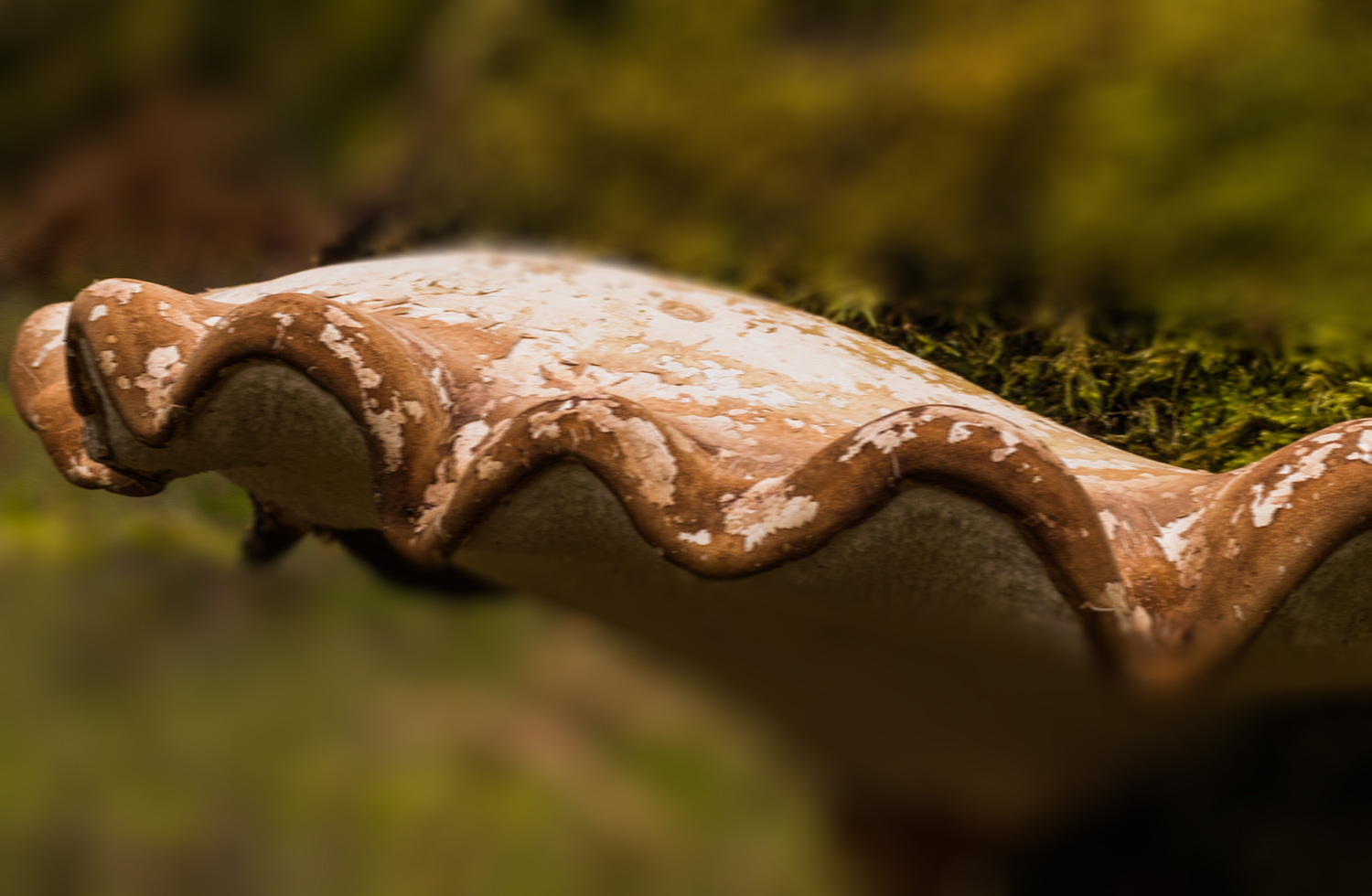
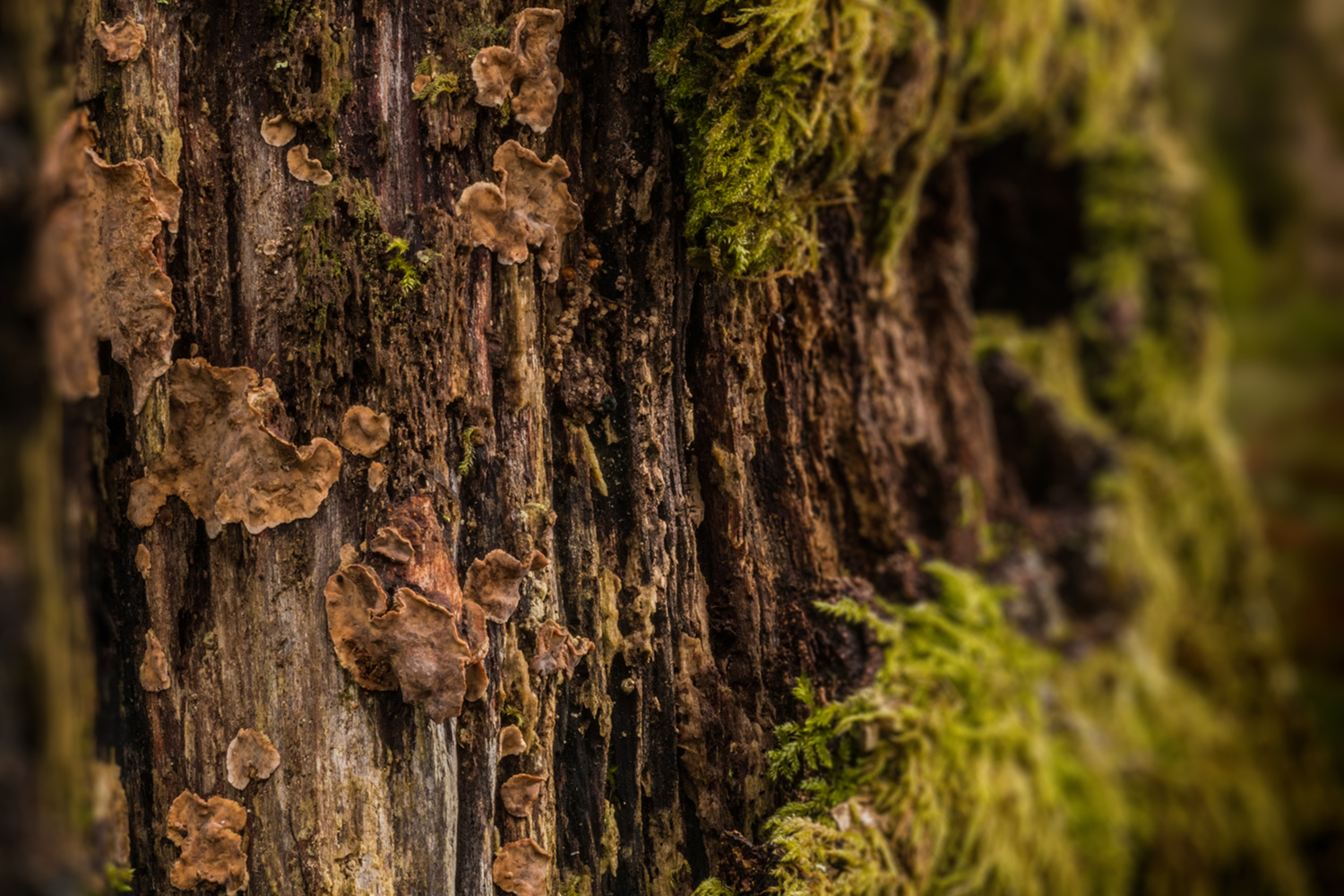
The images that I’m using depict coexisting/co-dependent ancient woodland plant species. Some are more ambiguous because of their scale of their unusualness, but I am not attempting to disguise them but photographing them in a way to make them and their relationships clearer. I have chosen images that emphasis relationships.
Editing mind map:
Presentation
I contemplated using the definitions that I had chosen as a border of underlying text. Eventually I decided that by simply adding definitions to a border on a print that the message was stronger.
The future
This work is already leading me forwards. I do not intend to develop te work in this style, studies of species that live harmoniously in the woodland community, but it was a process I had to go through, to move myself forwards. Seeing, studying and photographing them, has enabled me to appreciate more clearly and their interrelationships. At this point I feel my next springboard will be to use images of trees and moss to contextualise the success of this community and I might look at overlaying close up images of species onto these i some way.
Materials, techniques, observational skills, visual awareness, design, and compositional skills.
I used Canon 80 D with two different lens, initially a prime lens and then a macro-1:1 lens. The location is extremely dark and consequently I used a tripod for each shot.
Slow and sharp observation was key to finding my subjects. I spent several hours each shoot immersing into the woodlands whilst tapping into the narrative in my mind.
Once I found a subject, I spent a long time composing the image so that it would say what I wanted it to, to me.
Visual language, different ways of seeing and representation are central to this project. But perhaps will become more obvious as my work develops.
I felt it was important to begin by presenting the landscape in colour as I was seeing it. However, going forward, I will represent it in black and white as I think this will provide more space for viewers to interpret as they wish; subjects will become less obvious and more interpretable.
Quality of outcome
Content, application of knowledge, presentation of work in a coherent manner, discernment, conceptualisation of thoughts, communication of ideas.
The images represent the woodlands as they present in colour, but as I’ve said above, I will present in black and white next time, which means that I will need to look differently when photographing.
I have presented my work here simplistically, showing my progression from different methods as I experimented moving from psychogeography, to landscape, to abstracts, to close-ups as this assignment was presented as an opportunity to experiment with genre and style.
I am aware that these images are reasonably “straight” and obvious, which is not necessarily a problem, but I do intend from now on to use increasingly use perspective to increase ambiguity. This I think will echo my intention well, as this reflection on community, is in a large part affected by perspective.
I have considered other conceptual strategies but am reserving further experimentation for later assignments.
Imagination, experimentation, invention, development of a personal voice.
My intention to use the ancient woodland community as a visual metaphor for my local community is, I think, inventive.
I have experimented whist shooting these initial images and explored genre. This is shown in the development of my initial psychogeographical shoots and resulting images.
My photography developed as I moved from psychogeography at the beginning, to general landscape representation, then abstract and lastly to the close-up representation of community.
It is early days in this body of work, but I already hope that in my choice of subject for each photograph I am showing imagination and some personal voice.
It is the just the beginning of drawing parallels with the woodland and human community.
As usual I have reflected throughout this process, particularly on how I would represent my narrative. This journey is described in my learning log.
I read widely about woodlands, in particular, before I prepared for photographing, to get a general background on how these community’s work. See my bibliography on Trees and woodlands in my A1 learning log.
I have used and added to previous research on photographers I have studied previously who have stimulated this work such as, Minor White and Alfred Stieglitz.
These images are first explorations of my subject ancient woodlands as a visual metaphor for my theme of community.
I began shooting with the genre of psychogeography, photographing my longer/wider viewpoint unfocused whilst moving, and stopping to shoot still and with clarity and in detail subjects that caught my eye. In this way I emulated my external and internal passage through the place. I photographed as I saw, in colour. My later shoots continued with a psychogeography backbone but certainly with an increasing less objective sight as I worked into my topic, and I began to genre hop. I was aware that I was also thinking conceptually as I looked.
I was influenced in my way of seeing by practitioners such as Minor White and Stieglitz who used the landscape to express ideas and emotions in a representational way. Contemporary landscape photographers such as Rob Hudson, Stephen Segasby, Guy Dickenson, Tom Wilkinson and JM Golding of the Inside Out collective gave me further inspiration to explore space as an internal and external passage. As I shot, I increasingly found ways to enhance the aspect of community that the subject before me spoke to me of and shot as much what was in my sight as what was in my head.
The images I share here can fall into 3 groups (there are some that overlap):
Psychogeography/drifting
General landscape representation
Abstract representation
Close up representation
From these I can reflect further about my next steps, but at this moment I feel it is towards a mixture of landscape, abstract and close up. I may dabble with constructivism and conceptualism which I will do more research into, but I’m not convinced that I need to go down these routes to say what I want to in my work. I feel I need to work more into photographic styles that I have begun to develop so far in particular, landscape in abstract and close up, and use my absorption and new perspectives to share what I am seeing and feeling.
CONCEPT: Ancient woodlands as a visual representation of community
My interest is in community. I have been part of the local community here both as an insider and outsider, observed it keenly and photographed aspects of it before in my work. My perspective is that there are positives and negatives and many wounds and divisions that it would be good to heal.
CONTEXT:
As a walker and photographer, I appreciate the ancient woodlands local to here, not only for their aesthetic appeal but for their example of thriving communities. As a terrain these small temperate rainforests envelop your senses, encourage you to slowly absorb what you see and feel, wake your subconscious, and inspire reflection. Ancient woodlands are complex communities, with trees at their heart. I am most interested in aspects of their community where parallels can be drawn to human communities; features such as communication, language, cooperation, support, diversity, resilience, networking, adaptation, mutual exchange and adaptation.
APPROACH:
I intend to use the ancient woodland community as a visual metaphor for local community, using a personal, expressive, reflective, visual approach as a visual metaphor for visual community.
RESEARCH
I completed the coursework part one Genres before shooting and did some research on landscape photographers that haven’t looked at before that might inspire my work. My starting point for new research were some of the inside outside landscape photography collective who negotiate the liminal space between the world before us and within. This was an initial scan, below are the main inspirations to me I took away:
Rob Hudson: is a conceptual landscape photographer using metaphor and narrative. In his work the Secret language of trees, he gives clues to community, connectivity, and nurturing. He uses “Landscape as representation in photographic form” where he inhabits“two worlds, the one before us and the one within us” (Hudson, 2018). He believes we should illustrate the land by telling stories that interest us not just aesthetic presentations.
Stephen Segasby: Uses space and place as a human response to environment and culture, and a metaphoric base for personal narrative, and “making sense” (Seagaby, 2021).
Guy Dickenson: He explores place as internal and external passage. He describes how he shifts his eyes from foreground to background with “the passage of thoughts and of the body” (Dickinson,and Griffith, 2018); in the process, losing the horizon, using depth of field and perspective for texture tone and surface.
Tom Wilkinson: In his narrative about his workNothing Remains, he says “landscape is composed not only of what lies before our eyes but what lies within our heads” (Wilkinson,,2021) and talks of place and self?
JM Golding: “explores the transition from outer landscapes into inner through the experience of the soft fascination of place”, (Hudson,2018).
Hudson, R (2018) Introduction in: Inside the outside Collective (2018) Out of the woods of thought. An exhibition of photography. JosephWright.co.uk. limited edition of 200.
Photographs can illuminate personal philosophies (Szarkowski, 1970)
landscape photography expressing his ideas and emotions rather than presenting pure visual facts.
Minor White research revisited:
He had an amazing eye for observation of the natural landscape and used seeing and feeling in his work “to register a sense of things beyond the visible world” (Green, 1972).
He opens up the act of seeing, “Although their meaning seems to at first to be wrapped in metaphor, we see finally that they are frank and open records of discovery” (Szarkowski, 1970:174).
His final form was less important that the meaning it evoked, photography had the ability to be metaphorical and photographic representation must be symbolic (Grunberg, 1989).
White’s 1963 paper on the concept of Equivalence (1963), described it operating at three levels, the graphic, the mental processes of the viewer and the memories and feelings that remain afterwards (White, 1963).
“Great pictures cannot be just about particular landscapes; they have to direct us to more, even eventually to the whole of life” (Adams, 2009:92).
References:
Adams, R. (2009). Beauty in photography. New York, NY: Aperture.
Green, J (1972) in White, M. (1972). Octave of Prayer. New York, NY. p. Back cover.
Pultz, J. (1980) ‘Equivalence, symbolism, and Minor White’s way into the language of photography’ In: John Pultz Record of the Art Museum, Princeton University Vol. 39, No. 1/2 (1980), pp.28–39 [Online] At: https://www.jstor.org/stable/3774627?seq=1#page_scan_tab_contents (Accessed on 22nd August 2019)
THE RESEARCH AND COURSEWORK GAVE ME SOME IDEAS HOW I COULD REPRESENT MY CONCEPT THROUGH THE LANDSCAPE:
Represent the world within me with the world around me
Search for my narrative within the landscape
As a flaneur I can’t be objective
Using a combination of blurred distant views with clarity in close up views.
Disregard the horizon and play with perspective.
Take viewers into my field of vision
Show relationships within the woodlands
Infuse images with the feelings I absorb in a place
Create a platform for a story to be told
SHOOTING:
I began with Psychogeography as a genre is a good starting point .
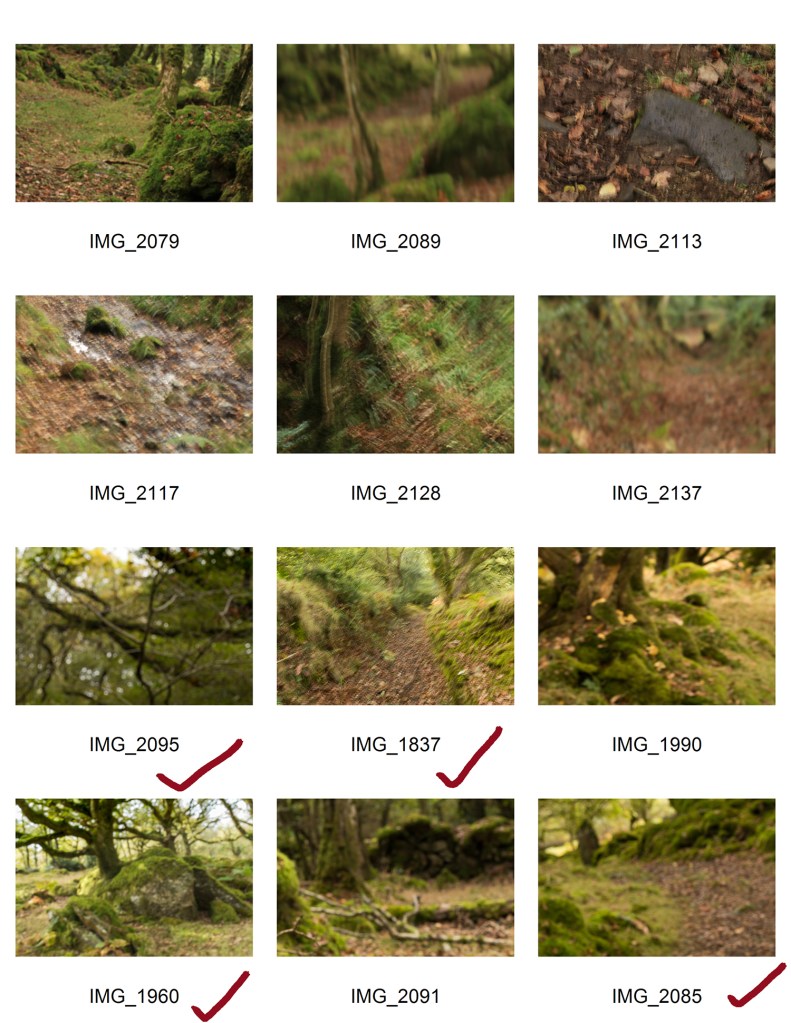
I set out to shoot using a combination of drifting and responding emotionally through place but with my theme of community on my mind. As walked, I recorded where my eyes rested. Then as I worked into the project I decided to replicate the scanning ahead that I did as I walked, by just capturing where my gaze went quickly – this resulted in lop sided views, blurred or out of focus images.
When I saw a detail that interested me, at first I shot with good depth of field for good clarity, as that’s what happens when I stop and closely observe something. My first shoot I predominantly used my prime lens, but on subsequent shoots I primarily used my 1:1 macro lens, for both the close up and scanning shots, which gave me the results I wanted. I also experimented with a shallow depth of field.
Once I had settled on my methodology, scanning versus detailed vision represented by uncontrolled photographing versus detailed close ups, I spent more time immersing myself in the place, just photographing whilst walking.
I didn’t set out to photograph in either colour or black and white, I felt that I had to see what transpired and then choose; I knew that this might make either less strong than if I deliberately sought subjects and compositions for one or other reasons, but that it was more important to go with the flow if I were to adopt the activity of drifting.
I did find it difficult to take completely ordinary shots of detail and subjects close up – I felt the need for there to be some aesthetics in my image, but in composing them I increasingly sought to enhance the aspect of the subject that spoke to me of community, through using different ways of seeing.
EDITING:
The images were taken over 2 shoots. After reviewing the images from the first shoot I returned to use only my 1:1 Macro lens which brought the results I wanted so that I could concentrate on immersing myself. I then had the blurred distant images that I wanted to represent my journey through the wood and plenty of detailed images. Whilst editing I tried to choose images that spoke the most to me about community. I thought about presenting different subjects to represent different aspects of community such as diversity, networking support and how I might present this, but then decided this might be something for the future. I returned for a final shoot to feel and capture the essence of community and relationship in the woodlands in different detailed ways, rather than to seek images to form a series.
I have chosen images that offer me different ways to continue this work:
General landscape representation, abstract representation and close up representation which could become abstract representations. Of course it maybe that I mix these styles in my work going forwards.














 NIKI SOUTH