This document details how I intend to disseminate my work and engage with a wider audience.
BODY OF WORK
ASSIGNMENT ONE: Reflections on formative feedback
This was a video feedback session. It was the first meeting that we had since beginning SYP, so it was useful to have my Tutor’s feedback and advice at this point.
The details of the feedback session are in the Formative feedback document below:
BODY OF WORK: ASSESSMENT
PH6BOW-5 Nicola South Student:514516
COURSE LEARNING OUTCOMES
LO1 produce convincing visual products that communicate your intentions, using accomplished techniques in complex and unfamiliar environments, with minimal supervision from your tutor.
- My final visual product includes images, which have been developed and are presented as visual metaphors for my feelings about community. These are accompanied by poetry that I have written as signposting to communicate my intentions. See – Submission Major portfolio: https://nkssite6.photo.blog/category/body-of-work/submissions/bow-ass-5-submission/a5-bow-submission/
- My subject and environment are constantly changing with the seasons and the weather. To reach my final product I have moved through several stages of experimentation both visually and technically. See – Assignment 4 Reflection against Learning Outcomes: https://nkssite6.photo.blog/category/body-of-work/bow-assignments/bow-assignment-4/bow-a4-reflections-against-learning-outcomes/
- To communicate my intentions, I have tried many ways of signposting the intention behind my images, culminating in the poetry presented in the final work. In assignment 2 I assigned the close-up woodland images dictionary definitions to highlight the attributes that they show that could be ascribed to humans. See – Assignment 2 Submission: https://nkssite6.photo.blog/category/body-of-work/submissions/bow-a2-submission/a2-bow-submission/
LO2 demonstrate comprehensive knowledge of your area of specialisation and be able to situate your own work within a larger context of practice in your field.
My work is led by photographic discourse on photographs metaphorically as ‘mirrors’ expressing a photographer’s thoughts and emotions, as well as ‘windows’ which project reality before us; this informed by my work in Contextual Studies on ‘affect’ and ‘effect’ in the practice of Minor white.
- My practice research is influenced by many photographers who work with the landscape metaphorically. My Assignment 5 research post summarises some of these. See: Assignment 3 reading post: https://nkssite6.photo.blog/category/research/bow-research/bow-research-part-3/
- To gain a deep understanding of my visual subject I researched trees and other woodland species, as well as photographers who work with these subjects. See- Assignment 2 research post: https://nkssite6.photo.blog/category/research/bow-research/other-photographers-same-material/
- Before I experimented with using poetry to signpost my work I researched Poetography. This post summarises the research, with my reflection at the end of it. See – Assignment 4 research post: https://nkssite6.photo.blog/category/body-of-work/bow-assignments/bow-assignment-4/research-poetry-photography/
LO3 transform abstract concepts and ideas into rich narratives and integrate them in your images.
It was a concern to me throughout how I might transform the abstract concepts behind my work into a tangible narrative for my viewers. My photographic work depends on the same premise that I researched in my contextual studies, that ‘affect’ a representation expressing an emotional response, as well as one documenting reality ‘effect’ can be present in photographs. The woodlands are a visual metaphor for my feelings about community.
- Representing the concept: A turning point for me in transforming my abstract concept into a narrative was during assignment 3, when I had drilled down into the crux of my message, that diversity can be harmonious, and I presented this with the woodlands as a visual metaphor for the concept, using image titles to provoke thought. See – Assignment 3 Submission: https://nkssite6.photo.blog/category/body-of-work/bow-submissions/bow-ass-3-submission/a3-bow-submission/
- Forming the narrative and integrating with my images: To consider what I would share and how I would narrate this in my final work, I reflected on the internal reflective and external visual journey that I had undergone. These are detailed at the beginning of my learning log for assignment five draft. See- Assignment 5 Major portfolio learning log: https://nkssite6.photo.blog/category/body-of-work/bow-assignments/bow-assignment-5/bow-a5-portfolio-learning-log-bow-assignment-5/
- Creating the narrative and integrating with my images is detailed in my learning log for my submitted Major Portfolio. In summary I chose and formed a series from a small set of the strongest images. I added a narrative to this in two ways, firstly by integrating with my own poetry as signposting and secondly by including as footnotes images captioned with definitions to add a final focus to the work. See – Major Project Portfolio for Submission Learning log: https://nkssite6.photo.blog/category/body-of-work/submissions/bow-ass-5-submission/bow-5-post-feedback-learning-log/
LO4 critically review your own work and evaluate it against desired outcomes.
I have been used in previous lives to being a reflective practitioner, reflecting throughout my processes and enjoy learning in this way.
- I record my reflections against the Learning Outcomes for each assignment. In my reflections against Learning Outcomes for assignment 2, those noted against LO1 and LO4 are good examples of critical reflection. See: https://nkssite6.photo.blog/category/body-of-work/bow-assignments/assignment-2/bow-a2-reflections-againgst-learning-outcomes/
- I use learning logs to reflect on my progress as I develop my work. My learning log for Assignment 3 demonstrates how I reflect on the various stages in the process, from changing concepts, influences from research, and my responses to shooting and particularly my final check on my image selection during editing. See: https://nkssite6.photo.blog/category/body-of-work/bow-assignments/bow-assignment-3/bow-a3-learning-log/
- I am open to input from others, which is part of my critical review process. After discussing my draft Assignment 3 with my tutor I experimented as suggested with cropping my images to a 5:4 ratio, this led to me to photograph from Assignment 4 onwards in this ratio – I usually compose in camera and rarely crop postproduction. After this I also used padlets when editing images for series as a virtual tabletop. See: https://oca.padlet.org/nicola514516/bow-draft-assignment-3-image-crop-sizes-td51x6mcq2sijad0
LO5 demonstrate management, leadership and communication skills and have deployed them during the negotiation and production of the final body of work with your tutor and third parties.
- Throughout the process I have shared my work with peers, this course necessarily mainly virtually in group ‘hangouts’. Interacting with peers has been invaluable; verbalising my work and ideas, inviting critique, and then making decisions what to assimilate to my work has contributed to my final body of work. See example: https://nkssite6.photo.blog/category/body-of-work/bow-assignments/bow-assignment-5/bow-a5-peer-portfolio-review-oca-hangout/
- I have benefited enormously from formative feedback and have particularly enjoyed video call feedback where I have been able to discuss and negotiate in real time. All my submissions changed following my first drafts. Following Tutor feedback sessions, I record and set actions and reflect on the outcomes. My reflections on tutor feedback after Assignment 3 demonstrates the way I experiment with feedback given, and subsequently adopt/integrate elements into that particular work, carry some ideas forward, and discount others after further thought. See example: https://nkssite6.photo.blog/category/body-of-work/bow-submissions/bow-a3-reflections-on-formative-feedback/
BODY OF WORK MAJOR PORTFOLIO OF WORK: ASSESSMENT
PH6BOW 5 Nicola South Student number: 516514
REFLECTIVE EVALUATION
Where did I begin?
The areas of interest that developed during my Level 2 Landscape and Documentary work brought me to the beginning of this Photographic project. I acquired a curiosity about layers of truth. I also had a desire to continue exploring landscape, but in an immersive slow manner with attention to the ordinary, drawing on my subconscious. Having recently moved to a new location I chose to focus on two things in my current experience, firstly the ancient woodlands that drew me in, and secondly the disharmony and animosity to ‘incomers’ in the local community.
My intention was to represent my feelings about community through equivalents in the unnoticed and ordinary within the woodland landscape. I began by exploring visual representations of elements of ancient woodland communities as metaphors for characteristics that could be beneficial in human communities.
Other Influences on my Body of Work
My research for Contextual Studies on ‘affect’ and ‘effect’, or ‘mirrors’ and ‘windows’ in landscape photography, particularly in the work of Minor White, opened further possibilities for my Body of Work photography. My work in both the courses was symbiotic, developing and enriching each other. A broad range of photographers influenced my work from Alfred Steiglitz, John Blakemore, to contemporary photographers such as Rob Hudson, Guy Dickenson and Gregor Radonic. I have also been affected by critical feedback from my peers given in student hangouts where I have shared my work, just as with my Tutor.
Experimentation
I experimented with a variety of visual strategies such as changes in scale and perspective, macro and micro, abstraction, blurring, and symbolism. As I worked into the project I became more concerned with being a ‘mirror’, than opening a window for others to a world of realism. To do this I developed a keener sense of seeing, slow looking, and immersion in my surroundings, and experimented with psychogeography and mindful photography. Eventually my looking became increasingly defocused, or ‘bottom up’, led by the landscape and my subconscious, rather than led by conscious intent. This to the point towards the end of the project where I was less keen to photograph and happier to pre- visualise; certainly, my image capturing decreased significantly.
Difficulties I encountered
Initially I struggled to get to the nub of my idea and to focus my intent. It took until assignment 3 to drill down into this enough to move forward more confidently. Another difficulty, which I am still working on, is how to signpost my subconscious ideas and messages for viewers. Adapting to the dynamic natural environment that I was photographing was challenging, but I enjoyed finding ways to overcome the constant changes, turning them to my advantage and overcoming technical difficulties.
My critical positioning and personal voice
My work is a combination of landscape and conceptual photography. By representing my feelings through equivalents and metaphors in visual objects, I can transform abstract ideas in my head, my subconscious, into something concrete, via a physical representation of another subject. I can put something of myself in the landscape without intervening in it, and believe that my voice, my subconscious, is in my images. I edit purposefully, with stronger confidence, and combining instinct with intention. I have discovered and show how a photographer may use the landscape to form new relationships and meaning. This is my emerging voice.
What I will take forward
I am enjoying and will continue to use visual metaphors and put my subconscious in the images. This will be in tandem with going deeper visually and spiritually into ancient woodlands.
I am still developing methods for signposting my intentions or messages. I have tried various techniques to signpost images to increase access to their meaning, definitions as captions, poetry, poetography, and binary pointers. Looking forward I need to find ways to share the messages in my photography with an audience, whilst not excluding the opportunity for viewers to decide for themselves what meaning they take from the images.
My intention is to build on this body of work and refine my publishing ideas to create a photobook, or Zine to realise a publication for Sustaining Your Practice.
BODY OF WORK ASSIGNMENT 5: MAJOR PROJECT PORTFOLIO
This version is changed from my draft submitted to my Tutor.
The introduction to my work below is also included in the presentation of the work in my slideshow included below.
WHAT LIES BENEATH
Introduction
The work
This body of work is a personal response to a dynamic landscape, both internally and externally. Ancient woodlands are complex communities, with trees at their heart; they envelop your senses, encouraging you to slowly absorb what you see and feel, wake your subconscious, and inspire reflection.
The photography here explores the possibility of transforming abstract ideas in a photographer’s subconscious into something concrete, via a visual representation of another subject. It positions an ancient woodland as a visual metaphor for community.
Through this work I have learnt that combining the world within my head, with the one in front of me, can be cathartic. This internal and external passage through the landscape, has helped me to accept and heal some of the wounds that inspired it’s beginning. This said it is important to acknowledge that a photograph carries no fixed meaning, and that viewers themselves may complete gaps in the meaning.
Influences on the work
The work is informed by research on ‘affect’ (expressing what is in a photographer’s mind) and ‘effect’(realism), in landscape photography. In essence this is the difference between photographing a subject realistically, and photographing to represent something else, including abstract ideas.
This has been influenced by twentieth century and contemporary photographers who created images as metaphors for something beyond the subject being photographed; thereby combining photographically the world within us, and the world outside us.
The concept of the work is stimulated by humans, though they are not evident in the images. The stimulus is my experience of the local community which seems often disharmonious and driven by difference, in contrast to the many harmonious characteristics of these ancient woodland societies. Qualities such as cooperation, support, diversity, resilience, inclusion, networking, mutual exchange, and adaptation, could in my opinion be beneficially applied to some human communities.
______________________________
What Lies Beneath
My final Submission as a slideshow can be seen in the video below:
South, N. (2023) What Lies Beneath At: https://vimeo.com/864896760 (Accessed 15.9.23)
BOW A5 LEARNING LOG ON CHANGES TO MAJOR PORTFOLIO FOR SUBMISSION
This learning log entry documents changes that I made to my final submission following Tutor and peer feedback
I now need to ensure that my intention for the work, combined with feedback from others meets the learning outcomes for the unit. To do this I must review and ensure any changes support:
- Producing a convincing visual project
- Communicating my intentions
- Use accomplished techniques.
- Show the above in a complex environment.
- Transform abstract concepts into rich narratives.
Review of my images
Taking on board advice from my peers and my tutor, I should now review, reduce, and therefore strengthen the series of images that I share in my major project portfolio. This will help to ensure that I am communicating what I intend.
Reviewing my draft A5 submission I edited the images again focussing on the images alone at first, rather than as images for a final product.
My original product had 14 images, I wanted to make a tighter set of main images. First I removed the greener “rebirth images,” which I have decided I won’t use at this point but may incorporate later in SYP. So omitted: #11, #12, #13, #14.
Then I rejected images #7, #8, & #9, as they are lesser immersive woodland images.
I added an image that I had earlier rejected (now #6) and reordered #1, #2, #3, #4, #5, #6, #10 and the new image to form a series of 8 images. Ultimately I rejected image #10 to form a final group of 7.
The final order for the images were 1) #3, 2) #1, 3) #4, 4) #2, 5) #6, 6) new, 7) #5.
See submission editing padlet: https://oca.padlet.org/nicola514516/revised-bow-a5-submission-image-edits-w07q1li6855xas1o
My editing was harsh, I really stepped back and reviewed my whole body of work, which did result in my redacting some of my later images. However, I am now pleased with the remaining images as they form a strong and cohesive group, as well as each being strong images each themselves.
Next my presentation of this series transforms these images which represent my abstract concepts into a narrative for the viewer.
Review of my method of presentation for assessment
During feedback, my Tutor focused, and in turn focused me on my images, rather than my method of presentation of them. This changed my perspective for the presentation of my work for assessment. Reviewing my presentation against the learning outcomes now, I can see that my book dummy was over complicated. I need to focus on more simple narration of my abstract ideas, but include some signposting to help convey my intention.
Having edited down to seven main images for what lies beneath and eight images with definitions for various components of the community, I have decided that I will present these as a slideshow rather than a book at this stage. This will simplify the presentation around the images, and as my tutor said, “let the images speak for themselves.”
My power point slideshow will include:
- Two sections of introduction split into an introduction to the work and an introduction to the influences on the work
- Seven main images.
- Six poetry couplets to accompany the main images.
- Eight images of components of the woodland community, presented as footnotes.
Whilst making my slideshow I carefully considered the font, text size and placement.
Change of project name: At some point during reviewing these elements of the work it occurred to me that the project name would be better returned to ‘What lies ‘beneath’ rather than ‘within’ – beneath is a better description I feel, as it points more to the invisible. This is the term I used when composing the poetry, and up to assignment 4.
Now this is done I will turn to the other elements needed for Submission for assessment.
BOW ASSIGNMENT 5 REFLECTIONS ON FORMATIVE FEEDBACK
This was a video feedback session.
I described the journey that I’d taken after shooting and editing for assignment 5 which formed new series ‘rebirth and healing’. And from this how I had developed my final Body of Work portfolio, and a dummy book to showcase this work.
My Tutor focused and caused me to refocus on the work alone initially which has helped me to re edit the work for submission.
Since the feedback I have rethought the way that I will present the work for submission and have switched from a book dummy to a slideshow, this to simplify the presentation and allow the images to speak for themselves.
I have formed a list of action points below:
- Review images for final portfolio: consider shape, tone, the amount that the woodland fills the frame, and consider whether some images are more suitable for a separate group of rebirth?
- Decide whether to include the rebirth images or leave for SYP
- Consider moving the woodlands ‘parts’ to the end of the work retain the borders and definitions.
- Make slideshow to present my work, saving a more sophisticated book for presenting my work in SYP.
- Experiment presenting images as full bleed on pages.
- Use one couplet only on facing page of each photo and consider font size of poetry.
- Remove captions from images and number the images on pages in small font in the corner.
- Shorten introduction and divide into two parts, one commenting on the work and two, explaining the influences on myself.
BODY OF WORK ASSIGNMENT 5: REFLECTIONS AGAINST LEARNING OUTCOMES
Nicola South Student 514516
LO1 produce convincing visual products that communicate your intentions, using accomplished techniques in complex and unfamiliar environments, with minimal supervision from your tutor.
- In my final portfolio for my Body of Work, I am on the way to producing a convincing visual product.
- In my final shooting during part five I majored on a using a ‘bottom up’ intuitive responsive approach to the landscape. Mindfulness whilst photographing and editing and sequencing has influenced my work.
- My editing and sequencing has been enhanced as I have increasingly used padlet as a virtual table when experimenting and making decisions.
- Working in a familiar place over time has honed my observation skills. I am confident that the portfolio images have strength and …This has been achieved in a dynamic landscape with variables beyond my control. I have learnt techniques to gain the best of it photographically.
- Where I need to develop it to reach this point is by finding successful mechanisms to communicate my intentions. I have experimented in several ways but I have some way to go and believe that ‘Sustaining Your Practice’ will give me the space to do this.
LO2 demonstrate comprehensive knowledge of your area of specialisation and be able to situate your own work within a larger context of practice in your field.
- I have carried the research, learning and knowledge of relevant practitioners and theories gained through my Contextual Studies work: Affect and effect: The landscape photography of Minor White. Which led me to other practitioners such as Alfred Steiglitz, and Edward Weston along with contemporary practitioners using photography to present the invisible in the visible.
- I have added to this research for my BOW many other practitioners and writers who use the landscape to share their internal and external passage.
LO3 transform abstract concepts and ideas into rich narratives and integrate them in your images.
- This work is all about transforming abstract concepts into narratives, which I hope are integrated into my images. It is the crux of this Body of Work.
- My portfolio is pinned on using an ancient woodland as a visual representation, a metaphor for my feelings about community.
- The narrative is also dependant on my signposting of my intentions, to integrate these with the images. This signposting is still a work in progress, I am still finding a balance between sharing my message and allowing room for interpretation and completing the meaning by my viewers.
LO4 critically review your own work and evaluate it against desired outcomes.
- I critically review my work at every turn and have been held to this by my peers and my tutor.
- I have learnt to evaluate frequently against my personal intentions.
- I also evaluate against the learning outcomes.
LO5 demonstrate management, leadership and communication skills and have deployed them during the negotiation and production of the final body of work with your tutor and third parties.
- To produce this Body of Work I have mainly self-managed the work, but there has been negotiation along the way with my Tutor and peers to reach this final portfolio of work.
- I will take this Body of Work into Sustaining your Practice and involve those outside of the OCA .
BODY OF WORK ASSIGNMENT 5: DRAFT MAJOR PROJECT
Nicola South Student: 514516
Present your final portfolio to your tutor, along with your introduction and your evaluation. Let your tutor know any preliminary ideas you have for realising your publication and presenting it to a public audience in Sustaining Your Practice.
WHAT LIES WITHIN
INTRODUCTION
This work is a personal response to a dynamic landscape, both internally and externally. It is informed by my learning and research for my Contextual Studies, on ‘affect’ (expressing what is in a photographer’s mind) and ‘effect’(realism), in the landscape photography of Minor White. In essence this is the difference between photographing a subject realistically, and photographing a subject to represent something else, including abstract ideas. In Contextual Studies I explored how a photographer may express their thoughts and emotions and share a realistic representation of a subject; in doing so I explored methods for finding meaning in images through shared visual language and decoding, using semiotics, and the viewer’s contextual experience.
I have been influenced by twentieth century photographers, such as Alfred Stieglitz, and John Blakemore, who created images as metaphors for something beyond the subject being photographed, as well as contemporary landscape photographers. Particularly those of The Inside the Outside Collective, particularly Rob Hudson and Guy Dickenson, who talk of combining in photography the world within us, and the world outside us, and suggest that that going out, is really going in.
This Body Of Work positions an ancient woodland as a visual metaphor for community. The motivation for this concept is my experience of the local community who are often disharmonious and driven by difference; this as a contrast to woodland societies. The concept is stimulated by humans, though they are not evident in my work. Ancient woodlands are complex communities, with trees at their heart; they envelop your senses, encouraging you to slowly absorb what you see and feel, wake your subconscious, and inspire reflection. I am drawn to aspects of their community which could apply to human communities; such as communication, cooperation, support, diversity, resilience, inclusion, networking, adaptation, mutual exchange, and adaptation.
This photography portfolio explores the possibilities of transforming abstract ideas, in my subconscious to something concrete via a visual representation of another subject. Through this work I have learnt that combining the world within my head with the one in front of me, can be cathartic. Developing this body of work by an internal and external passage through landscape, has helped me to accept and heal certain of the wounds that inspired it’s beginning. I have given some signposting of my intentions, though I accept that a photograph carries no fixed meaning. Whether such images can convey the ‘invisible’ the ‘visible,’ how this work falls between documentation and artistic expression will be for viewers to decide for themselves, as they will complete the gap in the meaning.
PORTFOLIO OF IMAGES FOR MAJOR PROJECT
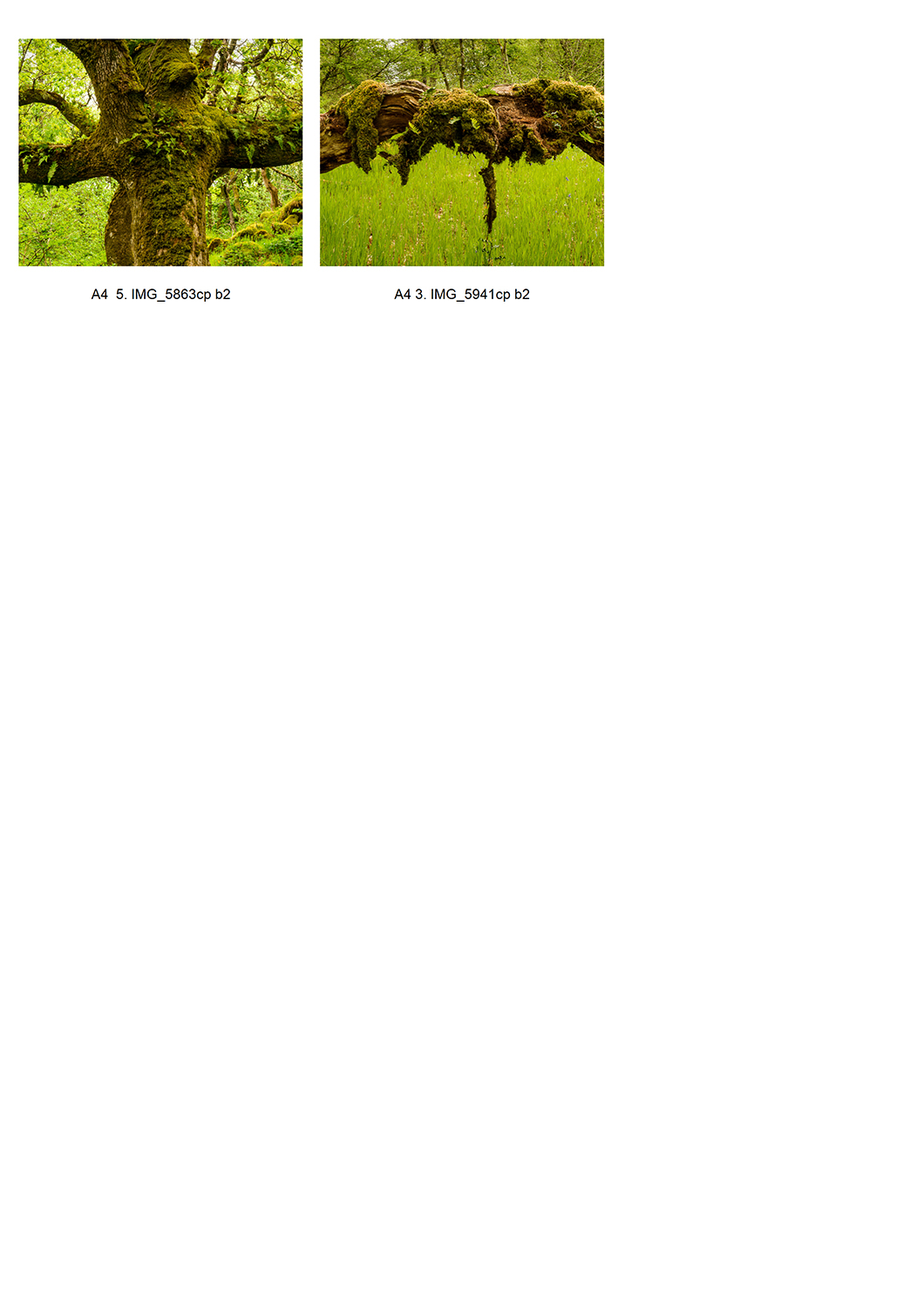
See also my A4 PDF two-page spread for a flat form dummy book. To view as a book dummy, click view-page display- two page scrolling
This is my draft portfolio for my Body of Work Major Project, “What lies within.”
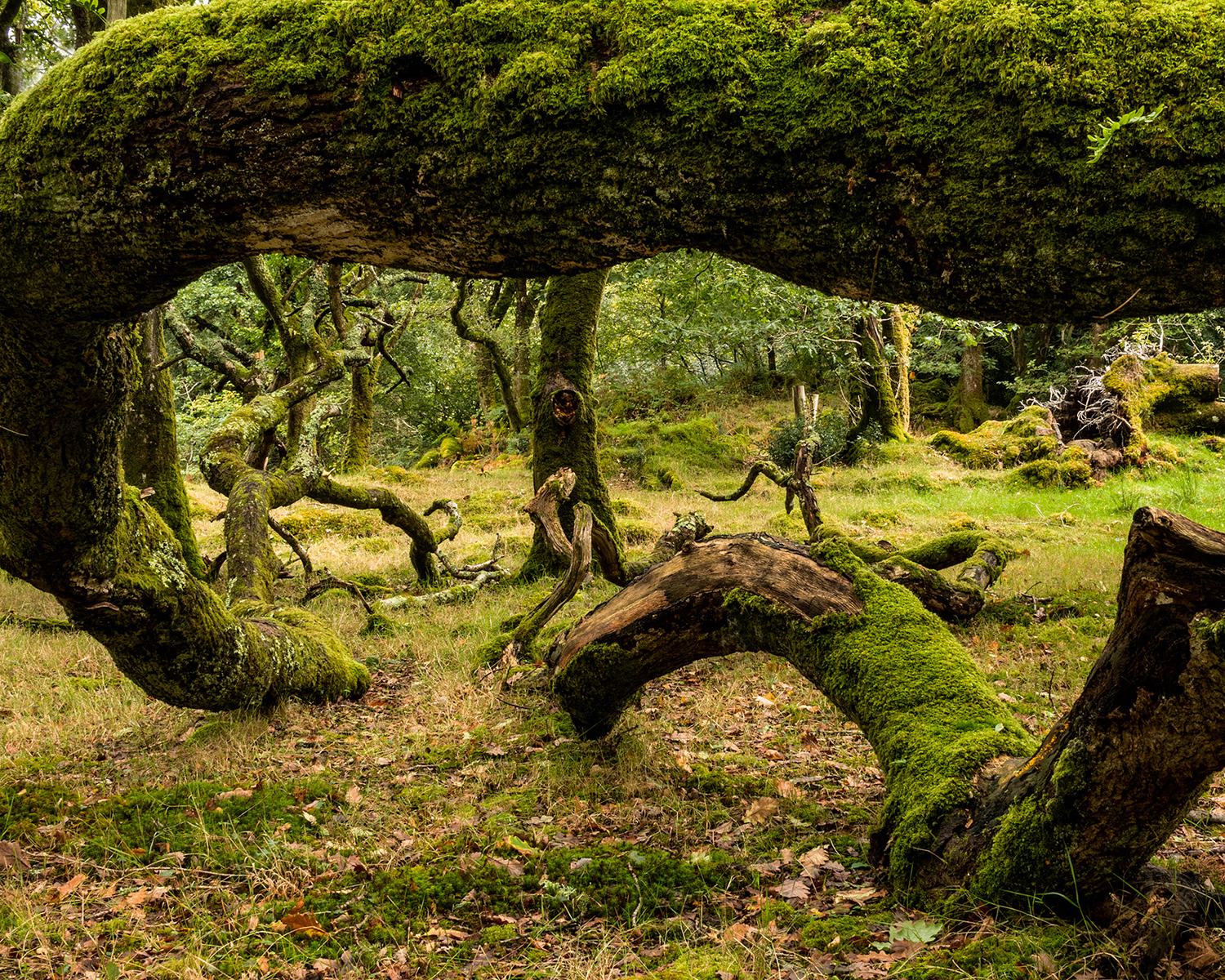
What lies within #1
___

Parts #1
___
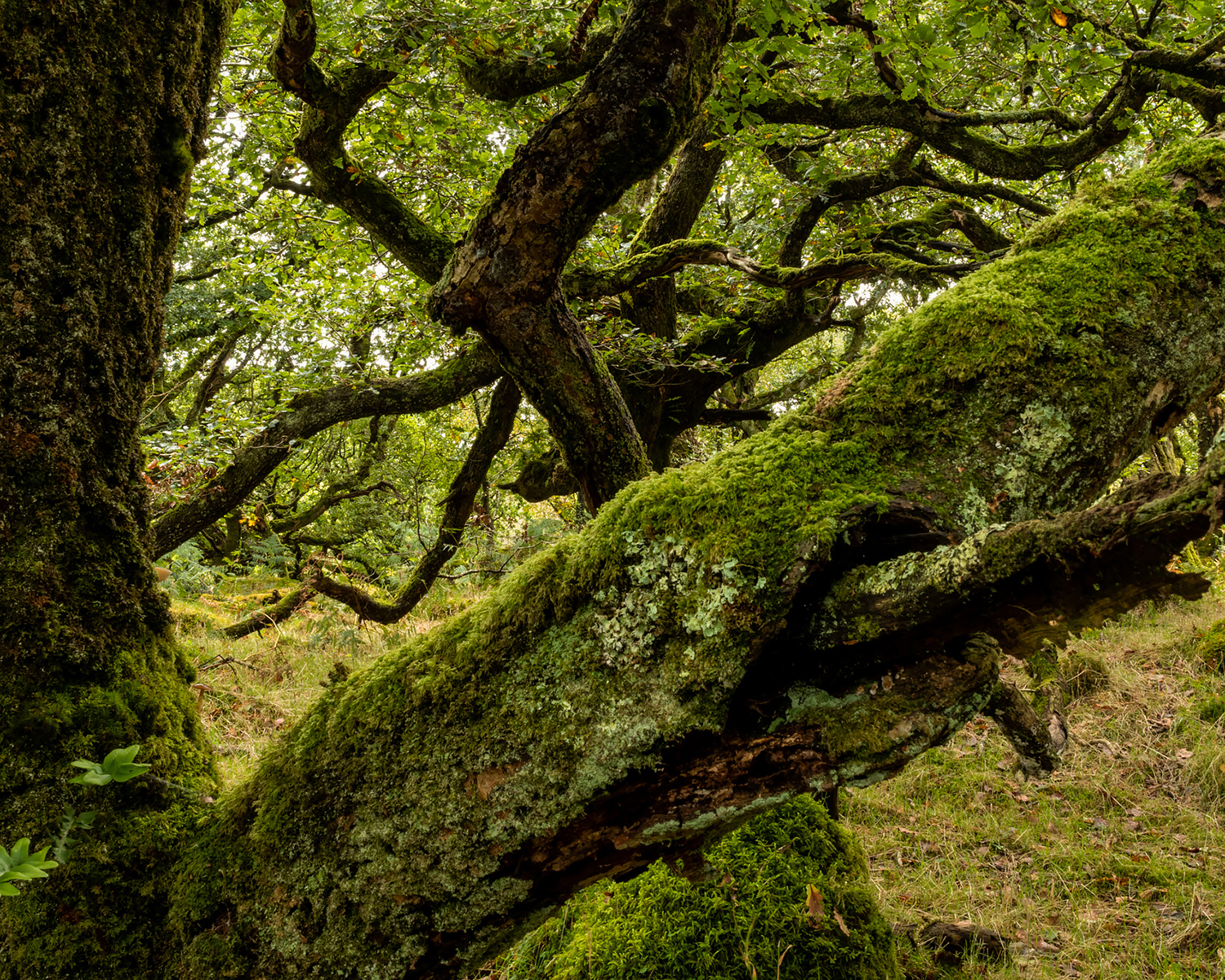
What lies within #2
___

Parts #2
___

What lies within #3
___
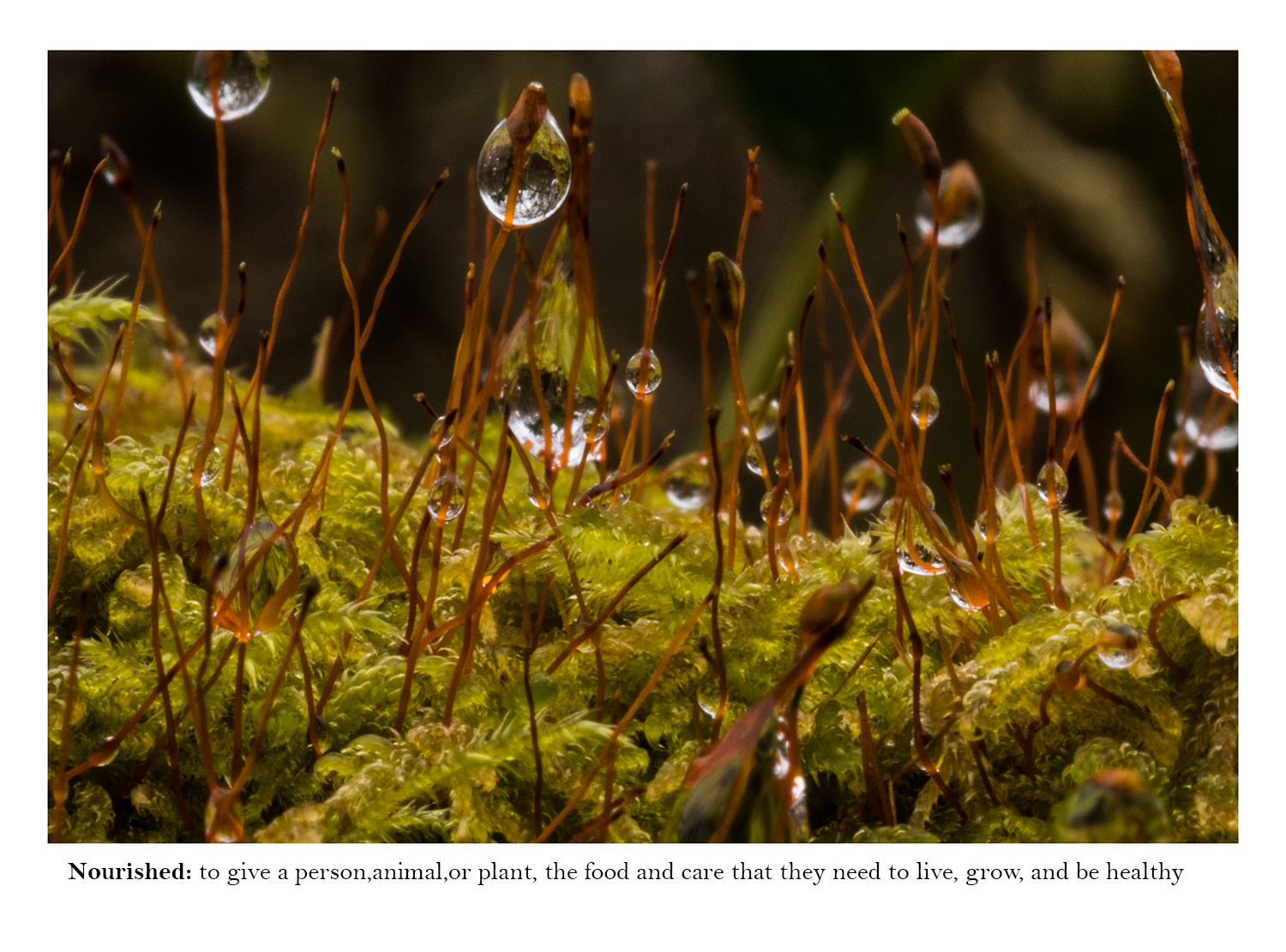
Parts #3
___

What lies within #4
___

Parts #4
___
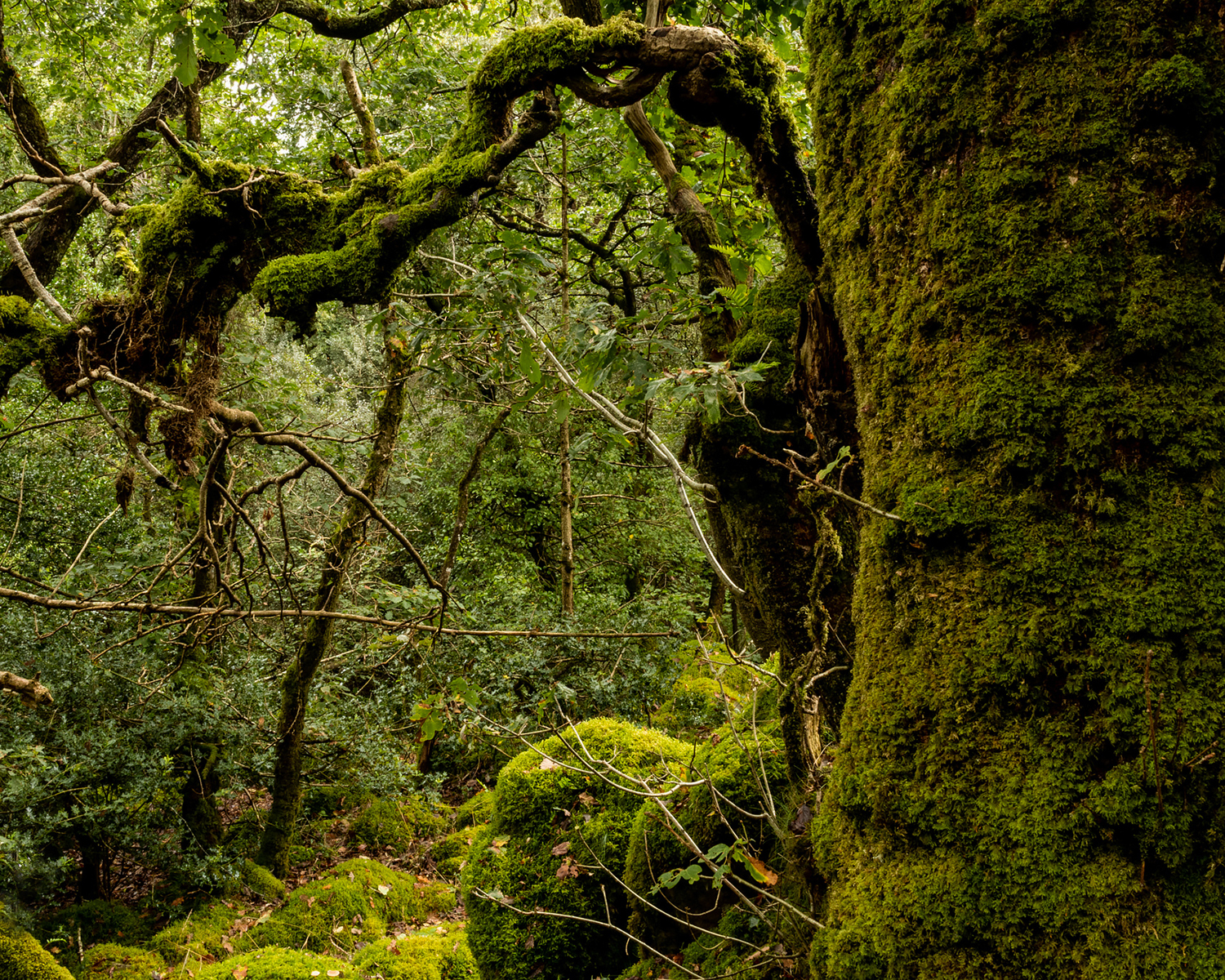
What lies within #5
___

What lies within #6
___
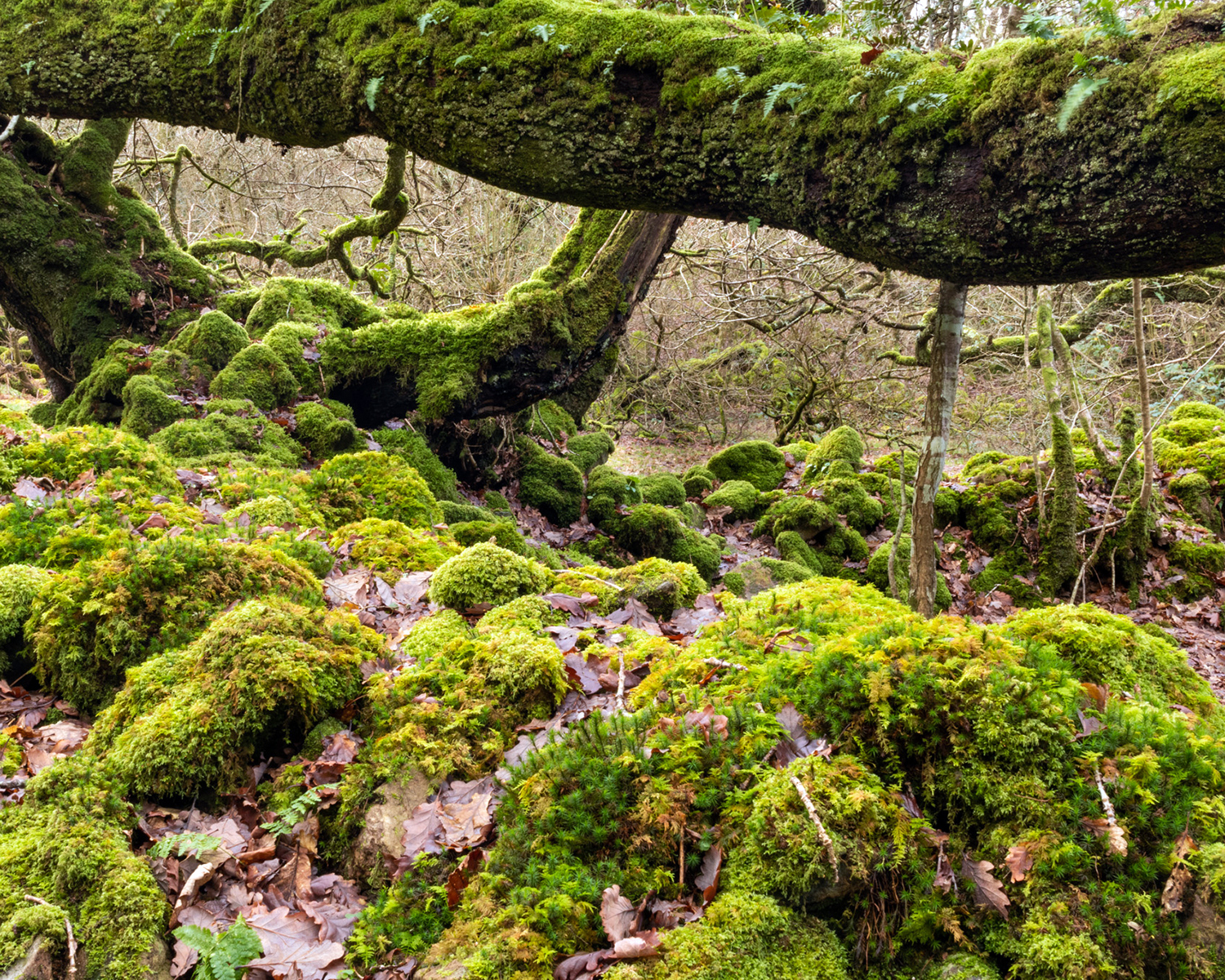
What lies within #7
___

What lies within #8
___

What lies within #9
___

What lies within #10
___

Parts #5
___
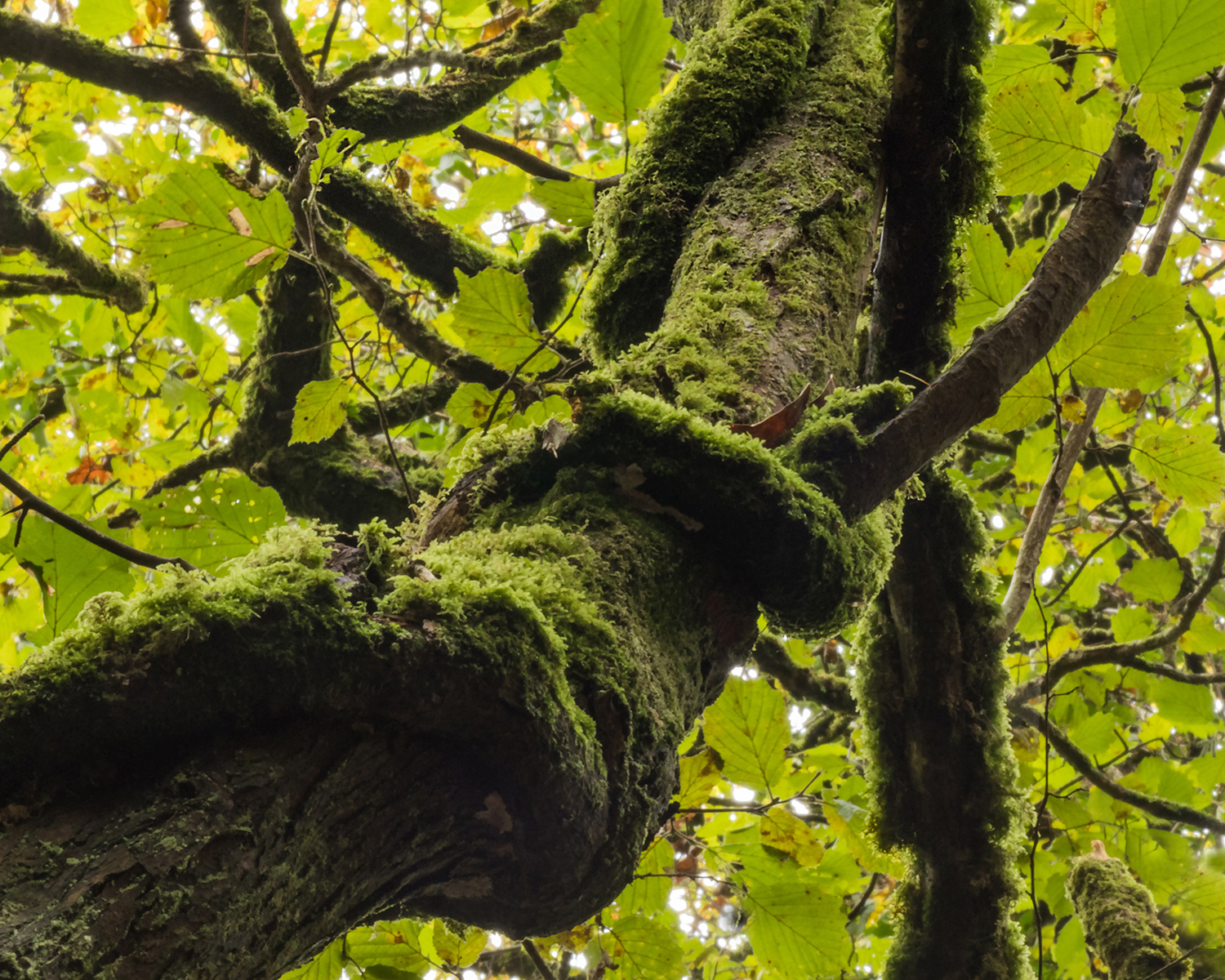
What lies within #11
___

Parts #6
___

What lies within #12
___

Parts #7
___

What lies within #13
___
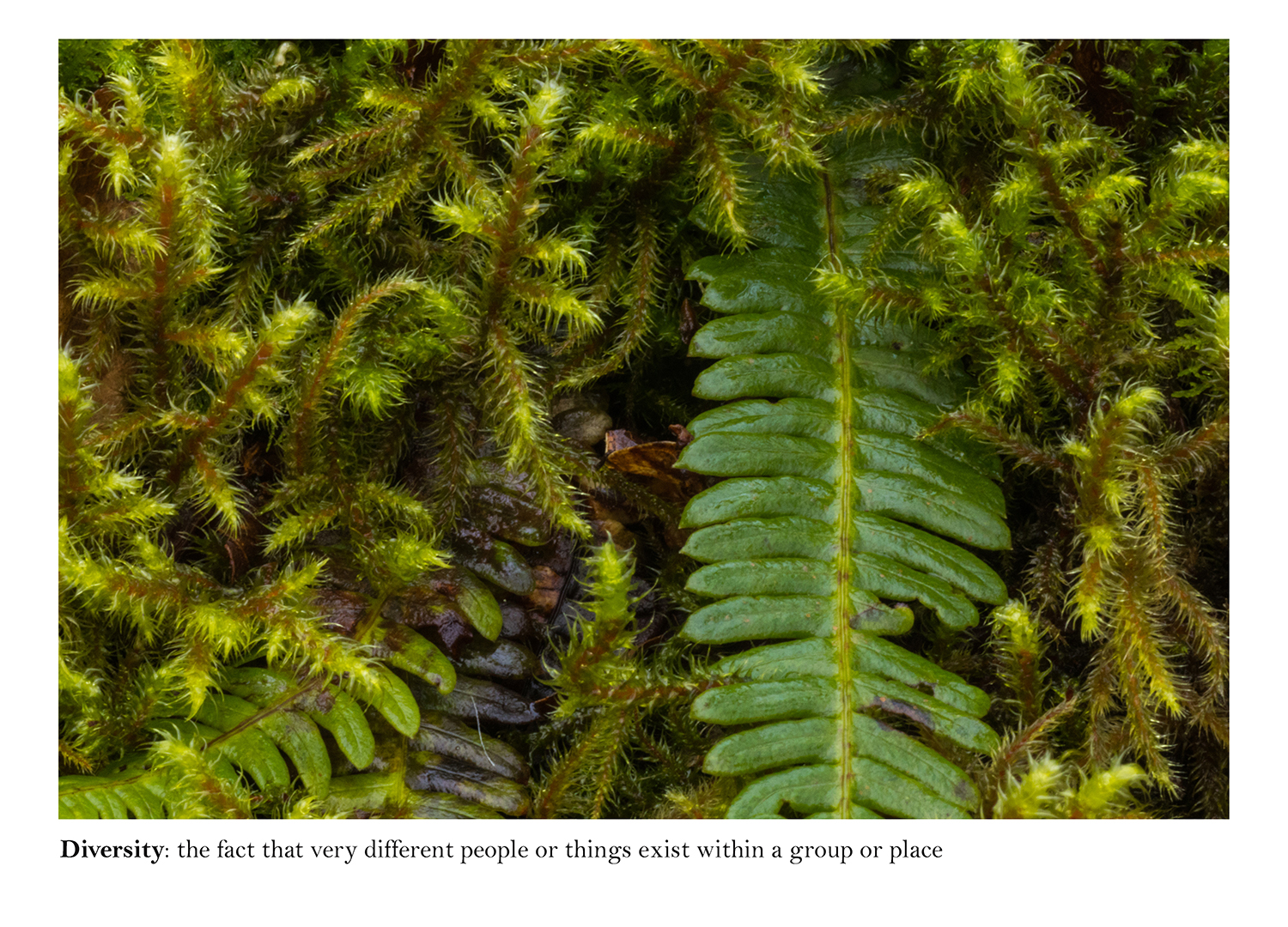
Parts #8
___

What lies within #14
___
To view the Major Project as a dummy book download then click view-page display- scrolling view
—
EVALUATION
The starting point for my Body of Work, was to explore using visual representation what an ancient woodland community could teach a human community. This I developed by experimenting with a variety of visual strategies such as, changes in scale and perspective, abstraction, metaphor, and symbolism. This linked to my research for my Contextual Studies on ‘affect’ and ‘effect’, or ‘mirrors’ and ‘windows’ in landscape photography.
As I worked into the project I became more concerned with being a ‘mirror’, than opening a window for others to a world of realism. To do this I developed a keener sense of seeing, slow looking, and immersion in my surroundings. I experimented with psychogeography and mindful photography. Eventually my looking became increasingly defocused, or ‘bottom up’, led by the landscape and my subconscious, rather than led by conscious intent. This to the point towards the end of the project where I was less keen to photograph and happier to pre- visualise; certainly, my image capturing decreased significantly.
My intention was to represent my feelings about community through equivalents in the unnoticed and ordinary within the woodland landscape. I have explored my ability to transform abstract ideas in my head, my subconscious, into something concrete, via a physical representation of another subject. I challenged myself in my last assignment to put something of myself in the landscape without intervening in it, and believe that my voice, my subconscious, is in these images. I have discovered how a photographer may use the landscape to form new relationships and meaning. During the project I moved to cropping postproduction to a 5:4 ratio, to share a more human view. I edited in an increasingly purposeful way, with stronger confidence – combining instinct and reference to my intention, through working titles.
I am still developing methods for signposting my intentions or messages. Currently I find it a difficult path to tread between sharing my message and leaving some ambiguity for the reader to fill the gap in meaning. I have tried various techniques to signpost my images to increase access to their meaning, using definitions as captions, poetry, poetography, and binary suggestions. I shall develop this and find my own way, with the right balance during Sustaining Your Practice.
Looking forward I need to find ways to successfully share the messages in my photography with an audience, whilst not excluding the opportunity for viewers to decide for themselves what meaning they take from the images. I am also interested to discover whether a readers’ impact can shift an artist’s meaning from their intent, and how it might add to any hole in the meaning? I am looking forward to developing a final product for my work, which I think most likely will be a book, magazine or zine presentation in SYP.
BODY OF WORK ASSIGNMENT 5: LEARNING LOG MAJOR PROJECT DEVELOPMENT
WHAT LIES WITHIN
Following this I took my body of work as a whole and considered how to present it as a whole.
There are different parts to my work as it developed:
A2 The parts of a community closer up – A representation of cooperation and mutual benefit
A3 The apparent chaos but actual harmony of the woodland community. How diversity can be harmonious.
A4 What lies beneath the community when sleeping during winter months – a representation of what can be versus what is in the local community
A5 Spring rebirth in the woodland community – A representation of potential for healing within.
Stage 1.
I began with a padlet: https://oca.padlet.org/nicola514516/body-of-work-major-project-initial-draft-for-mock-up-of-book-qf3ehiyjgmy6bvh4
I used this as a virtual table to chose and order images.
Stage 2.
I created a dummy book as a 2 page spread in a pdf form. Once I switched to 2 page scrolling view, I was able to make further decisions. I repositioned my ‘Sum of its parts’ in the middle of the work, and attached lines of my poetry alongside the Chaos/harmony images. I was at this stage most uncertain about the signposting that I would use.
This was my 1st draft of the dummy book. here
Stage 3.
Peer zoom hangout. The night after I was to submit my A5 draft to my tutor there was the opportunity for a zoom meeting ‘hangout’ with a group of my peers and an opportunity to share my work. This was a valuable opportunity for further reflection so I took it. See my write up of the hangout and its impact here: https://nkssite6.photo.blog/category/body-of-work/bow-assignments/bow-assignment-5/bow-a5-peer-portfolio-review-oca-hangout/
I was particularly pleased that the 5:4 crop was commented on with approval, some thought the images fitted into a the fine art category, and the group were happy with the rich greens, as presented.
Stage 4.
I took some of the feedback given into my portfolio and book dummy and made changes as I reflected on the advice given. At the hangout we had a long discussion about the work and the images. There were some good challenges and suggestions which led me to:
- Rewrite the introduction for my portfolio and this as a slightly shortened version, to fit on one page of my book. I did this to include more context about how Contextual Studies has influenced this work, and to explain more fully the contrast in behaviours of the woodland and human communities.
- I maintained poetry for viewers to refer to alongside images
- I have numbered the images for easier reference in feedback, and possible further use.
- I checked all font is all the same.
- I will use the dummy book pdf in blog but know that I should instruct viewers to go to 2 page scrolling view.
My own reflections:
To increase the flow and homogeny of the book I moved the ‘Sum of the parts’ images to being opposite the single larger images – this forms some signposting as well.
I removed all other signposting apart from the poetry.
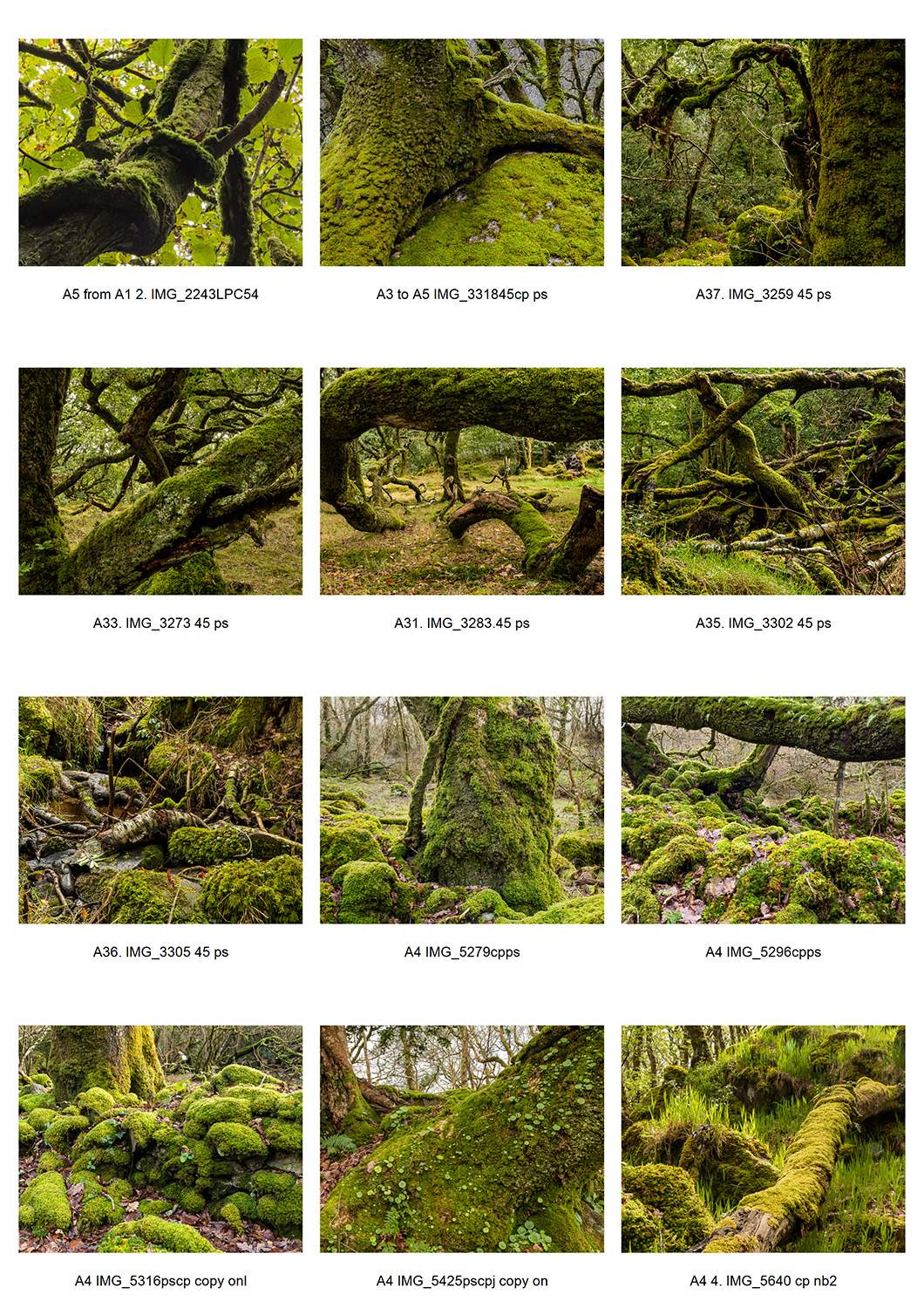
MAJOR PROJECT CONTACT SHEET
 NIKI SOUTH