Research point: Psychogeography
Psychogeography can be described as, responding to a physical space in a literary or artistic manner, and recording and analysing the emotions, feelings, and ideas of being in these spaces. The person capturing this may be called a Flaneuse who drifts through a place responding to the environment.
I have encountered work like this with literacy outcomes when reading the work of Robert MacFarlane who has written various books such as Underland (Macfarlane, 2020) and the Wild Places (Macfarlane, 2007). When writing these he walks through landscapes and responds in prose to his experience, adding amongst other subjects discussions of his concerns on the relationship of man to his landscapes. Roger Deakin’s book Wildwood: A journey through trees (2008), is of particular interest to me; here he explores first by walking and then by writing mans relationship with trees.
I also listened to a very interesting podcast about the Flaneur (BBC, 2016) which led me to the work of Lauren Elkin and her book Flaneuse: Woman walk the city. (2021). If I am to go deeper into this genre, I will explore the writings of Charles Baudelaire and, more currently, Will Self, Iain Sinclair, and Ken Worpole.
I have briefly at this point, explored some work of suggested photographers working in this genre:
Francis Alÿs
Though he often explores cities on foot to inspire his work, his outcome is usually performative art exploring human engagement and the human impact on the environment, I find hard to relate currently to much that I have seen of his work. His work Seven Walks (1999-2005), where he walked the streets of London and represented it through a range of media including photography, leaves me wanting to understand his methodology (Artangel, 2021).
He uses poetic and allegorical methods to address various realities and “addresses anthropological and geopolitical concerns through observation of engagement with everyday life” (Zwirner, 2020), and much of his work is videos. In the work below 2004 in Jerusalem, he walked trailing green paint, along the armistice border, known as ‘the green line’, which had been pencilled on a map by Moshe Dayan at the end of the war between Israel and Jordan in 1948. Though bewildering to onlookers, apparently his action did bring back memories of the green line when the separation fence, was being constructed to the east of the green line. His action did cause discussion and reflection from Israel, Palestine, and other countries.

He uses land-based and social practices that examine individual memory and collective mythology, as well as shared cultural histories, urban engagement, and the human impact on the environment. One piece of his work that I can engage with is Patriotic Tales which documents the artist’s re-enactment of a moment in Mexico’s political history. Here Alÿs leads a flock of sheep in single file round a flagstaff in the ceremonial square in Mexico City. In this work he mirrors an event when civil servants were forced to congregate in the Zócalo to welcome the new government, and yet “bleated like sheep to mark their protest” (Francis Alÿs, 1997). Though this strikes me as conceptual work more than psychogeographic.
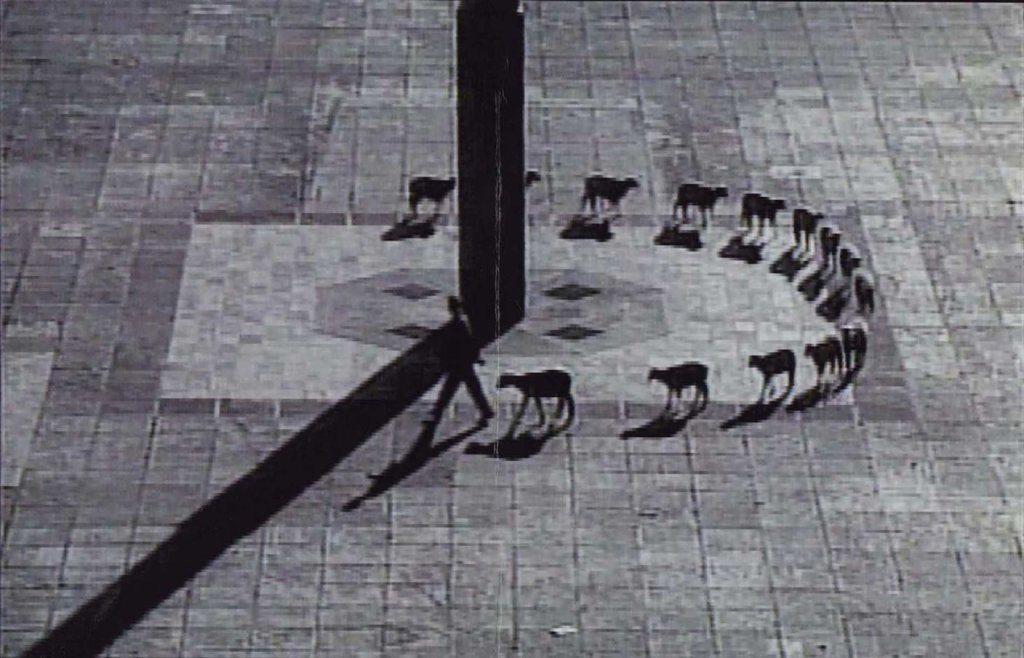
I do find interesting how he combines psycho-geography with conceptual art in my mind. I may return later to his work; and it does also illustrate another outcome as a response to place.
Stephen Gill
A conceptual artist used various unusual techniques to document Hackney to “encourage the spirit of the place to become trapped in the emulsion like amber creating a series of surreal interventions in the photographs” (Galerie, 2021). His techniques like inserting detritus into the camera body, and burying images, do not appeal to me but once again it demonstrates how broad a photographic response to a place can be.

Mark Power
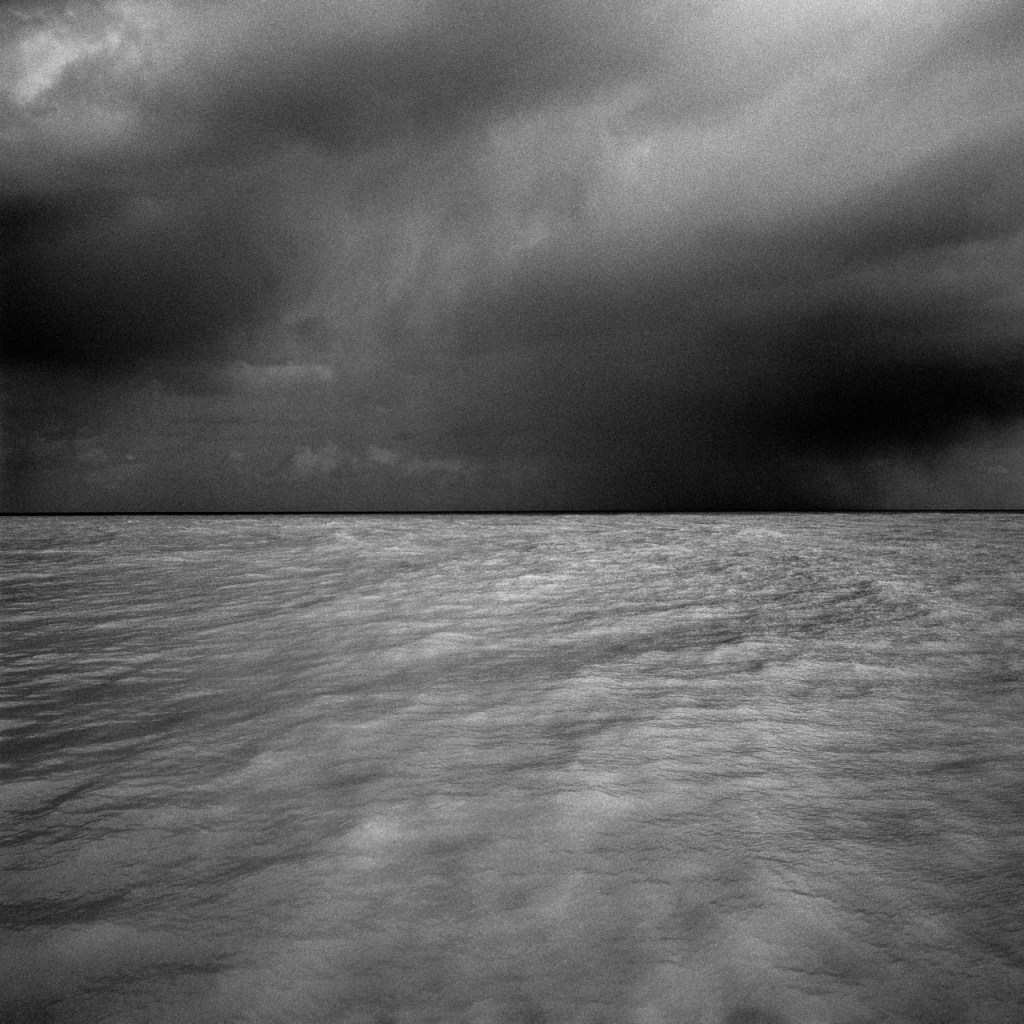
My foray into his works led me to 2 projects The Shipping Forecast (1993-1996) a poetic response to the language of the report “I was looking for pictures that were visual metaphors for the spoken words” (Magnum, 2018).
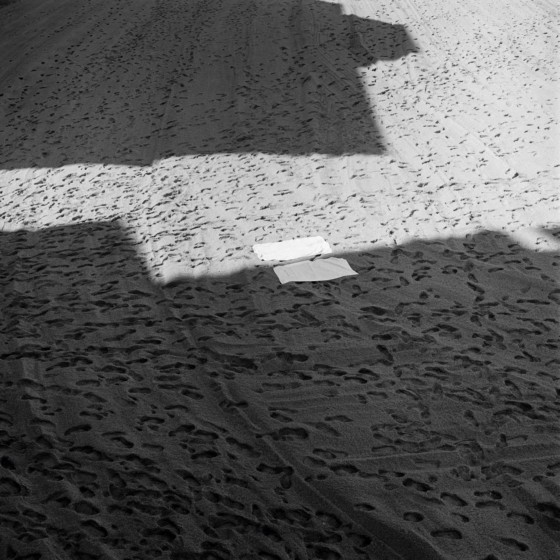
His other project that struck me was 26 different endings (2003-2006) where he photographed the places that fell off the edge of the London A-Z street atlas – a very interesting concept. I will definitely explore his work further to support me with my own ideas.
Debra Fabricius
She is a self-confessed Flaneur who explores the spaces around her, it is unfortunate her web site is no longer accessible. However, I have found her MA work Urban drift on the University of Westminster website. Urban drift focused around a 9 mile stretch of Regents canal with an “an archaeological way of seeing and the process of a journey within a city” (Hull, 2020) a fragmented and fragile space and how the social, cultural, domestic, and industrial have impacted on the space. I would have liked to be able to see more of her work.
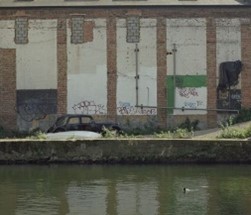
I am particularly interested in how she infuses her images with the feelings that she absorbs as a Flaneur and how they “create a platform for a story to be told” (Boothroyd,2020:39) and this is what I would like to do with my work, infuse images with feelings and tell a story.
What I take away from my initial research on psychogeography photography:
This genre could be an interesting starting point for my assignment 1 as I ultimately hope to infuse images with the feeling and spirit of a place whilst telling a story. My research has also opened my perspective on ways to respond and represent my experience of place. I will explore further some of these photographer’s work.
I am asked to answer the question: In terms of psychogeography, do you think it’s possible to produce an objective depiction of a place or will the outcome always be influenced by the artist? Does this even matter? Feel free to answer this with reference to the artists discussed in this section – or any others you’ve come across. (Boothroyd,2020:40).
My response:
It seems unrealistic to expect a flaneur to produce an objective representation of a place, as it is accepted that the purpose of a Flaneur is to absorb and express the spirit of a place. So no, as outlined in my research above, the value of the work of such photographers is in their ability to communicate what they see/feel about a location or journey.
References:
AntiAtlas (2013) Francis Alÿs – The Green Line – antiAtlas of borders. At: https://www.antiatlas.net/francis-alys-the-green-line-en/ (Accessed 06/10/2021).
Artangel (2021) Pebble Walk At: https://www.artangel.org.uk/artwork/pebble-walk/ (Accessed 12/09/2021).
BBC (2016) The Flaneur – Walking in the City (2 May2016) In: BBC 2 May 2016 At: https://www.bbc.co.uk/programmes/b0787dmb (Accessed 12/09/2021).
Boothroyd, S (2020) Photography 3: Body of work coursebook. Open College of the Arts. Barnsley.
Deakin, R. (2008) Wildwood: A Journey Through Trees. (2008): Penguin UK.
Galerie, C. G. (2021) Stephen Gill. At: https://christopheguye.com/artists/stephen-gill/biography (Accessed 12/09/2021).
Hull, S. (2020) Graduate Photography Online 2010: University of Westminster MA Photographic studies. Debra Fabricius. At: https://www.source.ie/graduate/2010/westunivma/westunivma_folder/westunivma_student_folder_09_59_22_26-04-10/westunivma_student_details_09_59_22_26-04-10.xml (Accessed 12/09/2021).
Macfarlane, R. (2018) The Wild Places. (2018): Granta Books.
Macfarlane, R. (2020) Underland: A Deep Time Journey. (s.l.): Penguin Books, Limited.
Magnum (2018) The Shipping Forecast. At: https://www.magnumphotos.com/arts-culture/society-arts-culture/mark-power-the-shipping-forecast/ (Accessed 12/09/2021).
MoMA (2011) Francis Alÿs: A Story of Deception. At: https://www.moma.org/calendar/exhibitions/1091 (Accessed 08/05/2011).
Power, M. (2021) 26 DIFFERENT ENDINGS. At: https://www.markpower.co.uk/projects/26-different-endings (Accessed 12/09/2021).
Stephen GILL (*1971, Great Britain) and Stephen GILL (*1971, Great Britain) (2013) Stephen Gill. At: https://christopheguye.com/artists/stephen-gill/selected-works (Accessed 06/10/2021).
Zabludowicz Collection (2021) Francis Alyss. At: https://www.zabludowiczcollection.com/collection/artists/view/francis-alys (Accessed 06/10/2021).
Zwirner, D. (2020) Francis Alÿs – Artworks & Biography. At: https://www.davidzwirner.com/artists/francis-alys (Accessed 15/06/2020).
 NIKI SOUTH